
If you’ve been trading forex for a while, you know that economic indicators drive the market. Interest rates, GDP (if you don’t know how GDP can influence the market CLICK HERE as I’ve done a full guide through GDP), inflation, employment figures—they all play a role in how currency pairs move. But there’s one key indicator that many traders underestimate, even though it provides some of the earliest clues about economic strength or weakness: PMI (Purchasing Managers' Index).
PMI is a leading economic indicator, meaning it gives insights into what’s likely to happen next, rather than just telling us what has already happened. That’s why professional traders, institutional investors, and even central banks watch PMI reports closely—it helps them adjust their strategies before big market shifts occur.
So, what exactly is PMI, how does it influence the U.S. dollar and other forex markets, and—most importantly—how can you trade it effectively? Let’s break it all down.
What is PMI and Why is it Important?
PMI stands for Purchasing Managers' Index. It's a survey-based economic indicator that measures business activity in key sectors of the economy, typically manufacturing and services.
Each month, purchasing managers from businesses across the country are asked questions like:
- Are you receiving more or fewer new orders compared to last month?
- Are you hiring more employees, or are layoffs happening?
- Are supply chain issues improving or worsening?
The responses are compiled into a single score, which tells us whether businesses are expanding or contracting.
The key PMI scale:
- Above 50: Economic expansion (positive outlook)
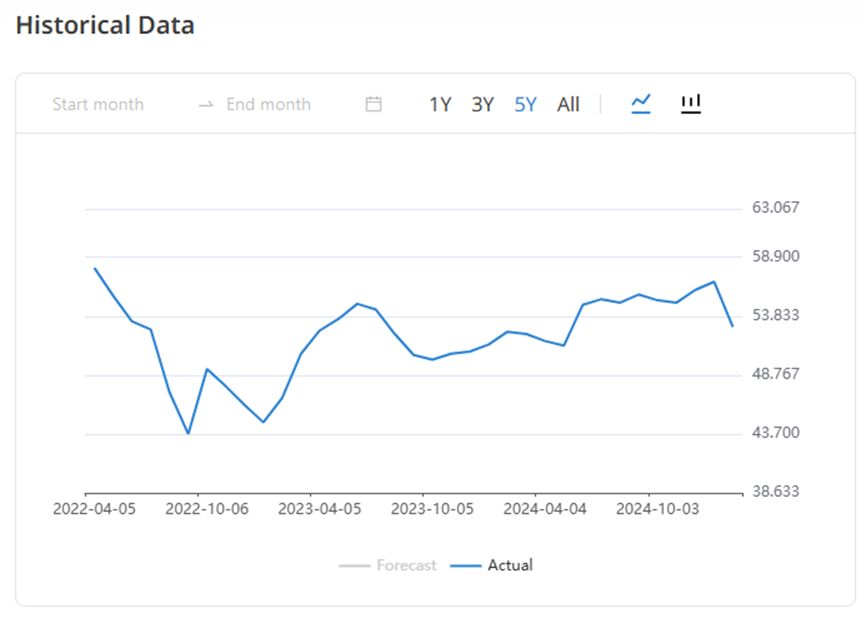
- Below 50: Economic contraction (negative outlook)
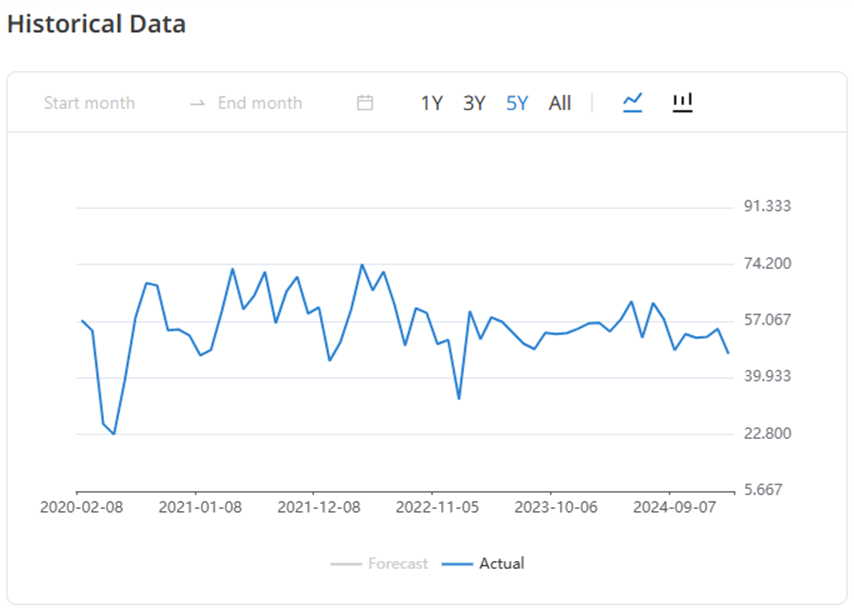
PMI is so useful because purchasing managers are the first to see economic trends forming. If businesses start cutting back on new orders or reducing hiring, it’s usually a sign that the economy is slowing down—often before GDP and employment data confirm it.
Types of PMI: Manufacturing vs. Services
There are two main types of PMI, and both provide different insights into the economy.
1. Manufacturing PMI
This PMI tracks businesses that produce physical goods—factories, car manufacturers, industrial equipment companies, and more. It focuses on:
- New orders: Are businesses receiving more or fewer orders?
- Production levels: Are factories increasing or reducing output?
- Employment: Are manufacturers hiring or firing workers?
- Supplier deliveries: Are supply chains running smoothly or experiencing delays?
Since manufacturing represents a smaller portion of the U.S. economy (around 15%), it’s not as influential as the services PMI, but it still plays a major role in forecasting economic cycles.
2. Services PMI
The services sector makes up about 75% of the U.S. economy, so the Services PMI is often more influential than the Manufacturing PMI. It tracks industries like:
- Retail (shopping, e-commerce, hospitality)
- Finance (banks, investment firms, insurance companies)
- Technology (software companies, telecommunications)
- Healthcare (hospitals, clinics, pharmaceutical companies)
A strong Services PMI usually means consumers are spending more, businesses are thriving, and the economy is growing. A weak Services PMI can be a huge red flag that the economy is slowing down.
Want to see how PMI impacts forex markets in action? Watch this insightful video with Luca Santos, Technical Market Analyst at ACY Securities. He breaks down the importance of the PMI, how it influences currency pairs like GBP/JPY and GBP/USD, and the best strategies to trade PMI releases effectively. Whether you’re new to forex or looking to refine your approach, this video will give you the edge you need. Click play and start trading smarter!
How PMI Can Predict a Recession
One of the most powerful things about PMI is its ability to act as a leading indicator for recessions.
Think about it: If businesses stop hiring, reduce orders, and scale back operations, it means they expect lower demand soon. If PMI starts falling below 50 for several consecutive months, it’s a strong warning sign that economic growth is slowing down—possibly leading to a recession.
Here’s an example:
In 2007–2008, right before the financial crisis, PMI dropped sharply before GDP data officially showed a recession. Investors who followed PMI data were able to adjust their positions early, while those who ignored it got caught off guard.
PMI isn’t always perfect, but when combined with other data like employment and inflation, it can help traders stay ahead of major market shifts.
How PMI Affects Forex Markets and the U.S. Dollar
1. Strong PMI → Stronger Currency
When PMI reports beat expectations, it signals that the economy is growing. This typically leads to:
- Stronger U.S. dollar (USD gains value)
- Weaker EUR/USD, GBP/USD, XAU/USD (gold falls as USD rises)
- Higher stock prices (investors feel more confident in the economy)
2. Weak PMI → Weaker Currency
When PMI reports come in worse than expected, it suggests a slowdown. The market response is usually:
- Weaker U.S. dollar (USD loses value)
- Stronger EUR/USD, GBP/USD, XAU/USD (gold rises as USD weakens)
- Stock markets decline (investors fear an economic downturn)
3. PMI’s Impact on Federal Reserve Policy
The Federal Reserve (Fed) closely monitors PMI data because it provides early clues about inflation, employment, and economic health.
- If PMI is rising consistently, the Fed may consider raising interest rates to prevent the economy from overheating.
- If PMI keeps falling, the Fed might cut interest rates to stimulate growth.
Since interest rate expectations drive currency value, traders always keep an eye on PMI reports for clues about future Fed decisions.
How to Trade Forex Using PMI Reports
Step 1: Check Market Expectations Before the Release
A few hours before PMI is released, I check what analysts are expecting. This gives me an idea of how much the market has already priced in.
For example, if the forecast is 55.0 and the actual number comes out at 58.5, that’s a strong beat, and I’d expect the USD to rally.
If the forecast is 55.0 but the actual number is 49.8, that’s a major disappointment, and I’d expect the USD to weaken.
Step 2: Watch the Initial Market Reaction
When the PMI report comes out, the market reacts instantly. I don’t enter a trade right away—I let the first move play out for about 5-10 minutes.
- If PMI is stronger than expected, I look for opportunities to short EUR/USD (betting on USD strength).
- If PMI is weaker than expected, I look for opportunities to buy EUR/USD (betting on USD weakness).
Step 3: Enter on a Retest of Key Levels
If the initial reaction pushes the market up or down too fast, I wait for a small pullback before entering my trade. This helps me avoid getting caught in a fake out.
Step 4: Take Profits and Manage Risk
I set my first profit target at the nearest support or resistance level. If price reaches that level and slows down, I close part of my trade and move my stop-loss to break even.
Final Thoughts: PMI is a Must-Watch Indicator for Forex Traders
If you’re serious about forex trading, you can’t ignore PMI. It’s one of the best indicators for understanding where the economy is heading and how currencies will move.
To summarize:
- PMI above 50 = Economic expansion → Stronger USD
- PMI below 50 = Economic contraction → Weaker USD
- Manufacturing PMI is useful, but Services PMI has a bigger impact on the U.S. dollar
- PMI can help predict recessions before they happen
- PMI influences the Fed’s interest rate decisions, which impact forex markets