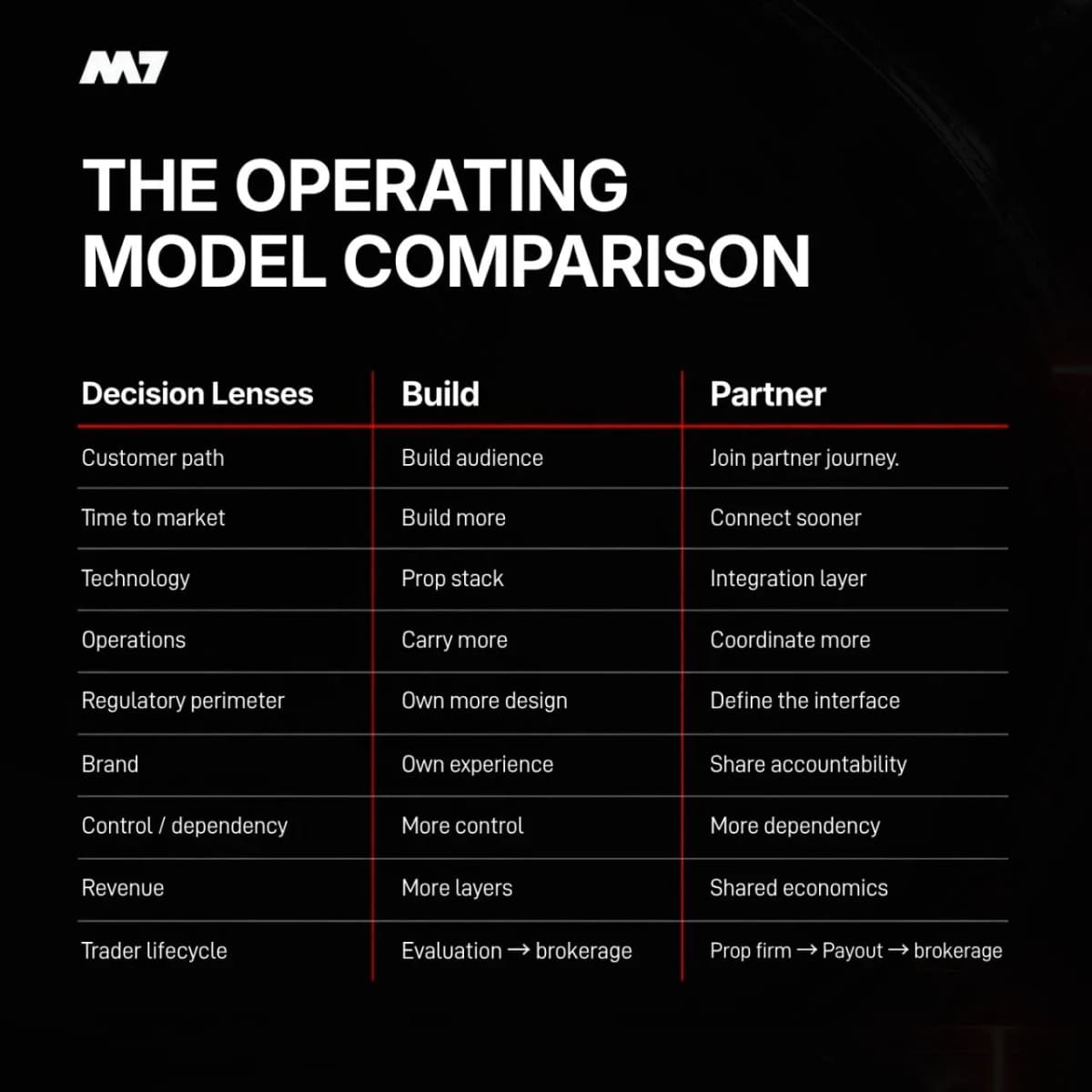

It’s a question worth asking as the line between prop trading and traditional brokerage continues to evolve. For years, brokerages have largely entered the relationship when a trader is ready to put their own capital to work. But what happens if the brokerage moves further upstream?
Building a prop trading arm could give a brokerage the ability to engage traders much earlier, before they are ready to fund a traditional brokerage account. The journey could look something like:
Evaluation → Simulated Trading → Funded Account → Payout → Live Brokerage
Instead of waiting for a trader to arrive at the final stage, the brokerage could build a relationship throughout the entire progression. That creates potential advantages across the business:
• Earlier customer acquisition
• A longer trader lifecycle
• More opportunities to monetize engagement
• First party insight into trader behavior
• A direct path from funded trading to live capital
• Greater control over the technology and customer experience
• The ability to build a brand around the entire trader journey
But building a prop arm also means taking on more of the infrastructure, operations, technology, risk management, customer support and regulatory considerations that come with running that part of the business.
That is where the strategic decision gets interesting. A brokerage could build the prop capability internally, partner with an established prop firm, or create a model that combines both. The right answer may depend less on the product itself and more on what the brokerage wants to own.
Does it want to own the:
- customer acquisition?
- trader relationship?
- technology?
- economics?
- transition into live capital?
Prop trading may be more than another product a brokerage adds to its offering. It could be a way to enter the trader journey earlier, build the relationship sooner, and create a path toward live capital from day one.