just now


Liquidity Finder Ltd is incorporated in England and Wales, company number 10610740, registered address 167-169 Great Portland Street, Fifth Floor, London W1W 5PF, United Kingdom.
Published: just now


Impact of the RBNZ's Recent Rate Cut
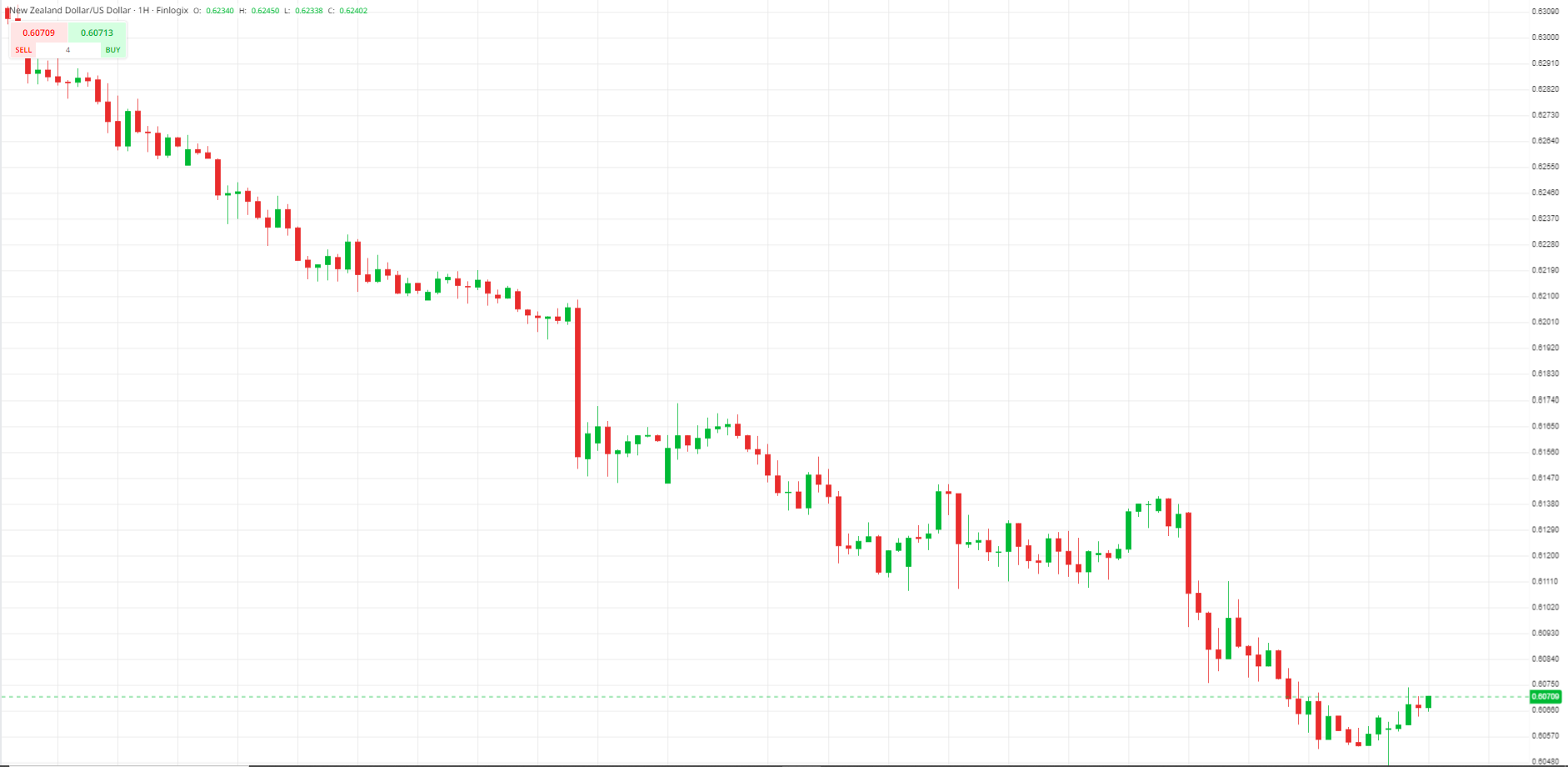
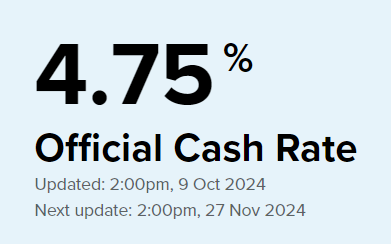
In a surprising move, the RBNZ reduced its official cash rate (OCR) by 50 basis points, bringing it down to 4.75%. This cut was notably larger than the incremental adjustments seen in previous months, signalling a decisive shift in the central bank’s policy stance. Although market participants had anticipated some easing, the magnitude of this rate reduction set the NZD on a path to becoming the weakest currency among the G10 nations at the time of the announcement.
RBNZD Rate Decision

Even though a rate cut had been widely priced into the market, the speed and scale of the RBNZ’s response caught many investors off guard. This abrupt policy change has raised questions about the bank’s outlook on economic growth and inflation, suggesting that the central bank is prioritizing economic stabilization over maintaining a strong currency.
NZDUSD H1
Shifts in RBNZ’s Policy Approach
The latest rate cut marks a sharp departure from the RBNZ’s earlier guidance. At the beginning of 2023, the central bank indicated that rate cuts might not be on the table until mid-2025, reflecting a conservative stance aimed at containing inflation. However, this perspective has shifted dramatically over the past few months. August saw a 25-basis point reduction, accompanied by assurances of a gradual and cautious easing approach.
The latest 50 basis point cut, however, reflects a new sense of urgency within the RBNZ. This more aggressive posture could be seen as a pre-emptive move to cushion the economy against a potential downturn, indicating that the bank is willing to act swiftly if it sees further signs of economic weakness.
OCR RBNZ
Market Expectations for Future Rate Cuts
The RBNZ’s policy shift has also fuelled expectations for further easing. I’m forecasting an additional 50 basis point cut at the central bank’s next meeting scheduled for November 27th. Currently, futures markets are pricing in a cumulative reduction of around 90 basis points over the next two meetings, suggesting that the RBNZ might continue to push rates lower if economic conditions do not improve.
This dovish stance is a significant contrast to the central bank’s earlier position, and it highlights the RBNZ’s increasing concern over the health of the New Zealand economy. As a result, traders are adjusting their positions, accordingly, leading to a weaker NZD outlook in the short-to-medium term.
Economic Rationale Behind the RBNZ’s Decisions
The rationale for these aggressive rate cuts is closely tied to New Zealand’s broader economic environment. Recent data revealed that the nation’s GDP experienced a slight contraction in the second quarter, while inflation trends suggest that price pressures are likely to ease further, approaching the midpoint of the RBNZ’s target range. This indicates that the central bank now has more flexibility to implement accommodative measures without risking an inflationary spike.
The current economic backdrop, marked by sluggish growth and softening inflation, has paved the way for a more pronounced policy response. The RBNZ seems determined to act proactively to support domestic demand and avoid a deeper economic slowdown, even if that means accepting a weaker NZD consequently.
Comparison with Other Central Banks
The RBNZ’s current approach stands in contrast to its earlier role as one of the most hawkish central banks during the period of elevated global inflation. Having been one of the first to implement aggressive rate hikes, the RBNZ is now shifting gears to become a leader in monetary easing. This transition reflects a recognition that New Zealand’s economic recovery is losing momentum and requires additional support.
In the coming months, the NZD is likely to remain under pressure, especially when compared to other G10 currencies, as the RBNZ’s dovish tilt diverges from the relatively tighter monetary policies of other central banks, such as the U.S. Federal Reserve and the European Central Bank.
External Influences on the NZD
Interestingly, the impact of the RBNZ’s rate cut might have been mitigated to some extent by external developments, particularly in China. There is growing speculation that the Chinese government may soon announce new fiscal measures aimed at stimulating its economy, which has been grappling with slower growth. This possibility has generated cautious optimism in Asian markets and provided some support to the NZD, even as domestic factors weigh heavily on the currency.
If these anticipated fiscal policies materialize, they could help stabilize regional market sentiment, potentially preventing a more pronounced decline in the NZD. However, this is a temporary buffer, and the currency’s longer-term outlook will likely be dominated by the RBNZ’s ongoing policy trajectory.
Broader Market Sentiment and Global Factors
Adding to the uncertainty is the upcoming release of the U.S. Federal Reserve’s meeting minutes, which are expected to shed light on the internal discussions that shaped its recent monetary policy decisions. The outcome of these minutes, along with key U.S. inflation data, could influence global risk sentiment and, by extension, impact the NZD’s performance. If the Federal Reserve adopts a more dovish tone, it could reduce the pressure on the NZD; however, a stronger U.S. dollar would exacerbate the NZD’s underperformance.
This content may have been written by a third party. ACY makes no representation or warranty and assumes no liability as to the accuracy or completeness of the information provided, nor any loss arising from any investment based on a recommendation, forecast or other information supplies by any third-party. This content is information only, and does not constitute financial, investment or other advice on which you can rely.
ACY Securities is one of Australia's fastest growing multi-asset online trading providers, offering ultra-low-cost trading, rock-solid execution, technologically superior account management and premium market analysis.

Select the categories and companies you wish to follow directly to your person rss feed.
Create Custom RSS FeedSign up and join over 5,000 professional members who receive personalized news alerts, curated professional connections, and more for free!
Webull (NASDAQ:BULL) has partnered with X as a Cashtag Partner for stocks and crypto trading, linking X's social-market data and conversation tools to Webull's brokerage infrastructure. Executives from both firms say the deal connects market discussion on X directly to investing action for users.
Gold price forecast ahead of NFP: Explore XAUUSD support, resistance and the weekly 50 EMA, with bullish and bearish scenarios and key price targets.
Learn how to convert custom price action strategies into fully automated MetaTrader 5 Expert Advisors (EAs) using a simple two-step AI prompt workflow.
NAS100 price forecast as the Nasdaq 100 consolidates near key levels. Explore the trend, support and resistance, and potential breakout targets.
BTCUSD price forecast for Bitcoin, covering key support and resistance levels, price action, market structure, 50 EMA, and bullish and bearish targets.
B2PRIME has appointed Christina Barbash as Commercial Manager, bringing 13 years of financial markets experience from senior roles at PrimeXM, FINKIT Solutions, Point Nine and FXPRIMUS. Barbash will focus on client relationships and supporting B2PRIME's scaling efforts across the global financial landscape.
Rob Wing has joined Trading Technologies (TT) as Head of FX Business Development, becoming the latest senior hire supporting TT's expansion in institutional foreign exchange.
Fiserv's digital asset platform is now live with financial institution clients, launching Roughrider Coin, Bank of North Dakota's dollar-backed stablecoin. VersaBank issues the coin, Fireblocks provides infrastructure, and transactions run on Solana, enabling more efficient interbank money movement across the state.
Robinhood has unveiled Robinhood Agents, Agent Apps, perpetual futures and earnings contracts at HOOD Summit 2026, alongside plans for 24/7 weekend equities trading, OCO orders and higher intraday margin, as the company looks to bring institutional grade trading tools to active retail traders.
Exinity has appointed FXTM alum Constantina Georgiadou as Associate VP of Public Relations, based in Limassol. It is the second FXTM executive to return to the Group in three months, following Antonia Droussiotou's appointment as VP of Corporate Communications & CSR. Georgiadou brings fifteen years of industry experience, including nine years at Exness.