just now


Liquidity Finder Ltd is incorporated in England and Wales, company number 10610740, registered address 167-169 Great Portland Street, Fifth Floor, London W1W 5PF, United Kingdom.
Published: just now

Markets are bracing for this Tuesday’s release of the U.S. Consumer Price Index (CPI), a key economic indicator that could shape monetary policy for the rest of the year. With inflation appearing subdued in recent months—registering 0.1% in April and 0.2% in May—investors are wondering if the tide is truly turning. However, the next few CPI readings, starting with this week’s, may reveal something different.
Tuesday's report marks the beginning of a new phase in inflation monitoring. This is when the effects of tariffs imposed earlier this year are expected to surface. While the previous data suggested stability, core CPI is likely to accelerate in the upcoming release, and that could trigger a renewed debate over rate cuts and inflation control strategies.
The most anticipated item is the U.S. CPI report, due Tuesday, July 15, at 08:30 AM ET. Core inflation—excluding volatile food and energy prices—is expected to rise, reflecting the lagging effects of import tariffs imposed in the spring.
Economists suggest that the months of July, August, and September will be pivotal. These will likely capture the full impact of rising import costs, especially for goods sourced from tariff-affected regions. As these figures roll in, they will influence not only the Federal Reserve’s rate decisions but also broader market sentiment.
Despite the potential uptick in CPI, there is a growing school of thought that central banks are overestimating the inflation threat. We argue that the structural conditions necessary for persistent inflation simply aren’t in place.
While the Federal Reserve and other central banks are concerned about the inflationary impact of tariffs, history suggests these shocks are typically one-time adjustments. The notion that tariffs will ignite a sustained inflation wave assumes firms will continually pass on these costs and that consumers will keep absorbing them—conditions that are not guaranteed in today’s economy.
Past inflationary spikes—such as the post-Covid surge—were not solely caused by supply shocks but were also fueled by extraordinary fiscal and labor market conditions. Government stimulus checks and a tight labor market enabled both businesses and households to sustain higher prices. Those conditions no longer apply. Today’s labor market has cooled significantly, and government stimulus has dried up.
Central banks are particularly focused on services inflation, which tends to be more persistent. However, factors like declining rent growth and weakening consumer demand are expected to ease this component as the year progresses. In the U.S., falling shelter costs may start to make a noticeable dent in core services prices in the second half of 2025.
There’s also a psychological factor at play. Central banks, still reeling from their failure to predict the last inflation surge, may now be prone to overcorrecting. Policymakers are increasingly viewing inflation through the lens of behavioral economics—fearing that once prices rise, they’ll stay elevated simply because people expect them to. But inflation is not purely a sentiment-driven phenomenon; it also depends on whether businesses and consumers can sustain those price levels.
The markets currently anticipate a potential Fed rate cut in September, a scenario built on the expectation that inflation will remain subdued. But if Tuesday’s CPI comes in hotter than expected, especially in core components, those expectations may be quickly revised.
A significant surprise could push the U.S. 10-year Treasury yield toward 4.75%. Simultaneously, expectations for a September cut could evaporate, temporarily strengthening the U.S. dollar and pressuring equity markets. This could bring the EUR/USD exchange rate down toward 1.15, though any such move may be short-lived.
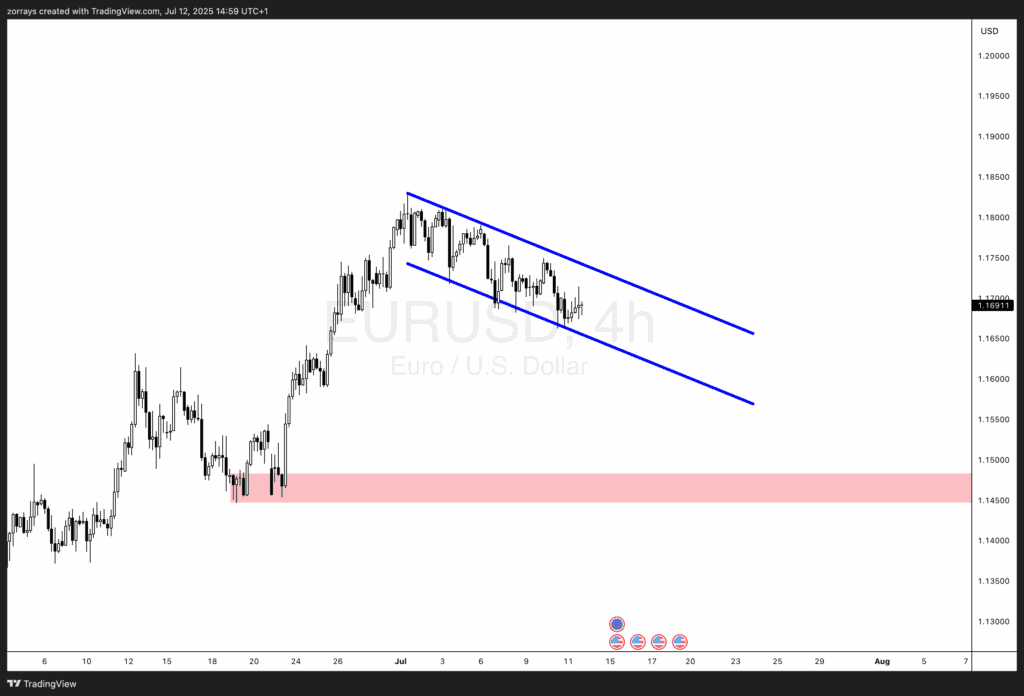
If Tuesday’s CPI confirms a rise in core inflation, the coming months will be under even tighter scrutiny. Here's what to watch:
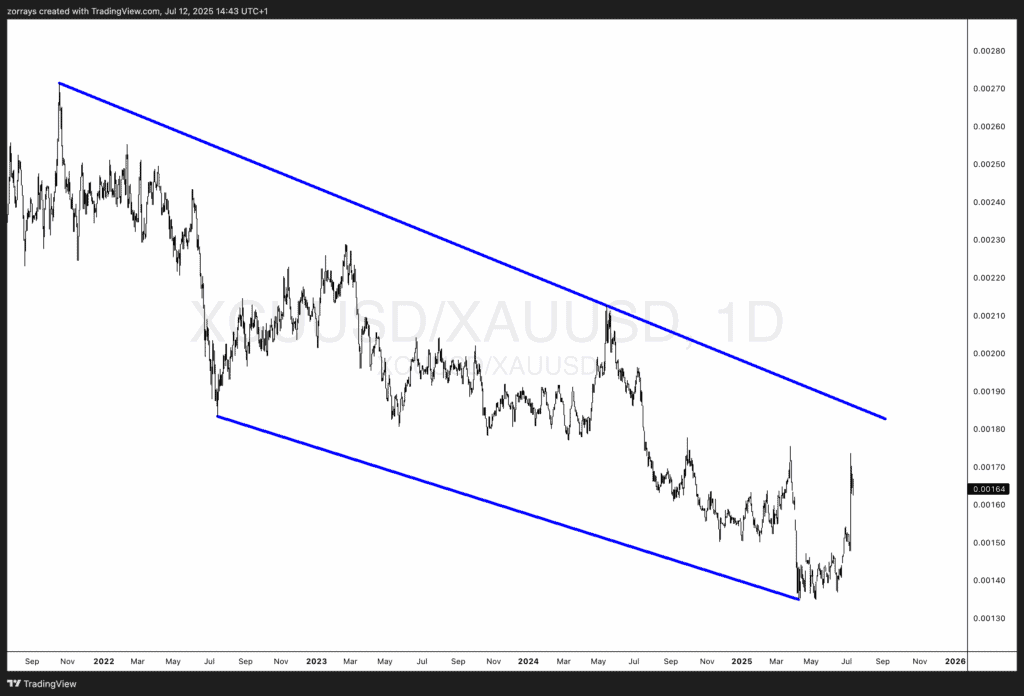
The Copper/Gold ratio—a long-trusted gauge of macroeconomic sentiment—is approaching a major downward trendline that's held firm since mid-2022. After a prolonged period of decline, this recent bounce marks the ratio’s most aggressive push higher in nearly two years. While it hasn't broken out yet, it's now pressing against a structurally important resistance level that could reshape how we think about inflation risk going forward.
So, what does this mean?
At its core, this ratio pits Dr. Copper, the industrial metal closely tied to real economic activity, against Gold, the go-to hedge for uncertainty and disinflation. When Copper outperforms Gold—as it’s attempting to now—it often reflects rising growth expectations, a pickup in risk appetite, or even the early stages of a reflationary backdrop.
This move toward the trendline is meaningful because it comes right as CPI data is due, and just as markets are wrestling with whether recent inflation will prove sticky or fade out. If this ratio breaks through the trendline, it may signal a shift in market psyche—from pricing in soft landings and Fed cuts to anticipating firmer growth or higher inflation pressure later this year.
In short, this chart serves as a real-time referendum on the inflation debate. If the ratio breaks out, central banks may not be wrong to stay cautious. If it gets rejected here, that would validate the view that inflation fears are overdone and the Fed still has room to ease without overheating the economy.
Yes, Tuesday’s CPI may show an uptick in core prices, validating central banks' short-term concerns. But the broader economic landscape doesn’t support the idea of a long-lasting inflation resurgence. The absence of robust fiscal stimulus, a cooling labor market, and softening consumer demand all suggest any inflation bump will be short-lived.
Rather than overreact, policymakers may need to stay patient. Services inflation is still elevated but showing signs of easing. Without the structural ingredients for runaway inflation, the Fed and other central banks should feel more confident in resuming rate cuts once the current noise fades.
Alchemy Markets is a multi-asset brokerage providing retail traders with the same elite trading conditions, tools, and transparency typically reserved for institutions.

Select the categories and companies you wish to follow directly to your person rss feed.
Create Custom RSS FeedSign up and join over 5,000 professional members who receive personalized news alerts, curated professional connections, and more for free!
CMC Markets, a FTSE 250 multi-asset financial services firm, has launched a read-only ChatGPT integration for UK CFD clients, giving access to balances, positions, orders, pricing and historical market data through conversational prompts, as part of its ongoing investment in AI and cloud technology.
DXtrade, the multi-asset trading platform from Devexperts, has integrated Notofin's trading performance intelligence solution, adding behaviour-first analysis, structured journaling and pattern recognition tools. Brokers licensing DXtrade can now offer Notofin's services to clients as part of the platform's open integration framework.
KYC is essential for building trust, preventing fraud, and meeting regulatory requirements. A centralized system like ATARIA CRM helps compliance teams manage KYC requests, track pending documents, monitor approvals and rejections, and keep the entire verification process organized. By quickly identifying pending issues, businesses can reduce delays and provide customers with a smoother path from “Pending” to “Approved.”
Build better trading habits with a trading journal. Learn how a trading memory bank helps you review mistakes, manage emotions, and develop confidence.
GBP/USD has fallen to 3-month lows near 1.3200 due to strong US economic data and weakening UK consumer demand, though technical indicators like an RSI of 25.18 suggest the pair is now in oversold territory near key support at 1.3150.
In Remembrance of H.H. Sheikh Ahmed bin Rashid Al Maktoum (1950–2026)
Blueberry Financial Consultation has secured a Category 5 licence from the UAE Capital Markets Authority and opened a new office in Dubai, forming a regional hub covering the UAE, Saudi Arabia and Egypt. Head of Category Giscard Abi El Hessen said the move supports the firm's long-term MENA growth strategy.
ATARIA CRM’s **Payment Gateways** feature centralizes multiple payment methods—**PSPs, bank payments, and crypto**—into one workflow. This helps brokerages manage payment activities more efficiently, reduce operational complexity, and provide clients with flexible funding options from a single platform.
Bring native groups from different connected trading servers together under one virtual structure and manage future routing changes from one place.