just now

Liquidity Finder Ltd is incorporated in England and Wales, company number 10610740, registered address 167-169 Great Portland Street, Fifth Floor, London W1W 5PF, United Kingdom.
Published: just now

As another trading week begins, the S&P 500 and Nasdaq are back at all-time highs, with recent candles still closing near their highs rather than fading into the close.
The bullish pressure is hard to ignore, but the mood is not exactly clean euphoria either. A lot of traders are bullish because of AI and mega-cap tech earnings, while another group is already actively shorting what they think is the top.
The market has already digested a lot of war noise, but it now has to deal with another round of inflation data and AI-linked earnings.
What’s in it for traders this week:
Constellation Energy reports Q1 results on May 11, giving traders another read on the AI power-demand story.
Since March 30th, 2026, the S&P 500 has rallied for 29 trading days.
This rally is clearly led by the tech sector, which is currently boosted by the AI sector. While it’s possible that there is still room to go, it’s undeniable that the current rally is extremely tech-heavy.
This means S&P’s rally is heavily supported by AI earnings, and the market appears to have digested war risks; especially since the ceasefire proposal starting from April 8th (despite no real conclusive resolution).
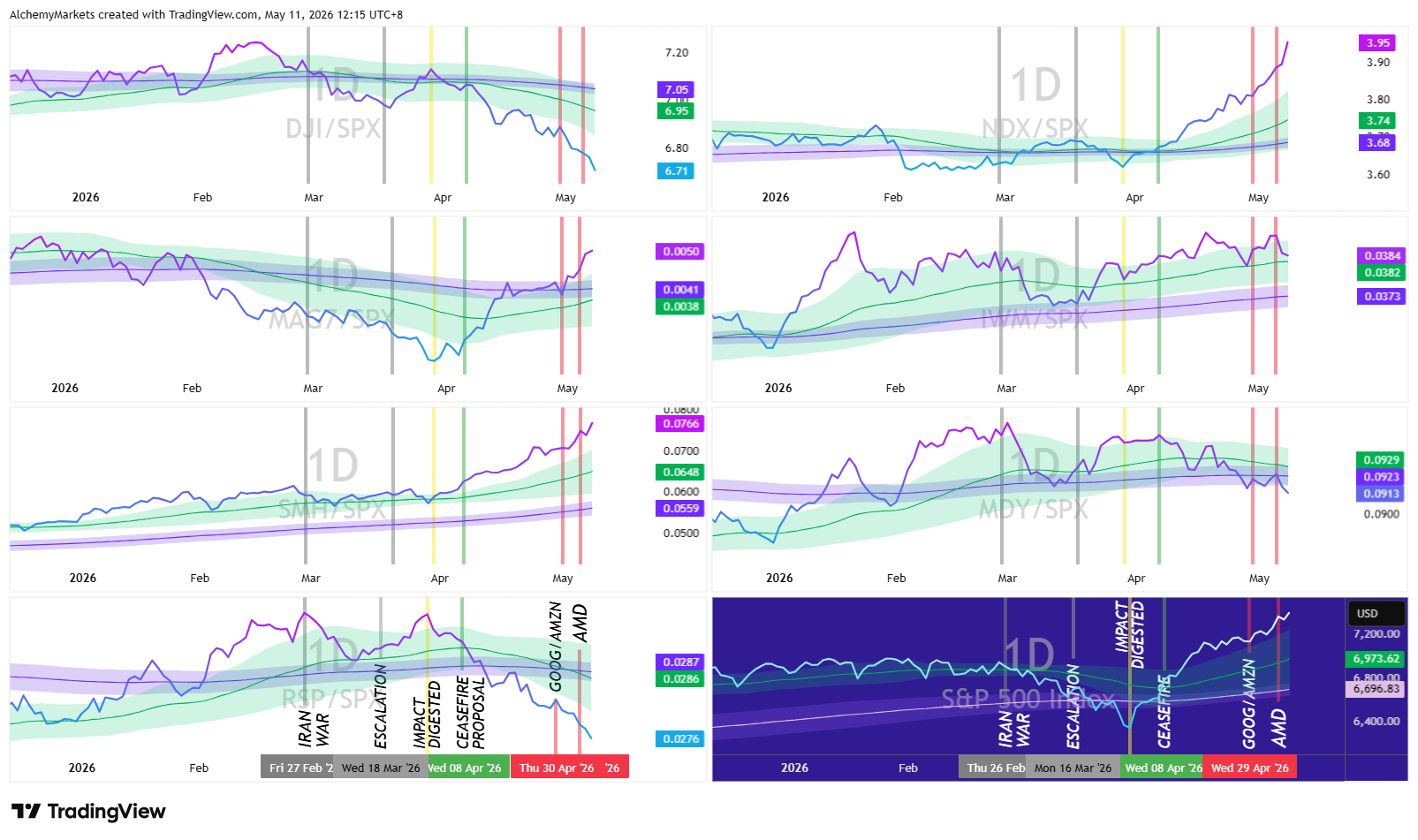
This is a US index comparison chart against the S&P 500. An overview like this can help us contextualise what the markets currently care about. And newsflash: it’s AI growth and earnings.
The Nasdaq and MAG7 are currently the strongest drivers of the S&P 500, with AI demand (displayed via the SMH index) clearly leading the charge. By contrast, the RSP, Small Caps, Mid Caps, and Dow Jones are the biggest losers.
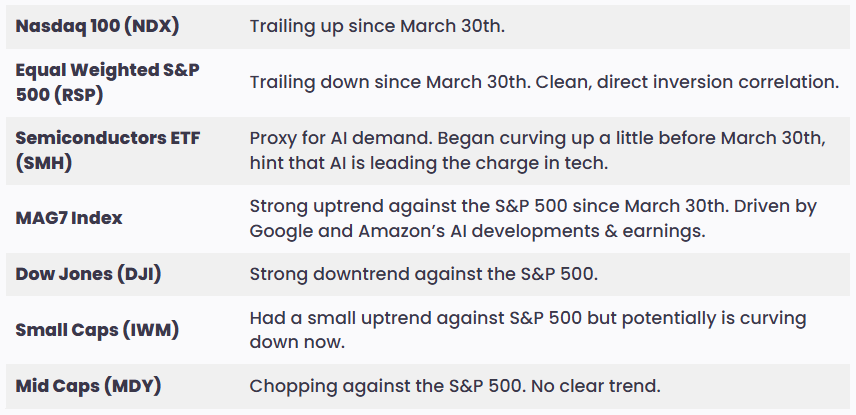
For now, the action plan is clear — remain cautiously bullish until the trend breaks.
Catalysts this week would be constellation Q1 earnings to maintain a bullish outlook on AI earnings, followed by CPI and PPI readings to gauge how sticky inflation is.
Despite a messy news cycle surrounding the US-Iran war, it is clear that markets have not reacted to war risks all that much.
At a glance, the price chart tells a simple story: war risks have likely been digested, and markets seem increasingly willing to lean on ceasefire optimism, strong economic resilience, and continued AI-led momentum instead.
Since the US-Iran War began in February, the news cycle surrounding peace talks has flip-flopped constantly.
A breakdown looks like this:
What matters here is not whether every war headline was bullish or bearish. It clearly was not. But the chart still tells us that markets have mostly digested the risk.
Equities are not ignoring the war because the risk is irrelevant. They are fading it because the current damage has not yet beaten the AI earnings story. But if oil breaks higher, yields reprice, or inflation expectations move again, the same market that looked calm can suddenly rush to price the risk all at once.
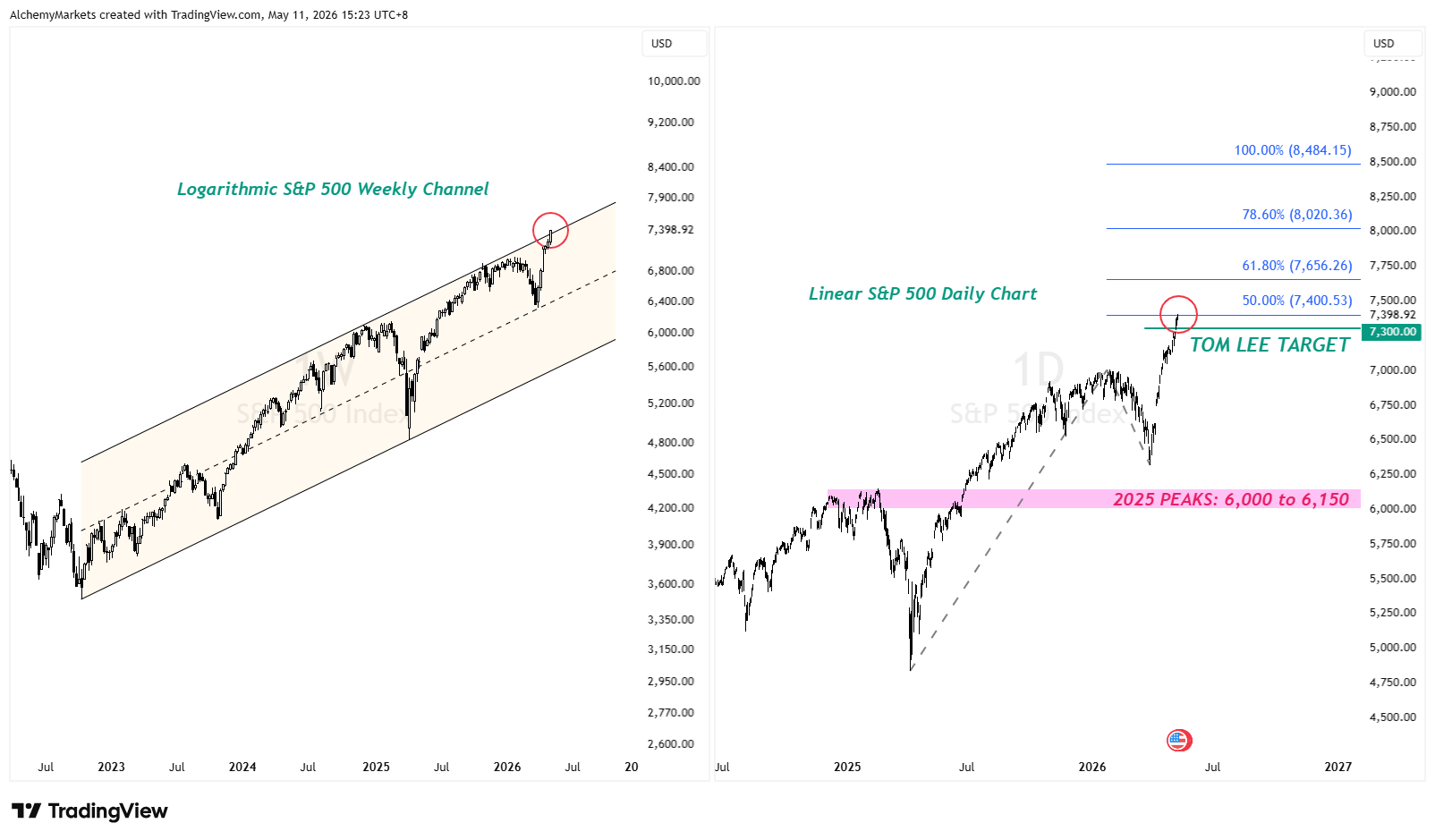
The S&P 500 is now pressing into the $7,400 area, yet another all-time high. This is one of the fastest rallies in S&P 500’s history, marked by a combination of war fears, and positive AI earnings.
On the weekly logarithmic chart, the S&P 500 is slightly peeking out of a potential rising channel. The multiple reactions at the midline adds a degree of validity to the channel; but if the markets do not feel like respecting it, the S&P 500 can absolutely run higher.
However, if the markets are still respecting the channel, it does mean the index is overstretched.
On the linear chart, we have another confluence with another resistance — the 50% Fib extension level smack dab at $7,400.
If momentum continues, the next extension levels sit near $7,656, $8,020, and $8,484.
These are not guaranteed targets. They are reference zones if the trend keeps extending if AI keeps delivering.
Constellation Energy is not big enough to move the S&P 500 by itself, but it matters because of what it represents. The company is one of the largest weights inside the utilities sector, with roughly 6.9% weighting in XLU (utilities ETF), and has become one of the cleaner non-chip proxies for AI data-centre power demand.
So the earnings reaction is less about whether CEG alone can carry the index, and more about whether traders still want to pay a premium for the power side of the AI infrastructure trade.
Yahoo Finance lists Constellation’s forward P/E at around 26.6x, which supports the idea that the stock is no longer being priced like a plain utility. Rather, the stock is being priced as a proxy for AI power demand.
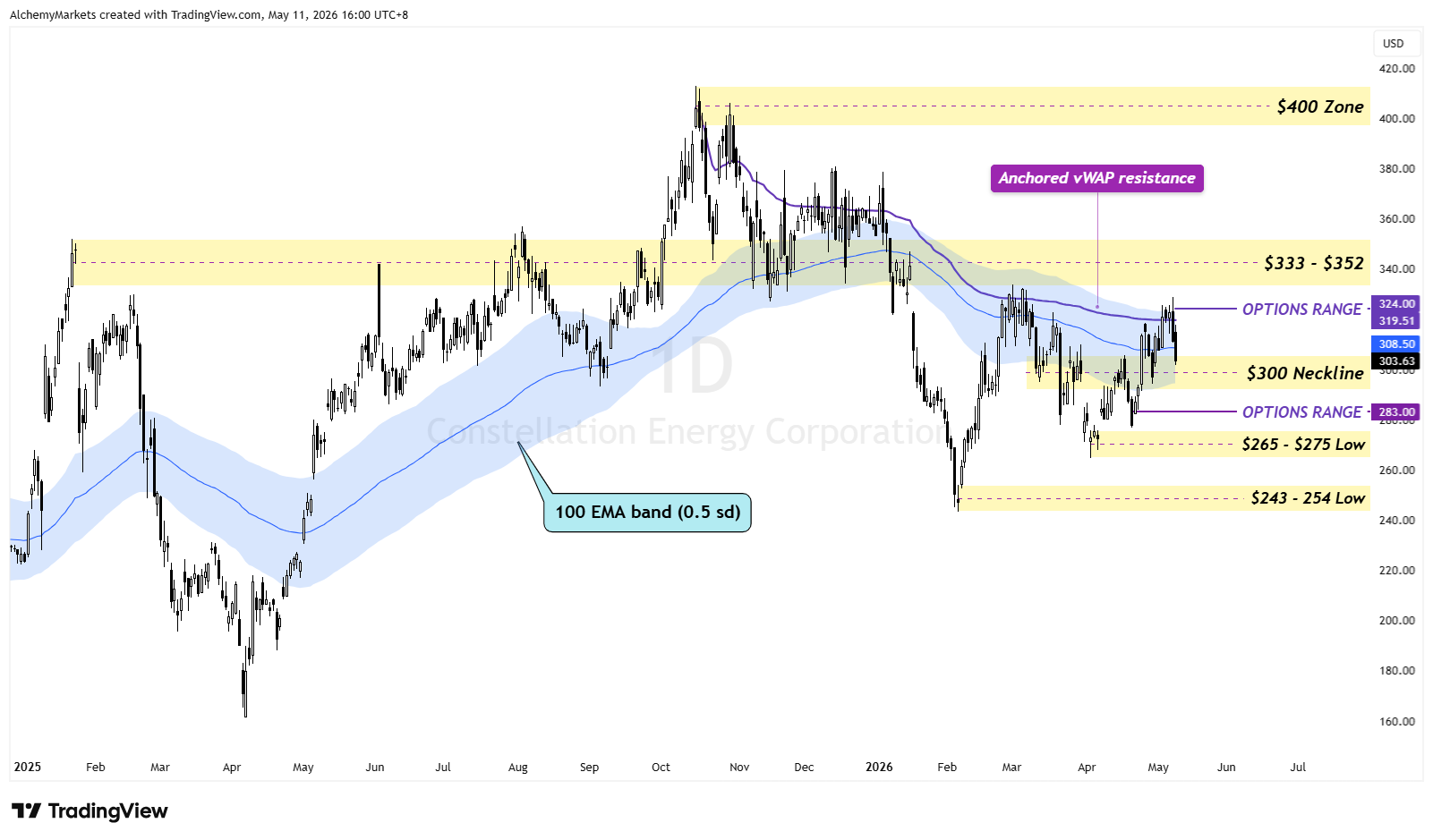
The stock is holding above its rising short-term trendline, while the $300 level — a neckline of a double bottom pattern that has already played out — remains the level bulls do not want to lose.
Above price, the $320 area is the first resistance to clear (marked by the anchored vWAP), followed by the wider $333-$352 zone, and then the $400 zone if earnings trigger a stronger upside reaction.
The options-implied move is 7%, which means an expected post earnings range of $283 to $324, based on last Friday’s close.
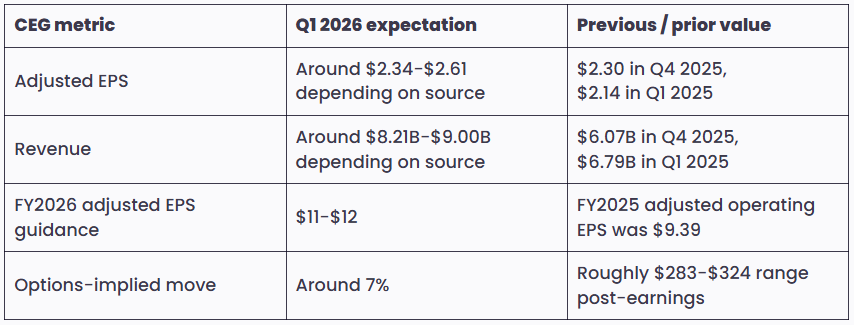
Constellation’s Q1 earnings call is scheduled for May 11 at 10:00 AM ET, according to the company’s investor relations page.
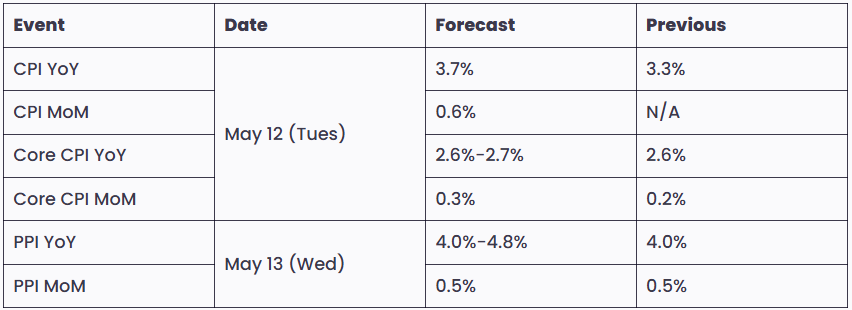
CPI is due on Tuesday, while PPI follows on Wednesday. Both releases matter more than usual because the market is entering the data with equities at highs, semiconductors stretched, and oil risk still hanging around in the background.
The BLS confirms that April CPI is scheduled for release on May 12 at 8:30 AM ET.
Meanwhile, the April PPI is scheduled for May 13 at 8:30 AM ET.
For now, the trend still leans bullish. The S&P 500 and Nasdaq are at highs, AI-linked tech is still leading, and the strongest flows remain concentrated in Mag 7, semiconductors, and the broader AI infrastructure trade.
But the rally is top-heavy, and that means the upside now depends on a narrower set of confirmations:
Until those break, the trend still leans bullish. But if semiconductors roll over, inflation comes in hot, or oil starts dragging yields higher again, this rally can go from confident to fragile very quickly.
DISCLAIMER: For educational purposes only. Trading comes with substantial risk, leading to possible loss of your capital. Traders are advised to do their own due diligence before investing.
You may also be interested in:
Alchemy Markets is a multi-asset brokerage providing retail traders with the same elite trading conditions, tools, and transparency typically reserved for institutions.

Select the categories and companies you wish to follow directly to your person rss feed.
Create Custom RSS Feed
just now
Sign up and join over 5,000 professional members who receive personalized news alerts, curated professional connections, and more for free!
Multi-asset trading broker AvaTrade has agreed to acquire the majority of FXCM Group’s business and brand, in a transaction that would bring a longstanding retail FX franchise into the AvaTrade Group.
LSEG and CMC Markets have signed a multi-year strategic data agreement expanding CMC's access to LSEG's real-time and delayed pricing, reference and corporate actions data, news and analytics, plus AI-ready content, to support new products, entry into new markets and the growth of CMC's institutional and B2B partnerships.
The Tel Aviv Stock Exchange is considering a bid for the Cyprus Stock Exchange, with Israeli media citing its EU licence, trading platform and clearing house. Euronext’s Athens exchange and India’s National Stock Exchange are also seen as contenders, and Cyprus aims to sign a sale agreement by the end of this year.
CME Group will launch baseball futures on 12 October, pending regulatory review, tracking CME FutureSports Performance Indexes built on Official League Data. Standard and micro contracts will start with the 2026 Postseason and the four clubs in the League Championship Series, trading around the clock.
ESMA has published an opinion stating that MiCA-authorised crypto-asset service providers should cease services tied to non-MiCA-compliant stablecoins for EU clients across MiCA crypto-asset services. National authorities should require remediation of existing exposures within three months, by early January 2027.
Nasdaq Ventures has made a strategic investment in Amsterdam-based derivatives and crypto exchange One Trading, with both firms to explore 24/7 trading of equity futures. The undisclosed investment follows Nasdaq's US$100 million investment in Payward, the parent of Kraken, and CME Group's move to 24/7 trading.
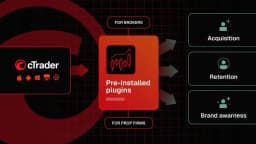
cTrader has opened multi-platform plugins to brokers and prop firms, which can pre-install their own tools for clients or list them in cTrader Store. The plugins run across Mobile, Web, Windows and Mac, and can be built and launched independently of core-platform releases, including trading journals and calculators.
Institutional brokerage and financial infrastructure provider Clear Street has joined TradingView’s broker network, allowing its clients to trade US stocks, exchange-traded funds and options directly through the charting and analysis platform.
Learn how to improve trading psychology, manage fear and greed, avoid revenge trading, and follow your trading strategy with discipline and a trading journal.
GTC Prime has announced a strategic partnership with Centroid Solutions to manage and distribute its liquidity through CS 360 Bridge, Centroid's multi-asset connectivity and execution engine, giving brokers and institutional clients access to tailor-made pricing, low-latency execution and real-time risk management.