just now


Liquidity Finder Ltd is incorporated in England and Wales, company number 10610740, registered address 167-169 Great Portland Street, Fifth Floor, London W1W 5PF, United Kingdom.
Published: just now
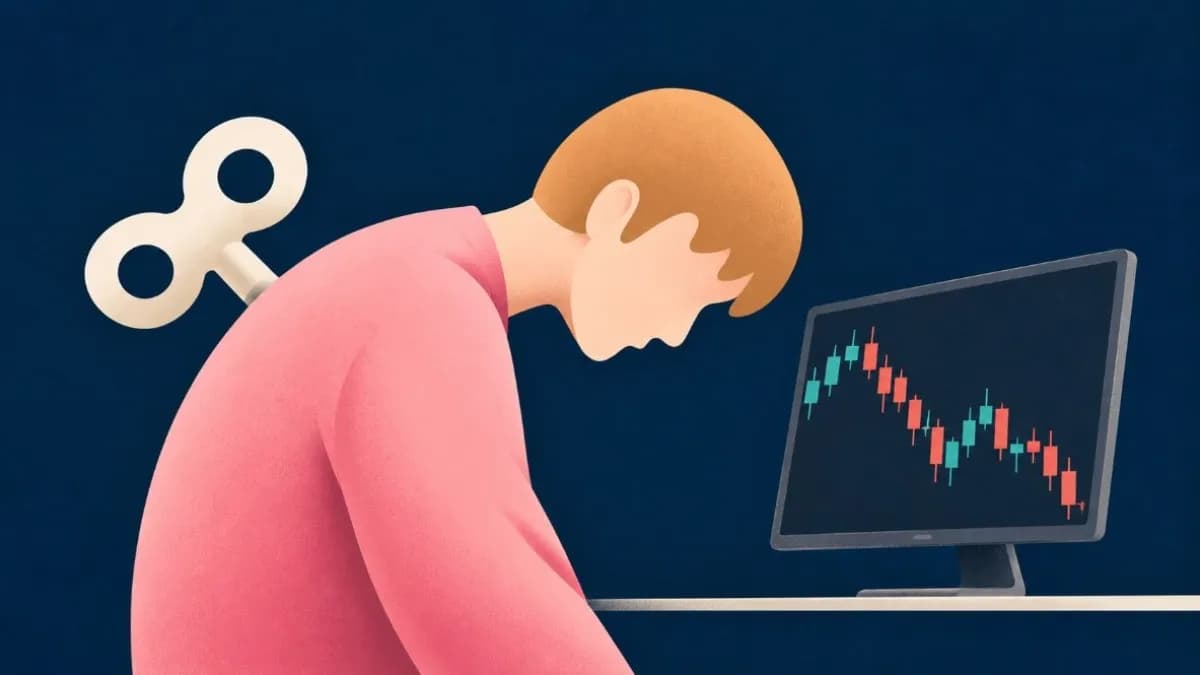

One impulsive trade. Then another. Suddenly, your trading plan is forgotten. Decision fatigue in trading can make it harder to stay disciplined, increasing the temptation to overtrade and chase losses. But how do you spot it before your next costly mistake? Learn the warning signs, and five ways to regain focus.
Understand how decision fatigue in trading affects your discipline and learn practical ways to reduce impulsive decisions, manage risk, and follow your trading plan consistently.

Decision fatigue in trading occurs when mental exhaustion makes it harder to make clear, disciplined decisions. After spending hours analyzing charts, evaluating setups, and managing positions, traders may become more vulnerable to emotional trading, overtrading, and poor risk management.
Many traders assume their losses come from a failing strategy. However, the problem may be their inability to execute that strategy consistently due to mental exhaustion.
For example, a trader may begin the day with a clear plan, marking support and resistance levels and waiting for confirmation. After hours of watching the market, they start forcing trades that do not meet their criteria simply because they want to find an opportunity.
Recognizing decision fatigue is essential for protecting trading capital and maintaining consistent performance.

Trading requires continuous decision-making. Traders must analyze market structure, identify entry opportunities, evaluate risk-to-reward ratios, and determine when to enter or exit positions.
Repeatedly making these decisions can become mentally exhausting, especially when combined with market uncertainty and emotional pressure.
Common causes include:
The more mental energy traders spend on unnecessary decisions, the harder it may become to maintain discipline.
A structured trading plan helps reduce this pressure by defining what to look for and when to act.

Recognizing the signs of decision fatigue can help traders stop making mistakes before they affect their accounts.
Some common warning signs include:
If you notice several of these behaviors, consider stepping away from the charts. Taking a break or ending your session may be better than forcing another trade.

Emotional trading and structured trading are two different approaches to decision-making.
Emotional trading is driven by feelings and immediate reactions. Traders may enter positions because they fear missing an opportunity or exit too early because they are afraid of losing money.
Structured trading follows predefined rules based on a tested strategy. Traders know what conditions must be met before entering a position and how much they are willing to risk.
For example, if a trading setup meets all the criteria of a tested strategy, the trader evaluates the opportunity based on the plan rather than fear or excitement. If the setup does not meet the criteria, they wait.
A structured approach does not guarantee profits or eliminate emotions. However, it helps traders remain consistent and avoid making unnecessary decisions based on short-term market movements.

Decision fatigue can contribute to overtrading by weakening a trader's ability to remain selective.
After spending hours watching the market, traders may begin looking for opportunities that are not part of their strategy. When these trades result in losses, frustration can lead to additional trades in an attempt to recover the money.
This creates a cycle of exhaustion, poor decisions, and unnecessary risk.
To avoid this, establish specific trading hours and focus only on setups that meet your predefined criteria. Remember that not every market movement presents a valid opportunity.
More trades do not automatically mean more profits. Waiting for high-quality setups is often better than forcing trades out of impatience.

Risk management is essential for protecting trading capital, but mental exhaustion can make traders more likely to abandon their rules.
For example, a trader who normally risks 1% per trade may increase their risk after a loss to recover their money faster. If the next trade also loses, the account experiences a larger drawdown.
Other common mistakes include moving stop-losses, taking trades with poor risk-to-reward ratios, and ignoring daily loss limits.
To protect your account:
Your risk management rules should remain consistent regardless of your emotions or recent trading results.

Trading psychology plays an important role in long-term performance. Understanding technical analysis is not enough if you cannot consistently follow your strategy.
Decision fatigue can affect concentration, patience, and emotional control. A trader may understand exactly what a valid setup looks like but still enter prematurely because they are tired of waiting.
The solution is to build a routine that supports disciplined decision-making. Accept that losses are part of trading, evaluate your decisions objectively, and avoid judging your entire strategy based on one trade.
The goal is not to eliminate emotions but to prevent them from controlling your actions.
Define your entry criteria, exit rules, risk limits, and market conditions before trading. A clear plan reduces unnecessary decisions and helps you recognize when a setup is not worth taking.
Avoid spending the entire day monitoring charts. Focus on the sessions that suit your strategy and use price alerts when appropriate.
Set a maximum number of trades or a predefined loss limit based on your strategy. These boundaries help prevent overtrading and emotional decisions.
If you notice frustration, declining concentration, or an urge to recover losses, step away from the market. If your focus does not return, consider ending the session.
Record your trades, emotions, and mistakes. Reviewing your journal can help identify patterns, such as taking poor setups after extended screen time or increasing risk after consecutive losses.
Use these observations to improve your trading routine instead of immediately assuming your strategy has failed.

Decision fatigue in trading can negatively affect discipline, trading psychology, and risk management. When traders become mentally exhausted, they may start forcing setups, overtrading, or abandoning the strategies they have worked hard to develop.
The solution is to keep your process simple. Follow a structured trading plan, establish clear risk limits, and recognize when it is time to step away from the charts.
You do not need to trade every market movement to become a better trader. Focus on executing your strategy consistently and protecting your capital.
Wait. Confirm. Execute and forget.
_____________________________________________________________________________________
Move from learning price action to applying it in the real market.
Trade:
Access trading platforms and tools including ACY, MT4, MT5, and Copy Trading.
Create an Account and Start Live Trading
_____________________________________________________________________________________
Build your trading foundation with these step-by-step guides:
Learn to read price action and assess trading setups at key levels:
Learn to recognize bullish, bearish and sideways markets:
Learn to mark key levels and interpret price reactions:
Understand recurring price patterns, retests and false breakouts:
Learn to combine candlestick signals with price action analysis:
Learn to recognize patterns that may signal a change in market direction:
Explore how to combine the exponential moving average with price action:
Bring your technical analysis skills together through a gold swing trading guide:
Learn how risk management and position sizing fit into your trading plan:
Learn how to plan take-profit targets using market structure and risk-reward:
Develop discipline, emotional awareness and a more consistent trading process:
Explore the psychological habits behind a disciplined trading approach:
_____________________________________________________________________________________
Not sure where to begin? Here’s a simple roadmap to guide you:
By building step by step; from basics → real trading → mastering the craft, you’ll gain clarity, confidence, and steady progress without ever feeling overwhelmed.

_____________________________________________________________________________________
Follow Ruffy Grant B. Capacio for Gold analysis, Forex trading ideas, price action education, trading psychology, and market insights: LinkedIn
ACY Securities: Join the Discord Server
Disclaimer:
Trading Forex, Gold, CFDs, cryptocurrencies, commodities, indices, and other leveraged financial instruments involves a high degree of risk and may not be suitable for all investors or traders. Market conditions can change rapidly, and leveraged trading can result in losses that occur quickly.
Before trading, carefully consider your investment objectives, level of experience, and risk tolerance. Only trade with capital you can afford to lose and seek independent financial or professional advice where appropriate.
All market analysis, price forecasts, technical commentary, trading scenarios, educational materials, and opinions presented in this content are provided solely for general informational and educational purposes. They do not constitute financial advice, investment advice, a recommendation, solicitation, or an offer to buy or sell any financial instrument.
Past performance and historical price movements are not reliable indicators of future results. Any price levels, targets, scenarios, or market outlooks discussed should be viewed as analysis rather than guarantees of future market performance. October 29, 2026
ACY Securities is one of Australia's fastest growing multi-asset online trading providers, offering ultra-low-cost trading, rock-solid execution, technologically superior account management and premium market analysis.

Select the categories and companies you wish to follow directly to your person rss feed.
Create Custom RSS FeedSign up and join over 5,000 professional members who receive personalized news alerts, curated professional connections, and more for free!
Learn what a target price is, how to set a simple profit target, and how to compare potential profit with risk before entering a trade.
Learn how decision fatigue in trading affects trading psychology, risk management, and discipline, plus practical ways to prevent overtrading and emotional mistakes.
GBPUSD faces weekly resistance at 1.34080–1.34590. A confirmed break below daily support could bring 1.32181 into focus. See both scenarios.
NAS 100 stays bearish as traders watch resistance at 26,715–27,185. Explore the confirmation signals for a potential decline toward 26,000.
Barclays has opened a new office in Riyadh's King Abdullah Financial District after receiving its CMA operational licence, and appointed former State Street Saudi Arabia CEO Majed Al Hassoun as Chief Executive Officer and Head of Investment Banking, Barclays Capital Saudi, alongside several senior hires in the Kingdom.
Crédit Agricole has proposed merging Banco BPM with Crédit Agricole Italia to create Italy's third-largest bank, offering Banco BPM shareholders a 20% premium and a €1bn extraordinary dividend, with Crédit Agricole's stake rising to about 45% and completion targeted for the second half of 2027, subject to approvals.
Kudo has appointed Felice Digennaro as Head of Prop at Kudo Funded. He joins from FunderPro, where he was Head of Affiliates, and will lead the prop business as Kudo pursues diversification and growth plans. Finley Wilkinson, Chief Operating Officer at Kudo, and Digennaro commented on the appointment.
Explore gold trading sessions, the London–New York overlap and time zone considerations to understand when to watch XAU/USD.
Learn what a stop loss is, how it works, and how to set one. Explore examples, stop-limit comparisons, trailing stops, benefits, and risks.
AUDCAD reached the 0.97900 bearish target after rejecting 0.98500–0.98750 resistance. Review the weekly structure, daily 50 EMA and retest setup.