just now

Liquidity Finder Ltd is incorporated in England and Wales, company number 10610740, registered address 167-169 Great Portland Street, Fifth Floor, London W1W 5PF, United Kingdom.
Published: just now

Every trader faces a recurring battle: discipline versus impulse. You might know your strategy, mark your levels, and even set alerts, but when the market moves fast, something inside pushes you to act before the plan says so. This is the tug-of-war between preparation and emotion, and it determines whether you’ll grow or blow your account.
Discipline isn’t natural - it’s trained. Just as athletes don’t rely on raw instinct but build routines that hardwire performance, traders must build systems that protect them when emotions run high.
If you want to sharpen this mindset further, start with guides like 3 Steps to Build a Trading Routine for Consistency and Discipline.

Impulse trading is often born from fear of missing out (FOMO) or the pain of watching a losing trade. It’s the urge to jump into a candle mid-surge or to double down after a stop-out. On the surface, it feels logical - “if I just catch this, I’ll make it back.” But in reality, it’s emotion disguised as strategy.
Like lifting weights without proper form, impulses can cause injury - not to your body, but to your account and confidence. That’s why resources such as Top 10 Ways to Prevent Emotional Trading are so crucial for every trader.
If impulse is natural, then discipline must be trained like a muscle. It doesn’t grow in theory; it strengthens through consistent reps.
This is why many pros argue that risk management is the only edge that lasts.
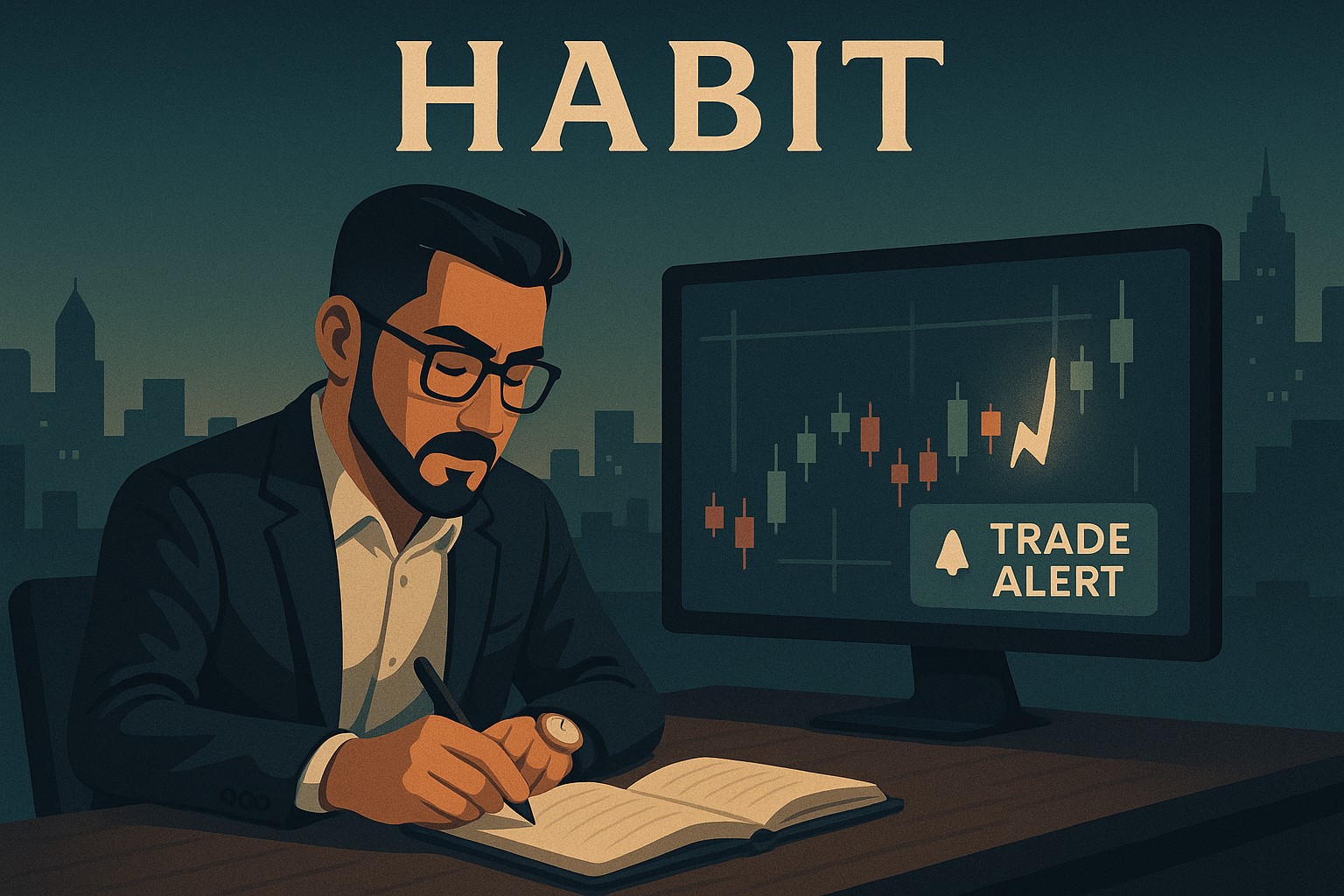
At first, discipline feels heavy. You’ll need constant reminders, daily journaling, and a strict checklist to keep yourself in line. But like any muscle, the more you train it, the less effort it takes to flex it. Over time, discipline shifts from being a conscious effort to becoming second nature.
The real goal isn’t to stay forever in “discipline mode,” but to turn discipline into habit. When you reach this stage, trading by your rules isn’t something you think about - it’s simply who you are. You don’t feel restricted by risk caps; you feel protected by them. You don’t force yourself to journal; it’s just part of your rhythm.
When discipline becomes autopilot, you unlock mental freedom. Instead of spending energy fighting impulses, you’re free to focus on reading the market with clarity. For more, read Top 10 Habits Profitable Traders Follow Daily.
To build that autopilot, you need a process that transforms rules into habits. Here’s a proven framework:
Weekly
By Day 14, discipline is already lighter. The system carries the weight, not your willpower. For deeper structure, explore The Ultimate Guide to Risk Management in Trading.
Imagine driving a sports car with no brakes. The engine (your impulse) is powerful, but without brakes (discipline), speed becomes dangerous. Control is not about slowing down forever - it’s about knowing when to stop, when to accelerate, and when to wait.
Trading is the same: the market rewards those who can harness power with restraint. This mirrors lessons from Stop Hunting 101 - where traps are set for those without brakes.

Discipline vs impulse isn’t a one-time choice - it’s a daily training ground. The more you reinforce discipline with rules, routines, and risk caps, the less room there is for emotional trading.
This week, challenge yourself:
Do this long enough, and discipline itself won’t feel like the main struggle anymore - it becomes your autopilot identity. And that’s the mark of a consistent trader.
It’s time to go from theory to execution - risk-free.
Create an Account. Start Your Free Demo!
Looking for step-by-step approaches you can plug straight into the charts? Start here:
Sharpen your edge with proven tools and frameworks:
News moves markets fast. Learn how to keep pace with SMC-based playbooks:
From NASDAQ opens to DAX trends, here’s how to approach indices like a pro:
Gold remains one of the most traded assets — here’s how to approach it with confidence:
Candlesticks are the building blocks of price action. Master the most powerful ones:
Ready to go intraday? Here’s how to build consistency step by step:
Markets swing between calm and chaos. Learn to read risk-on vs risk-off like a pro:
Step inside the playbook of institutional traders with SMC concepts explained:
If you’ve ever been stopped out right before the market reverses — this is why:
Mindset is the deciding factor between growth and blowups. Explore these essentials:
The real edge in trading isn’t strategy — it’s how you protect your capital:
If you’re not sure where to start, follow this roadmap:
This way, you’ll grow from foundation → application → mastery, instead of jumping around randomly.
Follow me for more daily market insights!
Jasper Osita - LinkedIn - FXStreet - YouTube
This content may have been written by a third party. ACY makes no representation or warranty and assumes no liability as to the accuracy or completeness of the information provided, nor any loss arising from any investment based on a recommendation, forecast or other information supplies by any third-party. This content is information only, and does not constitute financial, investment or other advice on which you can rely.
ACY Securities is one of Australia's fastest growing multi-asset online trading providers, offering ultra-low-cost trading, rock-solid execution, technologically superior account management and premium market analysis.

Select the categories and companies you wish to follow directly to your person rss feed.
Create Custom RSS FeedSign up and join over 5,000 professional members who receive personalized news alerts, curated professional connections, and more for free!
Bybit has launched Perp Options, described as the first options contracts built on TradFi perpetuals, giving traders round-the-clock access to US equity options. SpaceX and Nvidia are the first underlying assets, with USDT settlement and integration into Bybit's Unified Trading Account.
Use this trading preparation checklist to plan your session, define entry rules, manage risk, and build a disciplined trading routine in seven steps.
Your Bourse expands its crypto liquidity ecosystem with Caladan, giving brokers access to broader market coverage, institutional execution capacity and streamlined settlement.
Scope Markets, the retail brokerage part of Rostro Group, has appointed Ibrahim Hossny as Head of Research and Marketing for the Middle East and North Africa.
Hantec Prime, the institutional division of Hantec Markets, has reported trading volume up more than 300% year-to-date, alongside the addition of 42 new institutional clients since December, capping one of its strongest years of growth to date.
Learn how to refine XAUUSD support and resistance on the daily chart using candle bodies, market structure and weekly gold levels for swing trading. A slug alone cannot guarantee a top Google ranking. Keep it focused rather than adding every supporting keyword.
The week in Dubai will be focused on connecting directly with the industry and discussing how technology can help modern brokerages simplify operations, automate workflows, strengthen operational control, and scale efficiently.
Devexperts has launched a turnkey solution giving brokers in South Korea access to US equity markets, combining its DXtrade trading platform, dxFeed market data, and execution services. The offering targets South Korea's growing retail demand for US stocks, worth several billion USD monthly.
Assess why WTI crude oil surged past $105 per barrel amid Saudi pipeline disruptions, record tanker charter rates, and escalating geopolitical tensions.
Bitcoin price forecast: BTC/USD retests $78,460–$80,215 resistance. Watch bearish confirmation toward $72,480 or a bullish breakout toward $86,150.