just now


Liquidity Finder Ltd is incorporated in England and Wales, company number 10610740, registered address 167-169 Great Portland Street, Fifth Floor, London W1W 5PF, United Kingdom.
Published: just now

When traders talk about volatility, most point to economic data or central bank moves. But the markets often get shaken the most by events no calendar can predict: wars, elections, political scandals, or unexpected global crises. These geopolitical shocks can flip sentiment in seconds, causing capital to rush out of risky assets and into safe havens. If you want the bigger framework first, circle back to Part 1 on central banks and interest rates and Part 2 on inflation and economic data (CPI and PPI) so today’s lesson clicks neatly into place.

Understanding this risk-on vs risk-off dynamic is critical. Because when the seas get rough, money seeks safety - and knowing where that money goes can give you an edge. If you need a refresher on reading the market’s mood, here’s a practical explainer on risk-on and risk-off sentiment.
Geopolitical risks create uncertainty, and uncertainty is the enemy of stability in markets. While traders can anticipate CPI prints or rate decisions, few can time the outbreak of a conflict, a contested election, or a sudden terror attack. That’s why geopolitics acts like a wild card - unpredictable in timing but highly predictable in its effect: volatility.
Armed conflict almost always triggers fear-driven selling in equities and risk currencies. When a major energy or shipping route is threatened, oil and freight costs can spike, compounding the risk-off impulse. If you trade news events with structure, this step-by-step playbook on CPI trading using SMC shows how to anchor headlines to confirmation.
Elections are scheduled uncertainty. The event has a date, but the outcome or transition can surprise. Think Brexit in 2016 or drawn-out counts. Volatility often expands before and immediately after the result, then normalizes as policy paths firm up. To keep policy in context, revisit the series opener on central banks and interest rates.
Pandemics, sanctions, cyber attacks, or sudden diplomatic breakdowns can cause flash sell-offs. The market sells first and asks questions later, then reprices as facts emerge. If you’re building a repeatable approach to news, this guide on trading news with SMC can help you avoid emotional entries.
The core idea: when political stability is questioned, capital doesn’t wait for clarity - it moves to safety and re-evaluates from there.

Safe havens are assets investors turn to when fear rises. They don’t need to generate huge returns; their role is to preserve value and provide liquidity during storms. Four stand out in every geopolitical shock:
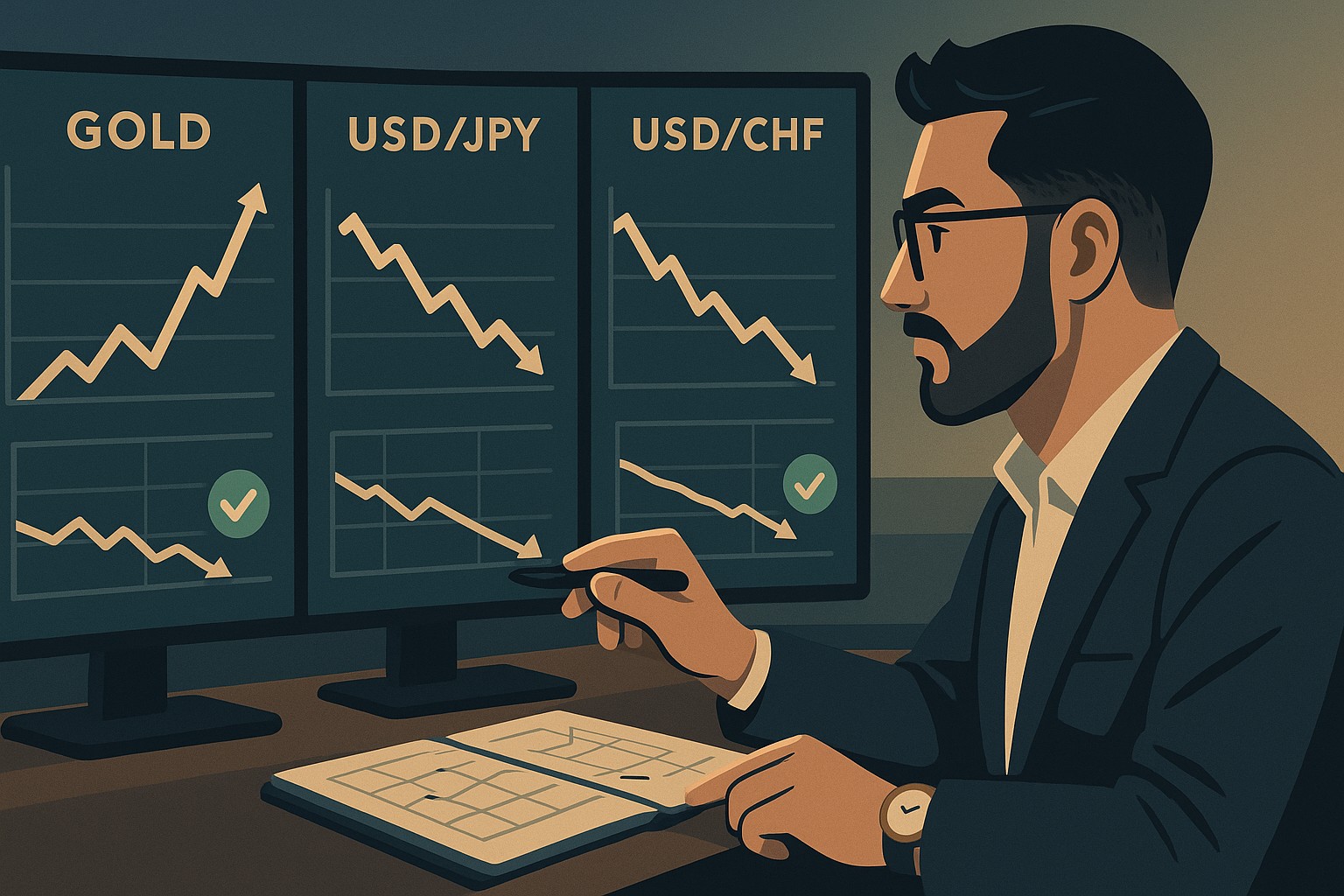
Gold has survived empires, wars, and currency collapses. Traders flock to it in times of stress because it carries no counterparty risk - no government or central bank can default on a bar of gold. If gold is your primary vehicle, keep this companion read handy: why gold remains the ultimate security and the complete SMC day-trading guide for XAU/USD.
The dollar is the world’s reserve currency. Its safety comes from depth and liquidity: trillions in daily turnover and the dominant U.S. Treasury market. Even when the U.S. is part of the narrative, global investors often choose USD because nothing else matches its scale. When you see the dollar bid alongside falling yields, you’re usually looking at a classic risk-off footprint.
The yen’s haven role surprises many given Japan’s low growth and high debt, but its current-account surplus and repatriation flows during global stress support JPY. If you prefer trading the theme through a pair, learn the rhythm of this cross with the USD/JPY trading guide.
Switzerland’s political neutrality and robust banking system underpin CHF’s safe-haven premium. In European risk episodes, CHF often outperforms as capital rotates out of the euro area.

These aren’t abstract ideas - they’re the tapes markets replay when fear returns.

Picture the market as a fleet sailing across calm waters. Suddenly, a storm hits. Some ships take damage (equities, EM FX), while others act like lifeboats (gold, USD, JPY, CHF). The edge isn’t predicting the exact minute the storm begins; it’s knowing where the lifeboats are and how quickly you can board without capsizing your own craft.

Traders don’t need to fear geopolitics - they need a playbook and risk discipline.
Headlines often move price before charts fully adjust. Build a checklist for major releases and geopolitical triggers. If you trade scheduled data, pair this with the NFP SMC strategy to keep your entries confirmation-led.
If gold and JPY rise together as equities slip and yields fall, risk-off is likely in control. Map the first impulse, then wait for a pullback into your zone before execution.
Geopolitical moves can fade if the event is contained or policy bridges are announced. Avoid over-staying in one-sided positions. If you’re building guardrails, review this practical primer on risk management that lasts.
Risk first, narrative second
Volatility cuts both ways. A ceasefire headline or unexpected coalition can unwind haven trades instantly. Keep stops tight, scale out, and size inside a coherent plan. For step-by-step rules, see the master risk guide (stops, TP, sizing).
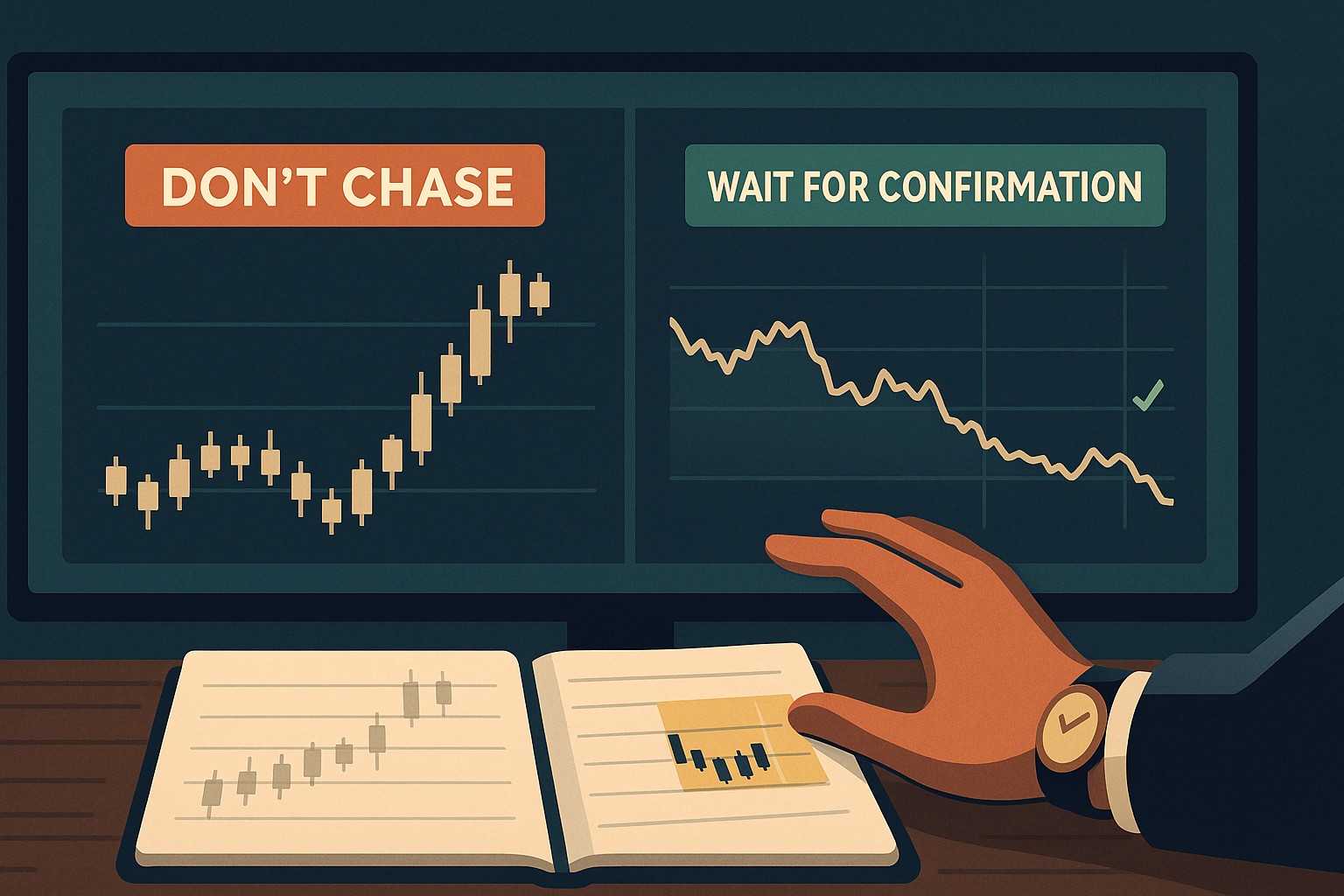
Challenge for this week: Log the next geopolitical headline in your journal. Then track gold, USD, JPY, CHF, equities, and U.S. 10Y yields over the next 2–24 hours. Note where the first impulse overextends and where pullbacks offer asymmetric entries. Repeat until the pattern feels familiar.

Geopolitical risks are part of the market’s DNA. They’re unpredictable in timing, but not in behavior - capital usually flees to safety first and hunts opportunity later. Your edge rarely comes from predicting the headline; it comes from recognizing how flows shift when the headline lands. Safe havens like gold, USD, JPY, and CHF are your compass points. Learn to read them and you’ll often be ahead of traders still reacting to the news ticker.
It’s time to go from theory to execution - risk-free.
Create an Account. Start Your Free Demo!
Looking for step-by-step approaches you can plug straight into the charts? Start here:
Sharpen your edge with proven tools and frameworks:
News moves markets fast. Learn how to keep pace with SMC-based playbooks:
From NASDAQ opens to DAX trends, here’s how to approach indices like a pro:
Gold remains one of the most traded assets - - here’s how to approach it with confidence:
Candlesticks are the building blocks of price action. Master the most powerful ones:
Ready to go intraday? Here’s how to build consistency step by step:
Markets swing between calm and chaos. Learn to read risk-on vs risk-off like a pro:
Step inside the playbook of institutional traders with SMC concepts explained:
Forex pairs aren’t created equal - - some are stable, some are volatile, others tied to commodities or sessions.
If you’ve ever been stopped out right before the market reverses - - this is why:
Mindset is the deciding factor between growth and blowups. Explore these essentials:
The real edge in trading isn’t strategy - it’s how you protect your capital:
If you’re not sure where to start, follow this roadmap:
This way, you’ll grow from foundation → application → mastery, instead of jumping around randomly.
Follow me for more daily market insights!
Jasper Osita - LinkedIn - FXStreet - YouTube
This content may have been written by a third party. ACY makes no representation or warranty and assumes no liability as to the accuracy or completeness of the information provided, nor any loss arising from any investment based on a recommendation, forecast or other information supplies by any third-party. This content is information only, and does not constitute financial, investment or other advice on which you can rely.
ACY Securities is one of Australia's fastest growing multi-asset online trading providers, offering ultra-low-cost trading, rock-solid execution, technologically superior account management and premium market analysis.

Select the categories and companies you wish to follow directly to your person rss feed.
Create Custom RSS FeedSign up and join over 5,000 professional members who receive personalized news alerts, curated professional connections, and more for free!
Bybit has launched Perp Options, described as the first options contracts built on TradFi perpetuals, giving traders round-the-clock access to US equity options. SpaceX and Nvidia are the first underlying assets, with USDT settlement and integration into Bybit's Unified Trading Account.
Use this trading preparation checklist to plan your session, define entry rules, manage risk, and build a disciplined trading routine in seven steps.
Your Bourse expands its crypto liquidity ecosystem with Caladan, giving brokers access to broader market coverage, institutional execution capacity and streamlined settlement.
Scope Markets, the retail brokerage part of Rostro Group, has appointed Ibrahim Hossny as Head of Research and Marketing for the Middle East and North Africa.
Hantec Prime, the institutional division of Hantec Markets, has reported trading volume up more than 300% year-to-date, alongside the addition of 42 new institutional clients since December, capping one of its strongest years of growth to date.
Learn how to refine XAUUSD support and resistance on the daily chart using candle bodies, market structure and weekly gold levels for swing trading. A slug alone cannot guarantee a top Google ranking. Keep it focused rather than adding every supporting keyword.
The week in Dubai will be focused on connecting directly with the industry and discussing how technology can help modern brokerages simplify operations, automate workflows, strengthen operational control, and scale efficiently.
Devexperts has launched a turnkey solution giving brokers in South Korea access to US equity markets, combining its DXtrade trading platform, dxFeed market data, and execution services. The offering targets South Korea's growing retail demand for US stocks, worth several billion USD monthly.
Assess why WTI crude oil surged past $105 per barrel amid Saudi pipeline disruptions, record tanker charter rates, and escalating geopolitical tensions.
Bitcoin price forecast: BTC/USD retests $78,460–$80,215 resistance. Watch bearish confirmation toward $72,480 or a bullish breakout toward $86,150.