just now


Liquidity Finder Ltd is incorporated in England and Wales, company number 10610740, registered address 167-169 Great Portland Street, Fifth Floor, London W1W 5PF, United Kingdom.
Published: just now

The July U.S. Consumer Price Index (CPI) release came in with a nuanced message for markets and policymakers.
Headline inflation rose 0.2% month-over-month, leaving the annual rate unchanged at 2.7%, slightly softer than the 2.8% most analysts had anticipated.
Core CPI, which strips out volatile food and energy prices, rose 0.3% on the month, pushing the annual rate to 3.1%.

This was the largest monthly core increase since January, and it underscores that while overall price growth is steady, underlying pressures remain.
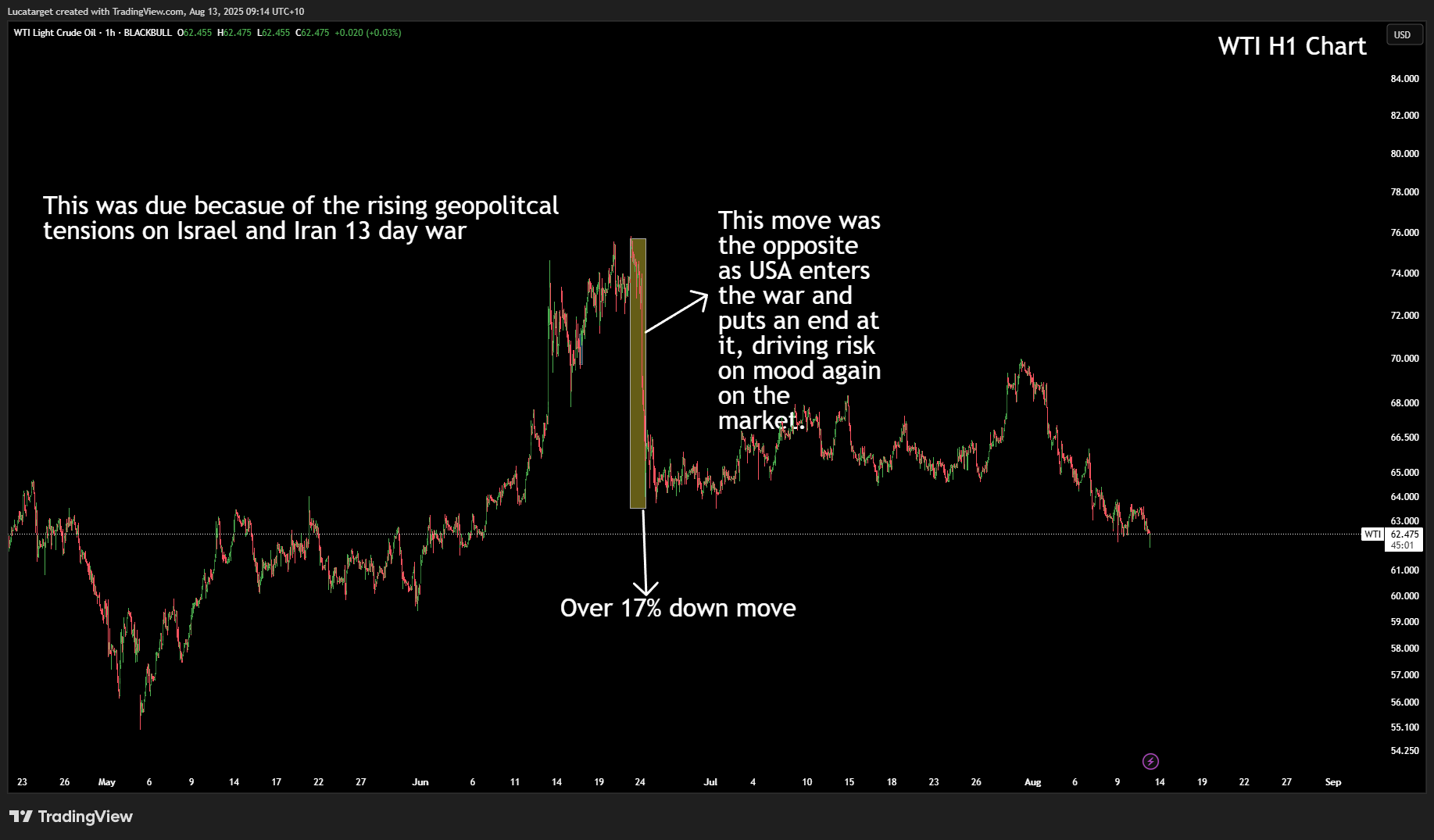
In the days leading up to the release, expectations from analysts around the world leaned towards a modest cooling in inflation, particularly given recent softness in energy prices including WTI and more stable food costs.
The headline number delivered that moderation, but the core reading told a different story.
Looking deeper, services inflation remained the primary driver of the higher core reading. Medical care costs climbed, airline fares rose, and other personal services showed notable increases.
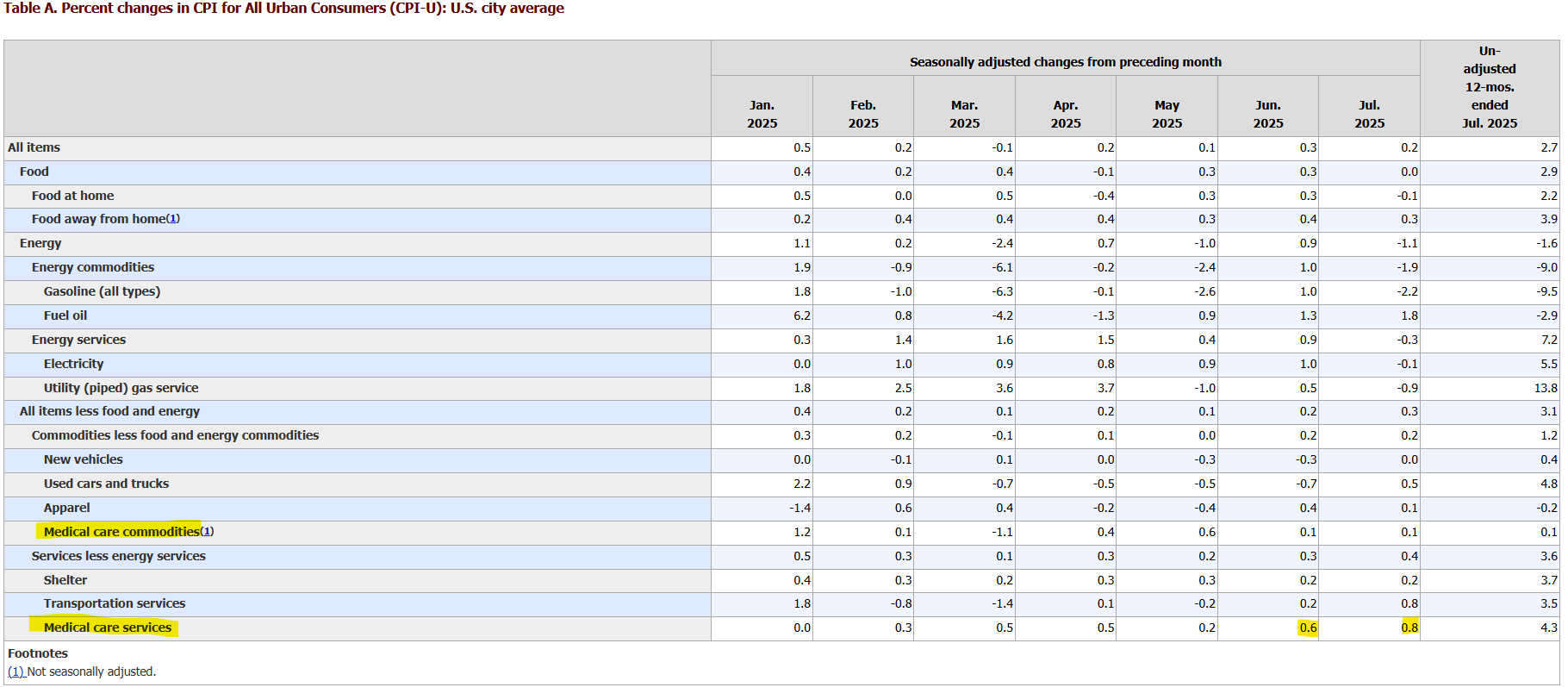
These gains offset declines in energy, where gasoline prices fell more than 2%, and a stable food category that provided some relief to consumers (you can also check on the image above). There is also a growing debate around the reliability of the data itself.
The Bureau of Labor Statistics has been relying more heavily on imputation methods due to staffing and budget constraints, and the recent dismissal of the BLS head has stirred additional questions about data integrity.
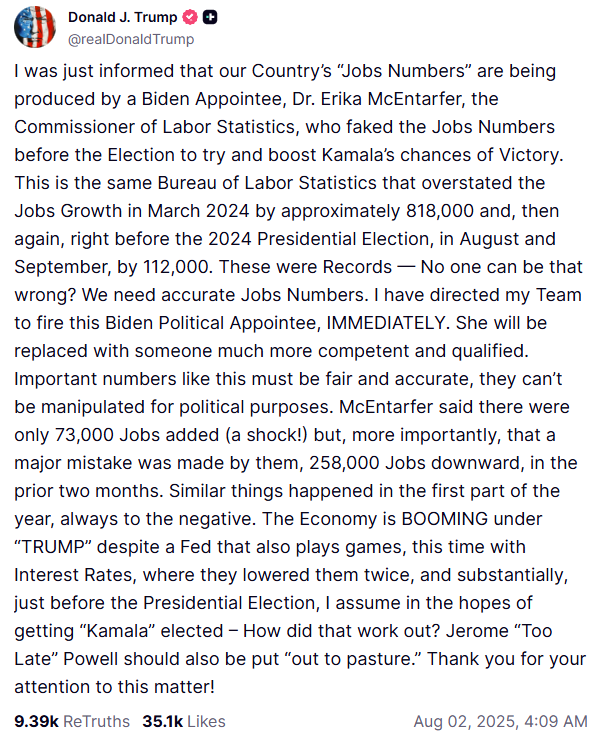
While these concerns have not derailed the headline narrative, they have added a layer of uncertainty for analysts trying to gauge the true trajectory of prices.
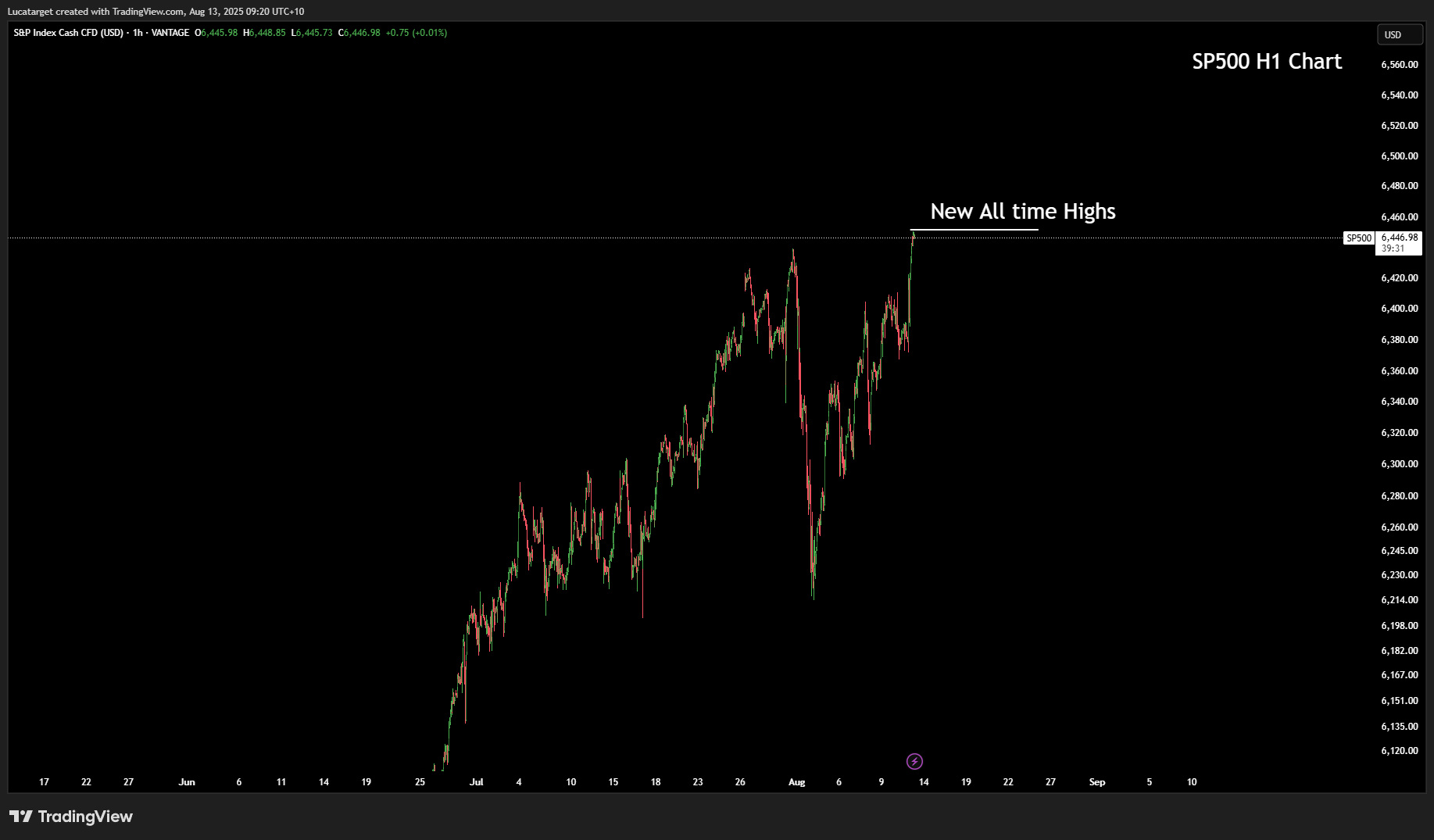
Markets responded positively to the numbers, focusing more on the stable headline figure than on the stubbornness of core inflation. U.S. equities rallied strongly, with the S&P 500, Nasdaq, and Dow all pushing to record highs.
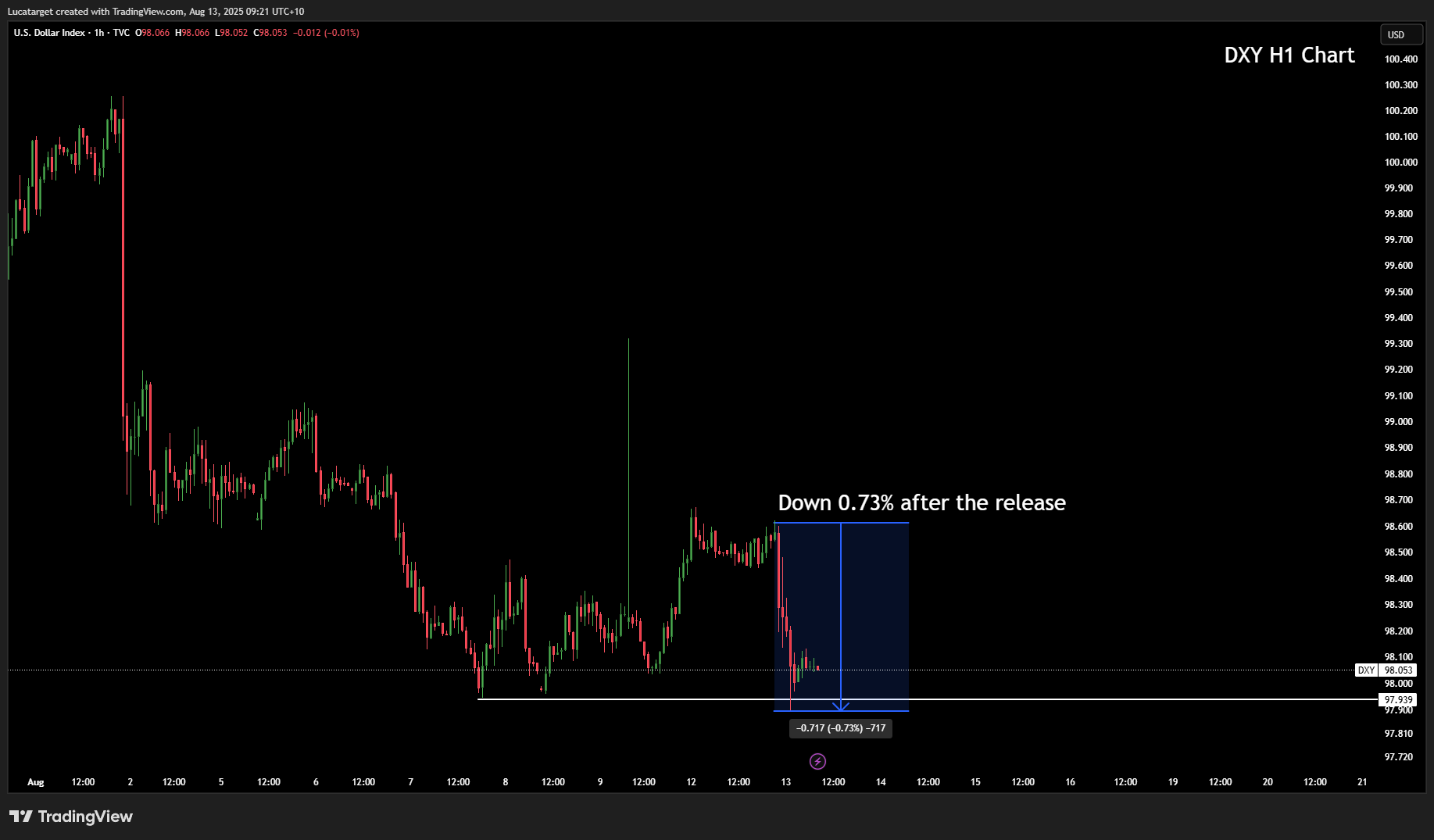
The U.S. dollar slipped modestly as traders interpreted the data as supportive of a more dovish Federal Reserve stance.
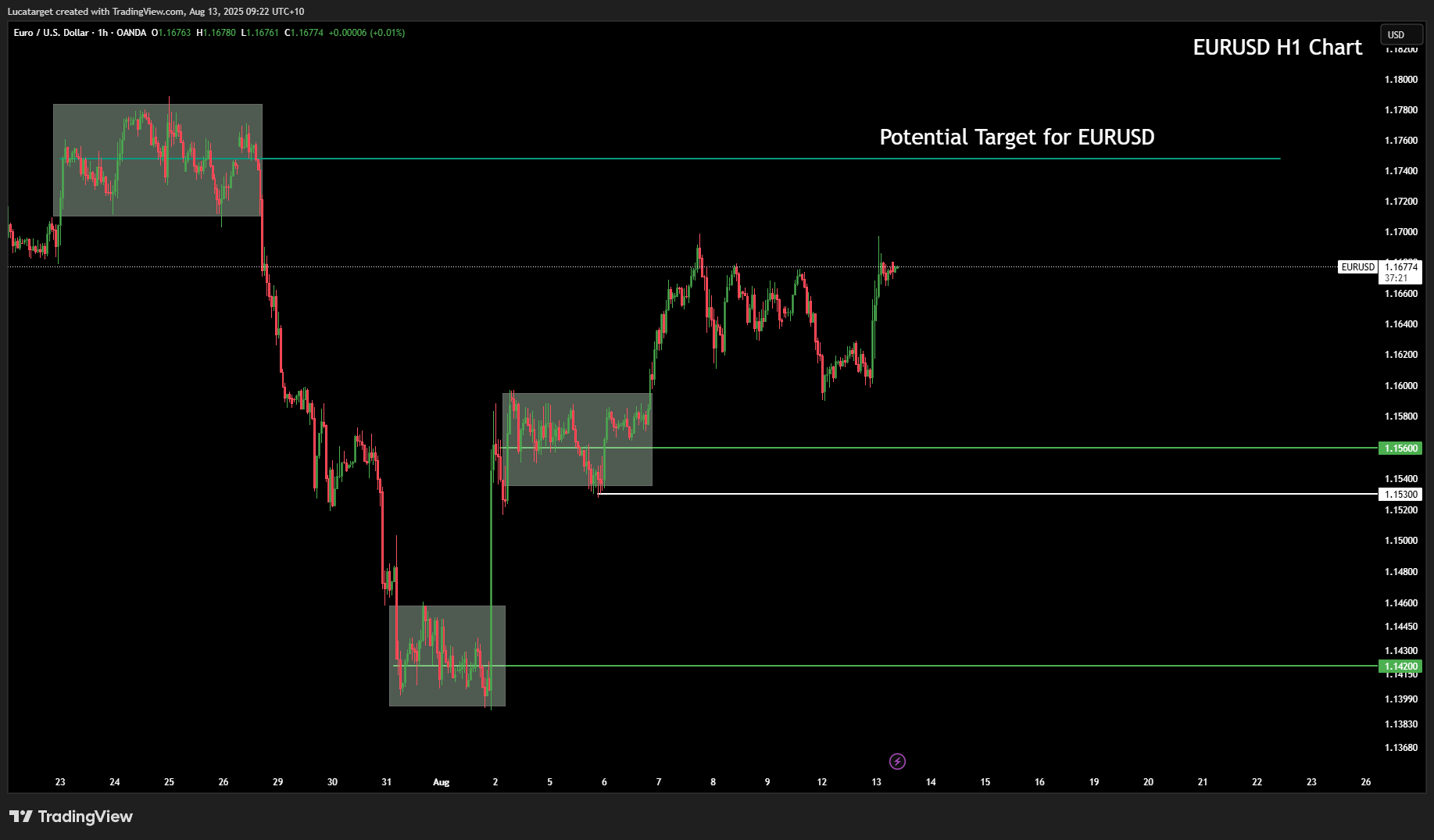
The euro gained against the dollar, and U.S. Treasury yields moved slightly lower, reflecting an increase in expectations for rate cuts later this year.
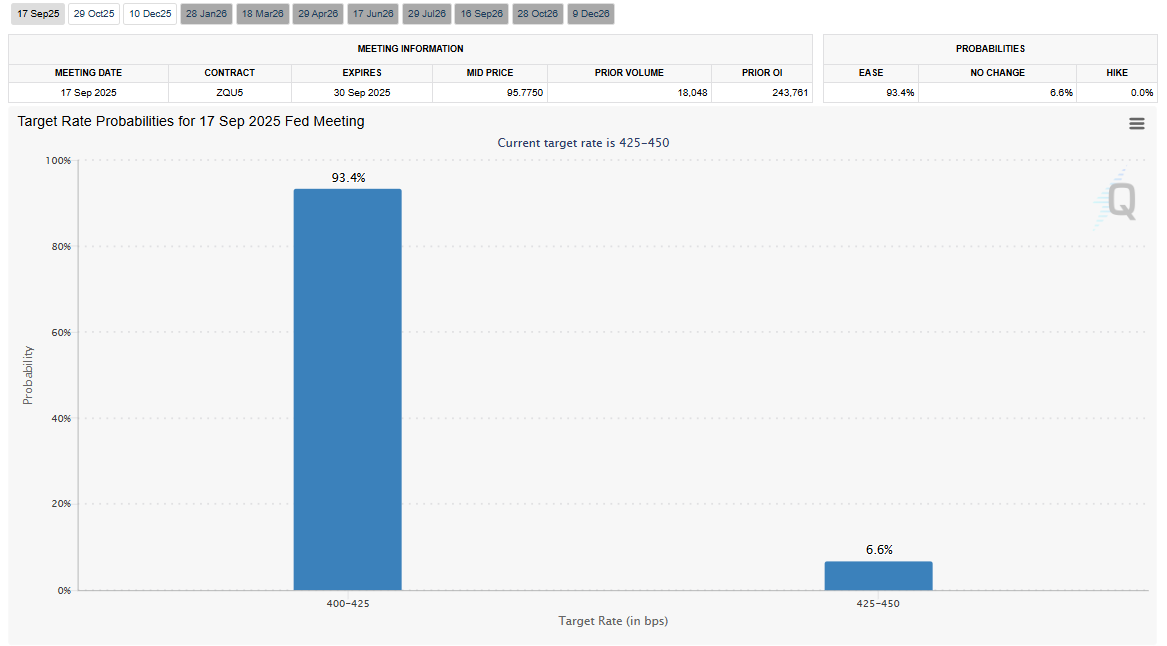
The CME FedWatch tool, which tracks market-based probabilities for Fed moves, showed a sharp jump in the likelihood of a 25-basis-point cut at the September meeting, with odds climbing above 90% in the hours after the release.
For the Federal Reserve, the latest CPI report presents a mixed picture. The lack of progress in reducing core inflation could temper enthusiasm for aggressive easing, but the unchanged headline number provides enough cover for at least one rate cut before year-end.
The Fed will be watching closely for signs that tariffs, already implemented in several sectors, begin to feed more directly into goods prices. So far, the pass-through has been limited, but that may change in the coming months.
At the same time, the strength in services inflation suggests that domestic demand remains resilient, complicating the case for a rapid shift to looser monetary policy.
From a market perspective, this CPI print reinforces a short-term narrative of policy easing and equity market strength, while keeping alive the risk that inflation could reaccelerate if service sector pressures persist or if tariffs begin to bite.
For traders, the immediate aftermath favors a softer dollar and continued momentum in risk assets, but the medium-term picture will hinge on the next few inflation and employment reports.
For now, the balance between steady headline prices and sticky core inflation means the Fed is likely to proceed with caution, cutting rates but doing so gradually to avoid reigniting inflationary pressures.
Q1: What was the main takeaway from the July U.S. CPI report?
The headline CPI stayed unchanged at 2.7% year-over-year, slightly below expectations, while core CPI rose to 3.1%, marking the largest monthly increase since January. This shows overall inflation is stable, but underlying pressures remain.
Q2: Which sectors contributed most to the increase in core inflation?
Services were the main driver, with notable rises in medical care, airline fares, and other personal services. Energy prices fell and food prices remained stable, helping to contain the headline number.
Q3: How did the markets react to the CPI release?
U.S. stocks hit record highs, the U.S. dollar softened, and Treasury yields dipped as traders interpreted the report as supportive of a more dovish Federal Reserve stance.
Q4: How does this CPI report affect the Federal Reserve’s outlook?
The steady headline figure and the market’s reaction make a September rate cut more likely, with CME FedWatch showing over a 90% probability. However, persistent core inflation means the Fed is likely to ease gradually rather than aggressively.
Q5: What should traders and investors watch for next?
The next key indicators will be upcoming inflation and employment reports, as well as the potential impact of tariffs on goods prices. These will help determine if the current easing bias from the Fed can be sustained.
This content may have been written by a third party. ACY makes no representation or warranty and assumes no liability as to the accuracy or completeness of the information provided, nor any loss arising from any investment based on a recommendation, forecast or other information supplies by any third-party. This content is information only, and does not constitute financial, investment or other advice on which you can rely.
ACY Securities is one of Australia's fastest growing multi-asset online trading providers, offering ultra-low-cost trading, rock-solid execution, technologically superior account management and premium market analysis.

Select the categories and companies you wish to follow directly to your person rss feed.
Create Custom RSS FeedSign up and join over 5,000 professional members who receive personalized news alerts, curated professional connections, and more for free!
Multi-asset trading broker AvaTrade has agreed to acquire the majority of FXCM Group’s business and brand, in a transaction that would bring a longstanding retail FX franchise into the AvaTrade Group.
LSEG and CMC Markets have signed a multi-year strategic data agreement expanding CMC's access to LSEG's real-time and delayed pricing, reference and corporate actions data, news and analytics, plus AI-ready content, to support new products, entry into new markets and the growth of CMC's institutional and B2B partnerships.
The Tel Aviv Stock Exchange is considering a bid for the Cyprus Stock Exchange, with Israeli media citing its EU licence, trading platform and clearing house. Euronext’s Athens exchange and India’s National Stock Exchange are also seen as contenders, and Cyprus aims to sign a sale agreement by the end of this year.
CME Group will launch baseball futures on 12 October, pending regulatory review, tracking CME FutureSports Performance Indexes built on Official League Data. Standard and micro contracts will start with the 2026 Postseason and the four clubs in the League Championship Series, trading around the clock.
ESMA has published an opinion stating that MiCA-authorised crypto-asset service providers should cease services tied to non-MiCA-compliant stablecoins for EU clients across MiCA crypto-asset services. National authorities should require remediation of existing exposures within three months, by early January 2027.
Nasdaq Ventures has made a strategic investment in Amsterdam-based derivatives and crypto exchange One Trading, with both firms to explore 24/7 trading of equity futures. The undisclosed investment follows Nasdaq's US$100 million investment in Payward, the parent of Kraken, and CME Group's move to 24/7 trading.
cTrader has opened multi-platform plugins to brokers and prop firms, which can pre-install their own tools for clients or list them in cTrader Store. The plugins run across Mobile, Web, Windows and Mac, and can be built and launched independently of core-platform releases, including trading journals and calculators.
Institutional brokerage and financial infrastructure provider Clear Street has joined TradingView’s broker network, allowing its clients to trade US stocks, exchange-traded funds and options directly through the charting and analysis platform.
Learn how to improve trading psychology, manage fear and greed, avoid revenge trading, and follow your trading strategy with discipline and a trading journal.
GTC Prime has announced a strategic partnership with Centroid Solutions to manage and distribute its liquidity through CS 360 Bridge, Centroid's multi-asset connectivity and execution engine, giving brokers and institutional clients access to tailor-made pricing, low-latency execution and real-time risk management.