just now


Liquidity Finder Ltd is incorporated in England and Wales, company number 10610740, registered address 167-169 Great Portland Street, Fifth Floor, London W1W 5PF, United Kingdom.
Published: just now
Most traders think fear is their biggest enemy.
It’s not.
One of the most dangerous moments in trading is when you start to feel right.
After a few clean wins.
After a streak where price respects your levels perfectly.
After you “called” the market and watched it play out.
That feeling is subtle, but it’s lethal.
The uncomfortable truth is this: being right feels good-but it quietly erodes discipline faster than losses ever do.
There’s nothing wrong with confidence. You need it to pull the trigger.
The problem starts when confidence turns into:
Wins don’t usually cause blowups immediately.
They create permission.
Permission to bend rules.
Permission to trust instinct over structure.
Permission to believe you’re seeing something others aren’t.
That’s where damage begins.
Losses hurt, but they also force caution.
Wins feel safe-and safety makes traders careless.
After a series of wins, traders often:
They don’t feel reckless.
They feel deserving.
The market punishes entitlement faster than ignorance.
Think about driving.
Most accidents don’t happen when someone is scared and cautious.
They happen when someone feels comfortable speeding because “nothing has happened so far.”
Trading is the same.
The moment you think:
“I’ve got this figured out”
Is often the moment you stop protecting yourself.
Here’s the real danger of being right-it moves attention away from how you traded and onto what happened.
Instead of asking:
You start asking:
Results replace process.
And when results lead, discipline follows-sometimes.
You can be right 70% of the time and still lose money.
You can be wrong often and still be profitable.
Accuracy feels impressive.
Risk management is what survives.
Professional traders don’t aim to be right.
They aim to be controlled.
That’s why they look boring during winning streaks-and calm during losing ones.
It rarely happens in one big mistake.
It happens through:
Small rule breaks justified by recent success.
The market doesn’t punish the win-it punishes the behavior that follows it.
If you want to know whether you’re actually disciplined, watch what you do after a win.
Ask yourself:
Because consistency after success is harder than consistency after failure.
Being right is intoxicating. It whispers that you’ve earned flexibility, that rules can loosen because you’re “in sync” with the market. That whisper is usually wrong.
True confidence doesn’t come from winning-it comes from knowing that no matter what happens next, your behavior won’t change. The trader who survives long-term isn’t the one who wins the most, but the one who stays the same when winning feels easy.
This week’s challenge:
After your next winning trade, do nothing. Same size. Same rules. Same patience. Treat success as a test of discipline-not a reward for breaking it.
Uncomfortable Truth #5: Discipline Isn’t Motivation - It’s Identity
Many think discipline is something you apply.
They wait to feel focused.
They wait to feel calm.
They wait to feel confident.
Then they trade.
That’s the trap.
The uncomfortable truth is this: discipline doesn’t come from motivation - it comes from identity.
What you do consistently is who you believe you are.
Motivation fluctuates with sleep, wins, losses, and mood.
Identity doesn’t negotiate.
A trader who says, “I’m disciplined when I feel good” will break rules under pressure.
A trader who says, “I’m the kind of trader who follows rules” doesn’t ask how they feel first.
This is why some traders look calm even during drawdowns.
They’re not fighting emotions - they’re acting in alignment.
Rules feel heavy when they’re external.
When discipline is something you force, every trade becomes a debate:
But when discipline is internalized as identity, rules stop feeling restrictive.
They feel protective.
You’re not obeying rules - you’re being yourself.
Think about professionals who wear uniforms:
They don’t wake up questioning whether they’ll follow procedure today.
The uniform isn’t clothing - it’s a reminder of responsibility.
Your trading rules serve the same purpose.
They define the role you’re stepping into.
When discipline is identity:
Not because it feels good - but because it’s normal.
That’s the difference.
Amateurs need motivation.
Professionals rely on standards.
Many traders say they want discipline, but their environment contradicts it:
Identity needs structure to survive.
If your process is vague, your identity will be too.
You don’t build identity by affirmations.
You build it through small, repeated proofs.
Every time you:
You reinforce the belief: “This is who I am.”
Consistency creates identity - not the other way around.
If discipline feels exhausting, stop trying to apply it.
Instead ask:
Because once discipline becomes identity, effort drops and consistency rises.
Motivation fades. Identity stays.
The traders who last don’t rely on willpower. They rely on self-definition. They don’t wake up trying to be disciplined - they wake up acting in alignment with who they’ve already decided they are.
Decide once. Then execute daily.
This week’s challenge:
Write one sentence that defines your trader identity. Then design your rules so breaking them would feel out of character, not just “undisciplined.”
Uncomfortable Truth #6: You’re Not Losing Because of the Market - You’re Losing Because You Can’t Sit Still
One of the most common lies traders tell themselves is this:
“The market just isn’t giving good setups.”
In reality, the market gives far more opportunities than most traders are capable of handling. The real problem isn’t a lack of trades - it’s an inability to wait for your trade.
Stillness is uncomfortable. Silence feels unproductive. And in trading, doing nothing often feels like failure. That discomfort is exactly where most losses are born.
Most losing trades are not bad setups.
They are unnecessary trades.
The market doesn’t punish bad analysis as much as it punishes impatience. Every extra trade you take outside your plan introduces randomness into what should be a controlled process.
Waiting forces you to confront uncomfortable realities:
For many traders, clicking the button feels like progress. Sitting on your hands feels like stagnation - even when it’s the correct decision.
But inactivity in trading is not laziness.
It’s discipline in its purest form.
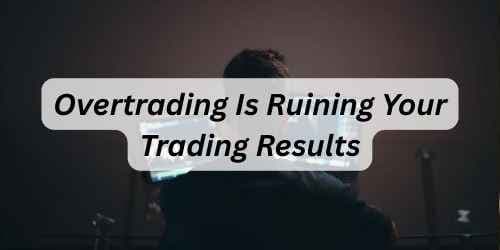
Overtrading doesn’t just damage your account. It damages your confidence framework.
Each unnecessary trade:
Soon, you’re no longer sure what works - not because nothing works, but because you stopped respecting the boundaries of your system.
Professional traders don’t measure success by:
They measure success by:
Sometimes the best trade is closing the platform and walking away.
Before every trade, ask one question:
“If I skip this trade and price moves without me, will I still be okay?”
If the answer is no, you’re trading for emotional relief - not for execution quality.
Stillness is a skill - and like any skill, it must be trained.
The market rewards patience far more consistently than activity. If you feel the urge to trade just to trade, that’s not intuition - it’s discomfort trying to escape itself.
The uncomfortable truth is this:
Most traders don’t need more screen time. They need fewer decisions.
Master the ability to wait, and you’ll eliminate more losing trades than any indicator ever could.
It’s time to go from theory to execution!
Create an Account. Start Your Live Trading Now!
Looking for step-by-step approaches you can plug straight into the charts? Start here:
Sharpen your edge with proven tools and frameworks:
News moves markets fast. Learn how to keep pace with SMC-based playbooks:
From NASDAQ opens to DAX trends, here’s how to approach indices like a pro:
Gold remains one of the most traded assets - here’s how to approach it with confidence:
Candlesticks are the building blocks of price action. Master the most powerful ones:
Ready to go intraday? Here’s how to build consistency step by step:
Markets swing between calm and chaos. Learn to read risk-on vs risk-off like a pro:
Step inside the playbook of institutional traders with SMC concepts explained:
Forex pairs aren’t created equal - some are stable, some are volatile, others tied to commodities or sessions.
If you’ve ever been stopped out right before the market reverses - this is why:
Mindset is the deciding factor between growth and blowups. Explore these essentials:
The real edge in trading isn’t strategy - it’s how you protect your capital:
If you’re not sure where to start, follow this roadmap:
This way, you’ll grow from foundation → application → mastery, instead of jumping around randomly.
Follow me for more daily market insights!
Jasper Osita - LinkedIn - FXStreet - YouTube
This content may have been written by a third party. ACY makes no representation or warranty and assumes no liability as to the accuracy or completeness of the information provided, nor any loss arising from any investment based on a recommendation, forecast or other information supplies by any third-party. This content is information only, and does not constitute financial, investment or other advice on which you can rely.
ACY Securities is one of Australia's fastest growing multi-asset online trading providers, offering ultra-low-cost trading, rock-solid execution, technologically superior account management and premium market analysis.

Select the categories and companies you wish to follow directly to your person rss feed.
Create Custom RSS FeedSign up and join over 5,000 professional members who receive personalized news alerts, curated professional connections, and more for free!
Multi-asset trading broker AvaTrade has agreed to acquire the majority of FXCM Group’s business and brand, in a transaction that would bring a longstanding retail FX franchise into the AvaTrade Group.
LSEG and CMC Markets have signed a multi-year strategic data agreement expanding CMC's access to LSEG's real-time and delayed pricing, reference and corporate actions data, news and analytics, plus AI-ready content, to support new products, entry into new markets and the growth of CMC's institutional and B2B partnerships.
The Tel Aviv Stock Exchange is considering a bid for the Cyprus Stock Exchange, with Israeli media citing its EU licence, trading platform and clearing house. Euronext’s Athens exchange and India’s National Stock Exchange are also seen as contenders, and Cyprus aims to sign a sale agreement by the end of this year.
CME Group will launch baseball futures on 12 October, pending regulatory review, tracking CME FutureSports Performance Indexes built on Official League Data. Standard and micro contracts will start with the 2026 Postseason and the four clubs in the League Championship Series, trading around the clock.
ESMA has published an opinion stating that MiCA-authorised crypto-asset service providers should cease services tied to non-MiCA-compliant stablecoins for EU clients across MiCA crypto-asset services. National authorities should require remediation of existing exposures within three months, by early January 2027.
Nasdaq Ventures has made a strategic investment in Amsterdam-based derivatives and crypto exchange One Trading, with both firms to explore 24/7 trading of equity futures. The undisclosed investment follows Nasdaq's US$100 million investment in Payward, the parent of Kraken, and CME Group's move to 24/7 trading.
cTrader has opened multi-platform plugins to brokers and prop firms, which can pre-install their own tools for clients or list them in cTrader Store. The plugins run across Mobile, Web, Windows and Mac, and can be built and launched independently of core-platform releases, including trading journals and calculators.
Institutional brokerage and financial infrastructure provider Clear Street has joined TradingView’s broker network, allowing its clients to trade US stocks, exchange-traded funds and options directly through the charting and analysis platform.
Learn how to improve trading psychology, manage fear and greed, avoid revenge trading, and follow your trading strategy with discipline and a trading journal.
GTC Prime has announced a strategic partnership with Centroid Solutions to manage and distribute its liquidity through CS 360 Bridge, Centroid's multi-asset connectivity and execution engine, giving brokers and institutional clients access to tailor-made pricing, low-latency execution and real-time risk management.