just now

Liquidity Finder Ltd is incorporated in England and Wales, company number 10610740, registered address 167-169 Great Portland Street, Fifth Floor, London W1W 5PF, United Kingdom.
Published: just now

Public, the Agentic Brokerage, has today launched private company pages, offering retail investors access to institutional-grade data on prominent private companies before their Initial Public Offerings (IPOs). From today, investors can track over 60 private companies, including OpenAI, Anthropic, and Stripe, with detailed valuation history, funding rounds, and price trends.
The new pages on Public provide retail investors with institutional-grade data, allowing them to track each company's valuation over time and understand the context behind major milestones. These pages also introduce new investment pathways, with a Public Market Exposure section demonstrating how investors can gain indirect exposure today. Users can also sign up for updates on company news and future IPO developments.

Leif Abraham, Co-CEO and Co-Founder of Public
Leif Abraham, Co-CEO and Co-Founder of Public commented:
“With companies going public much later today, their relationship with retail investors starts before they're public. Public is now one of the first platforms where you can track all the fundamentals before a company goes public.”
The increasing involvement of retail investors is becoming an integral part of a company's IPO story. To commence tracking the world's leading private companies, investors can download the Public app.
Public describes itself as the world's first Agentic Brokerage. Investors utilise AI and a vast variety of asset classes, from stocks and bonds to crypto and options, to construct long-term portfolios. Established in 2019 and headquartered in New York City, Public has raised over $400M from investors such as Accel and Tiger Global, and is trusted with billions in assets from affluent investors.
The democratisation of access to private market data by platforms like Public mirrors broader trends in financial markets. Historically, insights into private companies were largely the preserve of institutional investors and Prime Broker vs Prime of Prime clients. This shift towards providing retail investors with what was once considered exclusive institutional FX-level data highlights a growing demand for transparency and sophisticated analysis across all investor segments. It underscores the evolving landscape where advanced tools and information, traditionally reserved for professional desks, are becoming more accessible, thereby influencing capital allocation and trading strategies in both public and private spheres.
All investing involves risk. Brokerage services for US listed securities, options and bonds in a self-directed brokerage account are offered by Open to the Public Investing, member FINRA & SIPC. This is not investment advice. Additional information about your broker can be found by clicking here. Information on fees can be found in the Fee Schedule.
Pricing and other financial data on Private Company Pages are provided by Nasdaq Private Market (Tape D®). Private company shares are not available for trading on Public or any public exchanges. Displayed values are estimates based on historical primary and secondary activity and are not a guarantee of real-time market price.
As the financial landscape evolves, explore LiquidityFinder Insight for the latest analysis on institutional and retail brokerage innovations.
We're the largest marketplace to connect with brokers, Fintech companies & digital asset firms. Want to partner? Let's get in touch.

Select the categories and companies you wish to follow directly to your person rss feed.
Create Custom RSS FeedSign up and join over 5,000 professional members who receive personalized news alerts, curated professional connections, and more for free!
Multi-asset trading broker AvaTrade has agreed to acquire the majority of FXCM Group’s business and brand, in a transaction that would bring a longstanding retail FX franchise into the AvaTrade Group.
LSEG and CMC Markets have signed a multi-year strategic data agreement expanding CMC's access to LSEG's real-time and delayed pricing, reference and corporate actions data, news and analytics, plus AI-ready content, to support new products, entry into new markets and the growth of CMC's institutional and B2B partnerships.
The Tel Aviv Stock Exchange is considering a bid for the Cyprus Stock Exchange, with Israeli media citing its EU licence, trading platform and clearing house. Euronext’s Athens exchange and India’s National Stock Exchange are also seen as contenders, and Cyprus aims to sign a sale agreement by the end of this year.
CME Group will launch baseball futures on 12 October, pending regulatory review, tracking CME FutureSports Performance Indexes built on Official League Data. Standard and micro contracts will start with the 2026 Postseason and the four clubs in the League Championship Series, trading around the clock.
ESMA has published an opinion stating that MiCA-authorised crypto-asset service providers should cease services tied to non-MiCA-compliant stablecoins for EU clients across MiCA crypto-asset services. National authorities should require remediation of existing exposures within three months, by early January 2027.
Nasdaq Ventures has made a strategic investment in Amsterdam-based derivatives and crypto exchange One Trading, with both firms to explore 24/7 trading of equity futures. The undisclosed investment follows Nasdaq's US$100 million investment in Payward, the parent of Kraken, and CME Group's move to 24/7 trading.
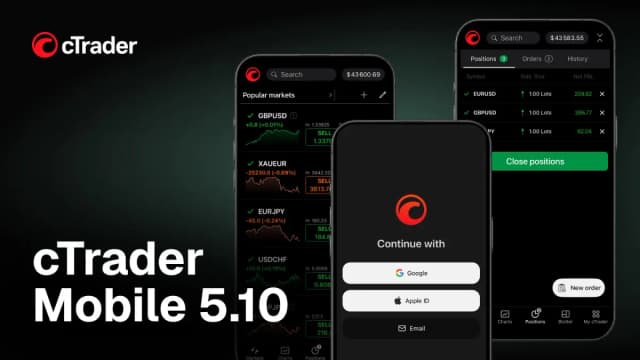
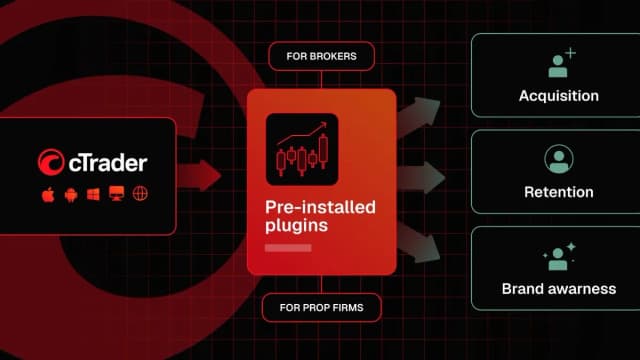
cTrader has opened multi-platform plugins to brokers and prop firms, which can pre-install their own tools for clients or list them in cTrader Store. The plugins run across Mobile, Web, Windows and Mac, and can be built and launched independently of core-platform releases, including trading journals and calculators.
Institutional brokerage and financial infrastructure provider Clear Street has joined TradingView’s broker network, allowing its clients to trade US stocks, exchange-traded funds and options directly through the charting and analysis platform.
Learn how to improve trading psychology, manage fear and greed, avoid revenge trading, and follow your trading strategy with discipline and a trading journal.
GTC Prime has announced a strategic partnership with Centroid Solutions to manage and distribute its liquidity through CS 360 Bridge, Centroid's multi-asset connectivity and execution engine, giving brokers and institutional clients access to tailor-made pricing, low-latency execution and real-time risk management.