just now


Liquidity Finder Ltd is incorporated in England and Wales, company number 10610740, registered address 167-169 Great Portland Street, Fifth Floor, London W1W 5PF, United Kingdom.
Published: just now


After a strong start to May, U.S. equity markets were rocked last week by renewed trade tensions. The Trump’s threat of imposing a 50% tariff on European Union imports reignited global uncertainty and rattled investor sentiment. Although the White House later delayed the implementation to July 9, the damage to short-term confidence was done — with all three major U.S. indices posting their worst week in May.
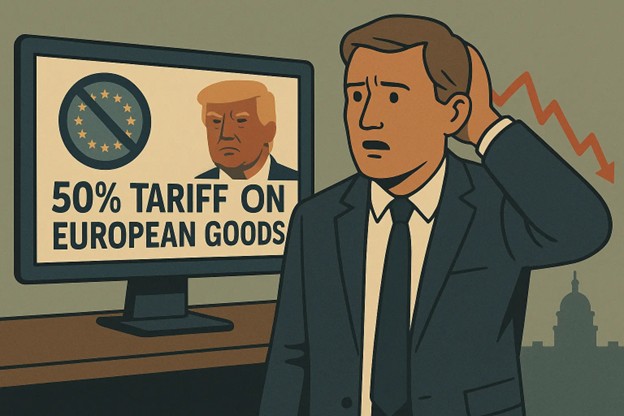
Markets were caught off guard early last week as Trump announced an aggressive 50% tariff package on European goods, citing trade imbalances and a need to protect U.S. manufacturing. The move sparked a broad market selloff, sending shockwaves through global equities, currencies, and commodities.
But by Friday, the administration walked back the urgency — pushing the tariff deadline to July 9, triggering a mild rebound in U.S. futures. The volatility underscored how geopolitical risks remain a powerful driver, particularly in a market already uneasy about interest rates and earnings.
Even with the delay, tariff threats are now back on the table — and markets are bracing for a choppy summer of geopolitical risks.
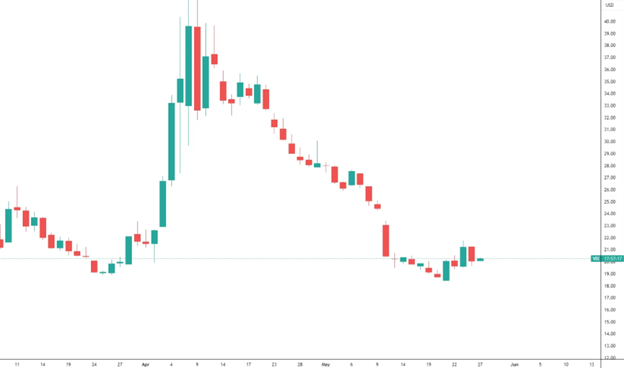
The VIX, often called Wall Street’s “fear gauge,” climbed steadily last week as the tariff news broke. It reflects growing investor demand for downside protection as uncertainty around trade, inflation, and policy returns.
This rise in VIX suggests investors are no longer complacent — they’re preparing for more choppy, headline-driven price action.
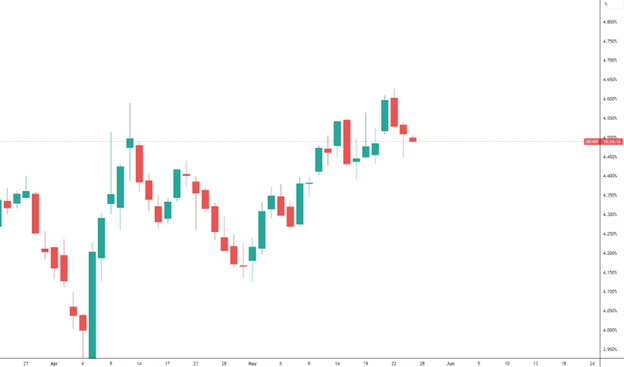
While stocks dropped, yields climbed sharply, driven by expectations of higher deficit spending and sticky inflation. The US 10-Year Treasury Yield pushed toward 4.5%, its highest since early May, weighing particularly on rate-sensitive sectors.
Elevated yields are a double-edged sword: they reflect economic strength but also challenge equity valuations, especially in tech and growth sectors.
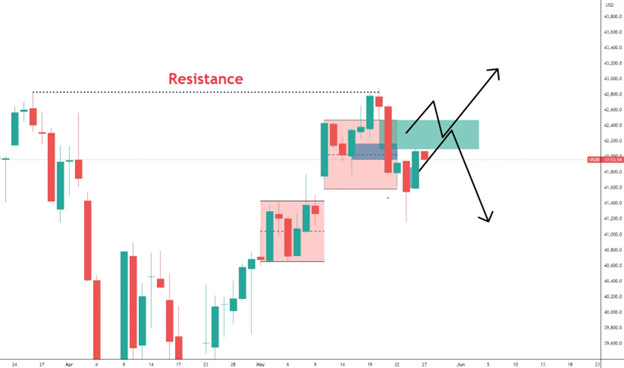
The Dow Jones Industrial Average, home to many tariff-exposed industrials and exporters, took the brunt of last week’s damage. While Friday’s relief rally helped trim losses, the Dow still closed its worst week since March.
Names like Caterpillar, Boeing, and 3M — heavily reliant on international markets — faced steep selloffs. Investors are now watching whether the tariff delay turns into a cancellation or just a brief pause.
The Dow remains vulnerable as long as trade tensions linger and cyclical data stays uneven.
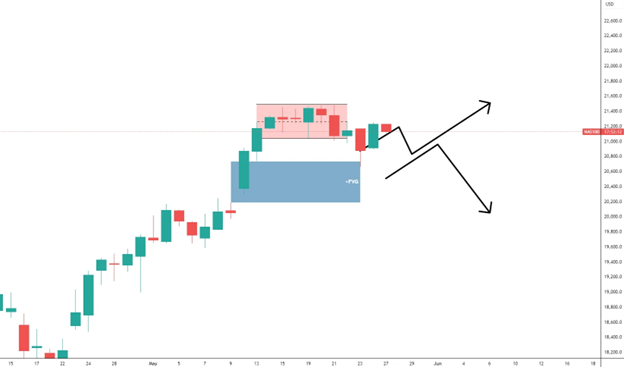
The Nasdaq 100 was relatively more resilient — but even tech couldn’t escape the volatility. Investors had hoped Nvidia’s earnings would sustain momentum, but after the post-earnings spike, the rally faded. With yields rising and macro stress creeping in, traders began taking profits across AI and cloud names.
Despite the retreat, many tech giants are still trading near all-time highs — but sentiment is noticeably more cautious.
The Nasdaq isn’t breaking — but it’s pausing. Without new catalysts, profit-taking is likely to persist.
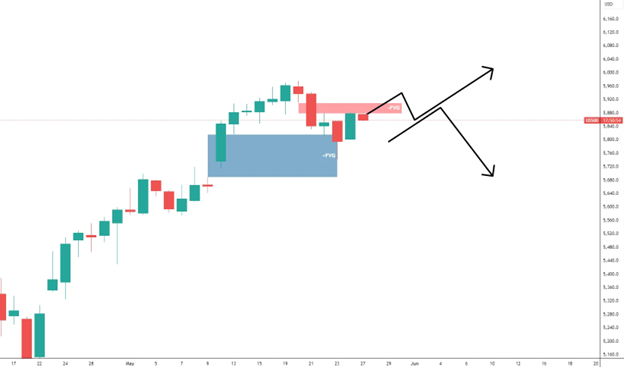
The S&P 500 reflects the broader investor mood: constructive long-term, uncertain short-term. The index pulled back 3% last week, weighed down by tariffs, inflation fears, and fading breadth.
Key reports this week — including Core PCE, Consumer Confidence, and ISM Manufacturing — could help determine whether the S&P finds support or slips further into consolidation.
The S&P 500 is flashing signs of fatigue — without fresh bullish drivers, range-bound chop may dominate.
| Date | Event | Forecast | Market Implication |
|---|---|---|---|
| May 27 | Durable Goods Orders | –8.0% | A steep miss would reinforce slowdown fears, pressuring cyclical and industrial stocks. |
| May 29 | Q1 GDP (2nd Estimate) | –0.3% | A sharp downgrade could spark risk-off sentiment and drag broad indices lower. |
| May 29 | FOMC Minutes | — | Hawkish tone may weigh on equities; a dovish lean could revive tech and growth names. |
| May 30 | Core PCE (YoY Apr) | 2.8% | A hotter print (>3%) could hurt rate-sensitive stocks; a cool reading may support a bounce. |
| May 30 | Personal Spending & Income | +0.2% / +0.3% | Weak numbers would raise consumer demand concerns, impacting retailers and discretionary sectors. |
Last week was a stark reminder that macro risk still matters — even in an AI-driven bull market. The return of trade tensions, higher yields, and unclear Fed direction has shifted the tone from momentum to hesitation.
Actionable Mindset for Traders:
"The market doesn’t wait for clarity — it punishes complacency and rewards preparation."
How to Start Day Trading:
5 Steps to Start Day Trading: A Strategic Guide for Beginners
8 Steps How to Start Forex Day Trading in 2025: A Beginner’s Step-by-Step Guide
3 Steps to Build a Trading Routine for Consistency and Discipline - Day Trading Edition
Learn how to navigate yourself in times of turmoil:
How to Identify Risk-On and Risk-Off Market Sentiment: A Complete Trader’s Guide
How to Trade Risk-On and Risk-Off Sentiment — With Technical Confirmation
The Ultimate Guide to Understanding Market Trends and Price Action
Want to learn how to trade like the Smart Money?
Mastering the Market with Smart Money Concepts: 5 Strategic Approaches
Mastering Candlestick Pattern Analysis with the SMC Strategy for Day Trading
Understanding Liquidity Sweep: How Smart Money Trades Liquidity Zones in Forex, Gold, US Indices
The SMC Playbook Series Part 4: How to Confirm Trend Reversal & Direction using SMC
The SMC Playbook Series Part 5: The Power of Multi-Timeframe Analysis in Smart Money Concepts (SMC)
Trading Psychology and Continuous Improvement Contents:
The Mental Game of Execution - Debunking the Common Trading Psychology
5 Steps to Backtest a Trading Strategy with AI: A Step-by-Step Guide
Managing Trading Losses: Why You Can Be Wrong and Still Win Big in Trading
Follow me on LinkedIn: Jasper Osita
This content may have been written by a third party. ACY makes no representation or warranty and assumes no liability as to the accuracy or completeness of the information provided, nor any loss arising from any investment based on a recommendation, forecast or other information supplies by any third-party. This content is information only, and does not constitute financial, investment or other advice on which you can rely.
ACY Securities is one of Australia's fastest growing multi-asset online trading providers, offering ultra-low-cost trading, rock-solid execution, technologically superior account management and premium market analysis.

Select the categories and companies you wish to follow directly to your person rss feed.
Create Custom RSS FeedSign up and join over 5,000 professional members who receive personalized news alerts, curated professional connections, and more for free!
Multi-asset trading broker AvaTrade has agreed to acquire the majority of FXCM Group’s business and brand, in a transaction that would bring a longstanding retail FX franchise into the AvaTrade Group.
LSEG and CMC Markets have signed a multi-year strategic data agreement expanding CMC's access to LSEG's real-time and delayed pricing, reference and corporate actions data, news and analytics, plus AI-ready content, to support new products, entry into new markets and the growth of CMC's institutional and B2B partnerships.
The Tel Aviv Stock Exchange is considering a bid for the Cyprus Stock Exchange, with Israeli media citing its EU licence, trading platform and clearing house. Euronext’s Athens exchange and India’s National Stock Exchange are also seen as contenders, and Cyprus aims to sign a sale agreement by the end of this year.
CME Group will launch baseball futures on 12 October, pending regulatory review, tracking CME FutureSports Performance Indexes built on Official League Data. Standard and micro contracts will start with the 2026 Postseason and the four clubs in the League Championship Series, trading around the clock.
ESMA has published an opinion stating that MiCA-authorised crypto-asset service providers should cease services tied to non-MiCA-compliant stablecoins for EU clients across MiCA crypto-asset services. National authorities should require remediation of existing exposures within three months, by early January 2027.
Nasdaq Ventures has made a strategic investment in Amsterdam-based derivatives and crypto exchange One Trading, with both firms to explore 24/7 trading of equity futures. The undisclosed investment follows Nasdaq's US$100 million investment in Payward, the parent of Kraken, and CME Group's move to 24/7 trading.
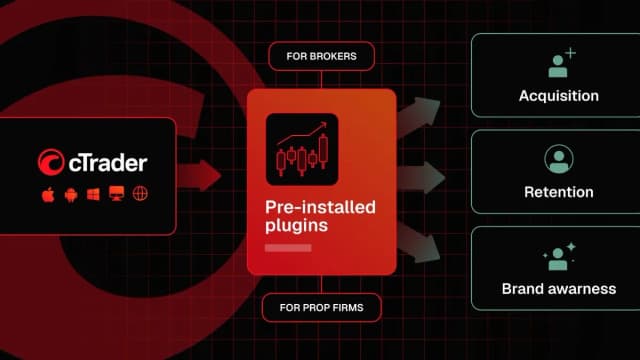
cTrader has opened multi-platform plugins to brokers and prop firms, which can pre-install their own tools for clients or list them in cTrader Store. The plugins run across Mobile, Web, Windows and Mac, and can be built and launched independently of core-platform releases, including trading journals and calculators.
Institutional brokerage and financial infrastructure provider Clear Street has joined TradingView’s broker network, allowing its clients to trade US stocks, exchange-traded funds and options directly through the charting and analysis platform.
Learn how to improve trading psychology, manage fear and greed, avoid revenge trading, and follow your trading strategy with discipline and a trading journal.
GTC Prime has announced a strategic partnership with Centroid Solutions to manage and distribute its liquidity through CS 360 Bridge, Centroid's multi-asset connectivity and execution engine, giving brokers and institutional clients access to tailor-made pricing, low-latency execution and real-time risk management.