just now

Liquidity Finder Ltd is incorporated in England and Wales, company number 10610740, registered address 167-169 Great Portland Street, Fifth Floor, London W1W 5PF, United Kingdom.
Published: just now


USD – Mixed Sentiment, Awaiting Clarity
JPY – Weak but Defending Key Zones
AUD – Struggling for Momentum, Limited Upside
NZD – Weak but Holding Support
EUR – Weakness Persists, Struggling for Direction
GBP – Choppy Price Action, Cautious Outlook
CAD – Oil-Driven Moves, Facing Resistance
CHF – Sideways but Holding Strength
The U.S. government is on the verge of a shutdown, set to take effect at 12:01 a.m. ET on Saturday, March 15, 2025, unless Congress finalizes a funding agreement before midnight on March 14.
Why Is a Shutdown Happening?
With the March 14 deadline fast approaching, talks between Democrats and Republicans continue, but a resolution remains elusive. If no agreement is reached, the shutdown will add further strain to an already complex economic landscape.
Morgan Stanley warns of further US dollar weakness after its worst start to a year since 2008 (down 3% in 2025). Risks include a potential government shutdown, slowing growth, and rising global asset values.
The bank recommends long positions on the euro (target: 1.12), the pound (target: 1.33), and the yen (target: 145) as investors shift toward European fiscal expansion and tighter monetary policies.
Morgan Stanley remains bearish on the dollar, expecting continued weakness.

United States Treasury Secretary, Scott Bessent, sees the dollar’s decline as a market correction amid shifting economic policies. After an initial post-election surge, concerns over tariffs, uncertainty, and potential Fed rate cuts have weakened the USD.
Bessent cautions that a government shutdown could further disrupt the economy.
The US government shutdown risk, economic slowdown, and global monetary policy shifts are key drivers of dollar depreciation.

“It looks like in the short term it will weaken. Looking at the Fed rate cut expectations this year, being priced into 3 rate cuts. It will continue to weaken but as the market digests a potential 1 rate cut this year due to inflationary elements, tariffs, corporate tax cuts, fiscal spending, we could see the Dollar to pickup.” - Thomas Taw, Head of APAC, Black Rock

The U.S. dollar is facing one of its most challenging starts to a year in over a decade, and investors are taking notice. With a 3% decline in 2025 alone, Morgan Stanley’s latest warnings paint an increasingly bearish picture for the greenback. But what does this mean for global markets, businesses, and everyday consumers?
Several factors are driving the dollar’s weakness:
A weaker dollar typically benefits U.S. exporters as American goods become cheaper for foreign buyers. Additionally, commodities like oil and gold often rise in value as the dollar depreciates.
On the flip side, a weaker dollar makes imported goods more expensive, potentially driving up inflation on everyday products from electronics to clothing. Travelers heading abroad may also feel the impact with a reduced purchasing power overseas.
Morgan Stanley sees opportunity in European and Asian currencies as governments in these regions pursue policies that make their assets more attractive. The bank is particularly bullish on:
Soft CPI & PPI Print
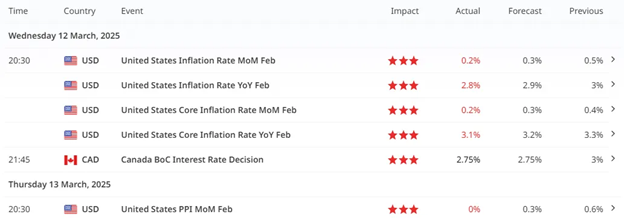
Soft US inflation data for February suggests cooling, keeping the Dollar weak with potential downside ahead. This could make the Fed more inclined to push rate cuts.
Daily
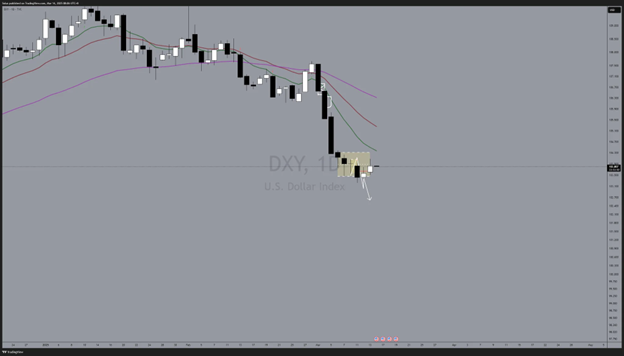
In technical perspective, transition to recovery is still uncertain as price is still far from the moving averages 10-20-50 day.
4-Hour
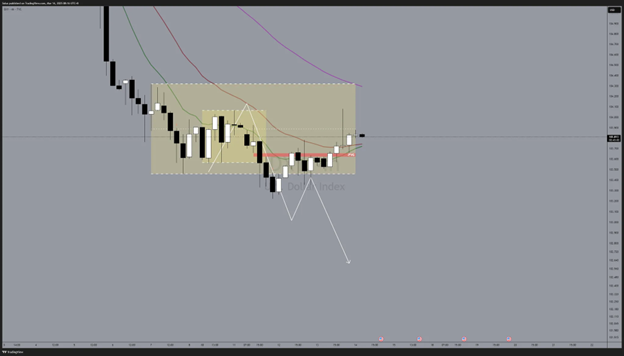
While long-term sentiment remains bearish, some traders are positioning for a short-term recovery. 10-day to 20-day Moving Average on the Daily Timeframe suggests price testing a potential transition from a downtrend move to a range-bound price action. However, any rebound may be short-lived unless the U.S. economy shows signs of stronger growth.
Unless we break the 104.300 resistance level and stays above it in confluence to a break of the moving average, we’d likely see Dollar to continue to stall.
Daily
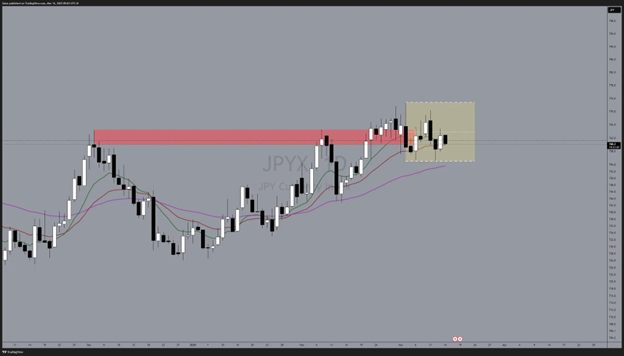
Yen is still hovering at the resistance level with no signs of clear direction. Unless we break the range, Yen pairs would continue to be in indecisive price action.
USDJPY
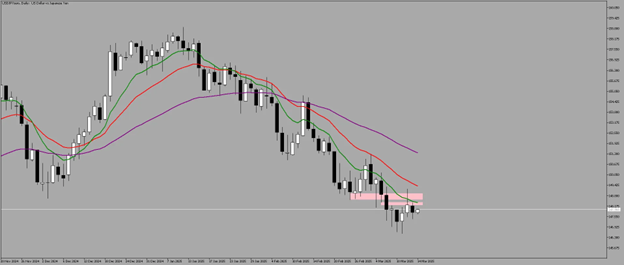
USDJPY remains strong against the dollar, trading below key moving averages with no clear signs of a slowdown or a shift toward a potential reversal.
4-Hour
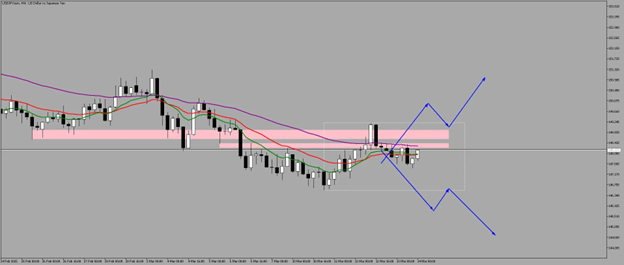
Prioritizing risk, the best approach is to wait for a decisive breakout in either direction—whether a transition to the upside or a continuation of the downside trend.
Daily
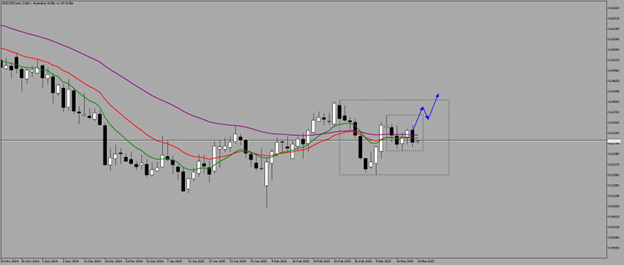
The Aussie remains confined within a micro range inside the broader macro range. For short-term directional bias, a breakout from the micro range could signal a move toward testing the macro range.
4-Hour
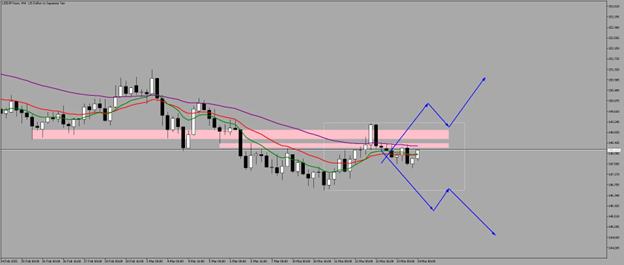
Currently, the micro range leans bearish, trading below the 50% level and hovering near support. A breakdown could confirm further downside, while a bounce may signal a potential reversal.
Daily
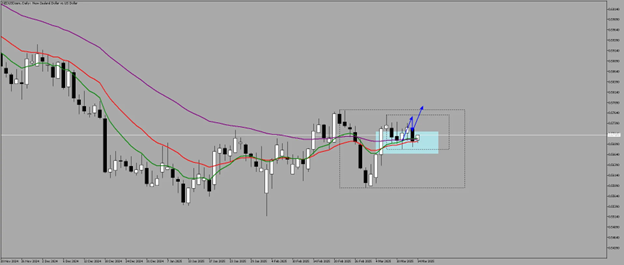
Compared to the Australian Dollar, the NZD maintains a more bullish stance, trading above the equilibrium level. The 50% level acts as strong support, with no clear signs of weakness favoring the Dollar.
4-Hour
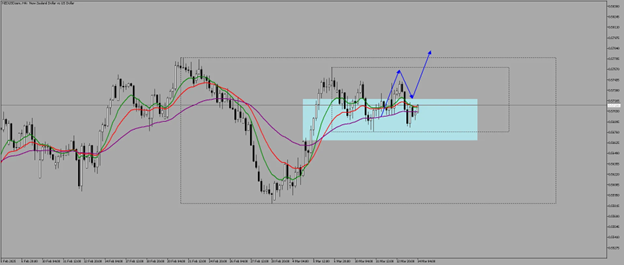
With the New Zealand Dollar maintaining a stronger bullish stance, we are watching for a breakout above the 0.57597 resistance level, potentially extending gains toward 0.57688.
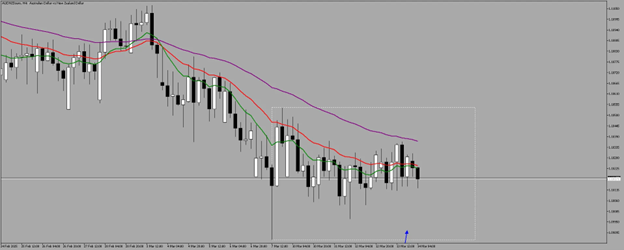
If USD is ⬇️ AUDNZD is ⬇️ = NZD is the better upside.
4-Hour
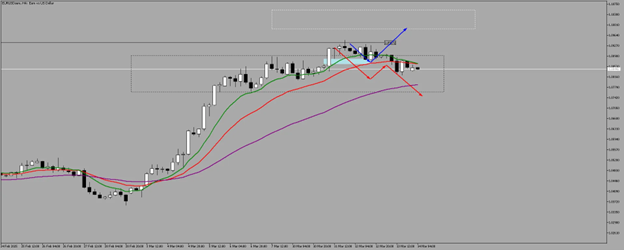
The Euro continues its upward momentum as growing investor confidence in European markets strengthens its appeal over the US dollar.
1-Hour
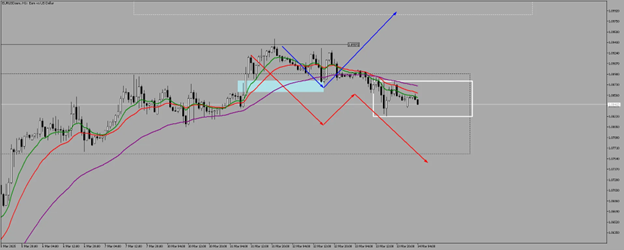
A breakout from the current micro range could signal the next directional move for the Euro, offering clarity on its trend.
Scenario:
Daily
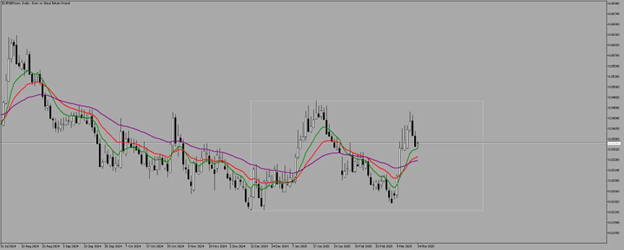
The euro continues to gain against the pound as EU members pledge to boost defense spending. With prices trading at a premium level, further upside remains in play.
4-Hour
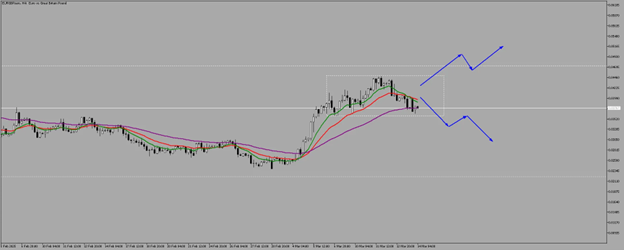
If USD is ⬇️ EURGBP is ⬆️ = EUR is the better upside.
Daily
4-Hour
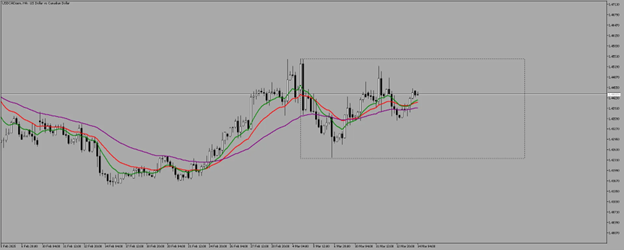
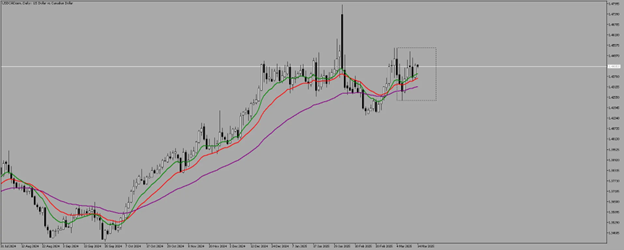
Unless USDCAD breaks out of its current range, whether above resistance or below support, price action will remain choppy and prone to whipsaws.
Daily
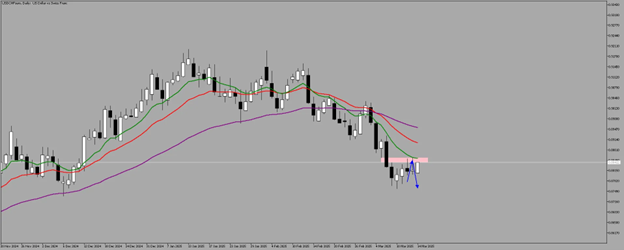
USDCHF remains in a bearish trend, trading below key moving averages. Price is rejecting resistance, signaling potential downside continuation toward 0.8750 - 0.8700, unless a breakout occurs.
4-Hour
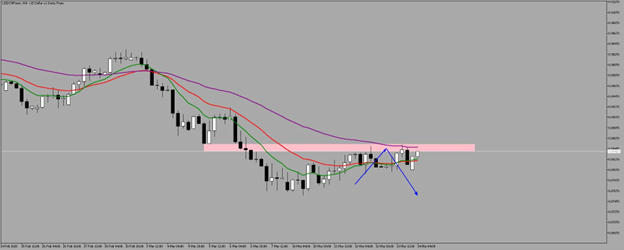
USDCHF on the H4 timeframe is approaching a key resistance zone, aligning with the bearish trend on the higher timeframes. Price has formed a potential lower high, suggesting a rejection from the supply zone. If the resistance holds, a move lower toward 0.8780 - 0.8750 could follow. A breakout above could invalidate the bearish bias.
The dollar’s decline signals a broader shift in global finance—one that could reshape investment strategies, trade policies, and consumer behavior in the months ahead. Whether this is a temporary adjustment or the beginning of a prolonged downtrend depends on how U.S. policymakers, the Federal Reserve, and global investors react to evolving economic conditions.
For now, one thing is clear: The dollar’s dominance is being tested like never before.
This content may have been written by a third party. ACY makes no representation or warranty and assumes no liability as to the accuracy or completeness of the information provided, nor any loss arising from any investment based on a recommendation, forecast or other information supplies by any third-party. This content is information only, and does not constitute financial, investment or other advice on which you can rely.
ACY Securities is one of Australia's fastest growing multi-asset online trading providers, offering ultra-low-cost trading, rock-solid execution, technologically superior account management and premium market analysis.

Select the categories and companies you wish to follow directly to your person rss feed.
Create Custom RSS Feedjust now
Sign up and join over 5,000 professional members who receive personalized news alerts, curated professional connections, and more for free!
The AI trade has always been a supply chain story. For the past two years, the narrative has been simple: insatiable demand for compute infrastructure, constrained supply at every choke point, and the companies that own the bottlenecks collect the toll. NVIDIA on GPUs. ASML on lithography. Samsung, SK Hynix, and Micron on memory. The entire semiconductor complex has traded on scarcity, and scarcity has delivered historic margins.
Interactive Brokers reported customer equity of USD 964.7 billion at the end of the third quarter, up 27% year on year, as customer accounts increased 35% to 5.58 million.
Crypto exchange BingX has secured a Markets in Crypto-Assets Regulation (MiCA) licence for its European arm from Austria's Financial Market Authority (FMA).
CXM Group has agreed to acquire TD Markets (Pty) Ltd, a Johannesburg-headquartered broker authorised by South Africa’s FSCA. TD Markets keeps its brand, team and licence, and Amar Ramith stays as CEO. Financial terms were not disclosed. The deal gives CXM a regulated base in South Africa. Clients need take no action.
Global equities under pressure: Hotter than expected US inflation and rising yields weighed on stocks, particularly technology and semiconductor shares.
Understand trading psychology and learn how a clear strategy, risk management and a trading journal help build discipline and day trading consistency.
Ripple Prime has launched support for real-world asset perpetual swaps, giving institutional clients including Virtu exposure to more than 100 reference markets across equities, indices, ETFs, metals, energy and FX. The swaps reference Trade.xyz perpetual futures on Hyperliquid and trade and settle around the clock.
iSAM Securities Apex has integrated with Crossover Markets, connecting brokers to CROSSx, its institutional digital asset ECN, through Apex’s ultra-low-latency technology stack.
Your Bourse and 4XPORTAL highlight their existing partnership, combining client onboarding, CRM and payment solutions with liquidity, execution and risk-management infrastructure for brokers.
The partnership brings together 4XPORTAL’s brokerage technology capabilities with Your Bourse’s connectivity, liquidity aggregation, and risk-management infrastructure.