
just now

Liquidity Finder Ltd is incorporated in England and Wales, company number 10610740, registered address 167-169 Great Portland Street, Fifth Floor, London W1W 5PF, United Kingdom.
Published: just now

The USD/JPY pair is balancing between U.S. inflation-driven dollar strength and Japan’s evolving policy outlook. While the Federal Reserve remains data-dependent - hovering between maintaining higher-for-longer rates and edging toward cuts - Japan faces a more political driver: the direction of the Bank of Japan (BoJ).
Markets are closely watching the leadership race within the Liberal Democratic Party (LDP), which may steer the BoJ’s policy stance for years to come. This intersection of politics and policy has revived uncertainty around the yen’s trajectory, keeping USD/JPY locked within a consolidation.
The BoJ remains the last dovish outlier among major central banks. While the Fed and ECB have moved decisively in their rate cycles, Japan has cautiously tiptoed away from negative rates without a full pivot. That may change depending on who shapes the central bank’s next phase.
For traders, the outcome is binary:
This underscores how political winds in Tokyo directly translate into volatility in USD/JPY.
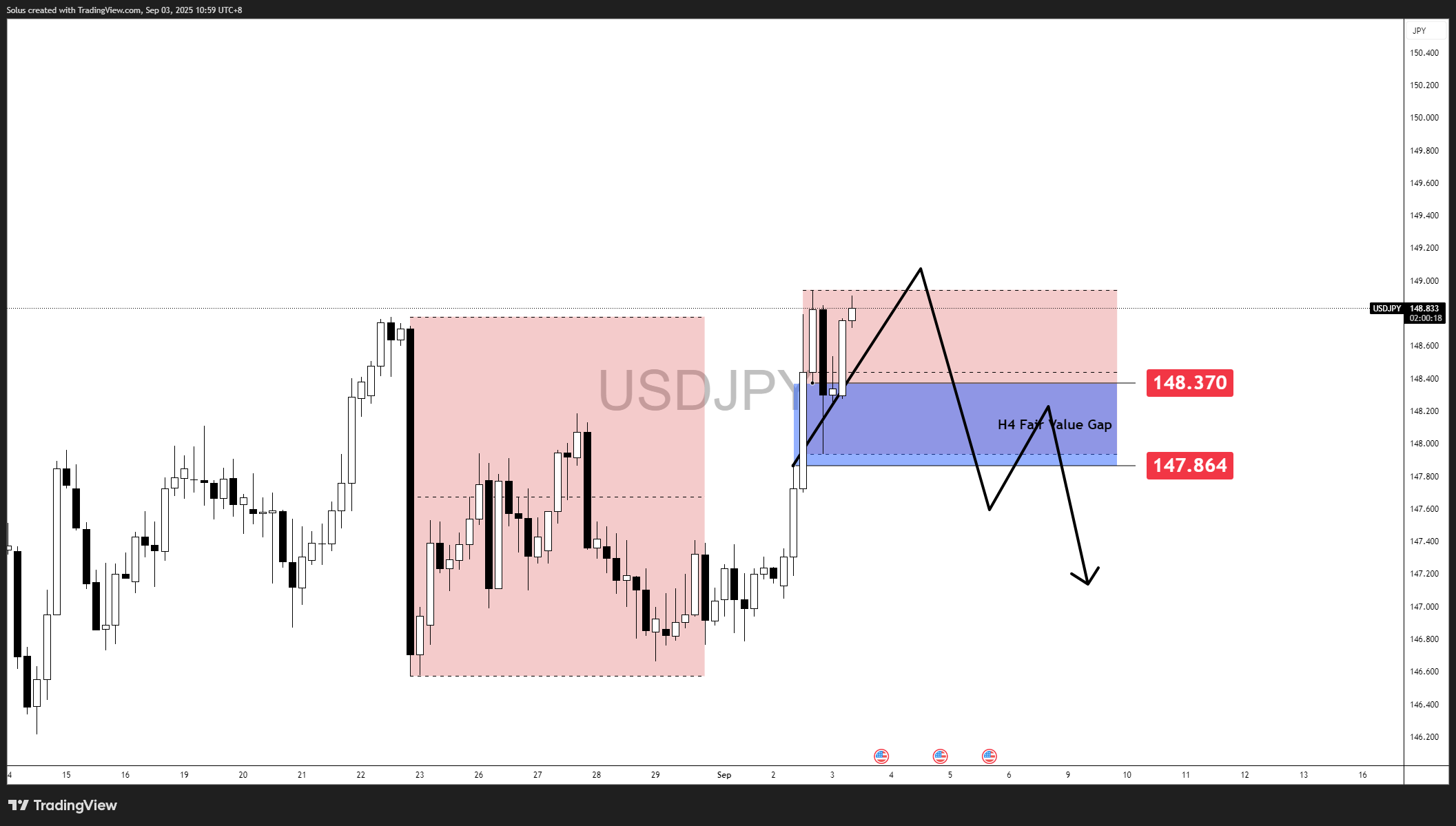
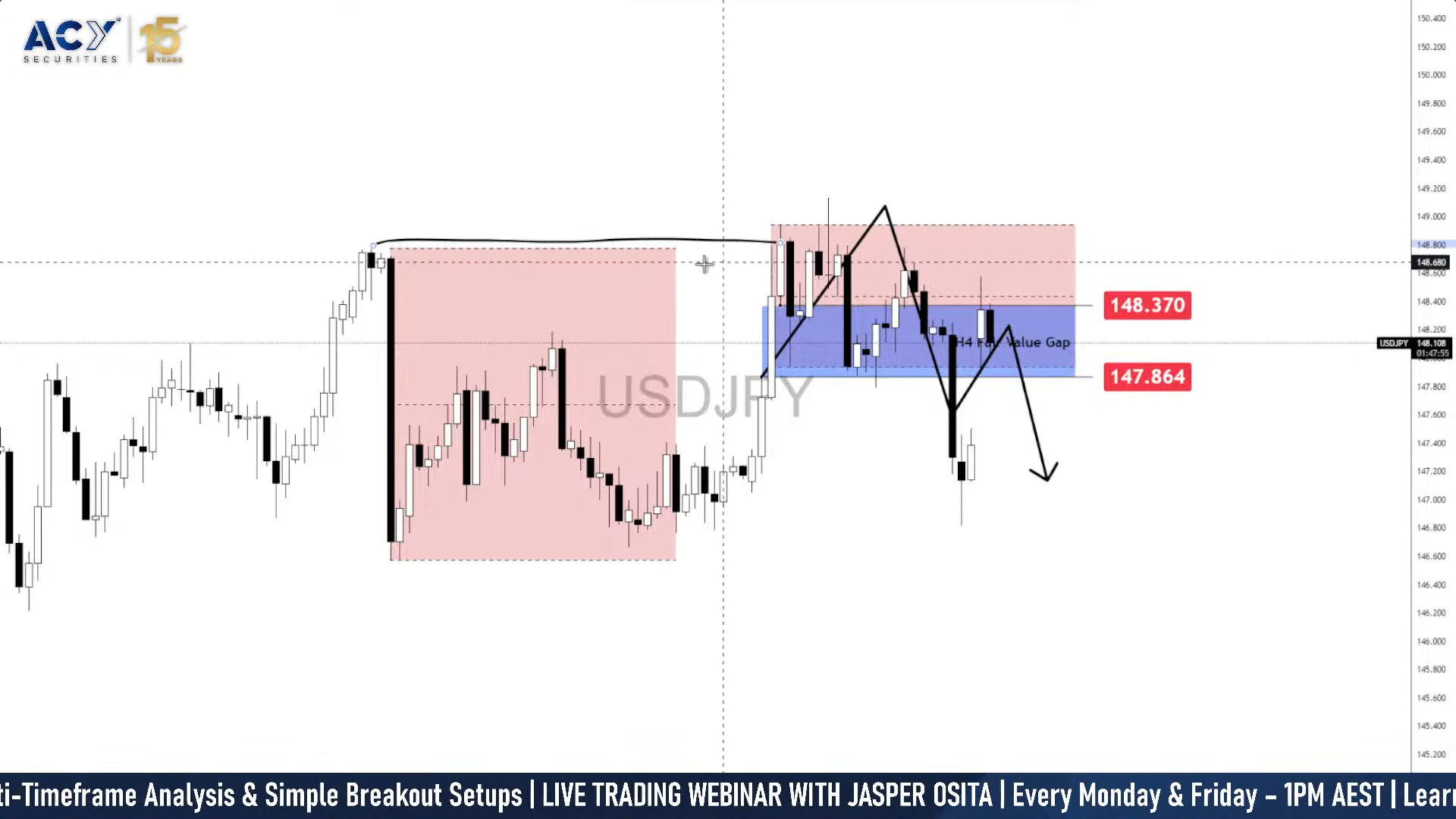
In the last forecast, we outlined a bearish distribution pattern forming below the 149 psychological level. Price action had established a H4 Fair Value Gap (148.37–147.86) and was consolidating within this imbalance. The expectation was that if USD/JPY failed to break higher and close below the 4-hour FVG, the gap would act as a resistance, prompting sellers to re-engage.
Key bearish triggers identified:
The roadmap pointed to downside toward 147.00–146.50 if the 147.86 level failed to hold.
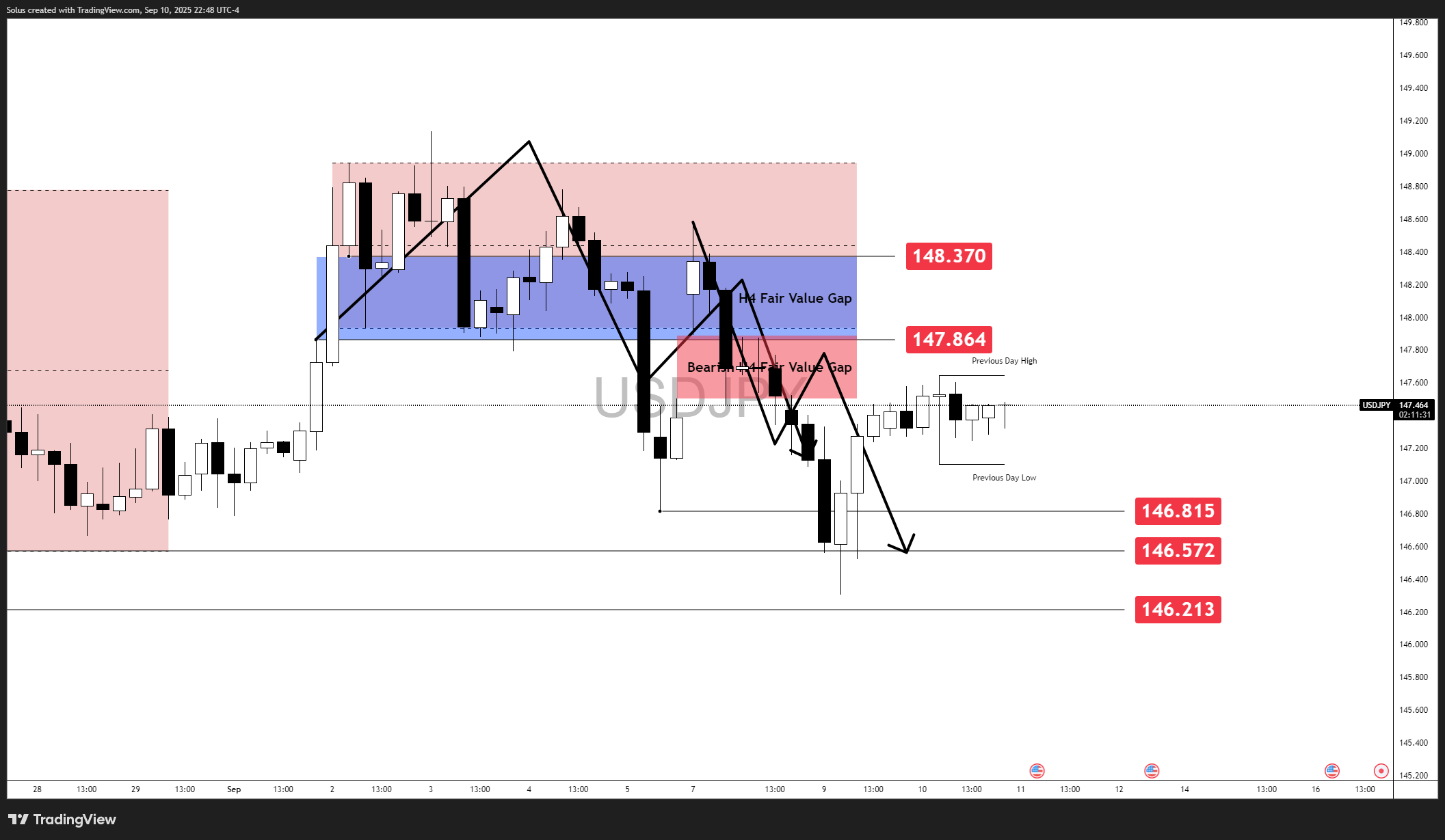
The outlined bearish path has since played out. Price tapped into the 148.37–147.86 FVG, rejected, and began to cascade lower. Sellers defended the supply zone firmly, forcing USD/JPY through support and triggering a move into the 145 level.
How it unfolded:
This confirms the distribution thesis from the last outlook, showing how imbalances provided a roadmap for the bearish continuation ahead of CPI risk.
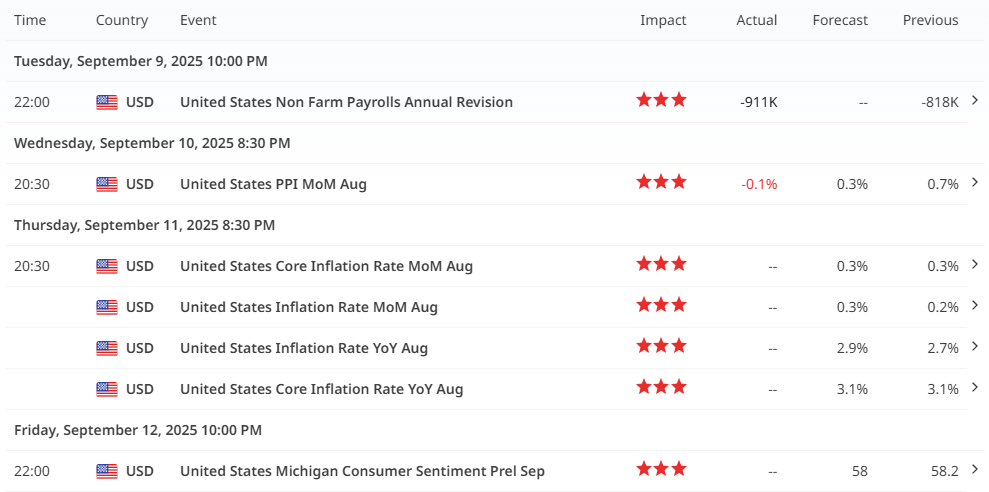
With U.S. CPI due, the report will act as the deciding factor for USD/JPY’s next directional leg.
Hot CPI Print (above expectations):
Reinforces the “higher-for-longer” Fed narrative, lifting U.S. yields and supporting the dollar. This would likely invalidate near-term bearish pressure, pulling USD/JPY back into the 148.50–149.00 zone, and even re-opening the door to the 150 psychological barrier if momentum accelerates.
Soft CPI Print (below expectations):
Strengthens Fed cut expectations, pressuring the dollar. USD/JPY could extend its bearish leg toward 146.20, with deeper retracement risk if sellers gain control below that level.
Inline CPI Print (as expected):
Likely keeps USD/JPY consolidating between 147.50–148.00, with the BoJ policy narrative remaining the heavier driver of medium-term direction.
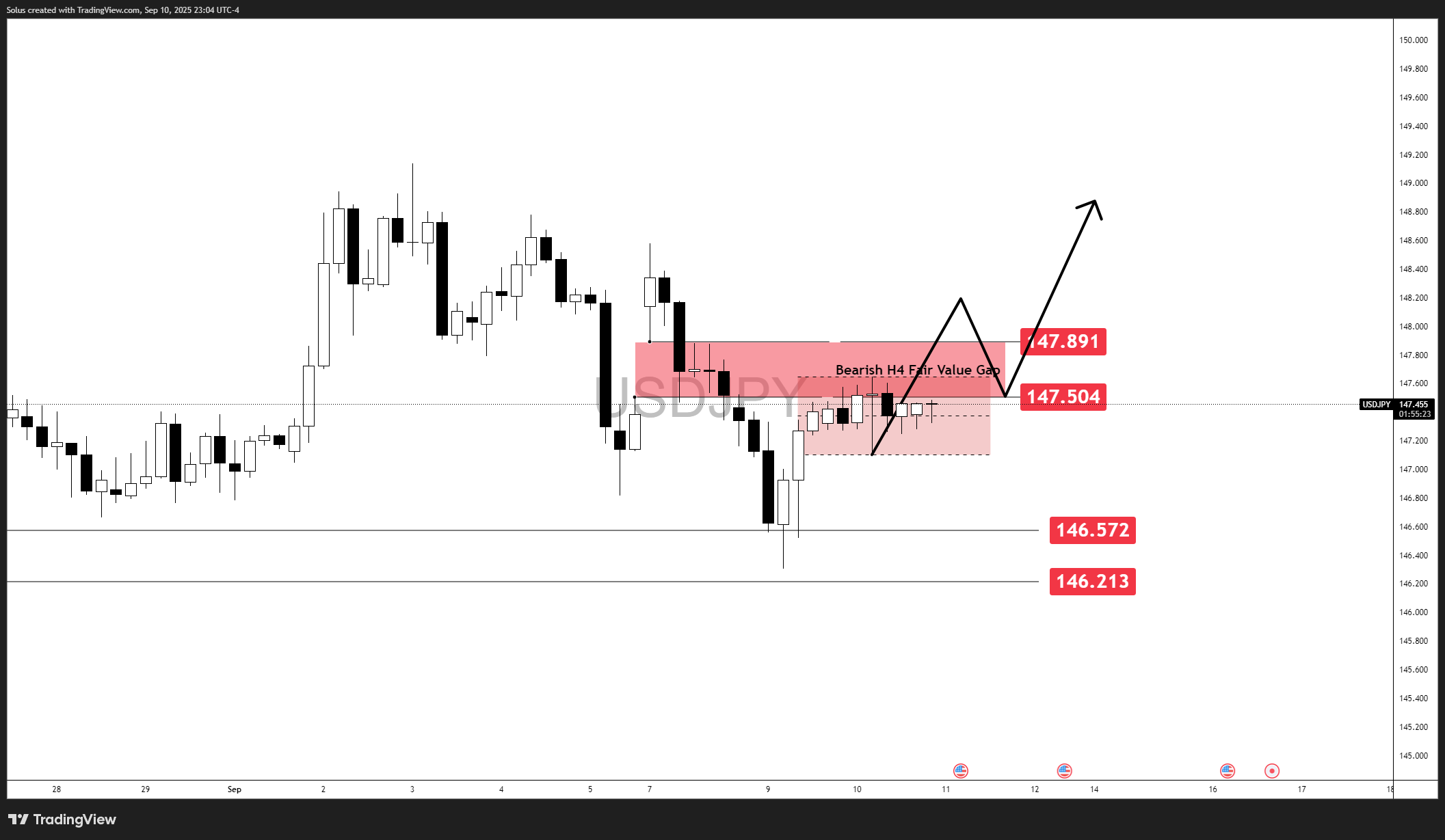
For the bullish case to materialize, USD/JPY needs to defend the 147.50 midpoint of the Fair Value Gap and push back above 147.89.
Bullish Targets:
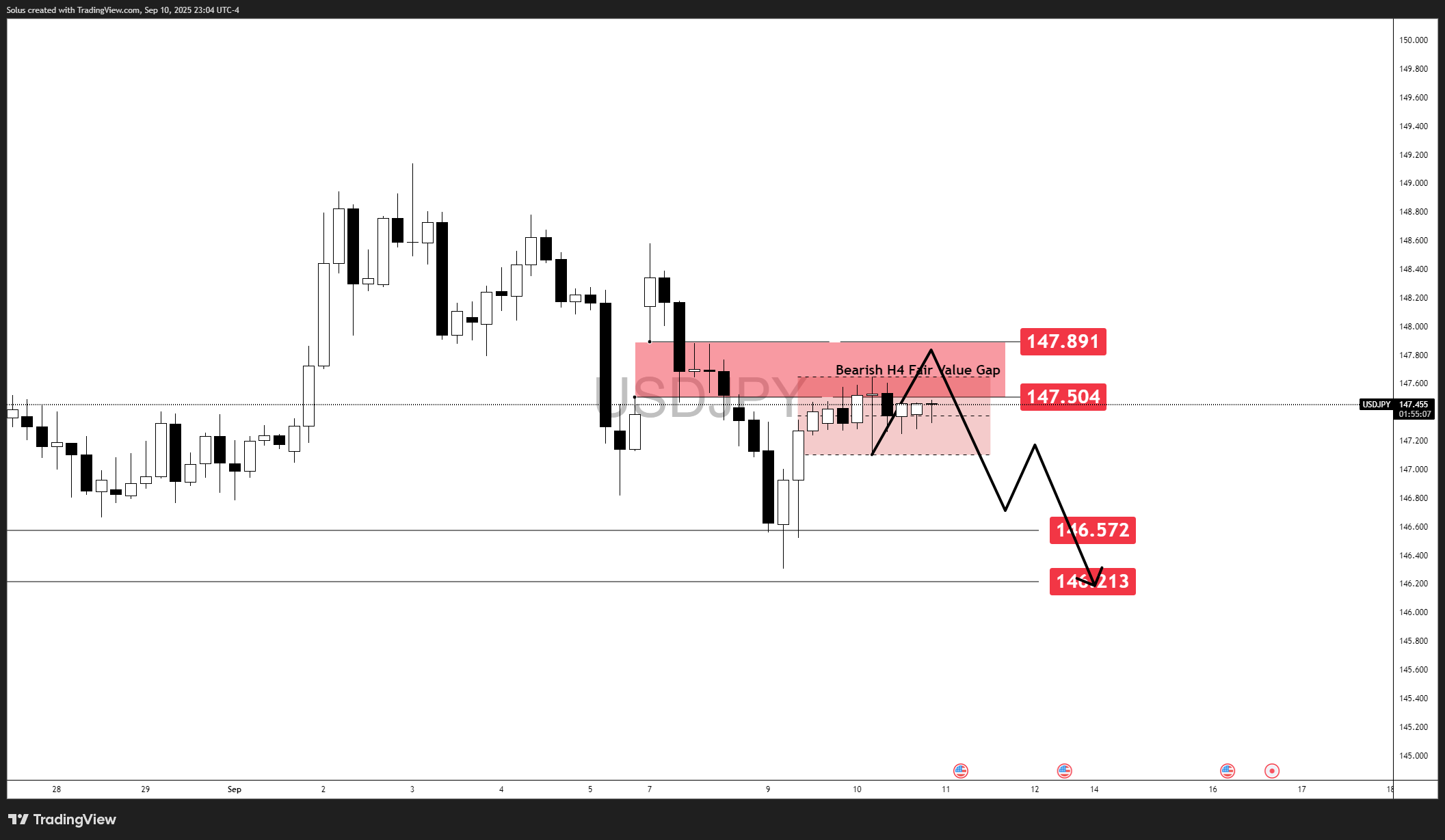
If price fails to reclaim 147.89 and supply holds inside the H4 Bearish FVG (147.89–147.50), then the downside bias strengthens.
Bearish Targets:
USD/JPY is a politically sensitive trade right now, caught between Fed inflation risks and BoJ leadership-driven uncertainty. The 148–150 supply zone has already delivered a clean rejection, confirming bearish momentum into the 146s. Going forward, the CPI release will decide whether the pair rebounds back into supply or extends the bearish leg lower.
It’s time to go from theory to execution - risk-free.
Create an Account. Start Your Free Demo!
Looking for step-by-step approaches you can plug straight into the charts? Start here:
Sharpen your edge with proven tools and frameworks:
News moves markets fast. Learn how to keep pace with SMC-based playbooks:
From NASDAQ opens to DAX trends, here’s how to approach indices like a pro:
Gold remains one of the most traded assets - - here’s how to approach it with confidence:
Candlesticks are the building blocks of price action. Master the most powerful ones:
Ready to go intraday? Here’s how to build consistency step by step:
Markets swing between calm and chaos. Learn to read risk-on vs risk-off like a pro:
Step inside the playbook of institutional traders with SMC concepts explained:
Forex pairs aren’t created equal - - some are stable, some are volatile, others tied to commodities or sessions.
If you’ve ever been stopped out right before the market reverses - - this is why:
Mindset is the deciding factor between growth and blowups. Explore these essentials:
The real edge in trading isn’t strategy - it’s how you protect your capital:
If you’re not sure where to start, follow this roadmap:
This way, you’ll grow from foundation → application → mastery, instead of jumping around randomly.
Follow me for more daily market insights!
Jasper Osita - LinkedIn - FXStreet - YouTube
This content may have been written by a third party. ACY makes no representation or warranty and assumes no liability as to the accuracy or completeness of the information provided, nor any loss arising from any investment based on a recommendation, forecast or other information supplies by any third-party. This content is information only, and does not constitute financial, investment or other advice on which you can rely.
ACY Securities is one of Australia's fastest growing multi-asset online trading providers, offering ultra-low-cost trading, rock-solid execution, technologically superior account management and premium market analysis.

Select the categories and companies you wish to follow directly to your person rss feed.
Create Custom RSS FeedSign up and join over 5,000 professional members who receive personalized news alerts, curated professional connections, and more for free!
US institutional crypto trading venue EDX Markets has announced a strategic partnership with blockchain infrastructure platform Paxos.
An Italian court has placed Revolut Bank UAB under judicial administration for one year over failings in its anti-money laundering (AML) controls in Italy
US prediction market operator Kalshi has acquired New York broker-dealer FB Securities and plans to offer trading in stocks and exchange-traded funds within the next two months.
dxFeed has warned that outdated trading technology models are threatening broker competitiveness. Stepan Bolshakov, Managing Director, dxFeed, says firms risk wasting millions on platform redevelopment, and argues modular architectures let brokers add scripting to the platforms they already operate.
The Monetary Authority of Singapore (MAS), Singapore’s central bank and financial regulator, and Germany’s central bank, the Deutsche Bundesbank, have tested connecting their digital asset settlement systems
iSAM Securities has appointed James Laidlaw as Sales Director, joining from FalconX and previously BCB Group. His background covers OTC market making in spot FX and cryptoassets, DeFi investment strategies and electronic trading systems. He will focus on developing relationships across new markets.
Talos, Marex (NASDAQ: MRX) and Broadridge (NYSE: BR) are connecting execution, prime brokerage and post-trade processing in one workflow for trading and financing DTCC-tokenised securities beyond market hours. Marex provides prime brokerage, Talos execution, and Broadridge DLX atomic on-chain settlement.
CMC Markets, a FTSE 250 multi-asset financial services firm, has named two-time heavyweight world champion Anthony Joshua a global ambassador in a 12-month partnership. CMC branding will appear on Joshua’s fight-night clothing for his 11 December bout with Tyson Fury at Cardiff’s Principality Stadium.
One company is setting the tone for the whole market. Nvidia reports on Tuesday, its first results since Jensen Huang resigned as CEO and left the board on November 12, after 33 years in charge. Two days later, Anthropic begins trading on Nasdaq in one of the largest listings ever. In between, the Fed's minutes and a 10-year Treasury yield back above 5% will remind investors that the cost of capital has not gone away.
Nasdaq is showing a clearly bearish short-term structure on the 1-hour chart. The recent low at 27,133 is the immediate support, while the broader decline from 28,535 confirms that sellers remain in control. The moving averages MA5, MA10 and MA20, with price trading below all three.