just now


Liquidity Finder Ltd is incorporated in England and Wales, company number 10610740, registered address 167-169 Great Portland Street, Fifth Floor, London W1W 5PF, United Kingdom.
Published: just now


The currency market has been thrown into disarray after Israel launched a wave of coordinated airstrikes on Iran’s nuclear and ballistic missile infrastructure a move that marks the most dangerous escalation in the region in years. Within minutes, Brent crude spiked over 11% before partially retracing, and traders rushed out of risk assets and into havens.
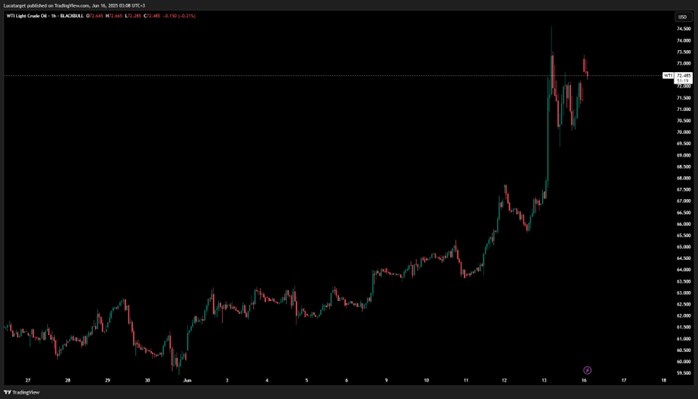
The surge in oil reversed all its losses since April when Trump’s new tariffs were first announced, snapping back above $74 before settling near $71. Meanwhile, the Swiss franc, yen, and US dollar were the prime beneficiaries of the classic risk-off play. High-beta FX like the AUD, NZD, ZAR, and MXN were punished, particularly as carry trades unwound aggressively heading into a very uncertain weekend.
From a geopolitical standpoint, things are still unfolding quickly. Netanyahu has promised continued strikes "as long as necessary," while Iran has already retaliated with over 100 drones and is promising much more. The situation has the potential to deteriorate into a wider regional conflict, and with Iranian nuclear enrichment back in the spotlight and nuclear deal talks already looking shaky this isn’t going to de-escalate quietly.
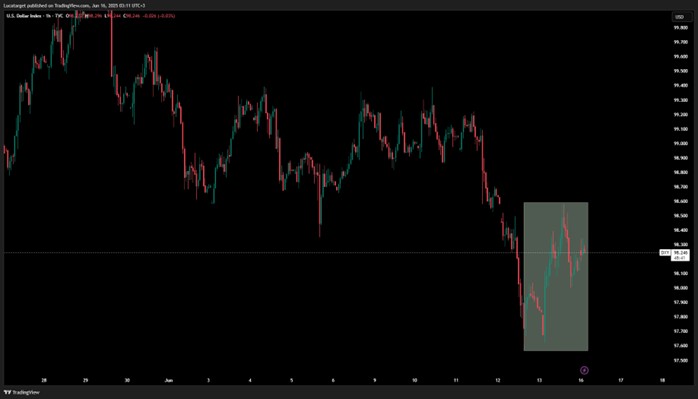
For the USD (DXY), the timing couldn’t be more interesting. Just before the missiles flew, the greenback was plumbing new year-to-date lows, driven by weak US CPI and PPI data, softening labour market prints, and growing calls for the Fed to cut. But geopolitical risk trumps everything in the short term. Now, the dollar is back in demand, even as macro headwinds remain.
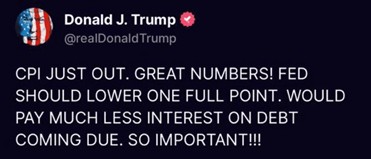
President Trump has doubled down on his pressure campaign against the Fed, calling for a two-percentage-point rate cut (up from his previous demand of one). His argument? Lower rates would ease US debt burdens by $600 billion annually. The real pressure point, however, is political: the Fed now faces a credibility test if Trump names a new chair nominee ahead of Powell's 2026 exit, as markets will have to gauge not just policy, but politics.
On that front, rate cuts still look unlikely in the very near term. While inflation is softening core PCE likely rose just 0.1% in May policymakers remain cautious due to trade uncertainty and rising energy costs. Labor market data is sending mixed signals: continuing jobless claims are now at their highest since November 2021, and while it’s not yet a trend, it could become one fast.
Across the Atlantic, the UK economy is cooling sharply. After a surprisingly strong start to 2025, GDP shrank 0.3% in April the worst print since late 2023 driven by a reversal in trade and distortions in domestic spending (think car sales and stamp duty-related activity). With front-loaded US demand fading, UK exports to the US fell by £2 billion in a single month.
Labor market slack is also building. Payroll employment is dropping, vacancies are down across sectors, and wage growth is easing. The BoE will likely stick to its quarterly easing cycle come August, but the risk now is that energy shocks from the Middle East delay disinflation progress. The government’s fiscal headroom is minimal, and tax hikes are almost certainly on the way if growth disappoints or the geopolitical crisis worsens.
This is one of those moments where geopolitical risk and macro fragility collide. The USD may have found a temporary floor thanks to war premiums, but with softer inflation and labour data still piling up, markets will have to choose which narrative dominates safety or stimulus.
Carry trades are vulnerable, risk assets are fragile, and oil volatility is now the wildcard. We’re heading into the weekend with tension rising in both Tehran and trading desks.
This content may have been written by a third party. ACY makes no representation or warranty and assumes no liability as to the accuracy or completeness of the information provided, nor any loss arising from any investment based on a recommendation, forecast or other information supplies by any third-party. This content is information only, and does not constitute financial, investment or other advice on which you can rely.
ACY Securities is one of Australia's fastest growing multi-asset online trading providers, offering ultra-low-cost trading, rock-solid execution, technologically superior account management and premium market analysis.

Select the categories and companies you wish to follow directly to your person rss feed.
Create Custom RSS FeedSign up and join over 5,000 professional members who receive personalized news alerts, curated professional connections, and more for free!
Bybit has launched Perp Options, described as the first options contracts built on TradFi perpetuals, giving traders round-the-clock access to US equity options. SpaceX and Nvidia are the first underlying assets, with USDT settlement and integration into Bybit's Unified Trading Account.
Use this trading preparation checklist to plan your session, define entry rules, manage risk, and build a disciplined trading routine in seven steps.
Your Bourse expands its crypto liquidity ecosystem with Caladan, giving brokers access to broader market coverage, institutional execution capacity and streamlined settlement.
Scope Markets, the retail brokerage part of Rostro Group, has appointed Ibrahim Hossny as Head of Research and Marketing for the Middle East and North Africa.
Hantec Prime, the institutional division of Hantec Markets, has reported trading volume up more than 300% year-to-date, alongside the addition of 42 new institutional clients since December, capping one of its strongest years of growth to date.
Learn how to refine XAUUSD support and resistance on the daily chart using candle bodies, market structure and weekly gold levels for swing trading. A slug alone cannot guarantee a top Google ranking. Keep it focused rather than adding every supporting keyword.
The week in Dubai will be focused on connecting directly with the industry and discussing how technology can help modern brokerages simplify operations, automate workflows, strengthen operational control, and scale efficiently.
Devexperts has launched a turnkey solution giving brokers in South Korea access to US equity markets, combining its DXtrade trading platform, dxFeed market data, and execution services. The offering targets South Korea's growing retail demand for US stocks, worth several billion USD monthly.
Assess why WTI crude oil surged past $105 per barrel amid Saudi pipeline disruptions, record tanker charter rates, and escalating geopolitical tensions.
Bitcoin price forecast: BTC/USD retests $78,460–$80,215 resistance. Watch bearish confirmation toward $72,480 or a bullish breakout toward $86,150.