just now


Liquidity Finder Ltd is incorporated in England and Wales, company number 10610740, registered address 167-169 Great Portland Street, Fifth Floor, London W1W 5PF, United Kingdom.
Published: just now

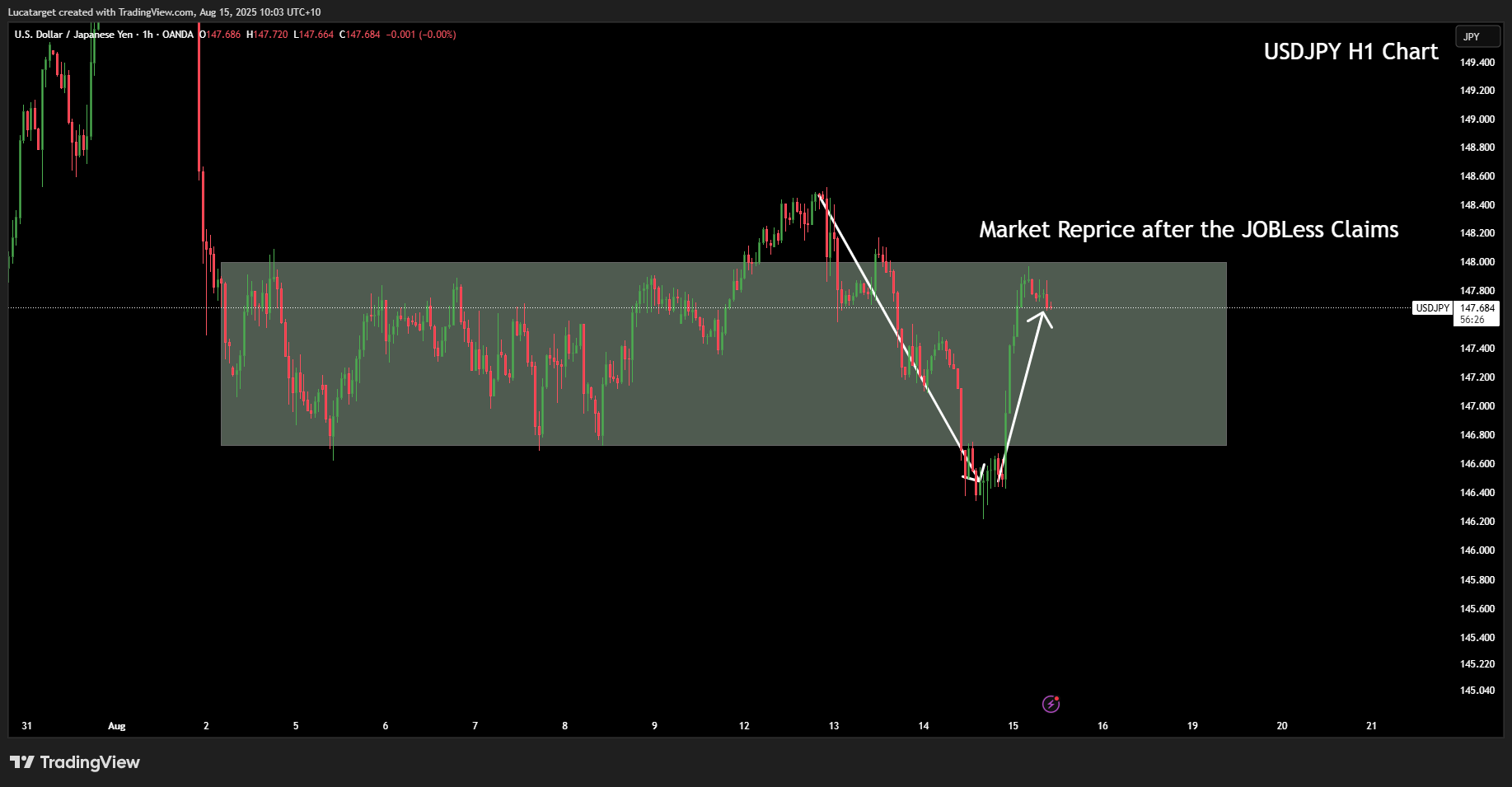
I woke up to a market re-pricing that feels more about policy signalling than data surprises. The yen led in Asia, with USD/JPY slipping back toward the mid-146s and rigth after coming back to 147s after the Jobless Claims release from USA, as traders leaned into the idea that BoJ normalization is not done.
The immediate catalyst was ongoing chatter around Tokyo’s communications framework and whether the Bank shifts emphasis from “underlying inflation” to realised price dynamics, subtle, but the kind of tweak that invites markets to price additional hikes at the margin.
Layer on Washington’s persistent push for easier Fed policy and a stronger yen narrative has oxygen, at least tactically.
In Europe, the UK printed a sturdier-than-feared Q2: +0.3% q/q (after +0.7% in Q1) with June GDP +0.4% m/m. That mix doesn’t scream boom, but it does complicate the case for rapid BoE easing, especially with services momentum still carrying weight.
Markets have faded some of the cut pricing and the pound has been bid on the crosses as a result. For me, the takeaway isn’t that growth is taking off; it’s that Britain’s cyclical floor held into summer, keeping the BoE in “data-dependent dawdle” mode rather than a pre-set quarterly cutting cycle.
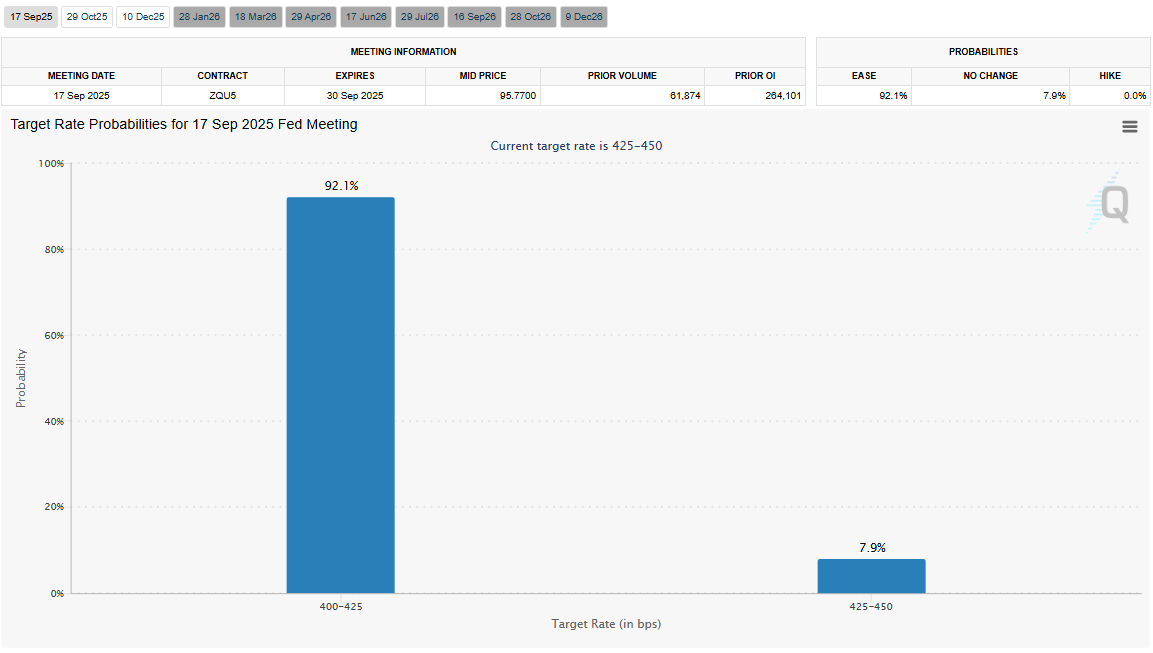
Across the Atlantic, the debate has pivoted from “if” to “how much” the Fed delivers in September. Treasury messaging has leaned openly dovish through July, and while money markets are comfortable with 25bp, the rhetorical space for a larger opening move remains part of the narrative.
My base case: the Fed opts for a conventional 25bp in September unless incoming inflation (PPI/CPI) and labour prints roll over more abruptly; the bar for 50bp is higher and would likely require a clean downside shock across both prices and jobs in the next few weeks.
JPY: I prefer to fade sharp USD/JPY rallies into 147–148 while the market stress-tests the BoJ’s guidance. Wage trends and the BoJ’s communication tweaks matter more than spot intervention rumours; if the Bank nudges its narrative toward realised inflation and tolerance for further normalisation, rate differentials can grind in JPY’s favour without fireworks. Risk: a hawkish Fed repricing that re-widens the front-end spread.
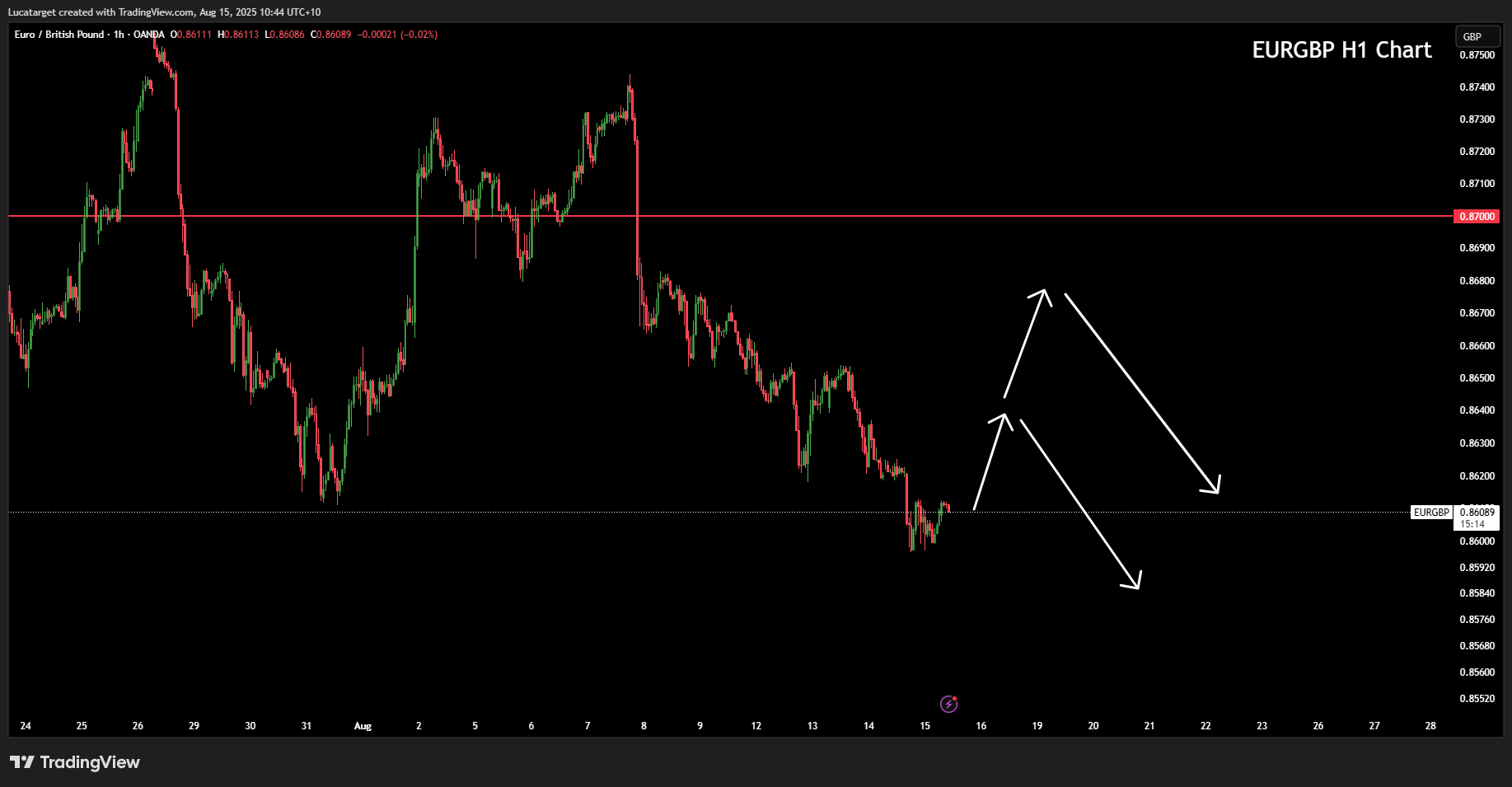
GBP: With Q2 growth firm enough to avoid a “must-cut” narrative, I like GBP on dips vs. low-beta Europe (e.g., EUR/GBP rallies toward 0.87 look sellable) while we wait for UK services and pay data to confirm. If UK domestic demand wobbles in Q3, this view softens, but for now the BoE can afford patience.
The yen’s bid, the UK’s sturdier growth prints, and the Fed’s open debate over the size of its September move are not isolated stories, they’re different expressions of the same market mood: policy is in transition, but the pace and scale remain contested.
In this environment, patience matters as much as positioning. I’m staying tactical rather than directional, letting the data decide the next sustained move, and looking to exploit short-term dislocations rather than make long-term bets on imperfect signals.
Q1: Why did the yen strengthen today?
A: The move was driven by speculation that the Bank of Japan may shift its policy language toward realised inflation, which traders interpret as keeping the door open for further policy normalisation.
Q2: How does UK growth affect Bank of England policy?
A: Stronger-than-expected GDP reduces the urgency for rapid rate cuts, giving the BoE room to move cautiously and remain data-dependent.
Q3: What is the market expecting from the Fed in September?
A: Most pricing is for a 25bp cut, but softer inflation and labour data in the coming weeks could revive talk of a larger 50bp move.
Q4: How do these policy shifts impact currency markets?
A: Currency values often move on relative interest rate expectations, when one central bank is seen tightening or staying on hold while another moves toward easing, rate differentials adjust and drive FX flows.
Q5: What’s the main takeaway for traders right now?
A: This is a period of policy transition across major economies, which means opportunities will come from short-term dislocations rather than long, one-directional trends.
This content may have been written by a third party. ACY makes no representation or warranty and assumes no liability as to the accuracy or completeness of the information provided, nor any loss arising from any investment based on a recommendation, forecast or other information supplies by any third-party. This content is information only, and does not constitute financial, investment or other advice on which you can rely.
ACY Securities is one of Australia's fastest growing multi-asset online trading providers, offering ultra-low-cost trading, rock-solid execution, technologically superior account management and premium market analysis.

Select the categories and companies you wish to follow directly to your person rss feed.
Create Custom RSS Feed
just now
Sign up and join over 5,000 professional members who receive personalized news alerts, curated professional connections, and more for free!
ESMA has published an opinion stating that MiCA-authorised crypto-asset service providers should cease services tied to non-MiCA-compliant stablecoins for EU clients across MiCA crypto-asset services. National authorities should require remediation of existing exposures within three months, by early January 2027.
Nasdaq Ventures has made a strategic investment in Amsterdam-based derivatives and crypto exchange One Trading, with both firms to explore 24/7 trading of equity futures. The undisclosed investment follows Nasdaq's US$100 million investment in Payward, the parent of Kraken, and CME Group's move to 24/7 trading.
cTrader has opened multi-platform plugins to brokers and prop firms, which can pre-install their own tools for clients or list them in cTrader Store. The plugins run across Mobile, Web, Windows and Mac, and can be built and launched independently of core-platform releases, including trading journals and calculators.
Institutional brokerage and financial infrastructure provider Clear Street has joined TradingView’s broker network, allowing its clients to trade US stocks, exchange-traded funds and options directly through the charting and analysis platform.
Learn how to improve trading psychology, manage fear and greed, avoid revenge trading, and follow your trading strategy with discipline and a trading journal.
GTC Prime has announced a strategic partnership with Centroid Solutions to manage and distribute its liquidity through CS 360 Bridge, Centroid's multi-asset connectivity and execution engine, giving brokers and institutional clients access to tailor-made pricing, low-latency execution and real-time risk management.
CMC Markets Founder and CEO, Lord Peter Cruddas, discusses the structural evolution of the Group, the accelerating opportunity across B2B and institutional markets, major global partnerships including Revolut, Westpac, and ASB, and his outlook for the remainder of the financial year ahead.
Clear Street has announced an exclusive partnership with Seawolf Capital to bring market commentary from Danny Moses, Vincent Daniel and Porter Collins to its clients and the wider investing community, including live market calls, digital content and events. New programming will sit alongside Seawolf's podcast.
Yields are surging. But is inflation really the reason? This week’s BitDelta Pro Weekly Outlook looks beyond the headline explanation to examine what is actually driving the move in rates, and what that could mean across equities, credit and commodities. We also explore the growing importance of balance-sheet quality, the signals emerging from the AI infrastructure cycle, and what oil and gold may be telling markets about the current macro regime. Read the full Weekly Outlook. BitDelta Securities Financial Services LLC, regulated by the Capital Market Authority under Category 5 (Introduction Only), acts solely as an introducer and does not provide trading, execution, dealing, advisory, portfolio management, or custody services. All trading, execution, and investment-related services are provided by BitDelta Limited, Mauritius, a licensed Investment Dealer. All trading and investments involve risk. The value of investments may fluctuate, and you may receive less than your initial investment.
Devexperts has appointed Rainer Fuchsluger as Global Group Chief Executive Officer, effective immediately. His career spans LSEG, Wolters Kluwer, SS&C and Thomson Reuters, and he follows Ben Hurley, who was CEO for two years. His mandate covers international growth, cloud computing and AI across the portfolio.