just now

Liquidity Finder Ltd is incorporated in England and Wales, company number 10610740, registered address 167-169 Great Portland Street, Fifth Floor, London W1W 5PF, United Kingdom.
Published: just now
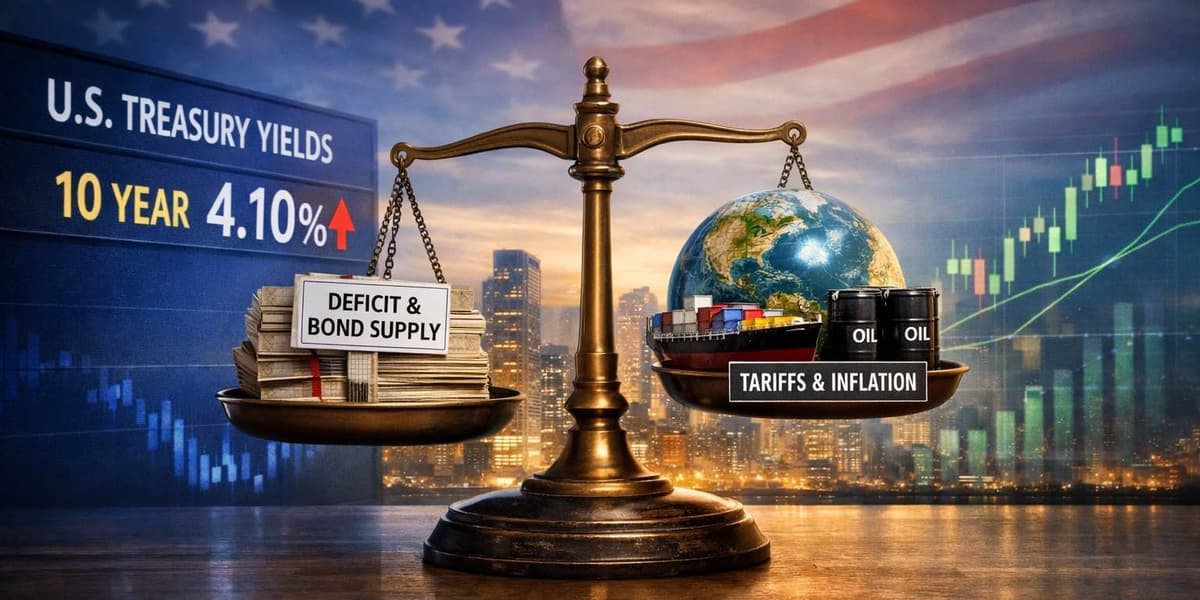
Markets reacted calmly but cautiously to the recent US Supreme Court ruling, with the clearest move seen in US government bonds. The 10-year US Treasury yield has edged back towards 4.10%. It’s not a dramatic shift, but it reflects growing unease about what this means for the fiscal deficit and future bond supply.
The key issue is the US deficit. Tariff revenues have recently helped soften concerns around government borrowing. While the deficit remains high, actual outcomes have been slightly better than the same period last year, largely thanks to tariff income. That has reduced pressure on the US Treasury to issue more long-dated bonds.
If those tariff revenues fade, however, the funding gap widens. That could mean more bond issuance down the line, particularly at the longer end of the curve. More supply typically means higher yields.
The next question is inflation. If tariffs are reintroduced in another form – which remains the base case for many analysts – inflation risks stay elevated. If Congress resists extending tariff powers, inflation pressure could ease, but that would leave a bigger revenue shortfall to fill.
On balance, fiscal risk looks like the dominant force. That suggests further upside pressure on yields, with the 10-year potentially drifting towards 4.25%. We could also see the yield curve steepen again, with the 2-year versus 10-year spread moving back towards 75 basis points.
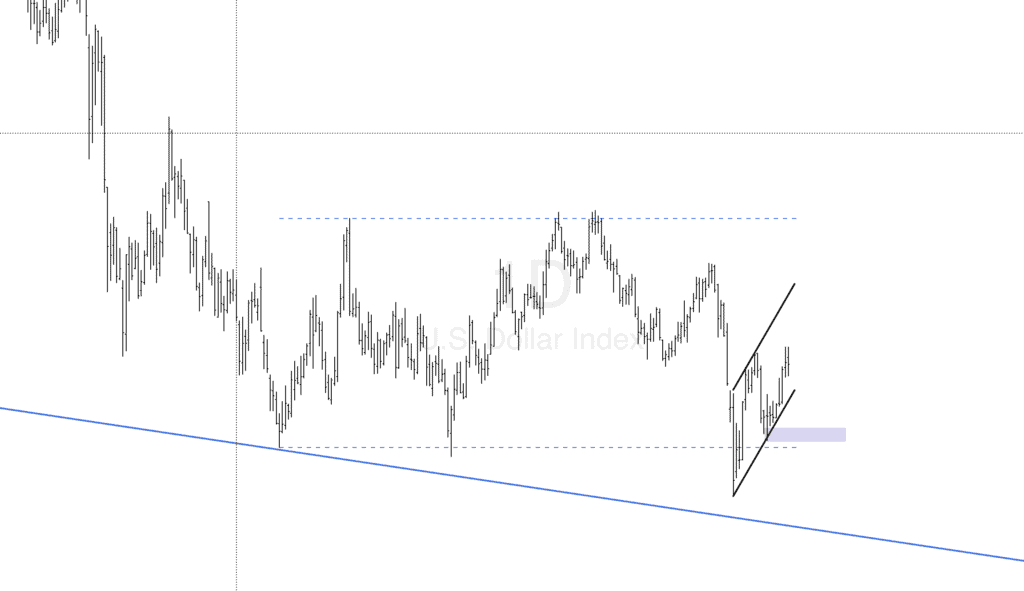
The US dollar is slightly weaker on the news. Pro-cyclical currencies – those that benefit from global growth – are leading gains. Scandinavian currencies and the Australian dollar are outperforming, reflecting a modest “risk-on” tone.
However, uncertainty remains high. The legal process could drag on for months. Meanwhile, the Canadian dollar and Mexican peso may underperform given that USMCA trade renegotiations are due in July.
There is also a separate geopolitical risk to watch: Iran. Any escalation that pushes oil prices $10–20 per barrel higher would likely strengthen the dollar again, particularly given the US advantage as a major energy producer. That would quickly challenge the current pro-growth narrative.
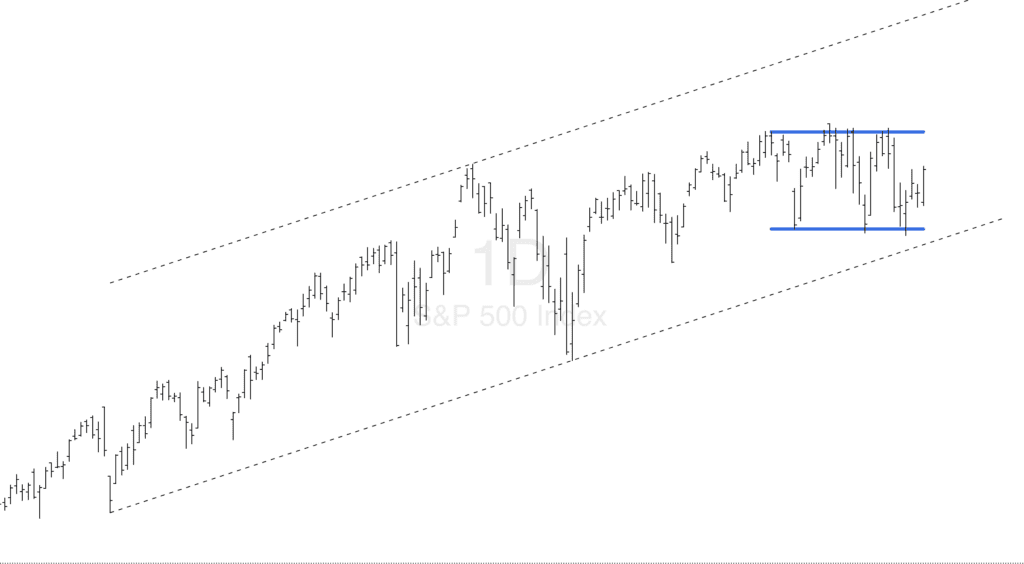
Equity markets have so far welcomed the prospect of reduced tariff pressure on corporate margins. US futures are up roughly 0.7%, while Germany’s DAX futures are also firmer.
There are signs that international investors are already rotating away from US equities. Recent European Central Bank data showed strong foreign buying of eurozone equities late last year. As long as energy prices remain stable, that rotation into non-US markets could continue.
The key risk to this theme would be a spike in oil prices or a renewed tariff escalation.
This week’s US calendar is relatively light. The main focus will be:
Producer Price Inflation (Friday) – Markets continue to price two Federal Reserve rate cuts in 2025 despite relatively hawkish January meeting minutes. A surprise here could shift that view.
Consumer Confidence (Tuesday) – Sentiment remains under pressure due to tariff worries and a cooling labour market. However, higher-income households continue to support spending, keeping the “K-shaped” recovery dynamic intact.
For now, markets are balancing modest optimism in equities against renewed fiscal concerns in bonds. Yields are drifting higher, the dollar is soft but fragile, and global equities are benefiting from hopes of tariff relief.
That balance could shift quickly. Fiscal sustainability, inflation trends, and geopolitical risk – particularly around energy – will set the tone for the weeks ahead.
Alchemy Markets is a multi-asset brokerage providing retail traders with the same elite trading conditions, tools, and transparency typically reserved for institutions.

Select the categories and companies you wish to follow directly to your person rss feed.
Create Custom RSS FeedSign up and join over 5,000 professional members who receive personalized news alerts, curated professional connections, and more for free!
Multi-asset trading broker AvaTrade has agreed to acquire the majority of FXCM Group’s business and brand, in a transaction that would bring a longstanding retail FX franchise into the AvaTrade Group.
LSEG and CMC Markets have signed a multi-year strategic data agreement expanding CMC's access to LSEG's real-time and delayed pricing, reference and corporate actions data, news and analytics, plus AI-ready content, to support new products, entry into new markets and the growth of CMC's institutional and B2B partnerships.
The Tel Aviv Stock Exchange is considering a bid for the Cyprus Stock Exchange, with Israeli media citing its EU licence, trading platform and clearing house. Euronext’s Athens exchange and India’s National Stock Exchange are also seen as contenders, and Cyprus aims to sign a sale agreement by the end of this year.
CME Group will launch baseball futures on 12 October, pending regulatory review, tracking CME FutureSports Performance Indexes built on Official League Data. Standard and micro contracts will start with the 2026 Postseason and the four clubs in the League Championship Series, trading around the clock.
ESMA has published an opinion stating that MiCA-authorised crypto-asset service providers should cease services tied to non-MiCA-compliant stablecoins for EU clients across MiCA crypto-asset services. National authorities should require remediation of existing exposures within three months, by early January 2027.
Nasdaq Ventures has made a strategic investment in Amsterdam-based derivatives and crypto exchange One Trading, with both firms to explore 24/7 trading of equity futures. The undisclosed investment follows Nasdaq's US$100 million investment in Payward, the parent of Kraken, and CME Group's move to 24/7 trading.
cTrader has opened multi-platform plugins to brokers and prop firms, which can pre-install their own tools for clients or list them in cTrader Store. The plugins run across Mobile, Web, Windows and Mac, and can be built and launched independently of core-platform releases, including trading journals and calculators.
Institutional brokerage and financial infrastructure provider Clear Street has joined TradingView’s broker network, allowing its clients to trade US stocks, exchange-traded funds and options directly through the charting and analysis platform.
Learn how to improve trading psychology, manage fear and greed, avoid revenge trading, and follow your trading strategy with discipline and a trading journal.
GTC Prime has announced a strategic partnership with Centroid Solutions to manage and distribute its liquidity through CS 360 Bridge, Centroid's multi-asset connectivity and execution engine, giving brokers and institutional clients access to tailor-made pricing, low-latency execution and real-time risk management.