
Search Companies, News, Members & more
Terms of ServicePrivacy PolicySecurity PolicyLegal InformationCommunity GuidelinesSitemapsCookie Settings
2026 Copyright © Liquidity Finder Ltd. All rights reserved.
Liquidity Finder Ltd is incorporated in England and Wales, company number 10610740, registered address 167-169 Great Portland Street, Fifth Floor, London W1W 5PF, United Kingdom.
How Do Foreign Brokers Enter The Brazilian Market? Costs, Capital And CVM Rules

Published on Oct 16, 2026
Updated on Oct 16, 2026
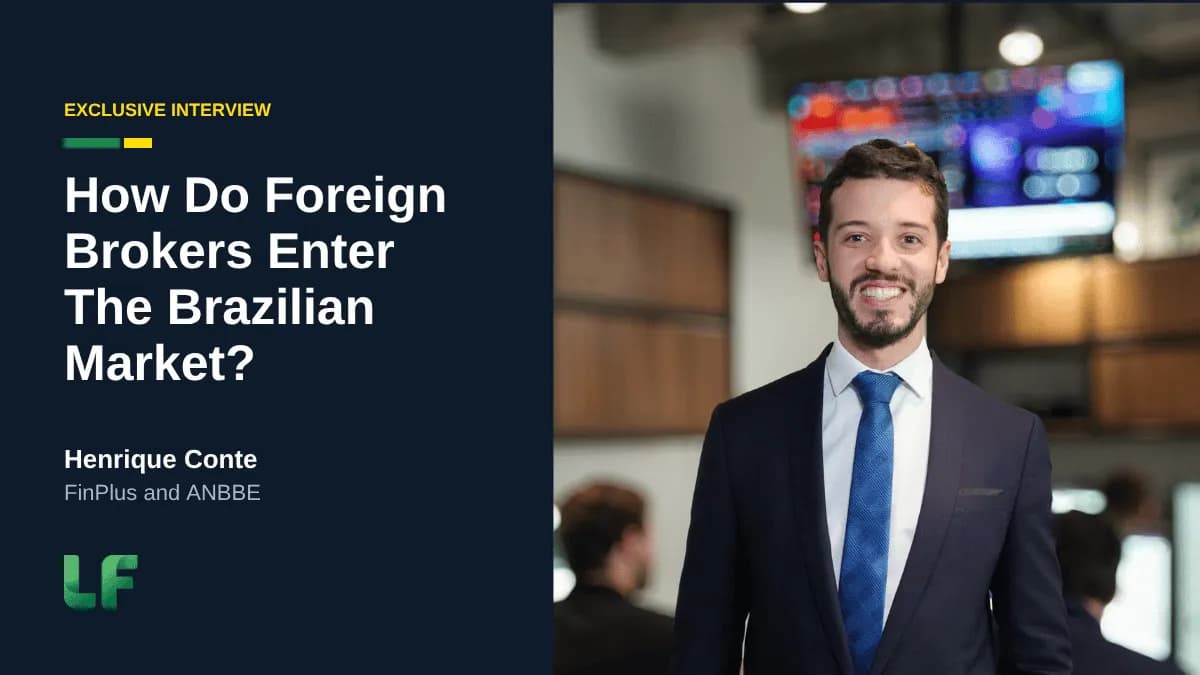
Through my conversations with brokers it seems that getting into Brazil is hot right now. I asked Henrique Conte of FinPlus and ANBBE what the opportunity really looks like, what it costs to get started in Brazil, and what the regulatory environment looks like
Brazil is hot right now.
In less than two years, the index has risen by more than 70%.
The day after the recent first round of the presidential run-off the Ibovespa jumped 7.7%, its biggest one-day rise since March 2020, to close above 200,000 for the first time. The real gained more than 4% against the dollar, reaching its strongest level in 17 months.
Part of the rally is the market positioning for a second Bolsonaro presidency, which investors expect to keep a tighter grip on public spending. Investment bank Morgan Stanley has upgraded Brazilian stocks to overweight.
I have been speaking to quite a few brokers who have Brazil on the to do list. What doesn’t seem to be clear is how a foreign broker actually gets into the country.
So I called Henrique Conte. Henrique is CFO and CTO of FinPlus, a Brazilian regulatory consultancy that helps foreign brokers set up a compliant presence in Brazil. He is also Director of Communications and Marketing at @ANBBE-BrazilianAssociationofForeignBrokers a self-regulatory body working to connect Brazil with the global capital markets, and Henrique can of course be found on LiquidityFinder @henriquec8f81a .
I had not prepared a list of questions. We just went for it. Hopefully the below is helpful for anyone out there looking to crack the Brazilian market.
If you only have a minute, here is how the two routes compare, based on what Henrique told me.
| Local Partner Route | Your Own Licence | |
| Time to launch | Around three months | At least two years, whether you buy a brokerage or apply for a new licence |
| Indicative cost | Around USD 15,000 a month for the local institution's services, depending on client numbers and risk | Acquisition or licensing costs, plus the running costs of a Brazilian financial institution |
| Regulatory capital | None. You pay for a service | Around BRL 14.4 million (roughly USD 2.9 million) for a typical brokerage. The exact figure depends on the activities it carries out |
| Branding | Your brand, with the local institution shown alongside it with the same relevance | Your own brand |
| People in Brazil | Support and sales in Brazilian Portuguese. FinPlus may recommend an investment advisory firm with at least one certified advisor resident in Brazil (around USD 15,000 to 20,000 a year) | A full local operation as a Central Bank-authorised institution |
| Oversight | The Brazilian institution supervises your activity under the CVM's partnership conditions | Central Bank authorisation and supervision, with the CVM overseeing your securities business |
| Henrique's advice | Start here, even if you plan your own licence later | A next step once you know the market |
Why Are Foreign Brokers Looking At Brazil?
Sam Low: Henrique, I keep speaking to brokers who want to get into Brazil. But what is the prize? Plenty of them have already worked their way through other emerging markets. Is Brazil worth the effort?
Henrique Conte: Brazil is by far the biggest market in South America. We have a huge population, and only a very small share of people's money is invested. So there is a large potential customer base and a big pool of savings that could move into investments.
Many of the big incumbent banks here offer a limited range of products, especially international ones. Brazilians like the idea of investing in dollars and holding assets outside the country, because our currency has a long history of losing value over time. A broker that can offer international assets has something different to sell.
I know from experience that brokers are tapping into this very successfully. But it does not come without risk, particularly if you come from the CFD business. You need to understand how you are allowed to approach those investors.
Brazil's Trading Market*:
• Around 350,000 active day and swing traders on B3, Brazil's exchange
• An estimated 3 to 5 million Brazilians with some exposure to offshore OTC derivatives, including 300,000 to 800,000 recently active in forex and CFDs
• B3's public target: double its day and swing traders to 700,000, partly by bringing in people currently trading offshore
• 77.7% of Brazilian FX and CFD traders say regulation and licensing is their main reason for choosing a broker
• 71.8% use Pix as their main payment method
*From FinPlus's Retail Trader & Trader Industry in Brazil 2026 report
Sam: Before we get into that, where do you fit in? Have you worked for a broker yourself, or have you come at this from the regulatory side?
Henrique: I am a fund manager myself; I have not come from another brokerage firm. Our expertise is Brazilian financial markets and capital markets regulation, and that gives us a particular view of how to do this properly.
FinPlus specialises in helping foreign brokers establish their presence here. We work on the structure, the relationship with the local institution and the compliance requirements. We also help firms deal with regulatory proceedings.
There are other firms doing this, of course. But it is our niche.
Sam Low: Why now? Is it all about the stock market?
Henrique Conte: The macro picture could be very positive for Brazil over the next few years, and there has been a big uptick in interest in the Ibovespa and Brazilian financial products in general.
But if you look only at Brazilian investors, the recent shift has mostly been to crypto. The Central Bank's new licensing rules for crypto firms have a deadline at the end of October, and that has caused a lot of movement in the market. At the same time, the Central Bank has raised capital requirements for financial institutions, so we are seeing a lot of consolidation.
Sam's note: The crypto deadline Henrique mentions is 30 October 2026. Under the Central Bank's new rules for virtual asset service providers, which took effect on 2 February 2026, firms that were already operating have 270 days to file the first phase of their application for authorisation. Those that file can keep operating while it is processed. Those that do not must wind down within 30 days. It is a separate regime from the brokerage routes in this interview, but it shows how quickly Brazil is formalising its markets. Pedro Birmann, the Brazilian CEO of trading technology firm Quadra, told me much the same when I interviewed him for . I come back to the capital rules later on.
Can Foreign Brokers Offer CFDs To Brazilian Clients?
Sam : This is where I get a bit confused. Brazil has seemed quite closed to retail brokers. Can they actually operate there, or is it essentially reverse solicitation: a client can find you, but you cannot go out and find the client?
Henrique : Reverse solicitation is allowed. Brazilians are free to decide what to do with their own money. If an investor finds your website by themselves, perhaps because you sponsor a Formula 1 team globally, and they want to open an account, there is nothing irregular about that.
What the CVM, our securities regulator, takes issue with are two things in particular. The first is a public offering of unregistered securities. The second is unregistered intermediation: offering brokerage services to Brazilians without being registered here or working through a registered local institution.
Having no office in Brazil does not put you outside the CVM's reach. It is the activity that matters. If you breach either of those two points, the CVM can go to the regulator where you are licensed, the FCA in the UK for example, and tell it that your firm is acting illegally in Brazil.
Sam : So let me press you on CFDs, because this is the part brokers will want to understand. What is the difference between promoting your brokerage and promoting the products people can trade?
Henrique : CFDs are not a registered category of security in Brazil, so you cannot make a public offering of them. But you can talk about your brokerage, its services and what makes it different, and you can approach Brazilian residents openly while you do it.
It is the same with shares. Apple stock is an unregistered security in Brazil. A Brazilian investor can trade it with you, no problem, but you cannot advertise it. You could not run a campaign telling people to invest in the SpaceX IPO, for example.
The framework also involves offering access to recognised markets. You need to take care over both the structure and what you say in your marketing. The right path is a bit peculiar, and that is where we help. Reviewing the broker's campaigns and the content its introducing brokers produce is part of our daily work.
Sam's note: The local partner route comes with conditions. It rests on a 2021 CVM decision that lets foreign intermediaries serve Brazilian residents through partnerships with Brazilian institutions, subject to suitability checks, anti-money laundering controls, investor disclosures and supervision by the local partner.
Access is limited to a list of recognised foreign markets. In May 2026 the CVM's board agreed to add CME, CBOT, NYMEX and COMEX to that list, and its technical area confirmed the change in August. None of this amounts to blanket permission to market CFDs or forex, and the local institution is expected to enforce restrictions on products and features. One thing that tripped me up: in Brazil, "introducing broker" is often used for this partnership model, with the Brazilian institution introducing clients to the foreign broker. That is not the same as the IBs and affiliates most of us mean when we use the term, which come up later.
Sam : The brokers I am speaking to might have management in Dubai or London, but an entity in Mauritius, Cyprus or Seychelles. Does the name on the licence make a big difference?
Henrique : It depends on what you intend to do. We have clients with companies in Mauritius, and that is fine. In fact, many Brazilian companies structure their holdings in Mauritius. Cyprus is a good jurisdiction as well.
The CVM does not publish a list saying this jurisdiction is acceptable and that one is not. But you have to think beyond the CVM. A payment provider will assess your firm before it lets you accept Pix and other Brazilian payment methods. And if you want to buy a brokerage or set up local entities, the ownership structure and compliance considerations matter even more. A group operating mainly from a jurisdiction that is grey-listed for money laundering would have problems.
Also, the key indicator used by the CVM is if the jurisdiction is a signatory of the IOSCO Multilateral Memorandum of Understanding (MMoU), and if it is not, such as the case of Seychelles for instance, they would have a harder time having a regulated presence in Brazil. That does not mean it is not possible though, and that is where we come in to help.
How Does The Local Partner Route Work?
Sam : You are describing something like an umbrella arrangement with a local broker. Does that Brazilian firm work with just one foreign broker, or could it have five or ten under the same umbrella?
Henrique : Both are possible. What we offer is one Brazilian institution working with several foreign brokers. In our experience, that is easier and cheaper.
You contract with the local institution and implement the processes the partnership requires. You do not have to create your own Brazilian brokerage first, and you do not need to put up the regulatory capital.
Sam : And I keep my own brand? Where does the Brazilian partner appear? In the small print at the bottom of the website?
Henrique Conte: You keep your brand, yes. But the local institution must appear alongside it with the same relevance. That is the actual term used. On the Brazilian version of your website it is visible at the top, next to your own logo, with further information and disclosures in the footer.
Sam : The obvious concern is information leakage. If that local partner is working with five or ten brokers, how do I know information from my business is not going to help one of the others? How do they trust that?
Henrique Conte: There has to be a trust relationship. There is a contract to protect the arrangement, and internal separation between the teams.
The institution we work with is a foreign exchange and payments provider. It does not trade, it does not profit from its partners' customers and it has no investment business of its own competing for those clients. There is no commercial gain in passing customers from one partner to another. There is only risk.
And to be clear, it is our partner. It is not a company owned by FinPlus.
How Much Does It Cost To Enter Brazil Through A Local Partner?
Sam : So a broker comes to you and says, "We want to get into Brazil." What happens next, and how long before it can start?
Henrique : First, we look at its goals and structure the presence around them. Then we work through the local partnership and the changes needed to the operation.
That includes adjustments to onboarding, anti-money laundering and know-your-customer processes, and how the broker receives and treats Brazilian residents.
For the partnership route, you are looking at something like a three-month project. Once that implementation is complete, the broker can start acquiring Brazilian clients the next day.
Sam : We have talked about getting set up, but we have not put a number on it. If I come to FinPlus and ask you to arrange the local partnership, what should I be budgeting?
Henrique : As an overall indication, around USD 15,000 a month for the local institution's services.
But it depends on how many customers you have and the nature of your business. There are a lot of variables. A big broker and a small broker carry different risks, and the local institution evaluates that too. We would go into the detail for the particular firm.
Sam's note: That USD 15,000 a month is Henrique's indicative figure for the local institution's services. It is not a total launch budget. We didn't go through FinPlus's own fees or the other set-up costs, so ask Henrique for a full breakdown based on your business.
How Much Capital Do You Need For Your Own Brazilian Brokerage Licence?
Sam Low: Now suppose I am a very large, publicly listed broker. I have the money and I am serious about Brazil. Do I still need this partner, or can I set up my own brokerage?
Henrique Conte: You can have your own brokerage, of course. We can help with an acquisition or with an application for authorisation.
But if you are a foreign entity buying a Brazilian financial institution or applying for a licence, I would allow at least two years. It is not an easy process, and there are a lot of approvals that need to happen.
Sam Low: Even for a large FCA- or ASIC-regulated group, you would still suggest starting with the local partner?
Henrique Conte: Mostly, yes. If they are patient enough and want to go straight down the acquisition or licensing route, that is possible, and we can help.
But we recommend starting with a service provider while you work towards your own licence. You familiarise yourself with Brazilian law and build experience in the market. Once your own licence is in place, you can let the partner go. By then you are an expert in Brazil and can handle it yourself.
Brazil is more complex than our neighbours. In that respect, we are more like the UK or the US than Mexico. Starting small gives you the chance to learn and grow from there.
Sam Low: You mentioned that the Central Bank has raised capital requirements. If I do go it alone with my own brokerage, how much capital are we talking about?
Henrique Conte: Today the minimum for a brokerage is around 14.4 million reais, depending on the activities it carries out. Before the change, the requirements were all over the place, and some small brokerages needed only a few hundred thousand reais.
I had an example just last week. A very small brokerage, four people with a real estate business, had a capital requirement of around 600,000 reais. Now it needs 14.4 million reais just to keep its licence active. All of a sudden, that is a lot of additional capital.
Sam Low: That is a serious jump. Did it happen overnight?
Henrique Conte: No. The new rules came in around November last year and are being phased in. Every six months, existing institutions need to increase their capital again.
We have seen a lot of consolidation as a result, with companies being sold, bought or liquidated.
But remember, capital is not the same as expenditure. It is an investment that stays committed to the business, and most firms hold it in Brazilian government bonds, which pay a good yield.
And that is the distinction we discussed earlier. If you use a local partner, you pay for its services. You are not putting up the capital to own a Brazilian brokerage yourself.
Sam's note: After the call, I got the detail, and confirmed with Henrique:
These rules come from Brazil's Central Bank and National Monetary Council, not the CVM. Minimum capital is the paid-in share capital and net worth an authorised firm must hold at all times. Until now, the minimums had barely changed since 1999 and were set by type of institution. Today they depend on what a firm actually does: a starting amount based on how many categories of activity it carries out, plus amounts for its operational, investment and funding activities. That is why the jump can be so big for a small brokerage like the one Henrique describes. Firms already operating kept the old minimum until 30 June 2026 and are now stepping up gradually, reaching the full amount by the end of 2027.
If you want a rough idea of your own number, the Central Bank has a minimum capital calculator on its website, though it stresses the result is illustrative only. Henrique's figure of BRL 14.4 million is roughly USD 2.9 million at today's rate. And the route is open: in May, Dubai-headquartered broker CFI Financial Group announced it had received Central Bank authorisation to operate as a securities brokerage in Brazil.
What Local Staff And Payment Set-Up Do You Need In Brazil?
Sam Low: I used to live in Stockwell in south London, which has a big Portuguese community. I would go into the local shops to buy Portuguese pastries for example, and couldn't understand a word anyone around me was saying. In Spain or France I can usually get by. Surely you need someone who speaks the language and understands the market?
Henrique Conte: Yes, and it needs to be Brazilian Portuguese. It is quite distinct from the Portuguese spoken in Portugal.
From a regulatory point of view, you need to offer support in Portuguese, and your sales team needs to communicate with Brazilian customers. Beyond that, people who understand the local market, whether employees or introducing brokers, make commercial sense if you want to grow here.
Sam Low: What is the actual requirement on the ground, though? Do I need a local compliance person and a whole team before I can get started?
Henrique Conte: That depends on the structure. If you are not buying a Brazilian brokerage or applying for your own licence, you do not automatically need that kind of local operation.
We may recommend setting up a regulated entity here, such as an investment adviser firm, to carry out the commercial activity. For that you need at least one certified investment adviser resident in Brazil. They do not have to be a Brazilian national.
Sam Low: And roughly what would a good person in that role cost me?
Henrique Conte: If we are talking specifically about that investment adviser role, which is the minimum, I would say USD 15,000 to USD 20,000 a year for a good professional.
Sam Low: What about getting money in and out? If clients are paying in reais and the brokerage is overseas, how does that work in practice?
Henrique Conte: What most brokers use is a foreign exchange payment arrangement. The investor pays in reais, and the broker receives dollars almost instantly, wherever its client accounts are held.
If you are routing the business through a company in Brazil, then you have that company's tax position and local obligations to consider. The investor also has their own tax responsibilities.
We can help with introductions to payment providers as part of setting up the operation.
How Do Foreign Brokers Win Clients In Brazil?
Sam : Right, so I have the local partner and the processes in place, but no clients. What do brokers actually do to get the business moving?
Henrique : The compliance work comes first: onboarding, AML, KYC and how Brazilian residents will be treated. Once that is done, firms build out their sales operation, depending on the structure they have chosen.
What works very well here is introducing brokers. Once you have your IBs and a sales team up and running, you can go full throttle.
Sam : And you look at what those IBs are saying, as well as the broker's own advertising?
Henrique : Yes. We review social media and marketing campaigns, and we also review posts and content from IBs. That is something we do daily.
Sam : Could I hire a venue in São Paulo, invite people along and launch my brokerage with a presentation?
Henrique Conte: Once you have everything implemented with the local institution, yes, you can. Before that, you would be taking a risk, and the CVM could issue a stop order.
Sam : What does a stop order mean in practice? You cannot operate in Brazil for a period of time?
Henrique Conte: It is a notice to the public in general. The CVM says, specifically, that this brokerage is not registered in Brazil. The administrative process follows after that. But if you have your full presence set up in the way I have explained, you would greatly reduce this risk.
Sam's note: CVM stop orders are published on the regulator's website, and enforcement is stepping up. According to FinPlus, stop orders nearly tripled from 13 in 2024 to 37 in 2025, alongside 434 warning letters last year.
Sam : But those IBs will often already have relationships with other brokers. How do you persuade them to leave and come to a new firm? What works in Brazil?
Henrique : That is the commercial challenge. We do not get too involved in that side. Our focus is regulation and marketing compliance.
We can help with some introductions, but bringing those partners over to your business is not our strong suit. That is something the broker has to work on.
Have Any Questions About Brazil? Ask Henrique
Brazil is a real opportunity for brokers that go about it properly, and going about it properly takes planning so as not to fall foul of CVM. The partnership route can get you live in around three months for a monthly fee. Your own licence takes years and, under the new rules, millions of reais in capital.
If you want to dig deeper, FinPlus has put together a 98-page report on Brazil's retail trading market, covering the size of the opportunity, how Brazilian traders behave and how the CVM approaches foreign brokers.
LIQUIDITYFINDER members can get a free copy.
>>Just send me a message through @sam_low and I'll send it over.<<
Not a member yet? Registering is free and takes a couple of minutes.
(LIQUIDITYFINDER may receive a small fee for introductions to FinPlus.)
Share this article

Comments
Most Recent
Find The Right Partners for
Your Trading Business
Sign up and join over 5,000 professional members who receive personalized news alerts, curated professional connections, and more for free!
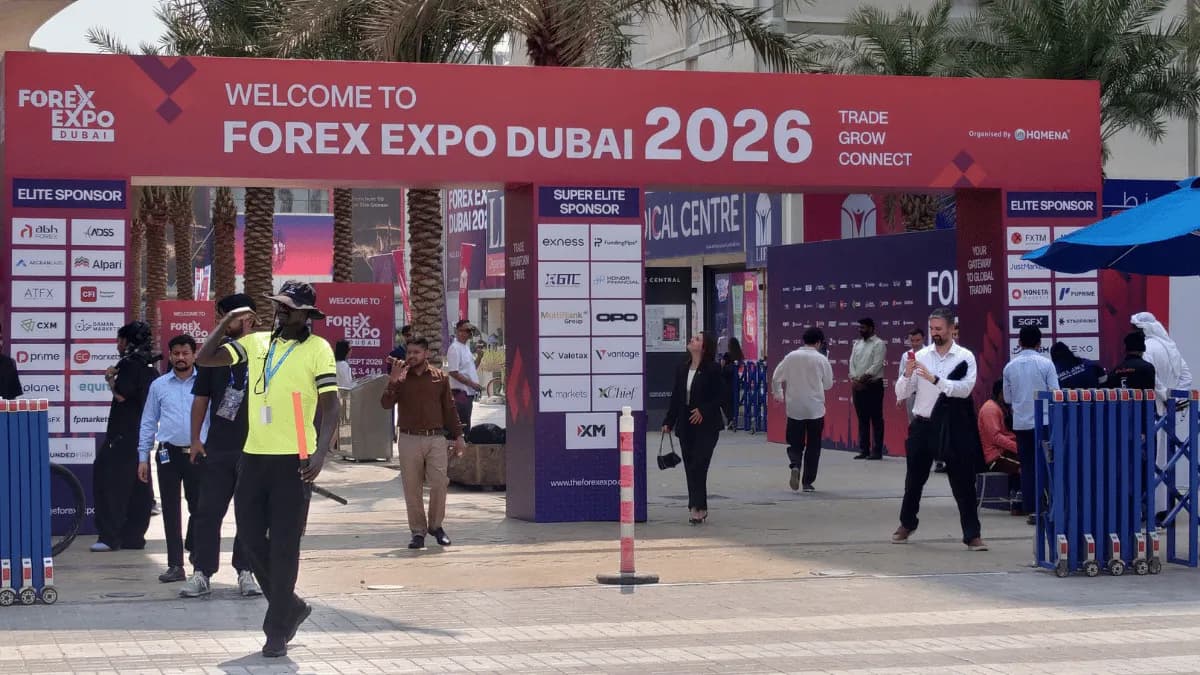
Some thoughts from Forex Expo Dubai 2026 about forex brokers: what was going on in the competition for attention, offshore unregulated entities on the same playing field as multi regulated brokers, in-house AI builds and the rise of prediction markets.
A comprehensive interactive guide to 50+ global financial regulators - including FCA, ASIC, CFTC, MAS and ESMA - rated across five dimensions: risk management, licence value, investor protection and more. Updated 2026.

A comprehensive look at SEBI regulations, permitted currency pairs, broker options, and what the institutional landscape looks like.
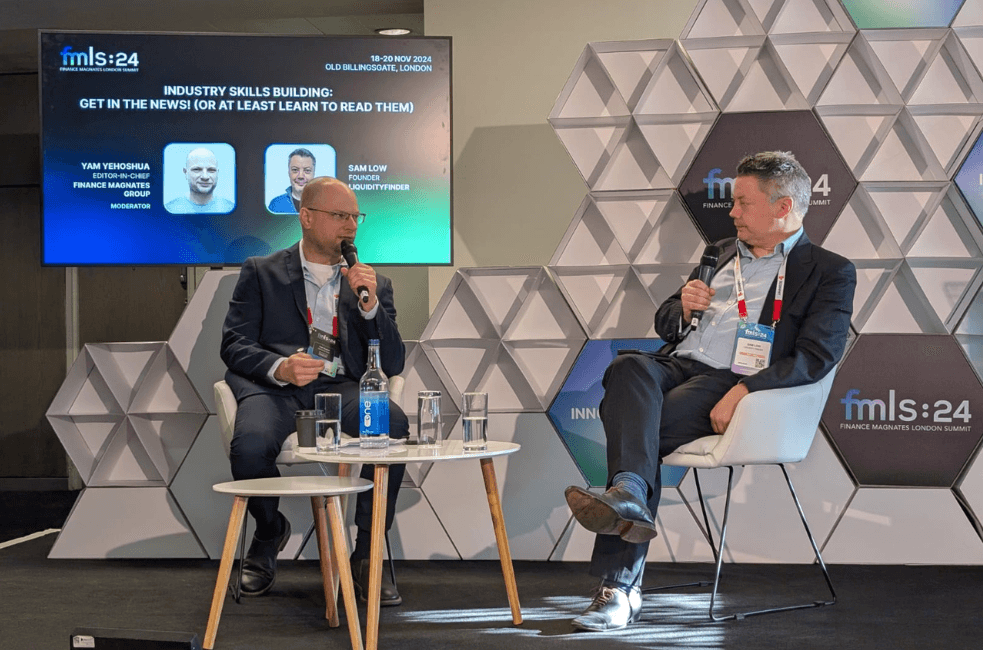
As someone who receives hundreds of press releases and news submissions, I wanted to share some insights on how financial firms can more effectively work with industry publishers. During a recent panel discussion with Yam Yehoshua from Finance Magnates at FMLS24, we explored the key elements that make for successful PR in our industry.

Mauritius is an attractive destination for retail brokerages, and the FSC of Mauritius continues to support the development of regulatory frameworks. Here’s everything you need to know if you’re considering setting up a retail brokerage in Mauritius.

Although the authorities in the Seychelles do not provide a definitive list of brokers set up in the territory (with this type of secrecy being one of the attractions to brokers setting up here), it is estimated that there are between 300-400 retail brokers registered in The Seychelles. Why are there so many brokers registered here? Should you join them?

In this comprehensive step-by-step guide, we'll walk you through everything you need to know to set up your own brokerage. From obtaining the necessary licenses to choosing the right technology and marketing your services, we will take you through the steps on the journey. Do let us know if you need any help with anything covered below.

Leverage limits for CFD trading vary significantly across jurisdictions. This comparison covers FCA, ESMA, ASIC, CySEC, FSCA, and other key regulators, giving brokers and traders a clear picture of what's permitted where.
Create Your FREE Account
Get access to latest news, updates, real-time data, brokerage and trading firm insights and customized information feeds.


The AI trade has always been a supply chain story. For the past two years, the narrative has been simple: insatiable demand for compute infrastructure, constrained supply at every choke point, and the companies that own the bottlenecks collect the toll. NVIDIA on GPUs. ASML on lithography. Samsung, SK Hynix, and Micron on memory. The entire semiconductor complex has traded on scarcity, and scarcity has delivered historic margins.


Interactive Brokers reported customer equity of USD 964.7 billion at the end of the third quarter, up 27% year on year, as customer accounts increased 35% to 5.58 million.

Crypto exchange BingX has secured a Markets in Crypto-Assets Regulation (MiCA) licence for its European arm from Austria's Financial Market Authority (FMA).
CXM Group has agreed to acquire TD Markets (Pty) Ltd, a Johannesburg-headquartered broker authorised by South Africa’s FSCA. TD Markets keeps its brand, team and licence, and Amar Ramith stays as CEO. Financial terms were not disclosed. The deal gives CXM a regulated base in South Africa. Clients need take no action.


Global equities under pressure: Hotter than expected US inflation and rising yields weighed on stocks, particularly technology and semiconductor shares.


Understand trading psychology and learn how a clear strategy, risk management and a trading journal help build discipline and day trading consistency.

Ripple Prime has launched support for real-world asset perpetual swaps, giving institutional clients including Virtu exposure to more than 100 reference markets across equities, indices, ETFs, metals, energy and FX. The swaps reference Trade.xyz perpetual futures on Hyperliquid and trade and settle around the clock.


iSAM Securities Apex has integrated with Crossover Markets, connecting brokers to CROSSx, its institutional digital asset ECN, through Apex’s ultra-low-latency technology stack.

Your Bourse and 4XPORTAL highlight their existing partnership, combining client onboarding, CRM and payment solutions with liquidity, execution and risk-management infrastructure for brokers.


The partnership brings together 4XPORTAL’s brokerage technology capabilities with Your Bourse’s connectivity, liquidity aggregation, and risk-management infrastructure.
Feed