
Liquidity Finder Ltd is incorporated in England and Wales, company number 10610740, registered address 167-169 Great Portland Street, Fifth Floor, London W1W 5PF, United Kingdom.
Institutional Market Insights: Liquidity
Access institutional insights, expert interviews, company spotlights and deep-dive analysis on market structures.
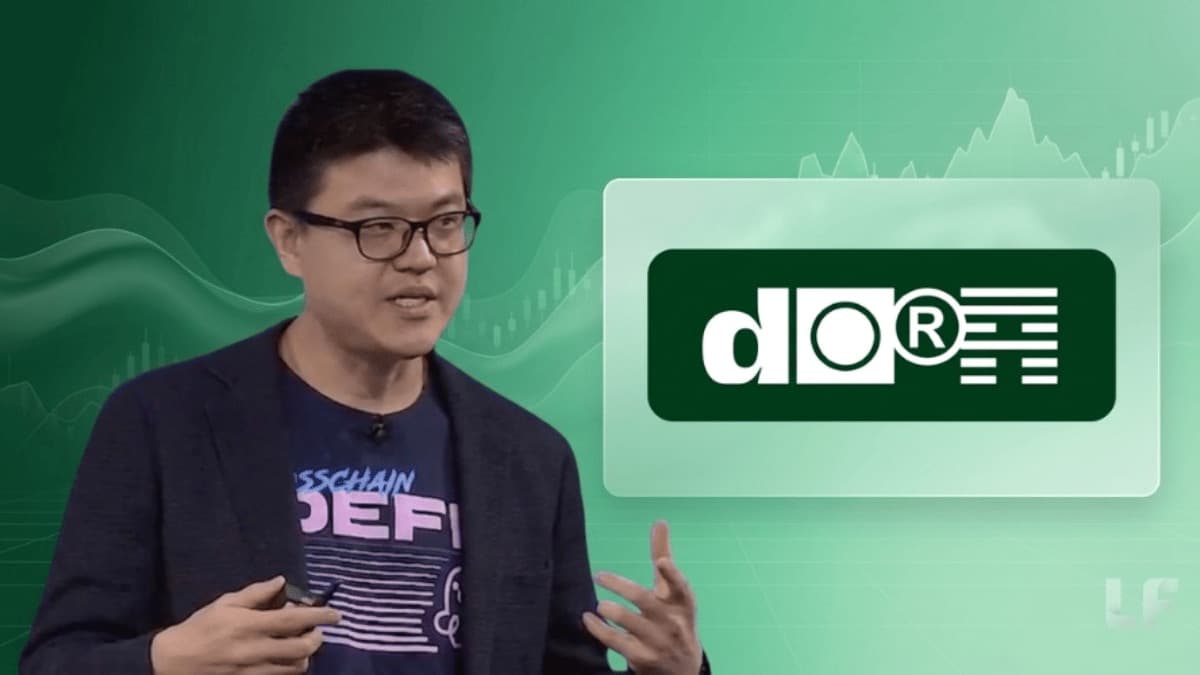
Brent Xu left Wall Street for blockchain in Ethereum's earliest days. Now his Franklin Templeton and Galaxy Digital backed platform Dora is bringing fractionalised bond trading to retail brokers. He speaks to Sam Low.
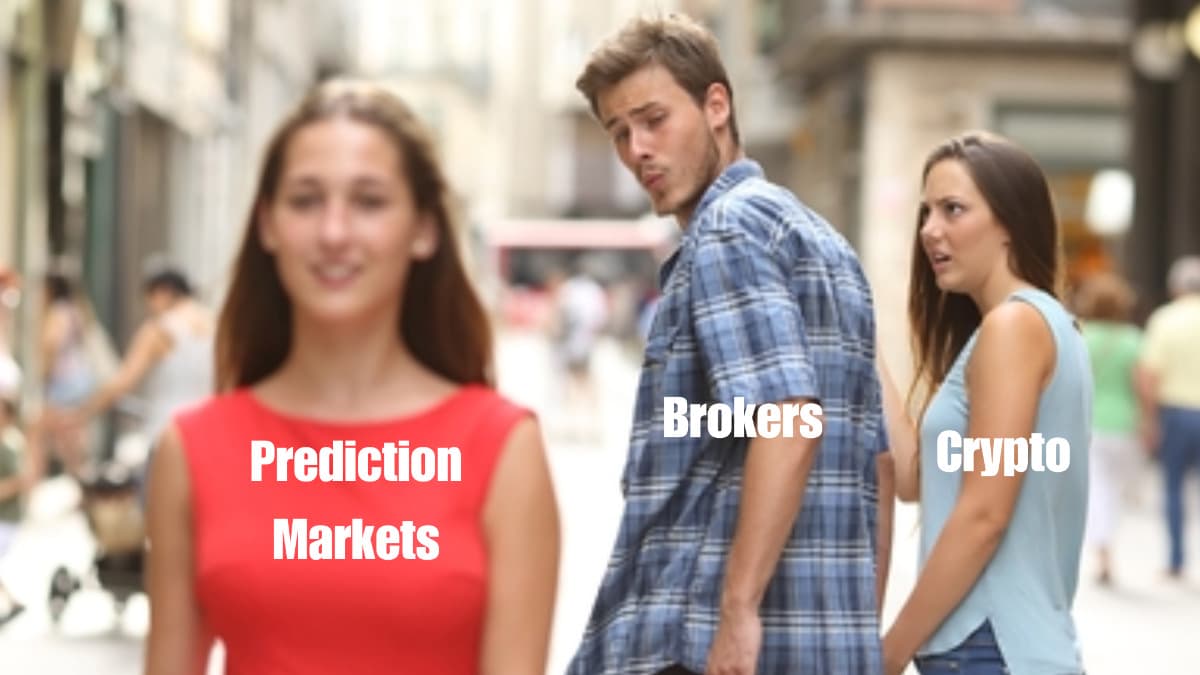
The Lowdown - newsletter. Something significant is happening in financial markets right now. Prediction markets are the new shiny object, and they are definitely now an institutional asset class. In the same way that brokers scrambled to add crypto to their offering a few years ago, the smartest operators in our space are already asking how they access prediction markets.

Kalshi is the largest CFTC-regulated prediction markets and event contracts exchange. In this exclusive interview, LiquidityFinder's Sam Low speaks with Andy Ross, Head of Institutional Business, about institutional access, block trading, market making, capital efficiency and the landmark launch of the first regulated perpetual futures on a US exchange, and what it all means for liquidity providers, brokers and institutional FX professionals.

As tokenisation and digital assets move from niche curiosity to mainstream expectation, banks and financial institutions face an uncomfortable truth: their legacy core banking systems were never built for this. From order execution and pre-funding to custody, portfolio management and gas fees, Olaf Ransome explores the key infrastructure challenges FIs must navigate and asks whether to re-use, buy or build their way to a solution that actually scales.
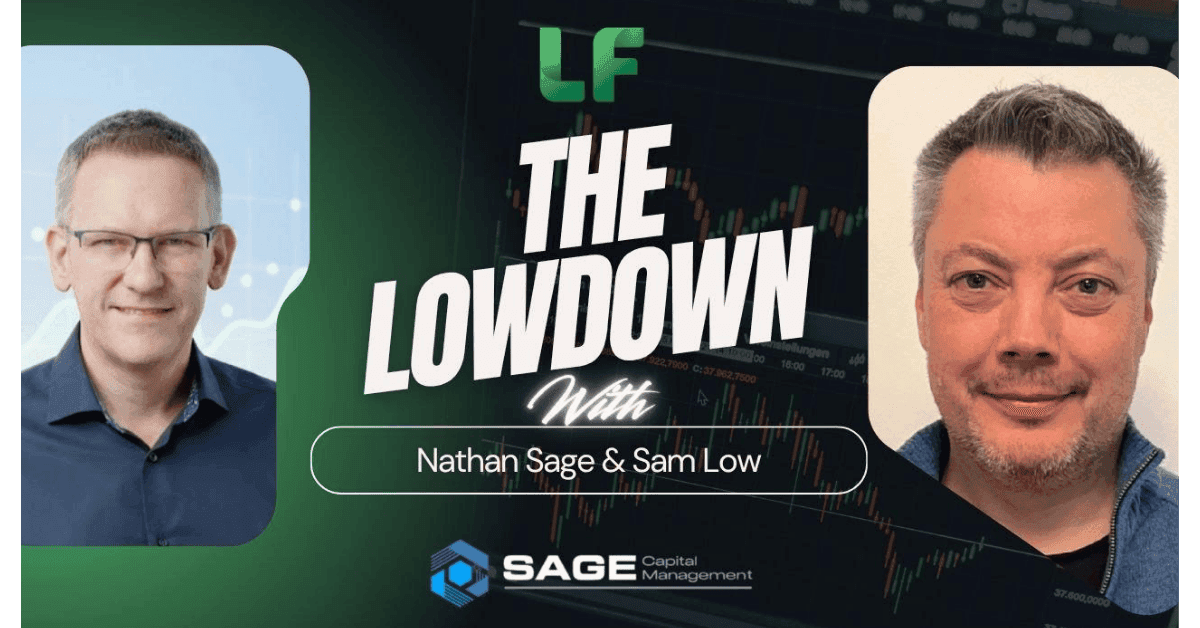
LiquidityFinder's Sam Low sits down with Nathan Sage, founder and CEO of Sage Capital Management, to trace his journey from FX fund manager to running a Bitcoin fund doing $1BN a day in 2016 — and how that experience of pain built one of the most connected prime brokerages in the digital assets market today.

Klarna is partnering with Coinbase, raising stablecoin-denominated funding and launching KlarnaUSD. We break down the treasury logic, merchant incentives and agentic AI payments angle — and what other CFOs should take from it.
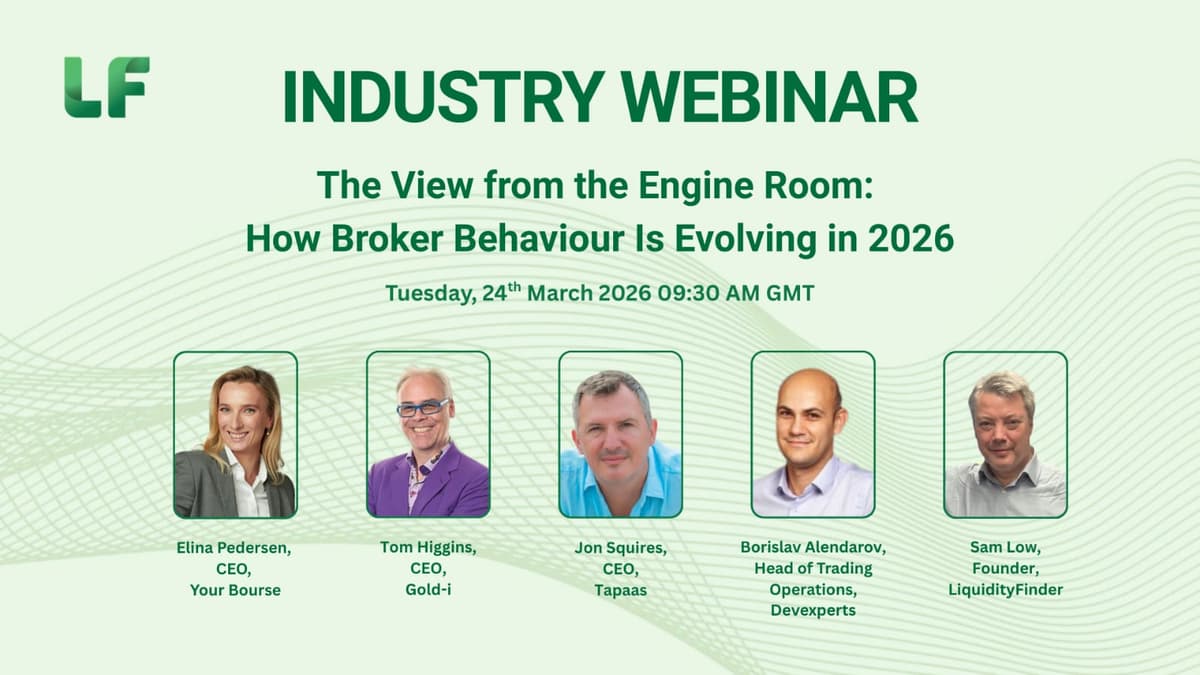
Gold at record highs, oil as a meme stock, and crypto exchanges eyeing your clients. Watch our expert panel - Gold-i, Your Bourse, Tapaas and Devexperts - discuss broker risk management, , AI trading and the MetaTrader debate.

Over a long tapas lunch in Shoreditch, London, Sam Low sits down with Peter Brooks and Jess Reed from ADMISI eFX, the dedicated electronic FX desk operating inside one of the world's largest agricultural commodities companies. What emerges is a compelling case for why this largely unknown operation deserves serious attention from brokers, payments firms, corporate treasuries, and digital asset companies alike.
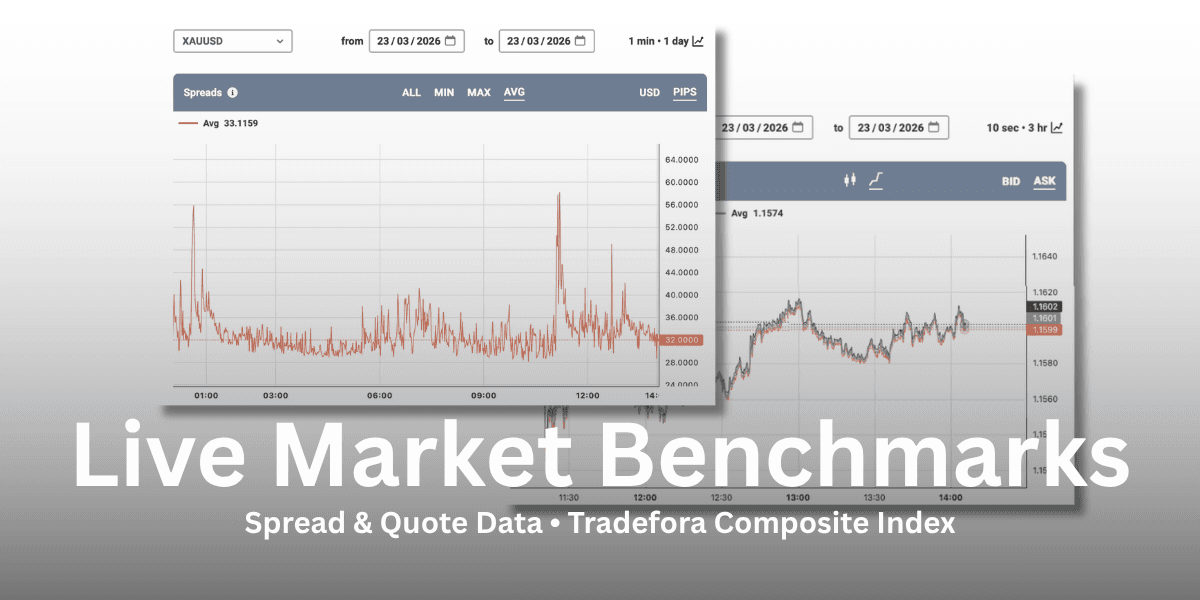
Explore live spread and quote benchmarks powered by the Tradefora Composite Index (TCI), an independent dataset aggregated from multiple FX and CFD brokers. View average, minimum and maximum spreads by instrument and timeframe, plus composite bid/ask quote data updated continuously at millisecond precision.

Fusion Capital is a specialist crypto liquidity provider offering brokers over 350 crypto CFD pairs with bespoke pricing, pure A-book execution, and access to decentralised exchange liquidity through Hyperliquid. In this broker profile, LiquidityFinder's Sam Low speaks with Head of Product Jasper Cooney about how Fusion's in-house trading bots monetise flow across centralised and decentralised venues, why crypto exchanges handle toxic flow differently to FX, and how brokers can now offer clients pre-IPO perpetual futures through their existing MT5 infrastructure.

Olaf Ransome’s latest article on liquidity management explores PORTS (Perpetual Overnight Rate Treasury Securities) and how they could expand the supply of on-chain high-quality liquid assets (HQLA) for treasury and cash management. He explains why long cash balances create risk, how stablecoins and tokenised money market funds need safe short-duration assets, and what PORTS could mean for reverse repo, liquidity management and wholesale banking.

African FX liquidity is shaped by hard-currency scarcity and capital controls. Roland Schilling, COO at Sika Financial, explains how interbank reference rates differ from parallel markets, and how Sika settles via CCP/PvP.

In Part 3 of his A-Book STP series, Youssef Bouz explains why STP should be viewed as a trading environment—not a feature—exploring execution realism, market behaviour, and why professional and algorithmic traders prefer true STP models for long-term alignment and scalability.

Guest insight from Olaf Ransome on UNITE Global FMI and a “single pool of liquidity” vision to reduce nostro reliance, cut buffers and enable real-time PvP/DvP.

Think A-book is safer? This guest insight from Anya Aratovskaya breaks down the hidden risks for FX/CFD brokers: leverage mismatches, margin shocks, collateral traps, tech outages and flow quality.

Why one-size-fits-all trading models fail as automation rises. In the second in his series of articles Youssef Bouz from GCC Brokers explains how discretionary and algorithmic traders need different execution conditions (transparency, predictability, stable infrastructure and clear scaling rules) and why realistic market behaviour (spreads, slippage, external liquidity) plus clear broker positioning reduces friction and supports long-term performance.

Watch the LiquidityFinder webinar replay on A-Book vs B-Book execution models for retail FX/CFD and crypto brokers. Hear Lars Holst (GCEX), Rob Brown (MAS Markets), Jeremy Kinstlinger (Afterprime), Youssef Bouz (GCC Brokers), Victor Ivanchenko (cBridge/Spotware) and Sam Low (LiquidityFinder) discuss AI-driven trading, liquidity stress, regulatory scrutiny, risk transfer, LP/PB relationships, balance-sheet volatility and brokerage valuation over the next 3–5 years.

In part 2 of his series A-book STP series, Youssef Bouz from GCC Brokers explains why Algorithmic and AI trading demand better execution. Youssef explains STP trading environments, slippage, spreads, and broker–trader alignment.
Find The Right Partners for
Your Trading Business
Sign up and join over 5,000 professional members who receive personalized news alerts, curated professional connections, and more for free!


Institutional brokerage and financial infrastructure provider Clear Street has joined TradingView’s broker network, allowing its clients to trade US stocks, exchange-traded funds and options directly through the charting and analysis platform.

AUDJPY price forecast: Watch resistance at 110.045–110.403 for bearish rejection toward 109.283 or a bullish breakout targeting 111.550.

GER40 price forecast: DAX 40 tests 25,285–25,390 resistance. Explore bearish rejection, the neckline retest and bullish breakout confirmation.

NAS100 price forecast: Nasdaq 100 breaks above 30,750 after bullish weekly support rejection. Explore key levels, retest confirmation and downside risks.
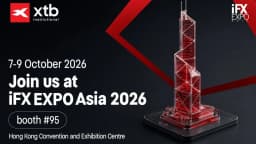
XTB Institutional is heading to iFX EXPO Asia 2026 in Hong Kong. Meet the team at Booth #95 to discuss institutional liquidity, 24/7 market access and the latest trading conditions.

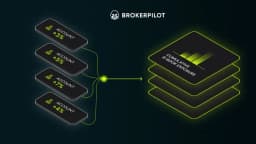
Profitable traders improve retention and brand credibility. They also break B-book distributions silently, over quarters. Most brokers find out too late.

Ondo Finance, a blockchain technology company focused on tokenising real-world assets, has announced Ondo Private Markets, a product offering tokenised exposure to privately held companies, beginning with an unnamed pre-IPO artificial intelligence company.

STARTRADER has launched 20 new Stock and ETF CFDs on MT5, tradable Monday to Sunday, with half listed in Seoul or Hong Kong. The additions focus on AI's physical infrastructure, covering HBM and DRAM supply chain names such as SK hynix and Hanmi Semiconductor, plus data-centre exposure through Cloudflare and Vistra.

IG Group has cut its 2026 revenue growth outlook after weaker revenue retention in its over-the-counter derivatives business outweighed growth in customer activity, putting the economics of its revised market-making approach in focus.
CME Group has withdrawn its filing to launch a 10-Barrel WTI Crude Oil futures contract that would have traded 24 hours a day, seven days a week. The exchange said industry participants were concerned that 24/7 energy trading could create unintended consequences without further due diligence.