
Liquidity Finder Ltd is incorporated in England and Wales, company number 10610740, registered address 167-169 Great Portland Street, Fifth Floor, London W1W 5PF, United Kingdom.
Institutional Market Insights: Regulation
Access institutional insights, expert interviews, company spotlights and deep-dive analysis on market structures.
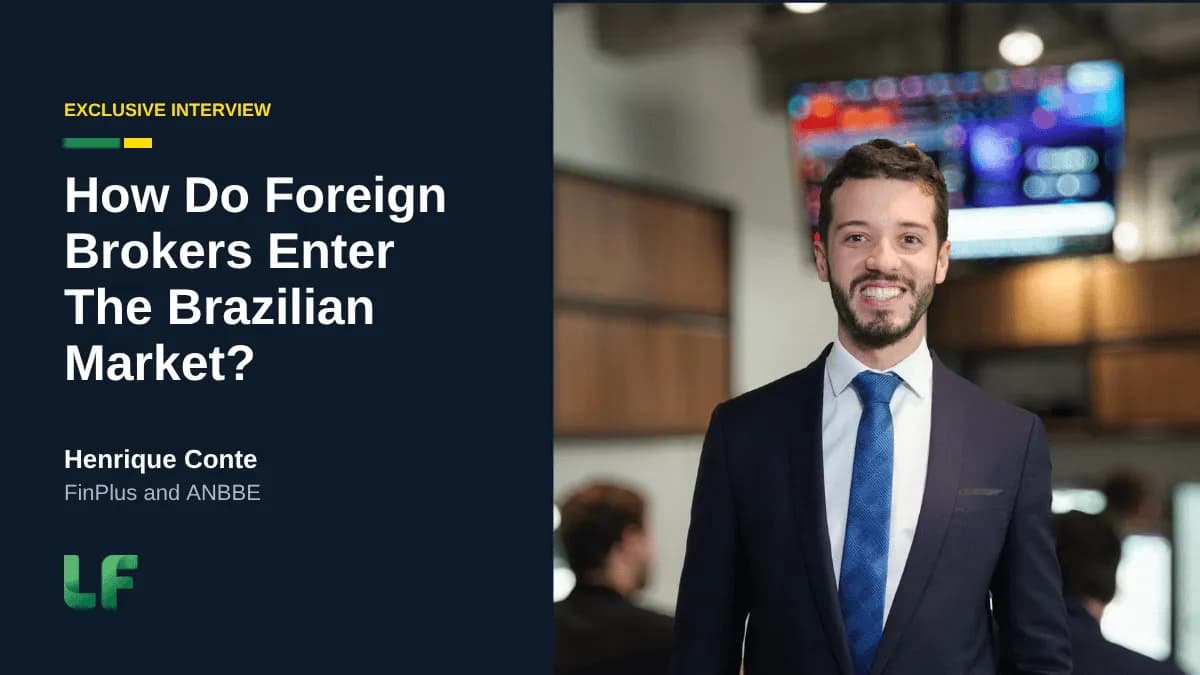
How can foreign brokers enter Brazil? Henrique Conte of FinPlus explains the local partner route, your own licence, CVM rules, costs and capital.

Kalshi is the largest CFTC-regulated prediction markets and event contracts exchange. In this exclusive interview, LiquidityFinder's Sam Low speaks with Andy Ross, Head of Institutional Business, about institutional access, block trading, market making, capital efficiency and the landmark launch of the first regulated perpetual futures on a US exchange, and what it all means for liquidity providers, brokers and institutional FX professionals.
n in-depth review of TMGM (TradeMax Global Markets), the ASIC-regulated ECN broker offering raw spreads from 0.0 pips, MT4 and MT5, copy trading via HUBx and ZuluTrade, and 24/7 multilingual support across four regulated jurisdictions. Find out if TMGM belongs on your shortlist.
A comprehensive interactive guide to 50+ global financial regulators - including FCA, ASIC, CFTC, MAS and ESMA - rated across five dimensions: risk management, licence value, investor protection and more. Updated 2026.
In Part 5 of his A-Book STP series, Youssef Bouz from GCC Brokers provides a guide to distinguishing healthy algorithmic trading from latency arbitrage and structural abuse — and why behavior, not profitability, is the real risk indicator.

Discover whether KuCoin is still “The People’s Exchange” in 2026. This in-depth KuCoin review breaks down fees, KYC, security, Proof of Reserves, supported coins, deposits/withdrawals, futures, margin, Earn and the platform’s standout free trading bots — plus who it’s best for (and who should avoid it).

African FX liquidity is shaped by hard-currency scarcity and capital controls. Roland Schilling, COO at Sika Financial, explains how interbank reference rates differ from parallel markets, and how Sika settles via CCP/PvP.

A comprehensive look at SEBI regulations, permitted currency pairs, broker options, and what the institutional landscape looks like.

Generating and sustaining liquidity requires a strategic approach across centralized exchanges, decentralized pools, and market-making relationships. This guide covers every stage of the process for crypto projects.

S&P Global Ratings gave Tether (USDT) the weakest Stablecoin Stability Assessment. Olaf Ransome breaks down what drives stablecoin risk—asset backing, custody/correspondent chains, transparency and reporting.

GCC Brokers’ Youssef Bouz exposes how unrealistic leverage, bonuses and rebates distort the FX/CFD market – and why true A-Book, transparent brokerage is the only sustainable model.

Amana CEO Muhammad Rasoul explains the realities of “swap-free” accounts, leverage, and building a fair, long-term trading culture.

We examine Plus500's spreads, regulatory standing, platform capabilities, and who it actually makes sense for in 2026.

Olaf Ransome explores how stablecoins offer faster, 24/7 payments and banking access where traditional rails fall short, with insights from industry experts: 6 reasons Stablecoins beat traditional payments

“Let’s get together!” Big US banks and infrastructure providers are apparently looking at a common stablecoin. How should you think about this and what should you think?

Stablecoins, tariffs and the papal conclave have an oligopoly on the news headlines right now. Simon Taylor, who is one of those who I think really gets the FinTech space and its impact on financial services just posted: “Stripe just declared war on banks with their stablecoin financial accounts.” That alone is worth a read. I want to explain where banks will struggle with processing Stablecoins. And I’ll throw in a few words on things Tokenised Deposits too for free.

Around things digital assets we have huge momentum. Who is going to win? To understand where we might be headed, I caught up with somebody who thinks about things crypto aka digital assets for a living. Kenny Hearn, the Chief Investment Officer at SwissOne Capital, a specialist asset management company with a focus on institutional grade crypto and blockchain investment funds. Kenny spends his time thinking about who the winners and losers are going to be. He shared his thoughts on what he sees as the differentiators, and just as importantly his view on what is important for institutional investments to be made. This is not investment advice, just a view on how the digital asset space will develop. If you do want investment advice, feel free to contact Kenny.

Deepcoin is a cryptocurrency platform started in 2018 and based in Singapore. Here is everything that you need to know about the platform, and whether it is safe to use.
Find The Right Partners for
Your Trading Business
Sign up and join over 5,000 professional members who receive personalized news alerts, curated professional connections, and more for free!

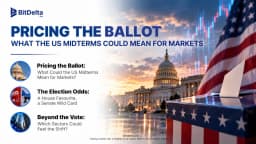
Americans vote on November 3 for all 435 seats in the House of Representatives and a third of the Senate. The presidency is not on the ballot, which means any new Congress will still need the President's signature to turn bills into law. Markets care about the midterms less for the laws that follow and more for what changes in oversight, budgets and the regulatory mood of Washington.

The Australian Securities and Investments Commission has said it is not currently convinced that prediction markets for retail clients are in the public interest. ASIC Chair Sarah Court said prediction market contracts have all the features of a bet, likening them to binary options, which are banned for retail clients.

Binance has confirmed a security incident with an estimated total impact of around $6.3 billion, linked by its initial investigation to a compromised DevOps engineer's laptop. Around $3 billion has been frozen on-chain, and the exchange says it will cover all losses from its SAFU fund and company funds.

US crypto exchange Coinbase has reported net income of $719 million for the third quarter of 2026, up 66% from $432.6 million a year earlier. Prediction markets passed $200 million in annualised revenue, and paid Coinbase One subscribers reached an all-time high.

Webull Securities Co., Ltd., the Japanese subsidiary of Webull Corporation, has started handling US Treasury bonds, giving customers access to about 20,000 bonds as of 30 October 2026. The service lets users trade market-traded bonds like stocks, with real-time prices and yields, from $100.

Intercontinental Exchange and Trade[XYZ] have agreed to bring Trade[XYZ]’s perpetual markets onshore in the US through a new regulated market and clearing structure for round-the-clock retail trading built on Hyperliquid, operated separately from ICE’s institutional futures franchise, subject to regulatory approvals.

The Utah Attorney General's Office has filed 14 criminal charges against KalshiEX, LLC, the operator of US prediction market Kalshi, in a case that names co-founders Tarek Mansour, Chief Executive Officer, and Luana Lopes Lara, Chief Operating Officer, as co-defendants.

US blockchain payments company Ripple and US crypto exchange Coinbase have partnered to make Ripple's US dollar stablecoin, Ripple USD (RLUSD), available across Coinbase's platforms

The UK Financial Conduct Authority (FCA) has secured High Court undertakings to ensure that global crypto exchange HTX, formerly known as Huobi, will not knowingly promote cryptoasset services unlawfully to UK consumers.
US post-trade market infrastructure provider DTCC has launched its DTCC Tokenization Service (DTS) through its subsidiary The Depository Trust Company.