
Search Companies, News, Members & more
Terms of ServicePrivacy PolicySecurity PolicyLegal InformationCommunity GuidelinesSitemapsCookie Settings
2026 Copyright © Liquidity Finder Ltd. All rights reserved.
Liquidity Finder Ltd is incorporated in England and Wales, company number 10610740, registered address 167-169 Great Portland Street, Fifth Floor, London W1W 5PF, United Kingdom.
EXCLUSIVE: Scope Prime's Andrew Taylor On Pricing Sharp Gold Flow At The Asian Open

Published on Oct 5, 2026
Updated on Oct 6, 2026

Gold, sharp flow and the Asian open: What to ask your prime of prime before you commit
Andrew Taylor is Managing Director, APAC, at Scope Prime @ScopePrime , the institutional liquidity arm of Rostro Group. He has spent more than 30 years in FX and CFD markets, across bank dealing desks, retail brokers and prime-of-prime businesses.
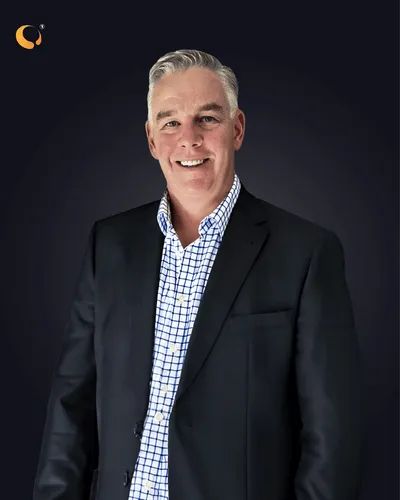
Andrew Taylor, Managing Director, APAC, Scope Prime
For many brokers serving Asian clients, gold is no longer one instrument among several major ones that retail traders just love to speculate on. One major tier-1 brokerage which publishes its instrument split, reported gold at 42.4% of platform volume in the second quarter of this year and 59% in January. Industry consensus is widely universal: metals continue to dominate trading flows, and retail brokers in the industry experience a persistent challenge in shifting client interest away from gold.
It is also where weak pricing has been exposed most brutally. Gold fell as much as 6.3% intraday on 21 October 2025, its biggest intraday drop since 2013. It then hit a record intraday high near US$5,600 an ounce in the last week of January and, on 30 January, dropped more than 12% intraday – its steepest intraday decline since the early 1980s. The World Gold Council (WGC) calculates that realised volatility earlier this year reached the top 5% of readings since 1971.
One of the big issues for a broker is no longer whether its gold book contains sharp flow – it almost certainly does. The question is whether you know where it sits, what it costs you and whether your liquidity relationship is built to price it – or to punish your whole book for it.
Why gold in Asia is harder
When the WGC examined gold's bid-ask spreads through the turbulence of early 2026, it found that the four largest spikes all came on the early Asian market opening on Monday, or early on Thursday into Friday, as prices gapped into the Asian open on thin liquidity. COMEX gold's daily break and weekly reopen also fall at the start of the Asian day. A stale quote survives longer in a thin market, and in Asia it is your clients who are at their screens to hit it.
Then there’s the matter of different exchanges. London spot, COMEX futures and Shanghai normally move together, but in 2025 they diverged. In August, the premium of COMEX futures over London spot reached a record – beyond US$100 an ounce at one point. Granted, it happened right after a US customs ruling suggested that 1 kg and 100 oz bars would face tariffs. Nevertheless, a quote built from one reference is exposed to anyone trading off another. Retail pricing drifted from reality too: we were observing brokers quoting gold inside US$0.10 during the late-2025 rally, when the institutional market was nearer US$0.30.
As much of Southeast Asia's retail business runs through introducing brokers (IBs), a strategy distributed through an IB network, a signals channel or a copy-trading leader can be replicated across hundreds of accounts at once. Screened account by account, it looks like many small, forgivable edges. But your liquidity providers, who see the aggregate, see one large one. As one senior industry leader said late last year, price-makers can spot clusters of gold EA traders that a broker watching only headline markouts will miss.
How the bill reaches you
Route sharp gold flow into an aggregated pool and it will fill, disproportionately, against whichever provider is slowest to update – that is what "best price" means in a fast market. Each provider measures its own markout and responds the way liquidity providers respond: wider spreads, smaller size, more rejections. That response is applied to the relationship, not to the handful of accounts that caused it. Months later, your soft flow is paying for a problem it did not create.
A hybrid book sharpens the effect. If you internalise the soft flow and pass on the rest, your provider sees only the sharp residue and prices you on it.
Warehousing is an alternative, but it only works with the balance sheet to match. After the early-2026 dislocations, companies across the industry reported a clear rise in risk being passed on by brokers, particularly smaller ones that could no longer absorb large hits.
Measure first, then fix what is yours
Brokers that handle sharp flow well start by measuring it, and at a finer resolution than most. A one-second markout and a 60-second markout can tell different stories about the same trade. The useful view takes several horizons against a declared benchmark, then cuts the results by session, by instrument and by IB or strategy cluster rather than by account alone.
Once flow is measured, it can be priced – and pricing it is usually better business than ejecting the client. The mechanism is segmentation: persistent sharp flow goes to a feed priced for it, while the rest of the book stays on pricing that reflects its own quality. Soft flow stops subsidising the minority, and the sharp client stays on the platform.
Segmentation does not make the cost disappear, it will still land somewhere: in the client's spread, the IB's rebate or the broker's own margin. What changes is that the cost becomes visible and attributable. The same rigour belongs in the controls a broker applies to its own clients. Where used, price tolerance and last-look-style checks should be symmetrical, disclosed and brief – the standard any broker should expect of its own providers.
A decision to reprice or reroute a client deserves a documented methodology, a review path, a client communication process and a record that could be shown to a regulator. Weekend and holiday exposure belongs in the same framework, as scheduled risk rather than bad luck. That means Friday-night reviews of exposure and funding, plus a written plan for every Shanghai closure.
What to ask before you commit
Having worked on both sides of the relationship, at retail brokers and at prime-of-prime providers, I would want several questions answered in writing before routing my flows. The most revealing is also the simplest: what did clients like you receive on 21 October 2025 and 30 January 2026? Spreads, fills, rejects and margin calls on those two days are the honest test of a provider.
Asking how the provider will measure your flow – at which markout horizons, against which benchmark, across clusters as well as accounts – and whether it will share the figures it uses internally to price you comes next. What happens to the rest of your pricing if part of your flow turns sharp? The answer to look for is segmentation rather than a relationship-wide reprice, backed by written criteria for moving flow between feeds, notice periods and a review you can challenge.
Depth and distance matter as much as price. And instead of marketing claims – focus on an odd hour, like asking how much gold you can execute at the quoted price at 06:00 in Hong Kong. The answer should give top-of-book size in ounces and lots, say whether depth is full-amount or sweepable and show your effective spread for a typical ticket by session, including rollover and the Monday open.
Credit, margin and Asian gold trading
The January sell-off showed how quickly margin can move. While gold may not be the next market that demands it, this January’s volatility demonstrated that providers can change margin requirements intraday, without much notice and shareable margin across feeds is an important pointer to have. Look for documented triggers and a single margin pool across feeds, so that segmentation does not trap capital.
Sharp flow is not going to leave Asian gold – if anything, the region's traders will keep getting faster. The brokers that come through the next dislocation intact will not be the ones that ejected the most clients. They will be the ones that knew where their sharp flow sat, fixed what was theirs to fix, priced the rest where it sat, and ultimately chose a provider that told them, in writing and before they signed, how it would treat them on the worst day of the year.
Scope Prime fully rolled out its 24/7 gold and silver products earlier this year and has since extended continuous trading to 24/7 oil liquidity in Brent and WTI CFDs.
Found this interesting? Become a member of LiquidityFinder and get daily industry news direct to your inbox — join here.
Share this article

Comments
Most Recent
Find The Right Partners for
Your Trading Business
Sign up and join over 5,000 professional members who receive personalized news alerts, curated professional connections, and more for free!

Scope Prime's Andrew Taylor sets out how brokers serving Asian clients should measure and price sharp gold flow, citing the October 2025 and January 2026 sell-offs, thin liquidity at the Asian open, segmentation over relationship-wide repricing and the questions to ask a prime of prime provider.

GCC Brokers is a Dubai-based A-Book STP broker with FSC Mauritius and UAE SCA regulation, raw spreads from 0.0 pips, and an LBMA gold fix service. Here is an honest assessment of who it suits and who it does not.

Dark pool trading was once the preserve of institutional desks, but a new wave of AI tools is promising self-directed investors a look into non-displayed liquidity and where the big money sits. This article explains what dark pools actually are, why retail traders face an even bigger information gap in FX than in equities, and what AI-driven intelligence platforms like IUX24 can and cannot reveal about institutional positioning.

LSEG's DiSH promises atomic settlement and 24/7 PvP and DvP capability using tokenised commercial bank deposits. But when the balances move and the banks don't, who actually owns what? Olaf Ransome examines the mechanics - and the risks.

Klarna is partnering with Coinbase, raising stablecoin-denominated funding and launching KlarnaUSD. We break down the treasury logic, merchant incentives and agentic AI payments angle — and what other CFOs should take from it.

Olaf Ransome’s latest article on liquidity management explores PORTS (Perpetual Overnight Rate Treasury Securities) and how they could expand the supply of on-chain high-quality liquid assets (HQLA) for treasury and cash management. He explains why long cash balances create risk, how stablecoins and tokenised money market funds need safe short-duration assets, and what PORTS could mean for reverse repo, liquidity management and wholesale banking.

African FX liquidity is shaped by hard-currency scarcity and capital controls. Roland Schilling, COO at Sika Financial, explains how interbank reference rates differ from parallel markets, and how Sika settles via CCP/PvP.

Guest insight from Olaf Ransome on UNITE Global FMI and a “single pool of liquidity” vision to reduce nostro reliance, cut buffers and enable real-time PvP/DvP.
Create Your FREE Account
Get access to latest news, updates, real-time data, brokerage and trading firm insights and customized information feeds.


AUDCAD remains bearish below 0.98500–0.98750 resistance. Explore confirmation signals for a decline toward 0.97900 or a bullish recovery toward 0.99100.

Nasdaq 100 forecast recap: NAS100 falls after breaking 29,800–30,400 support. Review bearish price action, the daily 50 EMA and the original 29,000 target.

AUDCAD turns bearish after breaking key support and the 50 EMA. Watch 0.98455–0.98720 resistance for confirmation, with 0.98075 the downside target.


CFTC-regulated prediction markets exchange Rothera, a joint venture between Robinhood and Susquehanna International Group, has announced seven executive hires and promotions across risk, compliance, technology, security, operations, legal and product. The new leadership brings experience from the OCC, Citadel, Brevan Howard, ICE, Cboe and IEX, as Rothera passes 6 billion cumulative contracts traded since its May 2026 launch.

OANDA Japan has restricted trading on accounts that may have been affected by unauthorised access after login details stored on GMO's Onamae.com Desktop Cloud VPS leaked. The broker says its core systems were not breached and is directing affected clients to GMO's compensation process while urging password changes and 2FA.

Alpaca has received in-principle approval from ADGM's FSRA for Alpaca Clearing & Custody ME Ltd. Subject to a Financial Services Permission, the entity plans to offer brokerage services and virtual asset custody, bringing Alpaca's API-driven brokerage infrastructure closer to partners in the Middle East region.


US stock futures edged higher in early trading today as investors prepared for a week of major central bank decisions. S&P 500 futures rose 0.2%, Dow futures gained 0.3%, and Nasdaq-100 futures advanced 0.3%, following Friday’s selloff.

Brent crude is trading at $115.57 after retreating from its recent high of $118.23. The moving averages indicate a mixed short term picture.


iSAM Securities Apex is working with LMAX Group to bring perpetual futures pricing to FX and CFD brokers through the Apex platform.

ICM MENA has promoted Ahmed Kamal to Chief Executive Officer. Kamal joined the firm in March 2019 as Business Development Manager and most recently served as Regional Manager. He brings more than a decade of experience in financial markets, with expertise in foreign exchange, business development and team leadership.
Feed