
Search Companies, News, Members & more
Terms of ServicePrivacy PolicySecurity PolicyLegal InformationCommunity GuidelinesSitemapsCookie Settings
2026 Copyright © Liquidity Finder Ltd. All rights reserved.
Liquidity Finder Ltd is incorporated in England and Wales, company number 10610740, registered address 167-169 Great Portland Street, Fifth Floor, London W1W 5PF, United Kingdom.
Why Brokers Plug In to PLUGIT's Predictable Pricing

Published on Jun 16, 2026
Updated on Jun 16, 2026

According to Maria Pittashi, most brokers discover PLUGIT's plugins the same way. People plug in PLUGIT’s plugins after they get plugged in to PLUGIT’s predictable pricing.
I spoke with Maria ( @mariap7e19f ), General Manager of PLUGIT ( @PLUGIT ) and Nestor, a senior member of the customer-facing team, to find out how the company got to where it has, what is inside the platform, and what is coming next.
A Career In The FX Market
Maria's route into broker technology came through some very recognisable names in financial data. She began in equity research in San Francisco before returning to Cyprus, where, with no local domestic equity market to speak of, she moved into foreign exchange. She spent the best part of a decade with Reuters and its various successors, Thomson Reuters, Refinitiv and ultimately LSEG (how many times can a company change its name!?), first as an FX specialist covering the Cyprus market and later leading regional support across the Middle East and Africa.
While Maria was walking the dealing rooms of Limassol and Nicosia selling Reuters, I was doing much the same rounds for Integral's aggregation business at roughly the same time, in all likelihood pitching to the same people in the same offices. She later spent time in FX Sales at Alpari and a period as CEO of a trading technology firm, before joining PLUGIT in 2022 and taking the General Manager role as the company moved into its current phase of growth.
It All Started With A Single Plugin
PLUGIT was founded in 2012 in Cyprus with its roots in the introducing broker (IB) management space. The company's founder, Jalal Faour, who is also the company’s lead developer, began by building automated tools that could operate on the backend of MT4 and MT5, helping brokers handle tasks that were being done manually. Word spread, and what had begun as a practical internal tool gradually became a commercial product.
"Before long, he was like, okay, this makes sense for me to actually maybe start it as an actual product of its own," Maria explains.
Over the following years, module by module, PLUGIT expanded what it offered. Today its core suite operates under the brand name Yoonit, which currently includes six modules: a CRM, an IB management system, Dynamic Margin, Bonus Automation, Copy Trade, and a MAM/PAM solution. Brokers can adopt a single module and add others over time, or take the full suite and run their entire brokerage operation from a single integrated platform.
One of the advantages Maria highlights with the founder also being the lead developer means that the key employee doesn’t move on, so the product never stagnates. "You know that the key developer is never going to go away," she says of Faour’s involvement. "He’s not an employee that's going to get up and leave at some point and then your product is left kind of sitting on the shelf."
The Architecture Behind the Technology
For execution-related modules, PLUGIT has made a deliberate decision to build plugins directly on MetaTrader, rather than external server-side applications. This applies to Dynamic Margin, Copy Trade, and the MAM, with the focus being on reduced latency.
"We don't want it to come back to us," Maria explains. "If the client didn't get top of book price, it should be because there wasn't depth of market for it to happen that way, not because the tool was too slow."
Nestor reinforces this point. In the copy trading and MAM space in particular, execution speed is the top priority. Trades need to follow master accounts in real time, and any delay compounds across a large client base. The plugin architecture removes one potential point of failure.
Setup time is also a differentiator. Once a broker provides the necessary configuration details, PLUGIT can have a new installation live within two to three business days. In urgent situations, such as during periods of sharp market volatility, Maria told me the team has deployed multiple servers for a single client within one working day.
Dynamic Margin: The Product That Sells Itself
Maria says that the tool that PLUGIT is best known for is Dynamic Margin. The tool allows brokers to create granular profiles that automatically adjust leverage and margin requirements based on specific conditions, including the instrument being traded, the account type, the client group, or even an individual account.
According to Nestor, what sets PLUGIT's implementation apart is the sessions functionality. A broker can set a baseline set of rules for margin requirements across a given group of accounts or symbols, and then layer on top of that a session, which applies a different set of rules during a defined time window. When that window closes, the system reverts automatically to the baseline.
Maria says brokers often start out trying to manage this with MetaTrader's native margin functionality, only to return to PLUGIT once they hit its limits. The native tools, in her words, are "really limited" and, crucially, have no session capability.
Maria says that inbound sales calls usually come during periods of high market volatility, when brokers cannot realistically adjust their exposure parameters manually at the speed markets are moving. The combination of profile-based rules, wildcard syntax for group inclusion and exclusion, and session layering gives risk managers a level of control that is difficult to achieve otherwise.
PLUGIT operates a fixed monthly fee structure rather than charging on volume. The module fee is combined with a plan fee that scales based on database size, file storage, and the number of connected servers and client accounts. The maximum plan fee, for the largest broker configurations, is a relatively low single digits thousands per month.
That fixed-fee philosophy is, in Maria's view, a meaningful point of difference. Brokers who come to PLUGIT from volume-based pricing models are often surprised by how much their costs had quietly grown as they scaled.
"A lot of people don't know," Maria says, "that when it comes down to it, you're going to get charged on volume as you scale. It's going to come back and bite you."
Copy Trading at Scale
Copy Trade is the newest addition to the YOONIT suite, added approximately one year ago, and it is another product PLUGIT is actively prioritising for growth in 2026. The module allows brokers to offer copy trading to their client base, with master traders followed automatically by subscriber accounts at the point of execution.
PLUGIT's pitch on Copy Trade is built around execution quality and user experience rather than a feature checklist. The feedback the team hears most often from brokers who move to them is about reliability under load: a tool that keeps matching and executing cleanly as volumes climb, rather than falling over at the point at which it matters the most.
"I don't need to put anybody down for my product to succeed," she says. "It will stand on its own."
The dedicated portal that PLUGIT provides to money managers and copy trade providers is also a focus. Rather than simply giving them access to reports, she says the goal is for the interface to be genuinely usable, which Maria argues directly affects whether a broker can retain their best performers.
"If you're not giving your copy trade managers, your money managers, and your IB and affiliate managers the proper tool to monitor the situation... there is a lack of trust, and then it's just a matter of time before they tell you, I can't work like this."
See Maria's participation on LiquidityFinder's recent webinar covering Copy Trading at Scale:
The CRM Opportunity and the Cost of KYC Drop-Off
PLUGIT's CRM module is at an earlier stage of development than its execution tools, but it is one the company is investing in heavily. The target market is brokers who are dissatisfied with their existing options, and who are losing clients at the onboarding stage.
Based on industry data quoted by Maria, when a broker handles KYC verification manually, 40% of applicants who submit their documents never return after being told they have been approved. The process is simply too slow, and the moment of intent passes.
When KYC is handled in real time through an integrated automated verification system, that figure drops to between 8-12% on average.
"If the broker is doing this manually, and it has to be seen by a human, and then it has to get approved, they won't follow through," Maria explains. "Whereas if it's done by a tool right there and then on the spot, the drop-off is only 8-12%."
PLUGIT's CRM currently integrates with verification provider SumSub, among other third-party tools. The wider integration ecosystem includes a range of payment service providers, which are pre-configured and ready for client deployment.
The CRM is set to receive an overhaul by the end of the year, including a redesigned interface developed in collaboration with a UI/UX specialist and a new graphic design team. Additional messaging and communication integrations are also planned. The goal is not simply to offer a functional CRM, but to help brokers convert more leads at the critical early stages of the client journey.
"There isn't a Forex CRM out there that I would say is completely 100% capable of meeting the needs of brokers. It's really up for grabs," Maria says.
What's Coming Next
Beyond the CRM redesign, PLUGIT is working on bringing AI capabilities into its platform, with a target of having something significant to show by the end of the year. The focus is on self-diagnosis and configuration assistance, so that the tools themselves can identify operational problems, work through log data automatically, and guide users through setup through a conversational interface rather than a manual, step-by-step process.
"It's not a matter of just looking at something. It's saving time, it's being able to move a lot faster," Maria says.
The PLUGIT team is also growing its customer-facing operation in Cyprus, with recruitment ongoing. The company will be present at iFX Expo International in Limassol, with a client drinks event planned for the final evening of the show.
Share this article

Comments
Most Recent
Find The Right Partners for
Your Trading Business
Sign up and join over 5,000 professional members who receive personalized news alerts, curated professional connections, and more for free!
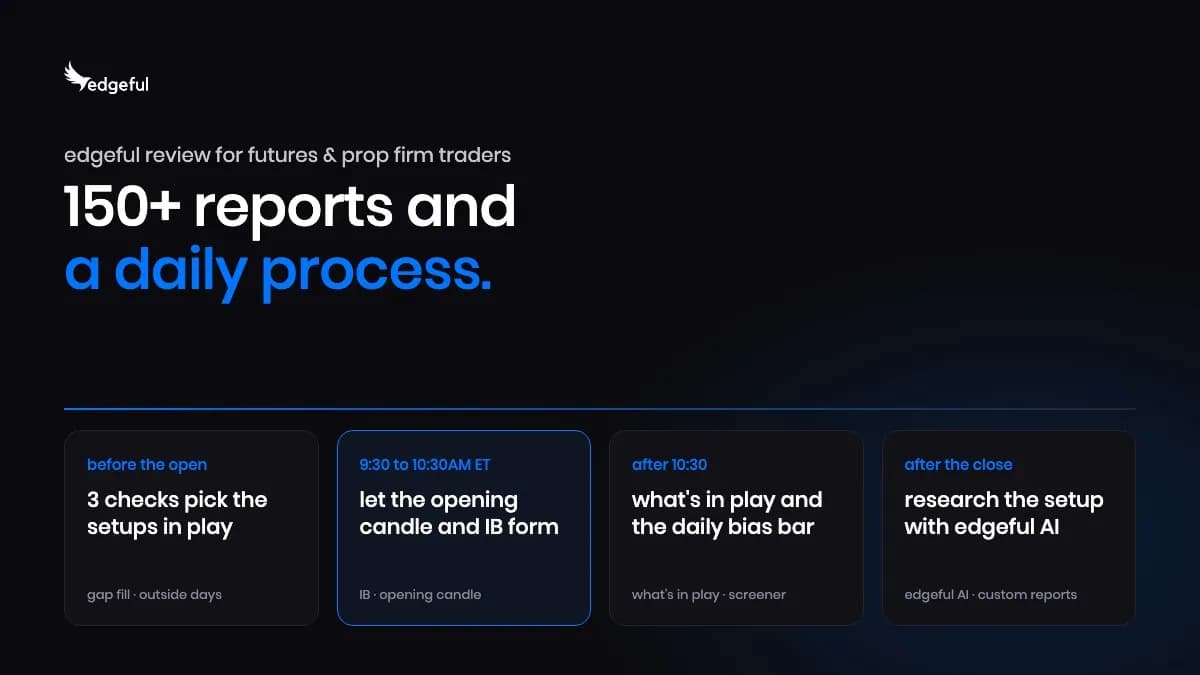
edgeful is a trading analytics platform with 150+ reports built on historical price data, covering futures such as NQ and ES. This guide explains its daily process, screener, TradingView indicators, edgeful AI, automated algos for prop firm accounts, and three pricing plans from $49 to $299 a month.

The Bloomberg Terminal has long been the reference standard for institutional market intelligence, but its $25,000-plus price tag puts it out of reach for most independent professionals. This article looks at seven platforms challenging that dominance in 2026, from AI-native tools like IUX24 to established names such as TradingView, Koyfin and AlphaSense, and asks how close they really come to replacing the Terminal.
Brent Xu left Wall Street for blockchain in Ethereum's earliest days. Now his Franklin Templeton and Galaxy Digital backed platform Dora is bringing fractionalised bond trading to retail brokers. He speaks to Sam Low.

n in-depth review of TMGM (TradeMax Global Markets), the ASIC-regulated ECN broker offering raw spreads from 0.0 pips, MT4 and MT5, copy trading via HUBx and ZuluTrade, and 24/7 multilingual support across four regulated jurisdictions. Find out if TMGM belongs on your shortlist.

Gold at record highs, oil as a meme stock, and crypto exchanges eyeing your clients. Watch our expert panel - Gold-i, Your Bourse, Tapaas and Devexperts - discuss broker risk management, , AI trading and the MetaTrader debate.

In 2026, ready-made infrastructure is beating custom development on speed, cost and compliance. Learn when to build vs buy—and where CTOs lose time and budget.
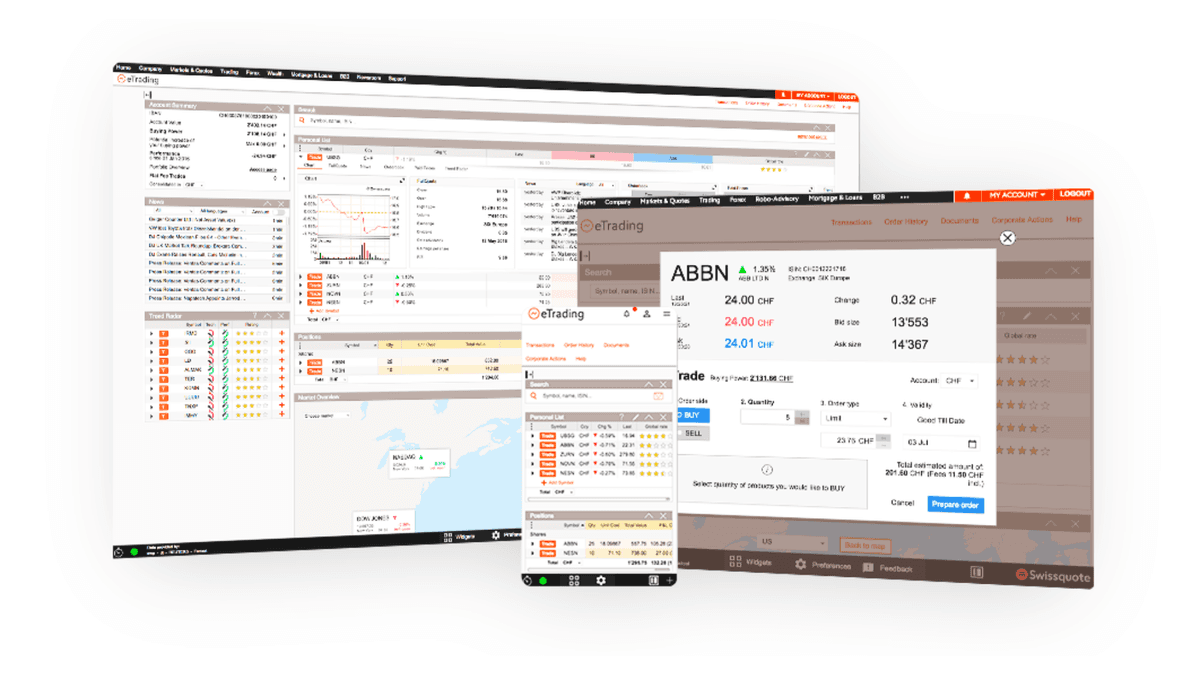
A complete comparison of MT4, MT5, cTrader, and modern proprietary trading platforms.

The definitive list of genuine prop trading firms and funded account challenges for 2026.
Create Your FREE Account
Get access to latest news, updates, real-time data, brokerage and trading firm insights and customized information feeds.


Institutional brokerage and financial infrastructure provider Clear Street has joined TradingView’s broker network, allowing its clients to trade US stocks, exchange-traded funds and options directly through the charting and analysis platform.


Learn how to improve trading psychology, manage fear and greed, avoid revenge trading, and follow your trading strategy with discipline and a trading journal.

GTC Prime has announced a strategic partnership with Centroid Solutions to manage and distribute its liquidity through CS 360 Bridge, Centroid's multi-asset connectivity and execution engine, giving brokers and institutional clients access to tailor-made pricing, low-latency execution and real-time risk management.


CMC Markets Founder and CEO, Lord Peter Cruddas, discusses the structural evolution of the Group, the accelerating opportunity across B2B and institutional markets, major global partnerships including Revolut, Westpac, and ASB, and his outlook for the remainder of the financial year ahead.

Clear Street has announced an exclusive partnership with Seawolf Capital to bring market commentary from Danny Moses, Vincent Daniel and Porter Collins to its clients and the wider investing community, including live market calls, digital content and events. New programming will sit alongside Seawolf's podcast.


Yields are surging. But is inflation really the reason? This week’s BitDelta Pro Weekly Outlook looks beyond the headline explanation to examine what is actually driving the move in rates, and what that could mean across equities, credit and commodities. We also explore the growing importance of balance-sheet quality, the signals emerging from the AI infrastructure cycle, and what oil and gold may be telling markets about the current macro regime. Read the full Weekly Outlook. BitDelta Securities Financial Services LLC, regulated by the Capital Market Authority under Category 5 (Introduction Only), acts solely as an introducer and does not provide trading, execution, dealing, advisory, portfolio management, or custody services. All trading, execution, and investment-related services are provided by BitDelta Limited, Mauritius, a licensed Investment Dealer. All trading and investments involve risk. The value of investments may fluctuate, and you may receive less than your initial investment.

Devexperts has appointed Rainer Fuchsluger as Global Group Chief Executive Officer, effective immediately. His career spans LSEG, Wolters Kluwer, SS&C and Thomson Reuters, and he follows Ben Hurley, who was CEO for two years. His mandate covers international growth, cloud computing and AI across the portfolio.

ATFX has been named Best Global Forex Broker at Forex Expo Dubai 2026, held on 22 and 23 September at the Dubai World Trade Centre. ATFX MENA's Mohammad Shanti also presented on designing currency pairs and FX portfolios for 2026 macro regimes at the event, which drew more than 23,000 attendees and 270 exhibitors.

Yapı Kredi Kripto has selected Integral's digital asset trading technology for its soon-to-launch regulated cryptocurrency business in Türkiye. The deployment covers pricing, liquidity and risk management as the country's new digital asset framework comes into effect, building on an FX relationship with Yapı Kredi.

AUDJPY price forecast: Watch resistance at 110.045–110.403 for bearish rejection toward 109.283 or a bullish breakout targeting 111.550.
Feed