just now


Liquidity Finder Ltd is incorporated in England and Wales, company number 10610740, registered address 167-169 Great Portland Street, Fifth Floor, London W1W 5PF, United Kingdom.
Published: just now
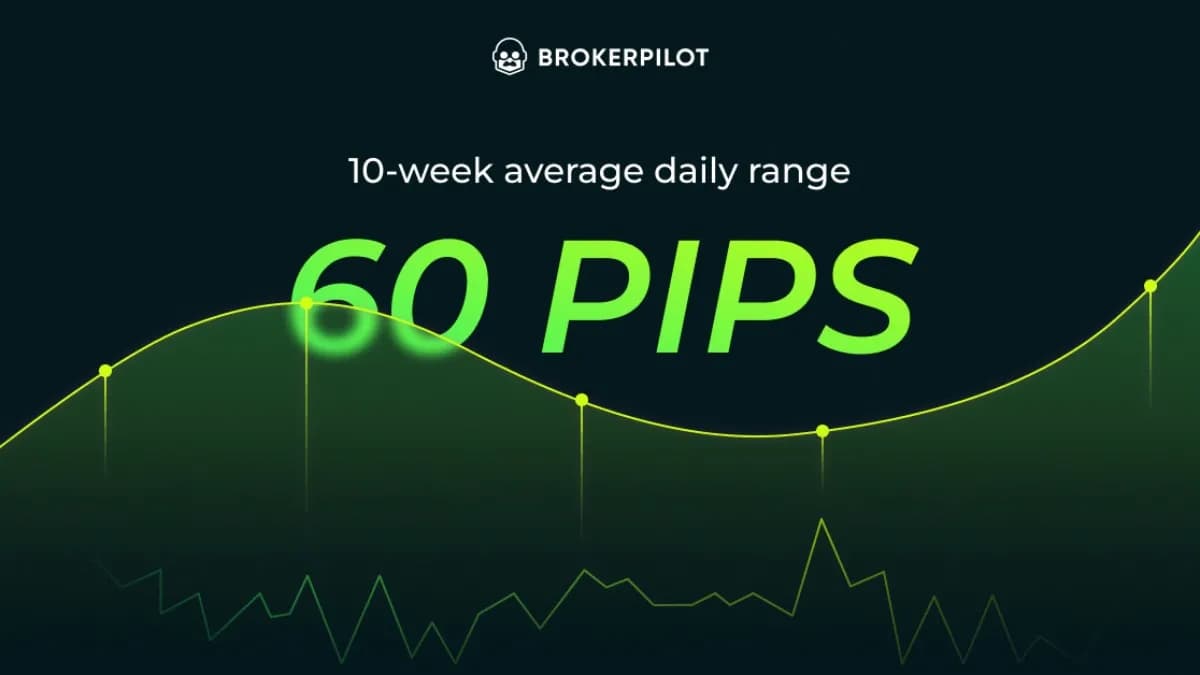
Sixty pips.
That's the ten-week average daily range on EUR/USD heading into the back half of July 2026 — down from the 70-90 pip regime that held for most of the spring. By the textbook definition, that's "Common Low Volatility." Quiet. Manageable. The kind of range that lets a dealing desk exhale, close a few tabs, and start believing the model has the market figured out.
It hasn't. Sitting directly underneath that quiet number is a Federal Reserve decision, a run of CPI and PPI prints, a ceasefire between the US and Iran that's holding by not much more than momentum, and a June jobs report that added only 57,000 positions with prior months revised down. Four live catalysts stacked into one compressed range — and, for the first time under the current Fed chair, a policy voice that leans far less on forward guidance than the market has spent years learning to read.
That last detail is the one desks tend to underweight. It shouldn't be.
A 50-70 pip average isn't a forecast. It's a description of what already happened. Risk limits, margin buffers, and anomaly-detection thresholds that get calibrated against a trailing ten-week window are, by construction, calibrated against the quiet that came before — not the print that's about to land. When EUR/USD found a floor near 1.1323, a level untouched since May 2025, it did so inside a "low volatility" window. The compression didn't prevent the move. It just meant the move looked, statistically, like an outlier against a baseline that was already stale.
That's the trap. A dealing desk watching realised volatility is always looking one window behind the market it's trying to price.
Under the previous Fed chair, forward guidance did a lot of the market's pre-positioning for it — hawkish or dovish language ahead of a meeting let desks and models absorb the reaction in instalments. The new chair has been notably more sparing with that kind of signalling. Less pre-positioning means more of the repricing has to happen in the window immediately around the data or the decision itself, rather than in the days leading up to it.
For a broker risk desk, that converts a calendar risk (mark the FOMC date, widen spreads, reduce leverage for the session) into something closer to an execution-quality risk: the move is more likely to be concentrated, sudden, and harder to distinguish in real time from a liquidity gap, a fat-finger print, or a feed error — right when correctly classifying it matters most.
Not predict which way EUR/USD breaks. That's not the job, and the market doesn't reward guessing. The job is making sure the infrastructure isn't still calibrated for the week that just ended.
Three places that quietly go stale first. Anomaly and exposure thresholds tuned to a 50-70 pip day will under-react to the first real spike, then over-react to it as noise a moment later — the worst possible order. Margin and hedging coverage sized off a 60-pip average won't hold if the print reproduces the 70-90 pip regime from spring, just compressed into minutes instead of a session. And "quiet" gets treated as synonymous with "priced-in," when the current setup — low realised volatility, high event density, a Fed chair saying less than the market is used to — looks a lot more like the second wearing the first one's clothes.
Not 1.1300, not 1.1450 — the two levels bracketing this week's range. It's 60. Because 60 pips a day is exactly the kind of number that makes a risk model feel finished. It isn't. It's the number right before the one that matters.
Brokerpilot is a SaaS risk management platform for multi-asset brokers. It helps monitor trade servers, detect fraud, and automate reporting to enhance dealing transparency and operational control.

Select the categories and companies you wish to follow directly to your person rss feed.
Create Custom RSS FeedSign up and join over 5,000 professional members who receive personalized news alerts, curated professional connections, and more for free!
Multi-asset trading broker AvaTrade has agreed to acquire the majority of FXCM Group’s business and brand, in a transaction that would bring a longstanding retail FX franchise into the AvaTrade Group.
LSEG and CMC Markets have signed a multi-year strategic data agreement expanding CMC's access to LSEG's real-time and delayed pricing, reference and corporate actions data, news and analytics, plus AI-ready content, to support new products, entry into new markets and the growth of CMC's institutional and B2B partnerships.
The Tel Aviv Stock Exchange is considering a bid for the Cyprus Stock Exchange, with Israeli media citing its EU licence, trading platform and clearing house. Euronext’s Athens exchange and India’s National Stock Exchange are also seen as contenders, and Cyprus aims to sign a sale agreement by the end of this year.
CME Group will launch baseball futures on 12 October, pending regulatory review, tracking CME FutureSports Performance Indexes built on Official League Data. Standard and micro contracts will start with the 2026 Postseason and the four clubs in the League Championship Series, trading around the clock.
ESMA has published an opinion stating that MiCA-authorised crypto-asset service providers should cease services tied to non-MiCA-compliant stablecoins for EU clients across MiCA crypto-asset services. National authorities should require remediation of existing exposures within three months, by early January 2027.
Nasdaq Ventures has made a strategic investment in Amsterdam-based derivatives and crypto exchange One Trading, with both firms to explore 24/7 trading of equity futures. The undisclosed investment follows Nasdaq's US$100 million investment in Payward, the parent of Kraken, and CME Group's move to 24/7 trading.
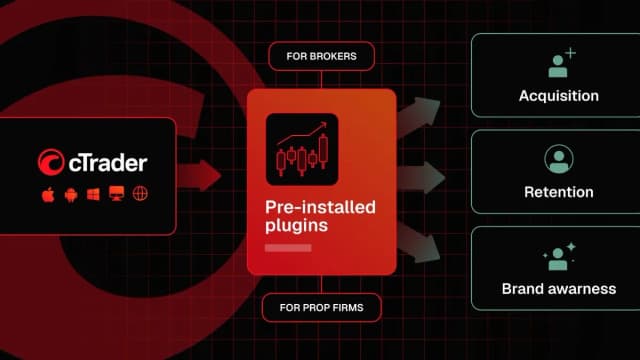
cTrader has opened multi-platform plugins to brokers and prop firms, which can pre-install their own tools for clients or list them in cTrader Store. The plugins run across Mobile, Web, Windows and Mac, and can be built and launched independently of core-platform releases, including trading journals and calculators.
Institutional brokerage and financial infrastructure provider Clear Street has joined TradingView’s broker network, allowing its clients to trade US stocks, exchange-traded funds and options directly through the charting and analysis platform.
Learn how to improve trading psychology, manage fear and greed, avoid revenge trading, and follow your trading strategy with discipline and a trading journal.
GTC Prime has announced a strategic partnership with Centroid Solutions to manage and distribute its liquidity through CS 360 Bridge, Centroid's multi-asset connectivity and execution engine, giving brokers and institutional clients access to tailor-made pricing, low-latency execution and real-time risk management.