just now


Liquidity Finder Ltd is incorporated in England and Wales, company number 10610740, registered address 167-169 Great Portland Street, Fifth Floor, London W1W 5PF, United Kingdom.
Published: just now
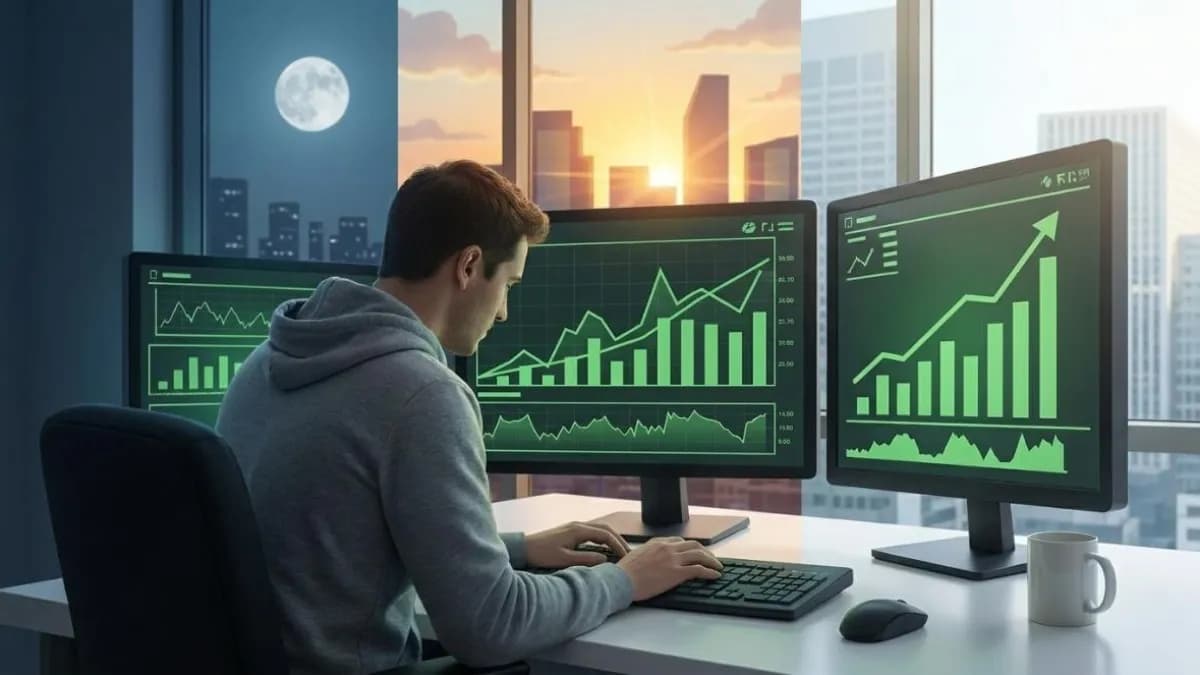

Many traders think the answer to becoming profitable is simple: spend more time in front of the charts.
But after a certain point, more screen time doesn't necessarily mean more progress.
If you've ever finished a long trading session only to realize you weren't really learning anything new, you're not alone. Improvement comes from practicing with purpose; not just putting in more hours.
That's where deliberate practice comes in.
To help traders improve faster by using deliberate practice instead of spending more time in front of the charts.
At the end of this lesson, you should be able to:
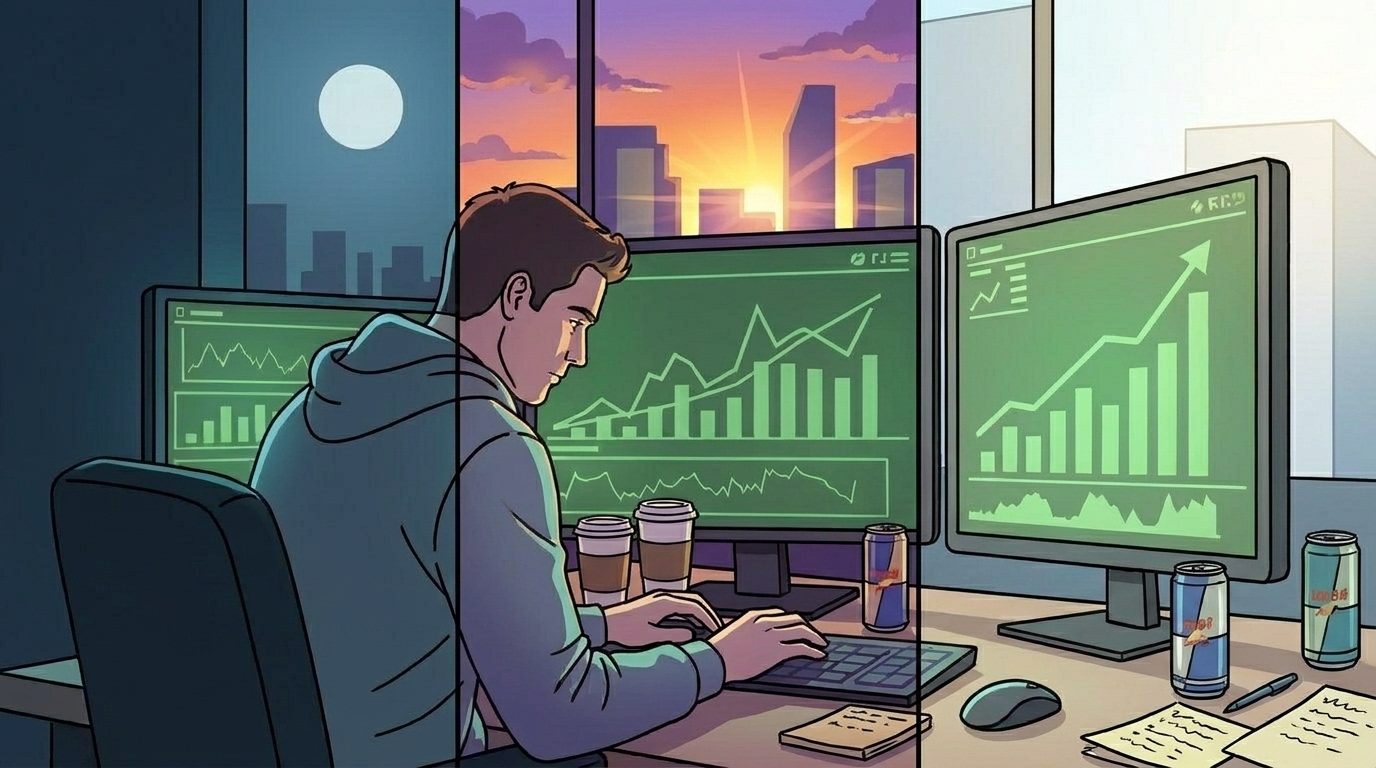
Deliberate practice is the habit of working on one specific skill at a time with complete focus.
Instead of opening your charts and hoping to find a trade, you approach every session with a clear objective. Maybe you're working on waiting for confirmation before entering a trade. Maybe you're trying to improve your risk management or stop second-guessing your trading plan.
The key is having a purpose every time you sit down to trade or study the markets.

It's easy to say, "I want to become a better trader."
The problem is that it's too broad.
A better approach is to focus on one thing you can improve today.
For example:
Small improvements made consistently often lead to the biggest changes over time.

One of the easiest ways to improve is by writing things down.
A trading journal isn't just about recording profits and losses. It's about understanding why you made each decision.
After every trading session, ask yourself:
You'll start noticing patterns that are difficult to see while you're in the middle of trading.

There is a misconception that successful traders spend all day watching charts.
In reality, quality is far more important than quantity.
A focused 45-minute study session is often more productive than spending four hours jumping between timeframes, checking social media, and forcing trades.
When you're fully engaged, you absorb more and make better decisions.

No professional athlete reaches the top without a coach.
Trading is no different.
Sometimes you're too close to your own trading to notice the mistakes you're making. Getting feedback from a mentor or experienced trader can help you spot habits that have been holding you back.
A different perspective can often save you months of frustration.

Confidence doesn't come from a winning streak.
It comes from knowing you've followed your process over and over again.
The more you practice good habits, the less you have to think about them during live trading. Eventually, following your trading plan becomes automatic.
That's when discipline starts turning into consistency.

Imagine two basketball players who both practice for three hours every day.
Player A spends the entire time shooting random shots, playing pickup games, and hoping to get better.
Player B spends just one hour working on one specific skill, free throws. They record every shot, analyze their form, correct mistakes, and repeat the drill until it becomes second nature.
After a few months, Player B becomes a far more consistent shooter, even though they spent less time practicing.
Trading works the same way!
Sitting in front of the charts for eight hours doesn't automatically make you a better trader. But spending one focused hour reviewing your mistakes, practicing one setup, or improving your risk management will develop your skills much faster.
Golden nugget:
It's not about how long you practice; it's about how intentionally you practice.

Most traders don't need more screen time; they need better practice.
If you want to improve, start each session with a clear goal, keep a journal, review your mistakes honestly, and focus on building one skill at a time.
Trading is a skill, and like any skill, the way you practice matters.
Always to remember:
The traders who improve the fastest aren't always the ones who work the hardest. They're the ones who make every practice session count.
If you want to develop a professional trading mindset while learning how to identify high-probability price action setups across Gold, Forex, Crypto, Commodities and Indices, continue following our market analysis and educational guides.
Build a strong trading foundation with step-by-step lessons designed for beginners:
Ready to learn simple price action strategy? Here’s how to do it step by step:
Learn how to identify bullish, bearish, and sideways markets using price action to make more informed trading decisions:
Ready to learn and capitalize the repetitive patterns in the markets? Here’s how to do it step by step:
Discover how candlestick patterns can help confirm market direction:
Gold is still one of the most traded assets, here’s how to trade it with confidence:
Your mindset is what separates steady growth from costly mistakes. Focus on these essentials:
Develop the mindset of a professional trader by mastering discipline, emotional control, patience, and consistency to achieve long-term trading success:
Learn the essential risk management strategies to protect your capital, manage losses, and trade with confidence:
Not sure where to begin? Here’s a simple roadmap to guide you:
By building step by step; from basics → real trading → mastering the craft, you’ll gain clarity, confidence, and steady progress without ever feeling overwhelmed.
Follow me for more daily market and educational insights!
Ruffy Grant B. Capacio - LinkedIn
Acy Securities - Discord
Disclaimer:
Trading forex and derivative instruments involves substantial risk and may not be suitable for all individuals. Only use funds that you are prepared to lose. It is important to understand how these markets work and the risks involved before trading, and to seek independent financial advice if needed. All market analysis and insights shared are intended for educational and informational purposes only and should not be considered financial or investment advice. July 16, 2026
ACY Securities is one of Australia's fastest growing multi-asset online trading providers, offering ultra-low-cost trading, rock-solid execution, technologically superior account management and premium market analysis.

Select the categories and companies you wish to follow directly to your person rss feed.
Create Custom RSS FeedSign up and join over 5,000 professional members who receive personalized news alerts, curated professional connections, and more for free!
Why did gold keep falling after reaching $3,880? See how a failed 4-hour retest confirmed weakness in XAUUSD and why $3,400 is the next weekly support to watch.
Reality television personality Aaron Chalmers and finfluencer Jason Agbodza have been fined after pleading guilty to illegally promoting an unauthorised foreign exchange trading scheme on social media.
UK retail sales rose a stronger-than-expected 0.7% in October, giving sterling some support, while a deepening tech sell-off pushed the dollar lower overnight against all major currencies. Thanim Islam, Head of FX Analysis at Equals, says the dollar remains in charge as the week ends, with the Fed expected to raise rates more than both the Bank of England and the ECB.
Nvidia beats expectations, reporting $115.8bn in revenue and raising its long-term growth outlook, but the stock still struggled to sustain its gains. AI remains fundamentally strong, but investor expectations are becoming more demanding, particularly around capex and profitability. Wall Street suffered a major sell-off, with the S&P 500 entering a six-session losing streak as rate concerns intensified.
iSAM Securities reviews the ris of weekend gold trading
Webull Corporation reported record third quarter 2026 revenue of $218.7 million, up 39% year-on-year, with customer assets reaching $32.4 billion and options contracts volume up 79%. Net income attributable to the company was $31.2 million, while margin debit balances passed $1 billion for the first time.
Anthropic, the company behind the Claude family of AI models, begins trading on the Nasdaq today under the ticker ANT. It priced its shares at $83 last night, above its marketed range of $70 to $78, and raised about $81.3 billion. That makes it the largest initial public offering on record, ahead of the roughly $75 billion SpaceX raised in June. This note covers what investors need to know: the terms, the business, how the company is governed, and what to watch.
Nvidia's first results without Jensen Huang answered the question that has hung over the AI trade since October. Revenue of $115.8 billion beat consensus by about $7 billion, fourth-quarter guidance of $130 billion came in roughly $5 billion above expectations, and the company raised its outlook for next fiscal year to around 75% growth. All of this assumes no data-centre sales to China.
Marex has entered the football financing market through a partnership with specialist sports investment and advisory firm Pinto Capital, targeting clubs in the Premier League and EFL Championship.
Around 110,000 UK retail investors have secured $300 million worth of Anthropic shares in its record-breaking $81 billion IPO. The heavily oversubscribed offer, coordinated by RetailBook, saw smaller investors prioritised, with 63% of applicants receiving their full allocation.