
just now


Liquidity Finder Ltd is incorporated in England and Wales, company number 10610740, registered address 167-169 Great Portland Street, Fifth Floor, London W1W 5PF, United Kingdom.
Published: just now


It’s becoming increasingly clear that the US dollar’s path forward is constrained by a range of structural and political headwinds. Even though long-end US yields remain elevated, the dollar is struggling to hold ground across G10 pairs. The latest G7 finance ministers’ meeting in Alberta has only sharpened the market’s focus on Washington’s increasingly erratic policy signalling particularly about trade, fiscal governance, and the role of the dollar itself in global portfolios.
While no formal comment has emerged yet from Treasury Secretary Bessent, the market remains sensitive to even the potential for a shift in how the US engages with its trading partners especially Japan and China. There’s growing talk that the G7 may follow the US in removing the de minimis exemption on low-value Chinese imports. That may seem like a side issue, but it’s emblematic of a broader trend toward decoupling, which threatens to reignite retaliatory tariff spirals. In FX terms, that simply adds one more layer of volatility and possibly a longer-term headwind for USD.
The fiscal backdrop in the US is also eroding confidence. Reports from Washington suggest a compromise may have been reached on lifting the SALT cap to push forward tax cuts. But with the IMF now weighing in, warning of an “ever-increasing” debt burden, and long-term Treasury yields punching above 5%, investors are being reminded that structural concerns are not going away. No wonder the DXY has drifted back toward April’s lows, despite the US economy continuing to show resilience in the data.
The euro has been climbing quietly but meaningfully, supported by a mix of improving current account dynamics and more balanced portfolio flows. The ECB’s March balance of payments report showed a current account surplus of €50.9bn the second largest monthly surplus on record with the 12-month rolling figure hitting €438.5bn, up 40% from last year.
Foreign demand for euro-area bonds is strong, though net bond flows remain outward. What's more notable is the equity picture: foreign investors added €408bn to eurozone equities in the year to March, comfortably offsetting outflows from fixed income. That suggests that the euro is slowly regaining safe haven status, especially as Germany begins to loosen the constraints of its constitutional debt brake.
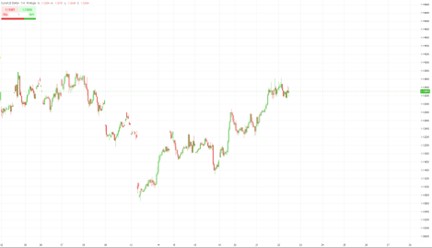
Technically, EURUSD has pierced through near-term resistance, and while participation is still light especially from discretionary accounts the tone remains constructive. On my desk, EURGBP longs have been expanded, particularly following the hotter-than-expected UK CPI print.
Sterling is battling uphill. April’s CPI numbers came in hotter than anticipated but the underlying story is less about inflation itself and more about the fiscal and political landscape. UK long-end yields continue to climb in line with global peers, but the UK doesn’t have the policy space or the geopolitical leverage to offset those pressures.
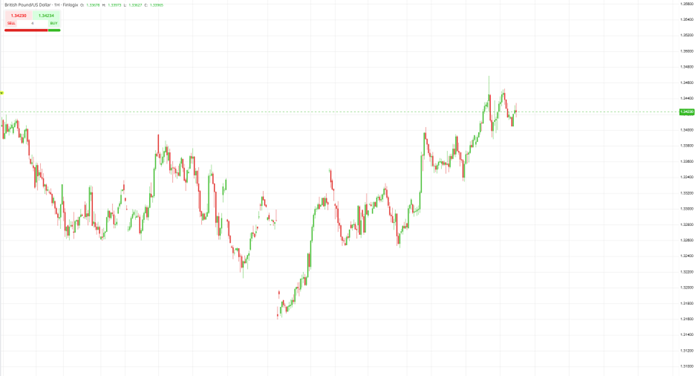
Deputy PM Angela Rayner’s suggestion of fresh tax hikes in the next budget on top of April’s resets only underscores how few good options the current government has left. Meanwhile, markets are growing wary of the UK’s willingness (or lack thereof) to stand firm at international negotiating tables. That’s not a narrative that attracts capital. PMIs are due next, but until then, I continue to favour EURGBP topside plays. GBPUSD (cable) has made some recent multi-year highs, but in this case, it’s more about dollar softness than sterling strength.
Geopolitical risks are once again pushing havens higher. The yen and Swiss franc both caught a bid on reports that Israel may be preparing to strike Iranian nuclear facilities a scenario that sent crude up about 1% and rattled already fragile risk sentiment.
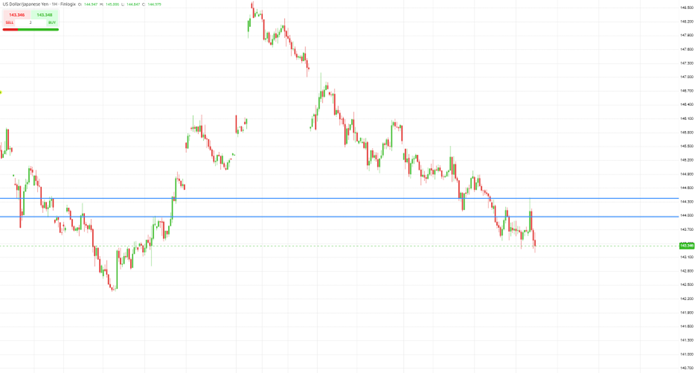
USDJPY is back under pressure, especially as Japanese yields steepen and the BoJ prepares for a likely tweak in its ultra long JGB policy in June. It’s too early to jump into fresh shorts on USDJPY, but I continue to look for rallies to fade, especially as Tokyo fix flows suggest local players are growing more active.
In Switzerland, the narrative remains conflicted: on the one hand, CHF should benefit from safe haven demand; on the other, its role as a funding currency means it also attracts selling pressure. With no clear catalyst, I’m staying on the sidelines for now.
The Australian dollar underperformed sharply after a dovish RBA tone saw systematic accounts reverse recent AUD buying. Even so, AUDUSD has bounced back modestly as broader USD softness takes hold. I'm still constructive on AUD medium-term, but crosses need to be handled carefully especially with macro uncertainty back on the table.
The kiwi was mixed some RM buying came through, but overall sentiment remains subdued. Systematic players are net sellers, and there’s little to change that unless New Zealand’s economic signals turn significantly.
Canada’s inflation data surprised to the upside in the core metrics, even though headline CPI softened to 1.7% the lowest since September. For the BoC, this complicates the June decision. Market pricing has moved rapidly: rate cut odds dropped from 70% to 30% post-release. I’ve closed my USDCAD longs and will stay neutral here too many moving parts.
This content may have been written by a third party. ACY makes no representation or warranty and assumes no liability as to the accuracy or completeness of the information provided, nor any loss arising from any investment based on a recommendation, forecast or other information supplies by any third-party. This content is information only, and does not constitute financial, investment or other advice on which you can rely.
ACY Securities is one of Australia's fastest growing multi-asset online trading providers, offering ultra-low-cost trading, rock-solid execution, technologically superior account management and premium market analysis.

Select the categories and companies you wish to follow directly to your person rss feed.
Create Custom RSS FeedSign up and join over 5,000 professional members who receive personalized news alerts, curated professional connections, and more for free!
FM Summit London 2026 returns to Old Billingsgate on 24 November for its 15th edition, with LMAX Group, Plus500 and oneZero among confirmed exhibitors. The one-day event adds Business Connect meetings and roundtables, and opens with a networking evening at The Folly on 23 November.
Finance Magnates Summit London returns to Old Billingsgate on 24 November 2026 for its 15th edition. The one-day event brings together brokers, liquidity providers, institutional firms, trading technology vendors, payments businesses and digital asset firms.
iSAM Securities Apex has integrated with Match-Prime, giving brokers access to liquidity across more than 2,000 instruments, with tailored pricing and up to 10 levels of market depth.
propfunding.com's free-entry instant funding changes the order of prop funding. Start trading first. Its free-entry instant funding model offers two qualification attempts without an upfront activation fee.
US stocks closed higher on Wednesday, with the Nasdaq gaining 1%, the S&P 500 rising 0.6%, and the Dow advancing 0.7%, as renewed enthusiasm for AI-related stocks lifted market sentiment.
SpaceX went public in June as a rocket company. On October 20 it reported as something else entirely: an AI infrastructure business, financed by a satellite broadband network, with a launch division attached. Rockets generated 12% of third quarter revenue and lost money. The AI segment generated 52% of revenue and consumed 84% of capital expenditure. Starlink generated 85% of operating profit.
Standard Chartered has signed definitive agreements to acquire 100% of Zodia Custody UK Limited, folding its regulated digital asset custody business into Securities Services. Zodia Solutions will be set up under SC Ventures with bank investors including Northern Trust, NAB Ventures, Emirates NBD and Investcorp.
Bybit Fintech FZE has secured a Virtual Asset Service Provider licence from Dubai’s Virtual Assets Regulatory Authority for Exchange Services, covering spot trading. Bybit’s Peter Loo said the firm hopes to add derivatives, subject to regulatory approvals. Its international Dubai headquarters opened in 2022.
ATFX Connect has released its Q4 2026 Institutional Edge, examining the geopolitical, monetary policy and fiscal pressures shaping global financial markets in the final quarter of the year.
The Nasdaq 100 is trading at 29,382. After reaching a recent high of 29,957, the index reversed sharply and has been recording a series of lower highs and lower lows.