just now


Liquidity Finder Ltd is incorporated in England and Wales, company number 10610740, registered address 167-169 Great Portland Street, Fifth Floor, London W1W 5PF, United Kingdom.
Published: just now

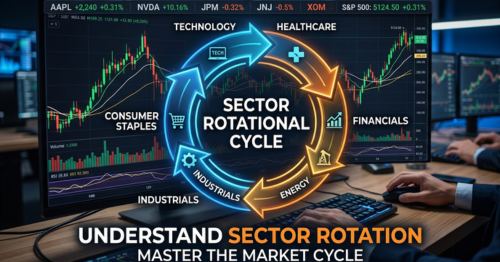
The Sector Rotation Cycle tracks how different stock groups react to economic shifts.

Interest-sensitive stocks usually lead market highs and lows.
Tracking sector group rotation helps you spot bull or bear market trends early.
Consumer spending leads economic recoveries, while capital spending lags behind.
Stock market never moves in a straight line. The economy is actually made of many different parts that rise and fall at wildly different times. It shifts fast. We call this predictable process the Sector Rotation Cycle but we should note that markets are forward-looking. When the overall business cycle switches between deflationary and inflationary environments, different industry groups take turns leading the charge. Tracking this movement is very important. Most industries do not easily fit into simple categories and instead, equity prices constantly shift and fluctuate based on expected profits and the shifting behavior of investors toward those same profits. Learning this rhythm makes stock selection much easier.
Why does it matter?
The theory of industry group rotation serves two very useful purposes for daily investors. It measures trend maturity. If the market is heavily oversold, you might see indication that a bear market is finally shifting into a bullish trend. At times like these, it is incredibly helpful to know if leading groups have stopped making new lows. It signals a clear shift.
Next, understanding this rotation helps you decide which stocks to buy or sell. Since most stocks rally together during a healthy bull market, they usually hit their lowest points at the exact same time. However, tracking specific groups tells you where the real strength lies.
How do business cycle stages affect industry groups?
The overall economy, measured by economic indicators like Interest Rates, CPI (Consumer Price Index) or Gross Domestic Product (GDP), is always either elevating or dropping. Yet, very few periods exist where all segments advance at once. Some industries thrive during deflation, while others explode under inflationary conditions at the end of the business cycle. The timing matters.
Economic recoveries are almost always led by consumer spending. Housing spearheads this push. As interest rates fall during a recession, the demand for new homes naturally begins to pick up pace. Therefore, homebuilding and construction stocks become leading groups. They jump first.
What are the best leading and lagging stock categories?
Retail stores, consumer discretionary also show leading tendencies because they anticipate better consumer spending. Certain interest rate sensitive stocks, like telecommunications and electric utilities, join them at the front of the pack. As the recovery continues, dramatically cut inventories finally become completely depleted. Manufacturing groups then improve.
Finally, manufacturing capacity runs out late in the economic recovery. Capital spending stocks, such as construction and mining companies, then quickly emerge as the new market leaders. Competence plays a huge role in this entire cycle. Prices follow.
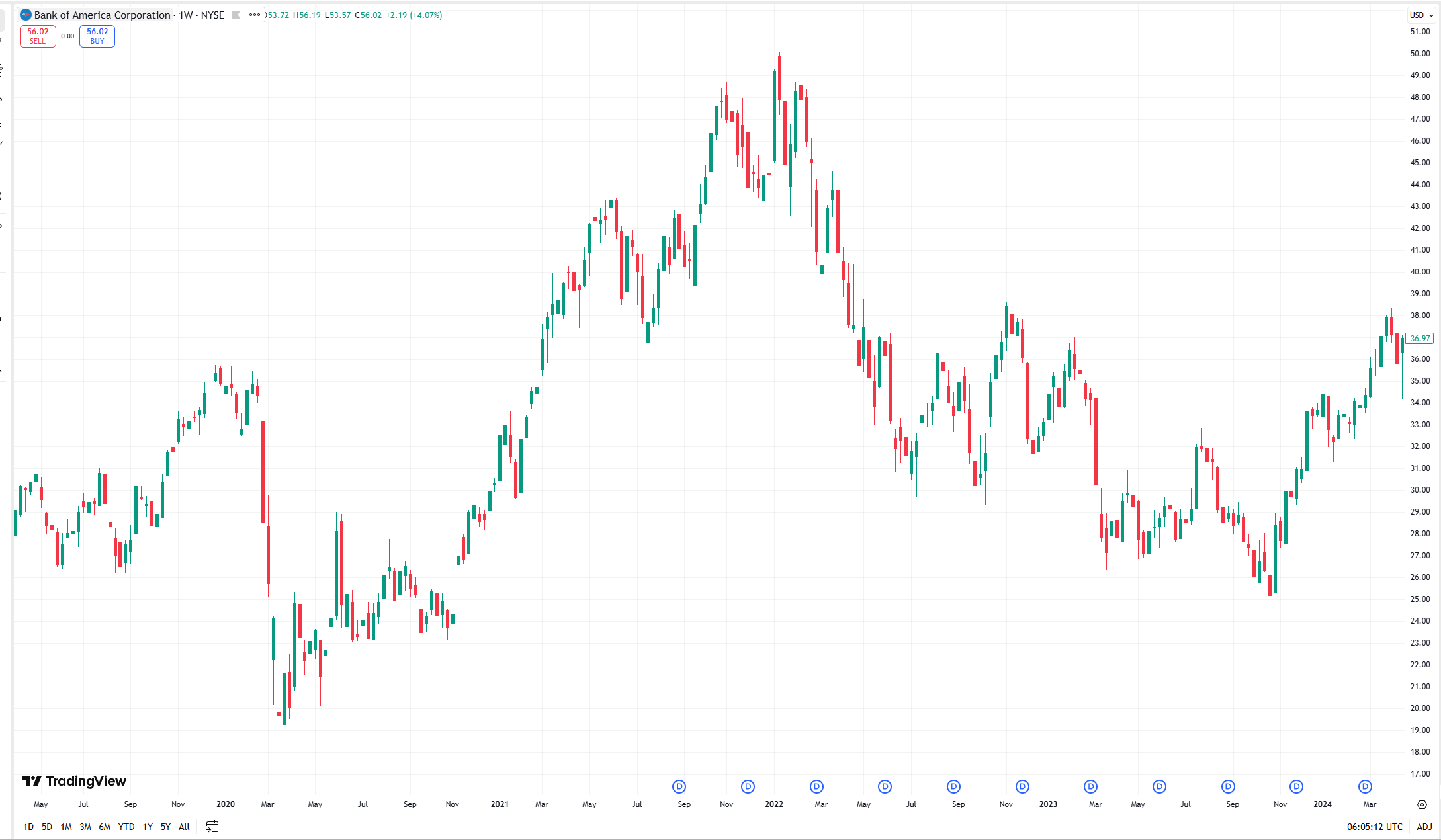
Example of a Bank of America’s (Financial) stock performance during high interest rates in 2022 from 0.25% to 4.50%
Source: TradingView
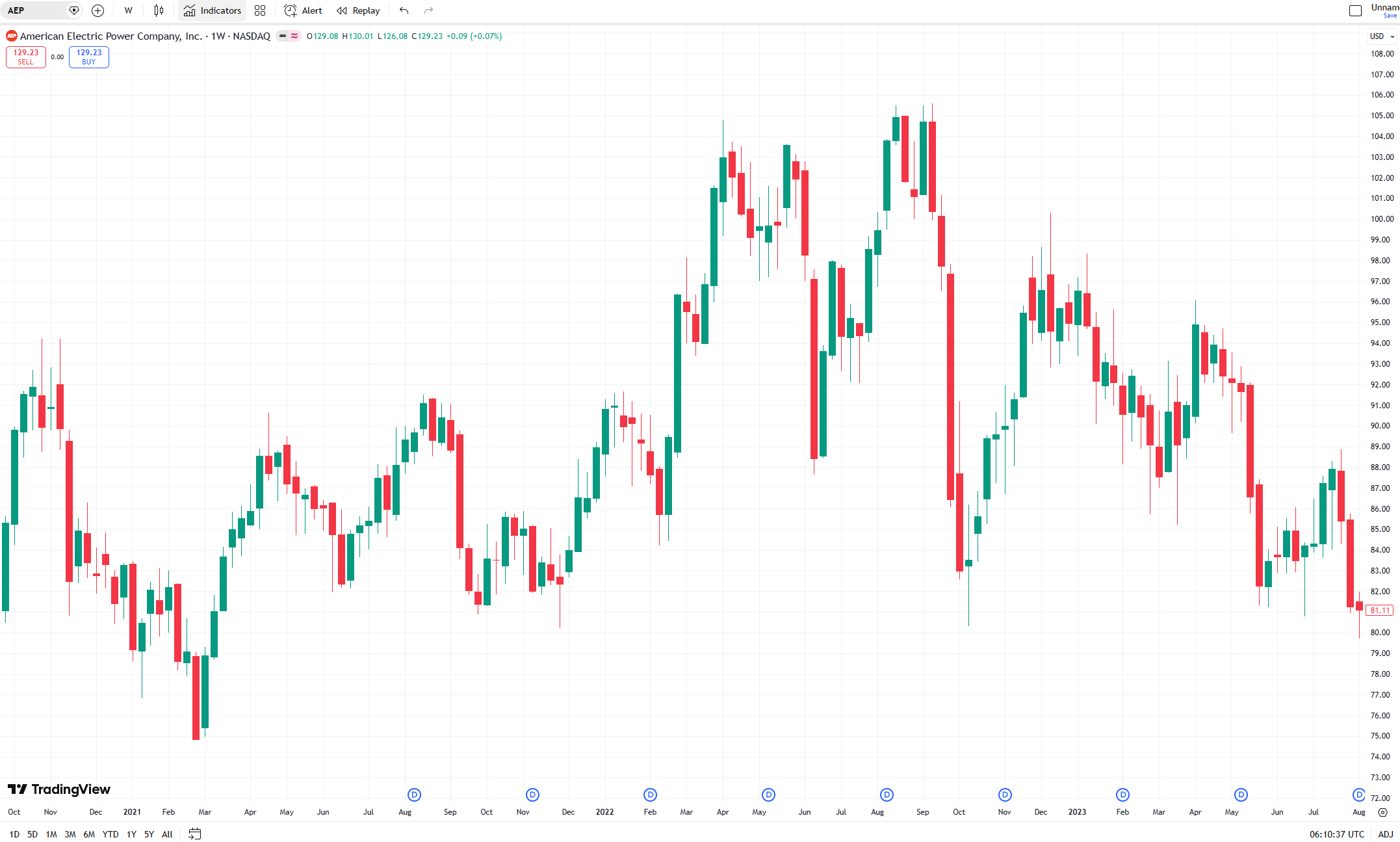
Example of American Power Company (Energy) stock performance in 2022.
Source: TradingView
How does investor confidence shift during this rotation?
During the early phases of a bull market, investors prioritize sound judgment. Stocks with great balance sheets and high yields show incredibly superior relative strength during this fearful time. As the cycle progresses, confidence improves and rotation turns to riskier, speculative issues. These volatile stocks peak fast.

What makes aviation and healthcare stocks different?
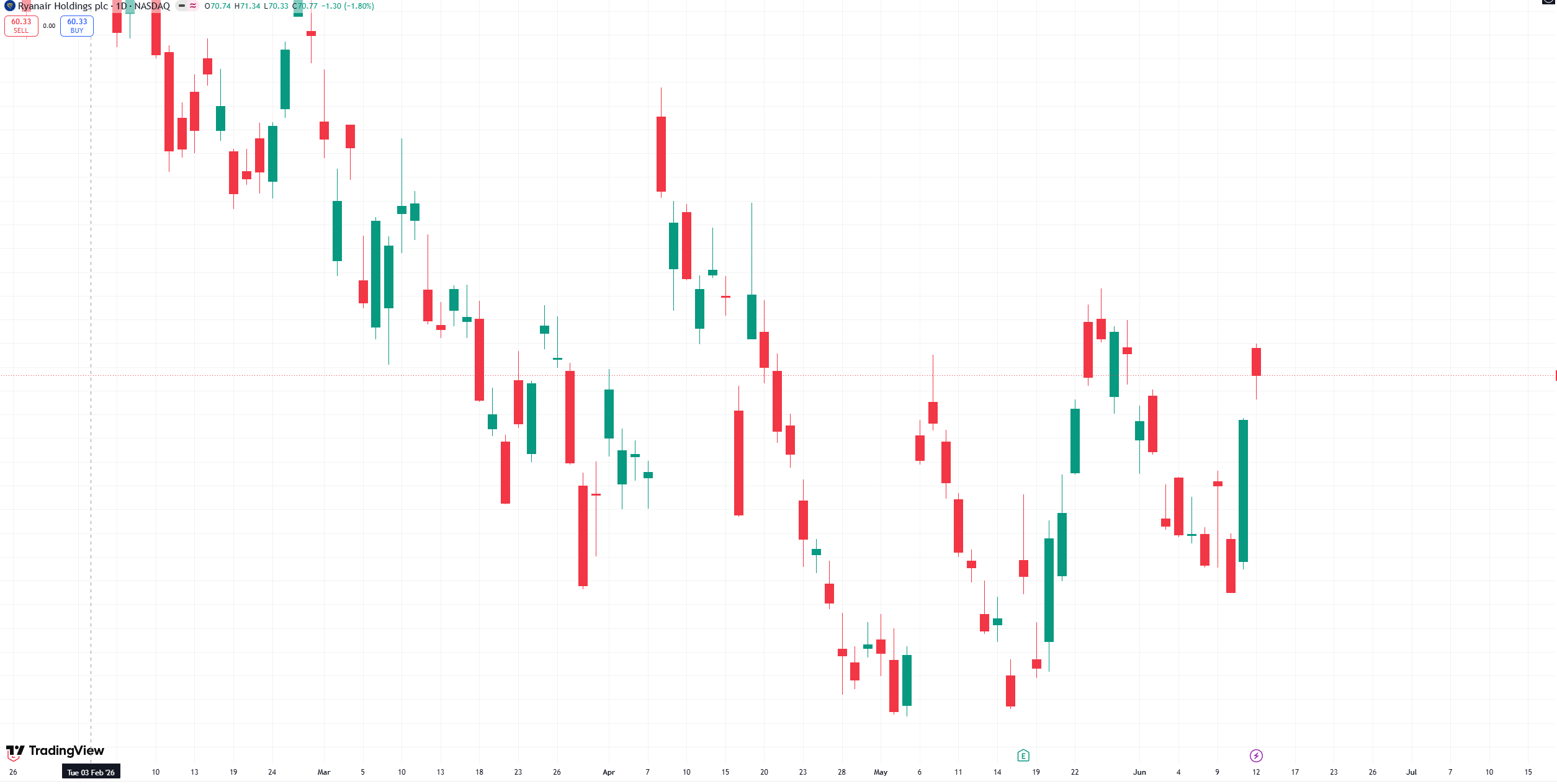
Some groups completely refuse to fit into the standard productive process. Aviation differs. This group often coincides with or lags slightly at bear market lows. However, aviation companies are almost always the very first groups to turn down before a major market peak. Energy prices hurt them.
Example of Ryanair Holdings during the spikes in energy costs in the middle of Middle East Tension 2026.
Source: TradingView
Healthcare stocks, on the other hand, show their absolute best performance at the tail end of a bull market. They are classic laggards. Sometimes, sudden fundamental changes cause an industry to act uncharacteristically strong or weak during a specific cycle. They often the last to join a market rally as they are defensive and non-cyclical investments, they happen to underperform when investors are aggressively chasing high-growth, tech-heavy stocks.
Monitoring an extensive of industry groups rather than relying on a single proxy provides a more reliable assessment of market health. Since the business cycle follows a sequential growth, it inevitably creates a distinct, observable pattern. By examining the data through this lens, the underlying rhythm of the economy becomes clear.
Understanding the Sector Rotation Cycle effortlessly assesses the maturity of any primary market trend. It guides choices. Your stock selection will improve massively once you master these specific market rhythms. Follow the rotation.
Economic recoveries are almost always led by consumer spending. Housing spearheads this push. As interest rates fall during a recession, the demand for new homes naturally begins to pick up pace. Therefore, homebuilding and construction stocks become leading groups. They jump first.
Economic Sectors and Industry groups
The economic sector is a group of companies that carry out comparable tasks, and by classifying them in this way, we can easily identify the sectors of the economy that are expanding or contracting. With emerging countries, which frequently depend on specific sectors, this is really crucial as for instance which some countries mostly rely on mining, which they then sell to developed countries for conversion into another product, while developed countries have a far more varied mix of all the main economic categories. As a result, balance is created.
Economic Sectors
Primary or the raw materials. This includes companies dedicated that harvesting raw materials or natural resources.
The core business activities in the primary sector include:
Secondary or the finished goods. This part of the economy creates finished goods out of natural products.
Examples of activities:
Tertiary or Services are all focusing on offering services rather than producing items or products.
Firms under tertiary sector offer a variety of services, including:
Quaternary is the knowledge-based section, concentrating only on in-depth study, intellectual pursuits, and actual sophisticated technology development. As we can see now, innovation is a fast-paced atmosphere.
Activities include:
For the equities or in the stock market
These sectors assess the economy's status based on corporate performance or key earnings.
The industrials metric is strong performance during periods of economic expansion and increased economic growth.
SECTOR ROTATION UNDER CATEGORIES
Liquidity
Utilities
• Power or Electricity
• Telecommunications
• Natural Gas
Financials
• Brokers
• Banks
• Insurance
• Financing
• Savings and Loans
Real Estate Investment Trust or REITs
Homebuilders and Construction
Containers and Packaging
Consumer Nondurables
• Household Goods
• Tobacco
• Cosmetics and Personal Care
• Food and Beverages
• Clothing
Transportation
• Airlines
• Cargo aircraft
• Railroads
• Trucking and Logistics
Middle
Retailers
Manufacturers
Healthcare
Consumer Durables
• Automotives and Components
• Furnitures and Appliances
• Building Materials construction
• Containers Metal and Glass
• Leisure and Media/Entertainment
• Hotels or Hospitality
• Waste Management
Earnings
Mining
Basic Industries
• Pulp and paper
• Chemicals
• Steel
• Heavy Machineries
• Computer Manufacturers
• Electronics
• Semiconductors
This shows that market trends follow anticipated, sequential rhythm, with various industries leading at particular points in the economic business cycle. By monitoring these changes or shifts, investors may better match their stock choices to the current stage of the economy and proactively spot market turning points.
Disclaimer: This content may have been written by a third party. ACY makes no representation or warranty and assumes no liability as to the accuracy or completeness of the information provided, nor any loss arising from any investment based on a recommendation, forecast or other information supplies by any third-party. This content is information only, and does not constitute financial, investment or other advice on which you can rely.
ACY Securities is one of Australia's fastest growing multi-asset online trading providers, offering ultra-low-cost trading, rock-solid execution, technologically superior account management and premium market analysis.

Select the categories and companies you wish to follow directly to your person rss feed.
Create Custom RSS FeedSign up and join over 5,000 professional members who receive personalized news alerts, curated professional connections, and more for free!
Bybit has launched Perp Options, described as the first options contracts built on TradFi perpetuals, giving traders round-the-clock access to US equity options. SpaceX and Nvidia are the first underlying assets, with USDT settlement and integration into Bybit's Unified Trading Account.
Use this trading preparation checklist to plan your session, define entry rules, manage risk, and build a disciplined trading routine in seven steps.
Your Bourse expands its crypto liquidity ecosystem with Caladan, giving brokers access to broader market coverage, institutional execution capacity and streamlined settlement.
Scope Markets, the retail brokerage part of Rostro Group, has appointed Ibrahim Hossny as Head of Research and Marketing for the Middle East and North Africa.
Hantec Prime, the institutional division of Hantec Markets, has reported trading volume up more than 300% year-to-date, alongside the addition of 42 new institutional clients since December, capping one of its strongest years of growth to date.
Learn how to refine XAUUSD support and resistance on the daily chart using candle bodies, market structure and weekly gold levels for swing trading. A slug alone cannot guarantee a top Google ranking. Keep it focused rather than adding every supporting keyword.
The week in Dubai will be focused on connecting directly with the industry and discussing how technology can help modern brokerages simplify operations, automate workflows, strengthen operational control, and scale efficiently.
Devexperts has launched a turnkey solution giving brokers in South Korea access to US equity markets, combining its DXtrade trading platform, dxFeed market data, and execution services. The offering targets South Korea's growing retail demand for US stocks, worth several billion USD monthly.
Assess why WTI crude oil surged past $105 per barrel amid Saudi pipeline disruptions, record tanker charter rates, and escalating geopolitical tensions.
Bitcoin price forecast: BTC/USD retests $78,460–$80,215 resistance. Watch bearish confirmation toward $72,480 or a bullish breakout toward $86,150.