
just now


Liquidity Finder Ltd is incorporated in England and Wales, company number 10610740, registered address 167-169 Great Portland Street, Fifth Floor, London W1W 5PF, United Kingdom.
Published: just now


Imagine you sell gold 12 minutes before your trading plan says you should. You make $100. When you open your trading journal, do you write “good trade” or “I entered early”?
Now imagine you lost $100. Would you describe the same decision differently?
That question gets to the heart of trading psychology. How you feel about a win or a loss can change the way you trade next time. If you remember the $100 and forget why you were supposed to wait, one early entry can become a habit.

Gold rises back to a price where sellers stopped it last time. Traders call that area resistance. You’re watching to see whether sellers' step in there again.
Your plan says to wait for a four-hour candle to close. Each candle shows how price moves during those four hours. With 12 minutes left, gold starts falling. You think, “If I wait any longer, I’ll miss it.” You sell.
Two minutes later, gold starts climbing again. The candle is still open. Now you’re asking, “Should I get out, or give it another minute?”
That’s the first cost of entering early. A moment ago, you could check the clock and wait. Now you have to make another decision with money on the line.
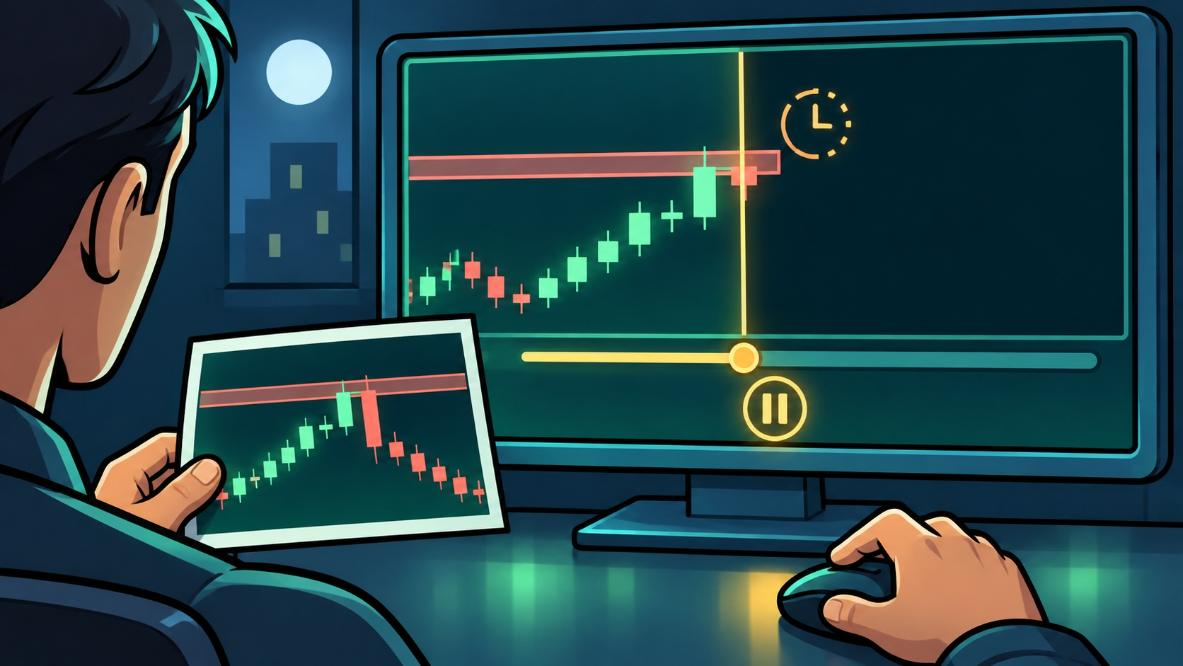
Outcome bias means letting the result of a trade change how you judge the decision. Suppose you sell early and make money. You might say, “I saw the move coming.” Lose money on the same entry and you might say, “I should have waited.”
Here’s a simple way to review it. Mark the time you clicked sell. If you use chart replay, pause it at that moment. Could you see a closed bearish candle then? With 12 minutes left, the answer was no. A screenshot taken later can make the signal look obvious because it shows how the candle finished.
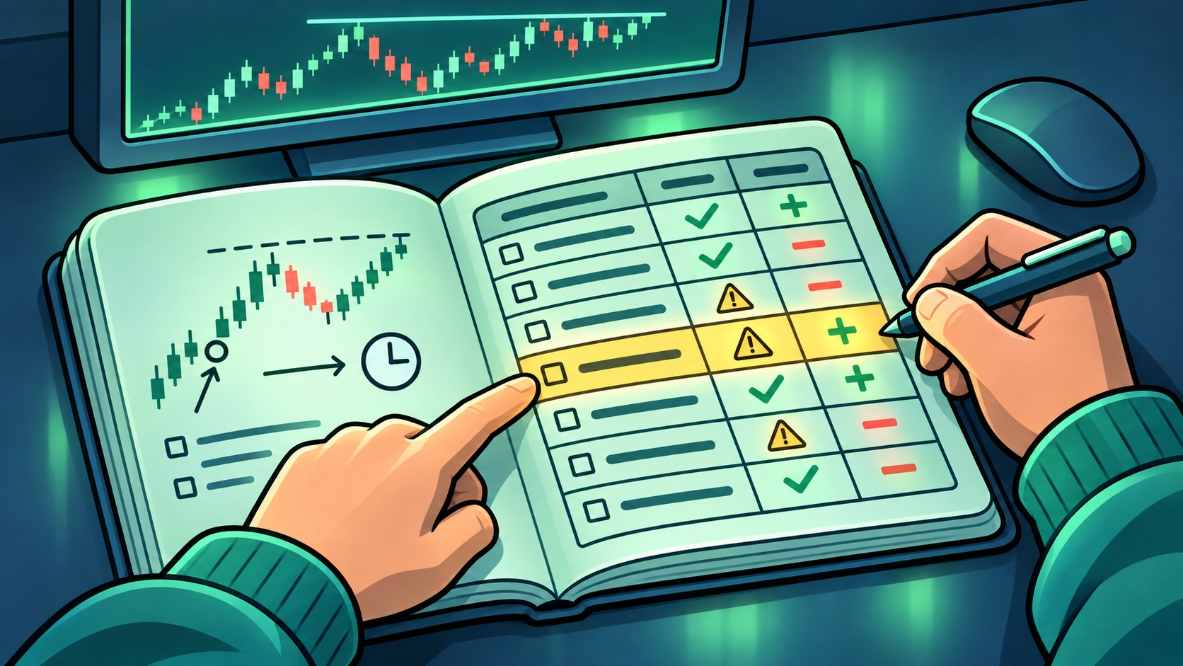
Say you enter early on Monday and make $100. On Thursday, gold approaches resistance again. This time, “It worked on Monday” feels like a good reason to sell.
By Friday, you’ve taken ten trades. You waited for confirmation on seven and entered early on three. Two of the early trades won.
How many times did you actually follow your entry rule? Seven. Label all ten trades in your journal so you can see which ones followed the plan. If you think entering earlier might work, you can test that idea on past charts as a separate strategy.

Imagine you step outside without checking the weather. It stays sunny, so you leave your umbrella at home the next day too. This time, you get caught in the rain.
The same thing can happen on a gold chart. You enter before the candle closes and the trade makes money. That win can make it tempting to enter early again. Waiting for the candle to close lets you see whether your setup is there before you risk money.
| What happens on the chart?If you sell earlyIf you wait for confirmation |
| Gold starts falling with 12 minutes left.You sell while the candle can still change.You wait to see where it closes. |
| Gold turns higher before the close.You already have an open position to manage.You can watch from the sidelines. |
| Gold falls without giving your planned signal.A profit can make the early entry look justified.You record why you skipped the trade. |

An if–then trading plan puts your next decision into words before price reaches the level. Here’s how it could work on the same gold chart.
The third condition matters when you feel the fear of missing out (FOMO). You’ve already decided what to do if gold drops without you. You can follow that decision even when the move looks tempting.

Answer the first three before you trade and the last two afterward.

Mark one level and finish two sentences before price gets there.
“I’ll only take this trade if…”
“If price moves without me, I’ll…”
After the session, check what you wrote. If gold dropped and you let it go because your signal never appeared, record that too. Your account history won’t show a trade, but your journal will show that you followed your plan.
No confirmation, no trade.
_____________________________________________________________________________________
Put these lessons into practice with a demo trading account. Test your strategies, build confidence, and develop consistent trading habits in a simulated market environment before risking real capital.
Start Practicing with a Demo Account
______________________________________________________________________________________
Use your demo sessions to practice the skills covered in these guides:
Start with the skill you need most, apply it in your next practice session, and review what you learned before moving on.
______________________________________________________________________________________
If you decide to move beyond demo practice, first review the provider’s account terms, trading costs, execution conditions, and risk disclosures.
Make sure you understand the financial exposure involved and use only capital you can afford to lose. Demo experience can help you learn the process, but it cannot guarantee live results.
Explore an ACY Live Trading Account
______________________________________________________________________________________
Follow Ruffy Grant B. Capacio for Gold analysis, Forex trading ideas, price action education, trading psychology, and market insights: LinkedIn
ACY Securities: Join the Discord Server
Risk Disclaimer:
Trading leveraged financial instruments involves significant risk and may not be suitable for everyone. This content is for general education and information only and is not financial advice or a recommendation to trade. Past performance, demo results, and price targets do not guarantee future outcomes. Consider your objectives, experience, and risk tolerance, and seek independent advice where appropriate. Only trade with capital you can afford to lose. November 26, 2026
ACY Securities is one of Australia's fastest growing multi-asset online trading providers, offering ultra-low-cost trading, rock-solid execution, technologically superior account management and premium market analysis.

Select the categories and companies you wish to follow directly to your person rss feed.
Create Custom RSS FeedSign up and join over 5,000 professional members who receive personalized news alerts, curated professional connections, and more for free!
Gold rises back to a price where sellers stopped it last time. Traders call that area resistance. You’re watching to see whether sellers' step in there again.
CMC Markets has reported record first-half results for FY2027, with net operating income up 54% to £286.6 million and profit before tax up 115% to £106.0 million. The broker declared a record interim dividend of 10.1 pence and said it has been registered by the FCA as a cryptoasset business under UK money laundering rules.
Switzerland's first spot Bitcoin ETF, the Bitcoin Fund ETF (BBIT), has listed on SIX Swiss Exchange, issued by Pernet von Ballmoos with BIT Asset Management as sponsor and asset manager. The fund tracks the SIX Reference Rate Bitcoin Index, with coins held offline at a Swiss bank under CISA investor protection rules.
Equiti Group has been named Official Fintech Partner of the 2026 Emirates Dubai 7s, with pitchside branding, a co-branded pop-up court with Dubai Basketball and Yalla Club fan activations in the Festival Village. The festival runs at The Sevens Stadium from 27 to 29 November and opens the HSBC SVNS season.
GCEX has launched Real World Asset perpetuals for eligible professional and institutional clients, starting with contracts referencing Amazon, Nvidia, Tesla and SpaceX. The cash-settled CFDs have no expiry, carry no shareholder rights, and are offered through FCA-regulated GC Exchange Limited in London.
Italy’s regulator has ordered blocks against three investment-service websites and eight crypto-service websites, bringing its total since July 2019 to 1,894.
RepoAgent connects Tradeweb execution to automated post-trade processing and settlement instructions, initially covering euro-denominated repo at Euroclear and Clearstream ICSDs.
Hong Kong’s CMU Digital Asset Platform supports debt issuance, tokenisation and atomic delivery-versus-payment settlement, with 24-hour multicurrency settlement using cash tokens.
The FCA’s new client categorisation rules take effect on 1 December, with separate wealth and expertise routes and an 18-month review period for most existing elective professional clients.
The Variant Take sets out a data-driven view that differs from market consensus, the evidence behind it, and what would prove it wrong. It is a way of thinking about a market question, not a recommendation to trade.