just now

Liquidity Finder Ltd is incorporated in England and Wales, company number 10610740, registered address 167-169 Great Portland Street, Fifth Floor, London W1W 5PF, United Kingdom.
Published: just now

06 December, 2017 Richard Perona (Advanced Markets) - As January 3, 2018 approaches, FX industry participants are busy reading through the new financial laws of “Markets in Financial Instruments Directive” (MiFID 2) in an attempt to understand how these will affect them going forward.
Originally, MiFID was created following the 2008 financial crisis in an effort to standardize the regulatory disclosures for particular markets. MiFID 2 came along with a revised set of standards which will enforce transparency, enhance investor protection and expand reporting to regulators, effectively changing the way that Europe’s secondary markets function. The significance of these changes should not be underestimated as the regulatory expectations of higher quality data sets will most likely lead to more regulatory issues and fines.
MIFID II - Questions to ask your BrokerIn a continuation of Advanced Markets’ ongoing, fact-finding series about MiFID 2, (High Impact Changes), I will be exploring the impact of the pending regulations, specifically on how they relate to those engaged in Algorithmic Trading - High Frequency Trading (HFT).
The broad Algorithmic Trading definition, incorporated within MiFID 2, was intentionally used to capture a wide array of clients and firms which wouldn’t have been placed within this category before. This new rule defines Algorithmic trading as follows:
Article 4(1)(39) of MiFID II, pursuant to which algorithmic trading is "trading in financial instruments where a computer algorithm automatically determines individual parameters of orders such as whether to initiate the order, the timing, price or quantity of the order or how to manage the order after its submission, with limited or no human intervention, and does not include any system that is only used for the purpose of routing orders to one or more trading venues or for the processing of orders involving no determination of any trading parameters or for the confirmation of orders or the post-trade processing of executed transactions." (1)
Continuing, Article 4(1)(40) of MiFID 2 has enacted High Frequency Trader as a subset of the Algorithmic Trading definition and will be subjected to the same controls and requirements with the ADDITIONAL requirements for an infrastructure designed to minimize network and other latencies including high-speed DEA, proximity hosting or collocation for algorithmic order entry that on average has:
a) At least 2 messages per second with respect to any single financial instrument traded on a trading venue;
b) At least 4 messages per second with respect to all financial instruments traded on a trading venue. (2)
Should your particular trading style, or methodology, fall under any of the above-mentioned HFT definitions then you will need to take action. If your firm is deemed as involved in “Algo” / HFT trading, by definition of MiFID 2, then you are required to become authorized as an investment firm and to comply with compulsory market-making rules. The rules ensure that your “Algo” system has appropriate controls which:
a) Prohibit sending erroneous orders during operations
b) Does not contribute to disorderly markets
c) Does not violate the trading venues rules
Also, High Frequency Traders will be required to store all time-sequenced records in detail for a minimum of 5 years. These stored records, which will be made available to the regulatory body, must encompass the following details:
-Person in charge of each algorithm
-Description of each decision made or trade by the algorithm
-Compliance and Risk Controls
If you determine that you will be under the new MiFID 2 HFT, then please download the following procedural guide, sourced from a leading regulatory compliance firm.
Furthermore, if you have questions or comments regarding this topic, please contact us - We are always happy to help you!
Sources: (1), (2) - Supplementing Directive 2014/65/EU of the European Parliament and of the Council as regards organisational requirements and operating conditions for investment firms and defined terms for the purposes of that Directive, 2016, April 25 (Commission Delegated Regulation (EU), page 41 https://ec.europa.eu/transparency/regdoc/rep/3/2016/EN/3-2016-2398-EN-F1-1.PDF
We're the largest marketplace to connect with brokers, Fintech companies & digital asset firms. Want to partner? Let's get in touch.

Select the categories and companies you wish to follow directly to your person rss feed.
Create Custom RSS FeedSign up and join over 5,000 professional members who receive personalized news alerts, curated professional connections, and more for free!
CMC Markets has retired the CMC Connect name and will now present its institutional business as CMC Markets Institutional.
The SEC has approved Cboe's binary options tied to key performance indicators reported by 23 companies, covering more than 100 metrics such as iPhone revenue. The cash-settled contracts pay a fixed $1, Robinhood plans to be the first retail broker to offer them, and trading awaits clearing registration.
Gold is trading around $4,150, recovering sharply after falling to a recent low of $4,073.

Global semiconductor and technology stocks sold off sharply on Thursday, with South Korea’s SK Hynix plunging over 10% and Samsung Electronics falling more than 8%.
Learn gold market structure to identify bullish, bearish and ranging XAUUSD trends using higher highs, higher lows, lower highs and lower lows, support and resistance.
Axi has launched an MCP integration connecting eligible MT5 accounts to Claude, allowing clients to access live market data, track positions, execute trades and update risk parameters through the AI assistant developed by Anthropic. Available to eligible Axi clients with an active MT5 account. Setup runs via Claude.ai.
Movantis has selected Integral to extend its FX liquidity offering for institutional clients including banks, payment networks and digital asset operators, adding an institutional trading platform, direct-to-client API trading and API connectivity into a third-party multi-dealer venue, supporting regional expansion.
Running a venue around the clock is the easy part. Pricing risk when the market underneath it is shut is not. Lars Holst, CEO of GCEX explains how to manage risk in 24/7 markets.
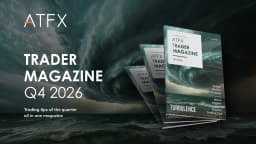
ATFX has released its Q4 2026 Trader Magazine, offering a closer look at the macroeconomic and market forces that could shape trading conditions in the final quarter of the year.
LSEG has announced a collaboration with NVIDIA that lets financial institutions analyse years of LSEG Tick History data in seconds using NVIDIA cuDF on GPUs, without creating another full copy of the dataset. Tick History holds 110 trillion rows across 100 million instruments and more than 580 venues and contributors.