just now

Liquidity Finder Ltd is incorporated in England and Wales, company number 10610740, registered address 167-169 Great Portland Street, Fifth Floor, London W1W 5PF, United Kingdom.
Published: just now

When it comes to managing multiple MT4 MT5 trading accounts efficiently, choosing the right allocation method is crucial. Whether you’re a fund manager, an account manager, or a forex trader, using a Multi Account Manager (MAM) or PAMM system allows you to execute trades across multiple sub-accounts from a single master account.
At ACY Securities, we offer fund managers and professional traders access to the MetaFX Multi Account Manager from KeySoft Group, designed to simplify trade execution and fund management. With this powerful MAM system, you can efficiently allocate funds to sub-accounts using various lot allocation and percentage allocation methods.
In this blog, we’ll explore the top 8 MAM allocation methods, helping you understand how different models work, from equal allocation to proportional allocation and percent allocation. Whether you’re looking for a method that suits high-volume lot-based trading or a strategy that aligns with investor contributions, we’ve got you covered.
Let’s dive into the best MAM and PAMM allocation methods that brokers, traders, and investors can use to optimise their trading accounts.
The different allocation methods allow the fund manager or trader to allocate trades to individual sub accounts either via lots, percentages or proportional allocation to suit their trading strategy or structure.
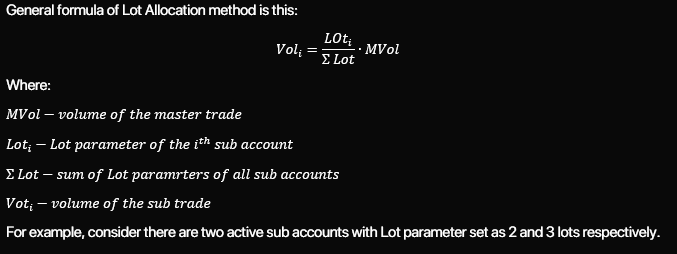
The lot allocation method is used to divide the volume of the master trade to the sub-accounts according to the lot parameter of the sub-accounts. This method allows trading with variable lot sizes on the master account.
The allocation to the subaccounts will be proportional to the set lot sizes provided for each of them. Note, when using lot allocation, at least one of the active subaccounts needs to have a balance greater than zero.
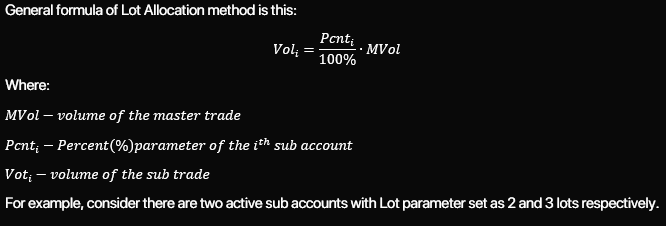
The percentage allocation method is used to divide the volume of the master trade to the sub-accounts to the set percentage parameter of the sub-accounts.
Hence, the volume will be allocated to the subaccounts by the predetermined percentage nominated by the fund manager. You can view the difference between MAM PAMM accounts here.
Note: When using the Percent Allocation the sum of the percentage parameter must add up to 100%.
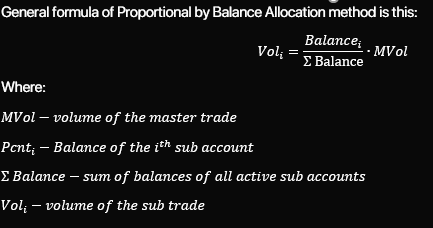
The proportional by balance allocation allocated the master trade proportionally according to the balances of the subaccounts. This method does not require additional settings to be changed and allocates the master trades automatically.
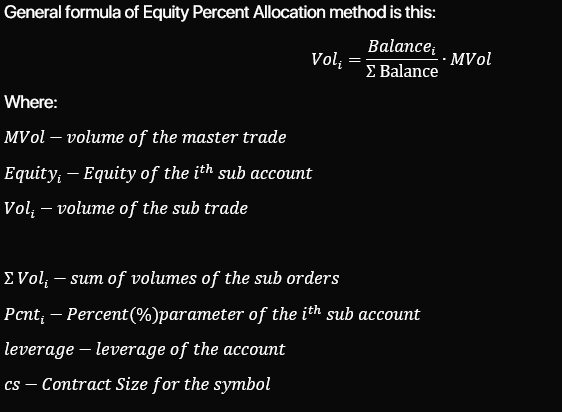
The equity percent allocation is used when the user requires allocation to sub-accounts on a percentage basis for each individual sub-MAM.
This allocation method allows it to define the risk for each individual sub-MAM. For example, if the risk percentage of the sub-account is placed at x%, then only x% of the sub-account equity would be traded at any given time.
Note: This allocation method requires the user to predetermine the percentage of the CFD Trading sub-account equity which will be traded at any given time.
When using the equity percent allocation, the volume of the master trade is changed to reflect the sum of volumes of the sub-trades. The volume on the initial trade request would be different from the open trade to reflect the sum of volumes of the sub-MAMs.
Allocation by Equal Risk allows investors to mitigate the issues with margin control on the subaccounts.
This method allows the user to set minimum margin percentage levels for each of the sub-accounts. If the minimal margin percentage limit is reached, there will be no allocation to those sub-accounts.
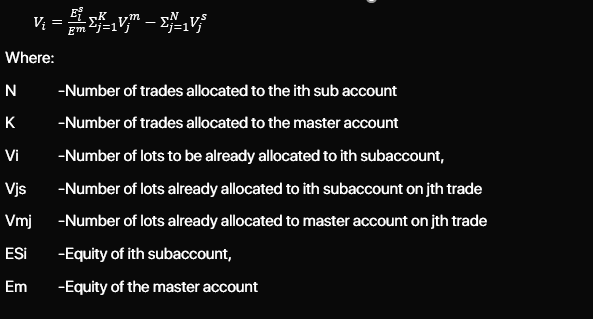
The lot multiplier allocation copies trade from the master account to the sub-account when trading the forex market and global markets.
There are several modes with the lot multiplier allocation and this can be selected for each individual sub-account separately. These modes allow different kinds of calculations of the sub-trade volumes.
The allocation by percentage allocation by P/L is used when the user requires allocation to the sub accounts on a percentage basis.
This method is more precise in general, as the allocation is made without opening trades on the sub accounts.
Instead, when the master trade is closed, the allocation to the sub accounts is made as a deposit/withdrawal transaction.
The proportional allocation by P/L is used when the user requires allocating to sub accounts proportionally to the sub accounts balances.
Like the percentage allocation by profit and loss, this method is more precise in general, as the allocation is made without opening trades on the sub accounts.
When the master trade is closed, the allocation to the sub accounts is made as a deposit/withdrawal transaction.
Hopefully, this blog post gives you, the money manager, a solid overview of the top 8 management modules you have available in your manager’s account.
Getting your head around managed Forex accounts is simple when you have all the information. To discuss the full suite of trading tools, trading accounts and platforms available, don’t hesitate to reach out to one of our ACY Partners team members.
We can run through the full list of trading instruments available to you, our sophisticated trading solutions, onboarding options and more.
At ACY Partners, we can help you establish your MAM manager account and run through the different allocation methods.
Why not jump on a call with our team today so we can get clear on your goals and expectations and see if we can help you?
Launched in 2020, ACY Partners is a special division of ACY Securities that is dedicated to attracting and servicing partners.

Select the categories and companies you wish to follow directly to your person rss feed.
Create Custom RSS FeedSign up and join over 5,000 professional members who receive personalized news alerts, curated professional connections, and more for free!
Multi-asset trading broker AvaTrade has agreed to acquire the majority of FXCM Group’s business and brand, in a transaction that would bring a longstanding retail FX franchise into the AvaTrade Group.
LSEG and CMC Markets have signed a multi-year strategic data agreement expanding CMC's access to LSEG's real-time and delayed pricing, reference and corporate actions data, news and analytics, plus AI-ready content, to support new products, entry into new markets and the growth of CMC's institutional and B2B partnerships.
The Tel Aviv Stock Exchange is considering a bid for the Cyprus Stock Exchange, with Israeli media citing its EU licence, trading platform and clearing house. Euronext’s Athens exchange and India’s National Stock Exchange are also seen as contenders, and Cyprus aims to sign a sale agreement by the end of this year.
CME Group will launch baseball futures on 12 October, pending regulatory review, tracking CME FutureSports Performance Indexes built on Official League Data. Standard and micro contracts will start with the 2026 Postseason and the four clubs in the League Championship Series, trading around the clock.
ESMA has published an opinion stating that MiCA-authorised crypto-asset service providers should cease services tied to non-MiCA-compliant stablecoins for EU clients across MiCA crypto-asset services. National authorities should require remediation of existing exposures within three months, by early January 2027.
Nasdaq Ventures has made a strategic investment in Amsterdam-based derivatives and crypto exchange One Trading, with both firms to explore 24/7 trading of equity futures. The undisclosed investment follows Nasdaq's US$100 million investment in Payward, the parent of Kraken, and CME Group's move to 24/7 trading.
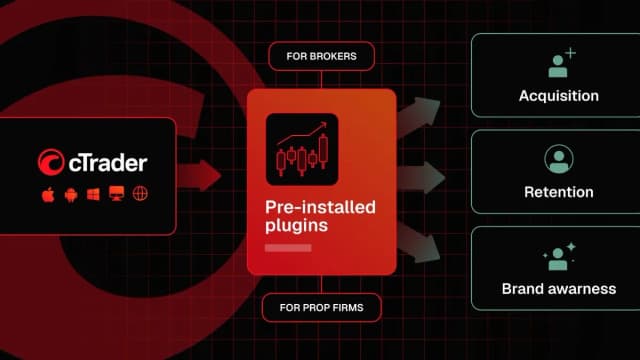
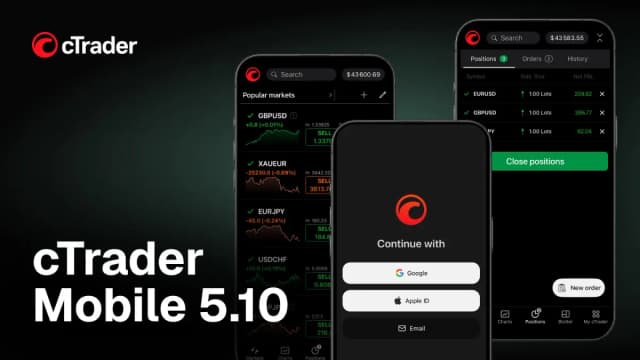
cTrader has opened multi-platform plugins to brokers and prop firms, which can pre-install their own tools for clients or list them in cTrader Store. The plugins run across Mobile, Web, Windows and Mac, and can be built and launched independently of core-platform releases, including trading journals and calculators.
Institutional brokerage and financial infrastructure provider Clear Street has joined TradingView’s broker network, allowing its clients to trade US stocks, exchange-traded funds and options directly through the charting and analysis platform.
Learn how to improve trading psychology, manage fear and greed, avoid revenge trading, and follow your trading strategy with discipline and a trading journal.
GTC Prime has announced a strategic partnership with Centroid Solutions to manage and distribute its liquidity through CS 360 Bridge, Centroid's multi-asset connectivity and execution engine, giving brokers and institutional clients access to tailor-made pricing, low-latency execution and real-time risk management.