
Search Companies, News, Members & more
Terms of ServicePrivacy PolicySecurity PolicyLegal InformationCommunity GuidelinesSitemapsCookie Settings
2026 Copyright © Liquidity Finder Ltd. All rights reserved.
Liquidity Finder Ltd is incorporated in England and Wales, company number 10610740, registered address 167-169 Great Portland Street, Fifth Floor, London W1W 5PF, United Kingdom.
Stablecoins and the “Pint Test”: What S&P’s USDT Rating Tells Us About Real-World Risk
Published on Jan 3, 2026
Updated on Mar 7, 2026

Stablecoins and the “Pint Test”: What S&P’s USDT Rating Tells Us About Real-World Risk
On 26 November 2025, S&P Global Ratings published a Stablecoin Stability Assessment on Tether (USDT) and gave it the weakest possible assessment: 5 (weak) on a 1–5 scale.
If you’re using stablecoins — or thinking about using them, or even issuing one — I have a few practical observations that may help you make better decisions.
There are three parts to this:
・Not all stablecoins are equal — structure, backing, custody, and reporting really matter.
・What S&P is saying about USDT specifically.
・What “good” looks like for both users and issuers.
1) Not all stablecoins are equal
I’m an operations guy, so I think in terms of process, structure, and risk.
When I first encountered Tether, I described it as a “layer cake of risk”.
This was back when it was holding US dollars in cash. The bottom layer was the risk of the bank in the Middle East where they were holding those USD. In simple accounting terms, any cash balances are unsecured receivables. The middle-Eastern bank then in turn holds US dollar cash with a clearing bank in the US. Again unsecured receivables. Then there is the issuer, Tether; how clearly does it report holdings, be that cash or other assets and is the operating company bankruptcy remote or segregated from the client assets?
The structure of the correspondent banking or custody set-up matters, because the degree of risk is driven both by the number of intermediaries in the chain and who they are. Banks are not required to hold cash to back client deposits separately from their own money. That is what powers lending via fractional reserve banking. Your $100 deposit powers up to $90 in loans. Securities are different; if you have fully paid for them, the bank or broker is required to hold them separately from its own assets.
Bankruptcy remoteness is also hugely important. If you hold any financial asset, including a Stablecoin, if the issuer goes bust, you are one of many with a claim. In a bankruptcy, there is a hierarchy for claims, with operating related liabilities being covered first: taxes, social security, payroll, pensions etc.
How often the issuer reports on holdings and values is also pretty important. Your bank will report your cash balance daily, whatever kind of client you are. Many assets are valued daily and lots of financial instruments will have a daily NAV, net asset value. If you are holding something with the label “stablecoin” on it and expecting to be able to use it as a payment asset, then you would want reporting that is both transparent and frequent.
If, like me, you agree that Stablecoins are like Heineken and can enable payments needs that other methods can’t reach, then I’d expect that like me, you would want to know that “a pint is a pint”, in other words you will get back 100 cents on the dollar, exactly as you would if you had a balance of $100 with a commercial bank and asked them to make a $100 payment.
I was involved in the creation of Fnality, a new on-chain payment system backed by bankruptcy remote balances with central banks. Showing issuance vs. holdings in real-time would be eminently doable and perhaps also a USP; the issuance is always known, and the balances are readily available through an API and Open Banking.
Over the years, Tether has had some very public reporting issues, with some opaque inter-company loans, as well as challenges with auditors. It has though become more transparent and has taken to buying a lot of US Treasury bills rather than holding cash with commercial banks. It also reports more frequently. In the meantime, the rest of the world has caught up. The Genius Act in the US is very prescriptive on how Stablecoins should be set-up: underlying assets, reporting frequency, bankruptcy remoteness. All those obviously good things are now requirements.
2) The S&P report had a couple of specific bones to pick re USDT:
1) Risky underlying assets. These make up 24% of the assets. There is some Bitcoin in the mix, which with its volatility could wipe out the reported “overcollateralization” vs. the amount issued. That big word simply means that on a mark-to-market basis the assets are worth more than the liabilities, i.e. the USDT in circulation. Lack of transparency; beyond the BTC, in that 24% lump of so-called risky assets there are holdings which are not transparent. Also, the structure of custody, correspondent bank and counterparty arrangements are not clear.
2) Infrequent reporting. Tether reports quarterly. Newest regulations like the Genius Act prescribe monthly. For me, daily would not be too much of a stretch.
3) Regulatory environment. Tether is based in El Salvador. Not high on the list of places you would be happy to run to a judge and say: “I have a claim against somebody in your jurisdiction”. El Savador does not require segregation of assets, i.e. bankruptcy remoteness.
Put simply, the underlying weaknesses that I highlighted when I made my “layer cake of risk” observation are still there. In the meantime, USDT is both huge and systemic.
3) What good looks like for users and issuers
“But everybody else is using it, so it must be alright!”. That would be the simplest retort to the insights above.
Some weeks back, Nick Philpott, a co-founder of Zodia Markets, told me that for clients in Emerging Markets, Stablecoins really were better and less risky than the next best alternative, namely fiat payments and holdings via a local bank. I agree with him that if there is a market practice then if you don’t want to be either penalised or excluded you have to work out how you can best “get with the programme.”
For Users
First step. Treat a Stablecoin as a means of payment rather than a store of value. Only hold what you need to hold to make your payments today. Don’t hold any substantial overnight balances. This is not news; on today’s fiat world institutional customers try to avoid having large overnight balances. Sweeping to money market funds and reverse repo are the cash management instruments of choice.
Second Step. Choose your weapon. Firstly, don’t put all your eggs in one basket or, more formally, avoid concentration risk. If you have a lot of Stablecoin payments to make today, you might want to use different stables if you can.
Third Step. Use Tokenised Deposits when you do need to hold overnight cash balances “on-chain”. Right now, JP Morgan’s JPMD is readily exchangeable to USDC. For more on this see Simon Taylor’s Dec 7 Blog Post: “The tokenized-deposit vs. stablecoin fight is a distraction.”
For issuers
The Genius Act is a good place to start. Bankruptcy remoteness is a must. Transparency is what will earn you trust. The Genius Act only requires monthly audited reporting. You could though choose to report in near real-time or daily. Looking at the allowed holdings for a regulated Stablecoin, I think daily is not too much of a burden. You also need to be clear on counterparties, custodians and correspondent banks. Who do you have open reverse repos with, whose CP and CDs are you holding, which money market funds?
Now, we are missing an on-chain means of payment which uses central bank money. That though is topic for another day.
Please feel free to get in contact via LiquidityFinder here.
 |
Olaf is a liquidity and financial services expert. He is the founder of 3C Advisory You can message Olaf directly here. |
Share this article
Comments
Most Recent
Find The Right Partners for
Your Trading Business
Sign up and join over 5,000 professional members who receive personalized news alerts, curated professional connections, and more for free!
Outsourced dealing desks have grown as the cost of hiring experienced dealers has risen. Alex Hristov of Broktinger sets out what brokers hand over, what stays in-house, and the monitoring tools his team built for their own desk, which other brokers can also benefit from.
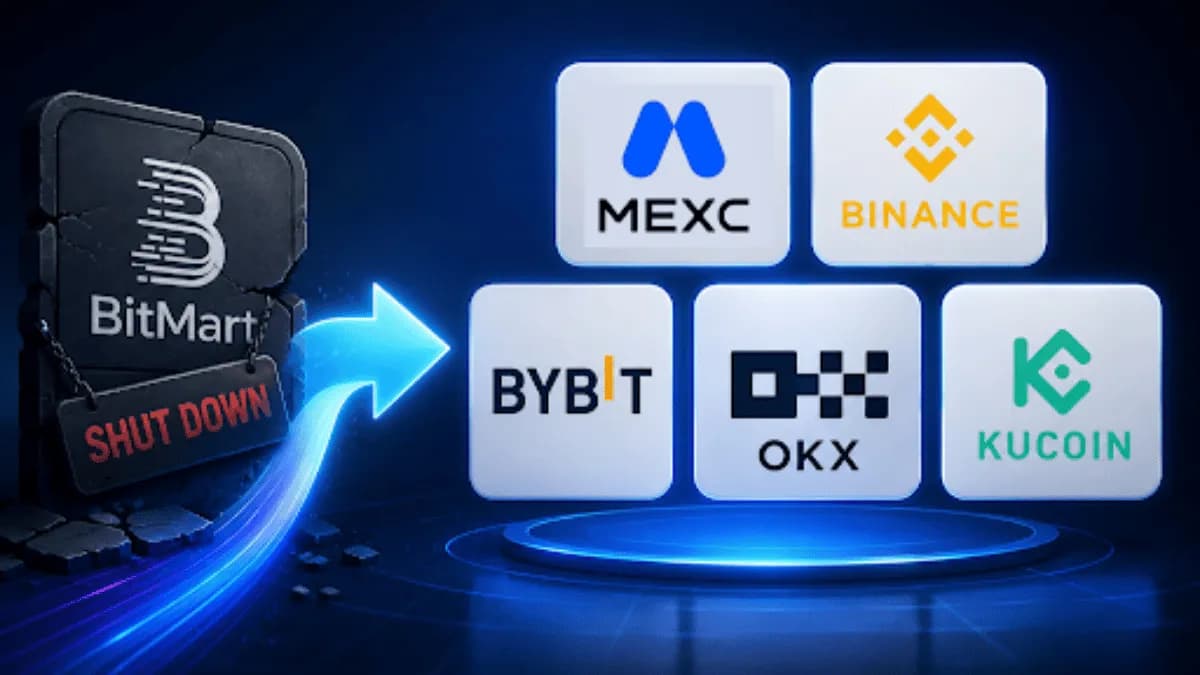
BitMart announced on July 26, 2026 that it is winding down its trading platform: new registrations and deposits stopped immediately, spot and futures trading ends August 26, 2026, and operations fully close by January 31, 2027. Anyone still holding funds on BitMart needs a reliable replacement exchange immediately.
A new stablecoin backed by 140+ firms, from Visa to BlackRock. Can Open USD challenge USDT and USDC, and will it clear MiCA? Olaf Ransome weighs in.
SoFi's SoFiUSD is the first stablecoin issued by a US national bank. But do holders actually have the protection they think?

Risk and dealing analytics provider BrokerPilot helps multi-asset brokers spot toxic flow before it eats into their P&L. Chief Revenue Officer Sergey Berezhnoy talks to Sam Low about catching toxic patterns across MT4, MT5 and cTrader, why new brokers get targeted from day one, and where AI fits into the dealing room without replacing the human dealer.

As tokenisation and digital assets move from niche curiosity to mainstream expectation, banks and financial institutions face an uncomfortable truth: their legacy core banking systems were never built for this. From order execution and pre-funding to custody, portfolio management and gas fees, Olaf Ransome explores the key infrastructure challenges FIs must navigate and asks whether to re-use, buy or build their way to a solution that actually scales.

Klarna is partnering with Coinbase, raising stablecoin-denominated funding and launching KlarnaUSD. We break down the treasury logic, merchant incentives and agentic AI payments angle — and what other CFOs should take from it.
In Part 5 of his A-Book STP series, Youssef Bouz from GCC Brokers provides a guide to distinguishing healthy algorithmic trading from latency arbitrage and structural abuse — and why behavior, not profitability, is the real risk indicator.
Create Your FREE Account
Get access to latest news, updates, real-time data, brokerage and trading firm insights and customized information feeds.


Thunes and Coinbase have announced a strategic collaboration at Money20/20 USA. Coinbase will integrate Thunes’ Direct Global Network for payouts to local clearing systems, while Coinbase will power Thunes’ stablecoin infrastructure, supporting enterprise supplier payments, gig worker payouts and global remittances.

Hantec Group's prop firm brand Hantec Trader began operating as RZR Funded on 19 October.

Online investment platform Webull (NASDAQ: BULL) will offer perpetual futures to eligible US customers from November. The first contracts will be on Bitcoin and other crypto assets.
Market data and financial technology provider dxFeed has launched dxFeed ZeroDTE, a quantitative analytics solution for the zero-days-to-expiration (0DTE) options market.


US stock futures edged higher this morning after Wall Street rebounded on Monday, with the S&P 500 rising 0.4% and the Nasdaq Composite gaining over 1%, led by technology stocks such as Nvidia, Tesla, and Alphabet.

Gold is trading at $4,128. Following its recent high of $4,198, the precious metal has entered a clear downward move, with successive lower highs and lower lows.


Was the recent AI infrastructure sell-off a warning sign, or a market overreaction? As earnings season takes centre stage, investors are looking beyond market volatility to assess the strength of corporate spending, financial resilience and future growth. With major technology, semiconductor and defence companies set to report, this week's results could offer important clues about where market confidence stands. In this Weekly Outlook, we examine the key developments and earnings signals that could shape market sentiment. Read the full article for our latest analysis. BitDelta Securities Financial Services LLC, regulated by the Capital Market Authority under Category 5 (Introduction Only), acts solely as an introducer and does not provide trading, execution, dealing, advisory, portfolio management, or custody services. All trading, execution, and investment-related services are provided by BitDelta Limited, Mauritius, a licensed Investment Dealer. All trading and investments involve risk. The value of investments may fluctuate, and you may receive less than your initial investment.


Nasdaq 100 turns bearish after breaking weekly support. Watch 29,800–30,400 resistance for a potential rejection toward the 29,000 target.

Tradeweb Markets Inc. has agreed to acquire electronic credit trading platform Trumid Holdings, LLC for about $1.97 billion, combining credit protocols and extending its reach into new issue and grey market trading. The deal is targeted to close in the first half of 2027, subject to regulatory approvals.

The Cboe has launched pre-market and post-market trading sessions for select single stock and exchange-traded fund (ETF) options on its Cboe Options Exchange (C1). Trading began today with options on 24 single stocks and 5 ETFs.
Feed