
Search Companies, News, Members & more
Terms of ServicePrivacy PolicySecurity PolicyLegal InformationCommunity GuidelinesSitemapsCookie Settings
2026 Copyright © Liquidity Finder Ltd. All rights reserved.
Liquidity Finder Ltd is incorporated in England and Wales, company number 10610740, registered address 167-169 Great Portland Street, Fifth Floor, London W1W 5PF, United Kingdom.
LSEG and DiSH cash. A tasty souffle or an Eton mess?
Published on Apr 24, 2026
Updated on Apr 24, 2026


Olaf Ransome
Founder, 3C Advisory | Published on LiquidityFinder
To unlock the potential of new digital assets in wholesale banking, we need a great solution for the means of payment. When LSEG announced DiSH, its Digital Settlement House, I thought it deserved a closer look.
On 15 January this year, London Stock Exchange Group launched its Digital Settlement House: LSEG DiSH. It is an open-access platform designed to deliver programmatic, instantaneous settlement across both on-chain and traditional payment networks, 24 hours a day. The settlement mechanism is DiSH Cash, a ledger-based representation of commercial bank deposits held across a network of member banks, supporting multiple currencies and jurisdictions. It is not a stablecoin.
The launch followed a proof of concept on the Canton Network conducted alongside Digital Asset and a consortium of financial institutions, and sits within LSEG's Post Trade Solutions division, the business in which eleven global banks including Bank of America, Barclays, Citi, Deutsche Bank, HSBC and JP Morgan collectively took a 20% stake in October 2025. Those names matter; they are both stakeholders and the anticipated first users of the service.
My view on developments in matters "new digital assets" in the wholesale banking space, is that in order to unlock all the potential benefits, we need a great solution for the means of payment.
By great, I mean, among other things, a solution which supports each of the three things P we want to do with a means of payment: P for payment, PvP for payment vs. payment i.e. FX, and DvP for delivery vs. payment, i.e. securities settlement. With that we need the ability to scale and service the global financial services industry. Millions of transactions and movements every day.
I have also chanted out loud that I believe tokenised deposits are useless outside the four walls of the issuing bank. With that I would allow for a private garden on the public blockchain with permissioned access.
I would add that today in TradFI we have existing systems which are great at any one of those three things P. Certainly for payments, I think it is unlikely that a new payment system can be significantly more effective. Our challenge even before we do things "new digital assets" is intraday liquidity management; so a solution which allows us to do all three things P is a welcome development.
Detail
For a more detailed view on what I think nirvana looks like, please take a look at the series of papers I wrote on things liquidity last year. This link will take you to the box set.
So, when LSEG recently announced its DiSH, Digital Settlement House, offering, a 24/7 platform for settlements and payments, I thought this one deserved a closer look.
How DiSH works
The means of payment in the DiSH structure is DiSH Cash. This is represented "on chain" based on money paid into participating commercial banks. The ledger balance at DiSH then drives the ability to settle trades and make payments. DiSH will settle things PvP, i.e. FX, as well as things DvP, i.e. securities.
What changes hands is a DiSH balance, so if Bank A settles a FX trade selling CHF 100 vs. USD 120 with Bank B, then A's DiSH balances reduce by 100 in CHF and increase by 120 in USD. At that moment in time, nothing moves in the underlying commercial banks. This concept is really not any different from having a currency account at Euroclear, or multiple currency accounts at CLS Bank, albeit that the former only services securities and the latter only FX.
Today, intraday liquidity management is difficult, and the associated buffers are expensive. We have to have currency balances in multiple places and there is pretty much no way to move them in real-time. In wholesale markets, there is no means to do an FX trade with instant settlement, so we have a reliance on correspondent banks and custodians providing intra-day overdrafts. 99.9% of all the people in financial services have absolutely zero or nearly zero understanding of the side-effects of those overdrafts in terms of their impact on the liquidity buffers banks need to hold. They are huge in terms of size and, as a consequence, cost.
DiSH coordinates with external systems (e.g. an FX platform or a DLT securities platform). Only when both sides of the trade are ready does DiSH move DiSH Cash and signal the asset movement, ensuring atomic settlement.
So, DiSH Cash appears to be a single pool of money, a SPooL; enabling what I have described above, servicing all things P. That alone is a positive -- having a SPooL is a real enabler, as it simplifies intraday liquidity management.
Does the approach work?
On a first pass view, if the underlying network is a private chain, then that would meet the conditions for providing settlement finality. Good.
Now on to things money, aka the means of payment. One evergreen question around things digital is: "Who has a claim on what?"
LSEG is not itself an issuer of DiSH Cash, so holders do not have a claim against LSEG as they might with a correspondent bank. DiSH Cash is a representation of balances at commercial banks.
There is nuance here. DiSH is not per se an FMI, it is just a coordinator. So economically and, by design, legally, any DiSH balance is a claim on one or more underlying commercial bank accounts, not a claim on LSEG itself. LSEG is the operator and validator, not "your bank".
Here is what I understand. Let's start with some balances:
| Participant | Bank | USD Paid In | DiSH Cash Balance |
|---|---|---|---|
| Fred | Wells Fargo | 100 | 100 USD DiSH |
| Barney | Citi | 150 | 150 USD DiSH |
| Charlie | JP Morgan | 50 | 50 USD DiSH |
Somewhere in the DiSH network, participants collectively hold 300 USD of deposits at member banks (Wells + Citi + JPM). DiSH reflects this as 300 USD of DiSH Cash on its ledger. Through onboarding and funding, each participant's DiSH position is mapped to deposits at one or more specific banks. The mapping can be many-to-one or many-to-many.
Now some transactions take place. For simplicity, let's stick with payments. Charlie pays Fred 20 and Barney 30. Nothing moves at Wells, Citi or JPM. Fred's balance in USD DiSH is now 120, Barney's is 130, and Charlie's is zero.
The wallet-to-wallet question: If Fred has 120 DiSH, backed 1:1 by fiat but with no clarity on exactly where -- that is a red flag. Risk calculations would need to include those cash balances in credit risk numbers.
Olaf Ransome
Founder, 3C Advisory
In summary
Let's say those are the positions at close of business. There is no claim on LSEG. What should Fred and Barney show in their balance sheets?
I would expect the new business approval process to look very hard at this. If Fred says "I have 120 DiSH, it is backed 1:1 by fiat, I just don't know where exactly," that is a red flag. The risk calculations would need to include those cash balances in the credit risk numbers.
Then would come the question of what happens when Fred wants to move that 120. Let's start with something simple: Fred wants to move 120 back to his fiat account at Wells. He does not have an account with either Citi or JPM. Who instructs what to whom?
With DiSH being based on tokenised commercial bank money, I'll repeat what I wrote at the start: tokenised deposits are useless outside the four walls of the issuing bank.
With all things bleeding edge in financial services, there is every risk that I haven't understood properly, or just missed a few salient points, or come to an implausible conclusion. If any of these things are true, please call me out on them.
Please feel free to get in contact via LiquidityFinder here.

Olaf Ransome
Olaf is a liquidity and financial services expert and the founder of 3C Advisory. You can message Olaf directly here.
Found this interesting? Become a member of LiquidityFinder and get daily industry news direct to your inbox -- join here.
Share this article
Comments
Most Recent
Find The Right Partners for
Your Trading Business
Sign up and join over 5,000 professional members who receive personalized news alerts, curated professional connections, and more for free!
Sign Up with LinkedIn

As tokenisation and digital assets move from niche curiosity to mainstream expectation, banks and financial institutions face an uncomfortable truth: their legacy core banking systems were never built for this. From order execution and pre-funding to custody, portfolio management and gas fees, Olaf Ransome explores the key infrastructure challenges FIs must navigate and asks whether to re-use, buy or build their way to a solution that actually scales.
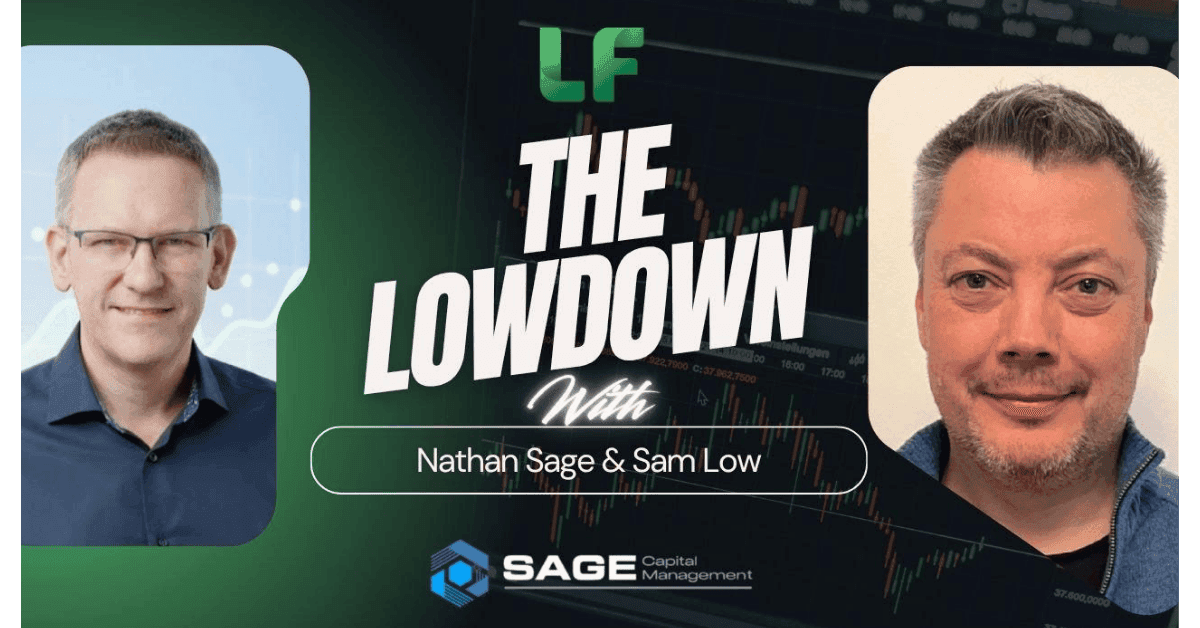
LiquidityFinder's Sam Low sits down with Nathan Sage, founder and CEO of Sage Capital Management, to trace his journey from FX fund manager to running a Bitcoin fund doing $1BN a day in 2016 — and how that experience of pain built one of the most connected prime brokerages in the digital assets market today.

Klarna is partnering with Coinbase, raising stablecoin-denominated funding and launching KlarnaUSD. We break down the treasury logic, merchant incentives and agentic AI payments angle — and what other CFOs should take from it.

Olaf Ransome’s latest article on liquidity management explores PORTS (Perpetual Overnight Rate Treasury Securities) and how they could expand the supply of on-chain high-quality liquid assets (HQLA) for treasury and cash management. He explains why long cash balances create risk, how stablecoins and tokenised money market funds need safe short-duration assets, and what PORTS could mean for reverse repo, liquidity management and wholesale banking.

African FX liquidity is shaped by hard-currency scarcity and capital controls. Roland Schilling, COO at Sika Financial, explains how interbank reference rates differ from parallel markets, and how Sika settles via CCP/PvP.

Guest insight from Olaf Ransome on UNITE Global FMI and a “single pool of liquidity” vision to reduce nostro reliance, cut buffers and enable real-time PvP/DvP.

At the top of the FX liquidity hierarchy sit Tier 1 banks, the institutions that set interbank rates and define the depth of the global forex market. This article explains how they operate, how their pricing flows down to retail brokers, and what it means for execution quality at every level.

Why buy-side and sell-side firms are turning to tokenised collateral for efficient liquidity management.
Create Your FREE Account
Get access to latest news, updates, real-time data, brokerage and trading firm insights and customized information feeds.


amana, a MENA-based neobroker and trading platform, has appointed Nikos Tsoskounoglou as Head of Quantitative Market Making & Research. He joins from EBS and ADSS, bringing expertise in electronic market making, pricing automation, and market microstructure analysis.

CME Group has launched Nasdaq CME Crypto Index futures, financially settled contracts tracking the Nasdaq CME Crypto Settlement Price Index, which covers bitcoin, ether, SOL, XRP, ADA, LINK, and other leading cryptocurrencies via a regulated futures marketplace.


As the brokerage industry becomes increasingly complex, conversations are shifting from growth alone to operational control, risk visibility, and resilience. IFX Expo International 2026 in Limassol provides a valuable opportunity for industry professionals to exchange ideas and explore the challenges shaping the next phase of brokerage operations.

XS.com has appointed Omar Alaa as MENA Marketing Director. Alaa brings experience in digital acquisition, paid media, and regional brand development, and will oversee campaign execution and audience engagement across the Middle East and North Africa.
MEXC has launched Combo, a new prediction markets feature enabling users to combine up to 20 event predictions across sports and crypto into a single order. The exchange says it is the first centralised platform to offer multi-event combination trading globally.


Swap rates are one of the most frequently mismanaged aspects of MetaTrader platform operations. Set them incorrectly and you expose your brokerage to unnecessary costs, client complaints and compliance risk. This guide explains how swaps are calculated on MT4 and MT5, the most common mistakes brokers make when updating rates, best practices for staying aligned with interbank rates, and how automated swap management tools eliminate the manual workload entirely.


Discover the latest AUD/JPY price action analysis. Are we looking at a massive AUD/JPY sell setup? Read my technical breakdown to find out!

Will the index can maintain this level before the SpaceX IPO

Master your trading psychology to boost profits. Learn why avoiding overtrading and waiting for high-quality setups is the secret to long-term success.


Fed hike bets hit 70%+ as May CPI drops this morning — and EUR/USD is sitting on channel support ahead of Thursday's ECB decision.
Feed