
Search Companies, News, Members & more
Terms of ServicePrivacy PolicySecurity PolicyLegal InformationCommunity GuidelinesSitemapsCookie Settings
2026 Copyright © Liquidity Finder Ltd. All rights reserved.
Liquidity Finder Ltd is incorporated in England and Wales, company number 10610740, registered address 167-169 Great Portland Street, Fifth Floor, London W1W 5PF, United Kingdom.


Will our Core Banking platform support our clients in new digital assets?
For many FIs things crypto generally and Bitcoin specifically were simply banned, not accommodated. A few chose to do what a good provider should do; they stepped up and supported their clients’ needs. We know that many banks shoe-horned some Bitcoin and ETH processing into their core banking platforms. A best-efforts version 1.0 to meet a very niche client demand; give the security a fake ISIN number and process BTC like a security, so it is off-balance sheet, send trading orders out manually, hold in an omnibus account and reconcile manually to the outside brokers holding the position. In Switzerland we’d call this “Handgestrickt”, over in New York they might say “Sellotape and Band Aids”.
Let’s allow that tokenisation, aka new digital assets, is going to be quite a big thing. What you have today for your existing client business most likely scales; 10 clients, 100 even, multiple orders; your machinery is likely finely tuned and well oiled.
The new in “new digital assets” is both an opportunity and a threat; any sentence with the word “new” in it, will invariably also have the word “change”.
So, if you have a version 1.0 of your processing set-up, or even just a Core Banking system, but have not touched crypto, what would a solution which scales to work like your legacy set-up look like?
If you are a bank serving retail aka private clients, what might they expect from you? Buy, sell, best execution, custody, margin or Lombard lending to name a few. In other words, pretty much the same capabilities you provide for them today. What do you need to get there?
To help me understand what those capabilities might look like, I spoke to Andrew Wishart, the Head of DACH Sales at Wyden. His input helped me formulate what I hope is a well coloured picture of the things to think about. Read on for my notes on how you might think about this challenge.
What are the challenges?
Let’s start with Order and Execution Management aka OEMS. Today, there are multiple places where you execute orders, but there is a common standard: FIX and FpML. You don’t have to maintain a bunch of bi-lateral connections. The new world offers a couple of challenges; first, there is no FpML equivalent, so connections are bi-lateral. You need one-to-many connectivity. And the brokers and execution venues can make changes anytime and unilaterally.
The landscape of execution venues may well also change completely. Today, there are a limited number of venues where a particular equity might trade. In the world of new digital assets, we can expect to have AMMs. Automatic Market Makers.
Then comes something fundamental and new; pre-funding / earmarking. Execution venues expect you to hold the position you want to sell or to use a network like Fireblocks where you can earmark aka block the position so that the venue is sure you will have what you want to sell if the order is confirmed. Now, ear-marking is not new for a core banking system, but that is an internal thing for control and not something you communicate to an exchange or execution venue.
Execution processing. Today’s legacy processing is built on buying and selling securities vs. a cash amount in a currency. So, yes, you could do that shoehorn thing for BTC and buy some of that ISIN vs. CHF. Now what would you do if a client wants to buy BTC, or any asset vs. a stablecoin, say USDC? The answer for a legacy system would be “computer says no”, because every purchase or sale needs to be booked versus an amount of currency. You could work around this by using a suspense account to process the purchase vs. USD and then selling USD vs. USDC. Awkward and will not scale.
Then come all things portfolio management and custody. Those new digital assets will be in a wallet. That might be a custodial wallet, i.e. a service like the one you have for legacy securities. Now just maybe the provider can end aka push you a daily statement that looks like a SWIFT or ISO 20022 format for your reconciliation engine to ingest. On the portfolio side, clients will expect an integrated view of all their holdings. Imagine that they started with 100 in “legacy assets” and then took 20 of that and invested in “tokenised assets”, you would imagine they will expect a few basic things: a portfolio statement covering the whole 100, the ability to borrow money in a margin or Lombard loan, against the whole 100, with some LTV assigned to the tokenised parts. Maybe not to BTC, but for sure if it is a tokenised money market fund.
On your side, you may also want to have individually segregated accounts rather than a single omnibus holding for all clients together. For sure you will want to charge custody fees. You will also need to manage “gas fees”; these are an upfront commitment without which nothing happens on a blockchain. And you will need to incorporate those fees into your billing process.
In summary
The standard CTO view on new tech needs is: #1. re-use, #2. buy and #3. build, in that order. And the standard CTO-Schtick also includes a quip about “if you get to #3, go back to #2”.
Under #1, you might consider asking your core-banking provider if they have a solution. Just maybe they say they do. Question #1: is it complete, is the price fixed? Software firms are well known for saying yes to everything and then charging you for the work to develop the solution, and then for on-going maintenance fees. Question #2: Who else is using what you have built in production and can I talk to them?
In parallel, to make sure that you have as informed a picture as possible, you should go and talk to those selling “digital specific” solutions. Same questions.
From both of those angles, you should get a sense of how long it would take to implement. Whatever that amount of time is, you will eventually need to make a decision. You could of course, kick the can down the road; keep going with the shoehorn solution, with an eye on the timeline for a more strategic solution. I would make the case that this has an opportunity cost; if you are shoe horning things, that takes extra effort and if you are not working on the strategic solution, you are not learning how this whole new ecosystem works.
Going forward you are likely to see the need for multi venue orchestrators such as Wyden that sits in between the various trading, storage, data streaming & booking systems which not only support the connectivity but also the idiosyncratic crypto nuances such as number of decimals, 24/7, near-time/real-time booking engine and not to forget crypto vs. crypto legs on-chain, which use a blockchain based custody solution which supports control of cryptographic keys.
With all things bleeding edge in financial services, there are a number of risks when I write: There is every risk that I haven’t understood properly, or just missed a few salient points, or just come to an implausible conclusion. If any of these things are true, please call me out on them.
In any case, please do share a comment or two.
Please feel free to get in contact via LiquidityFinder here.
Author - Olaf Ransome
Olaf is a liquidity and financial services expert. He is the founder of 3C Advisory.

Share this article
Comments
Most Recent
Find The Right Partners for
Your Trading Business
Sign up and join over 5,000 professional members who receive personalized news alerts, curated professional connections, and more for free!
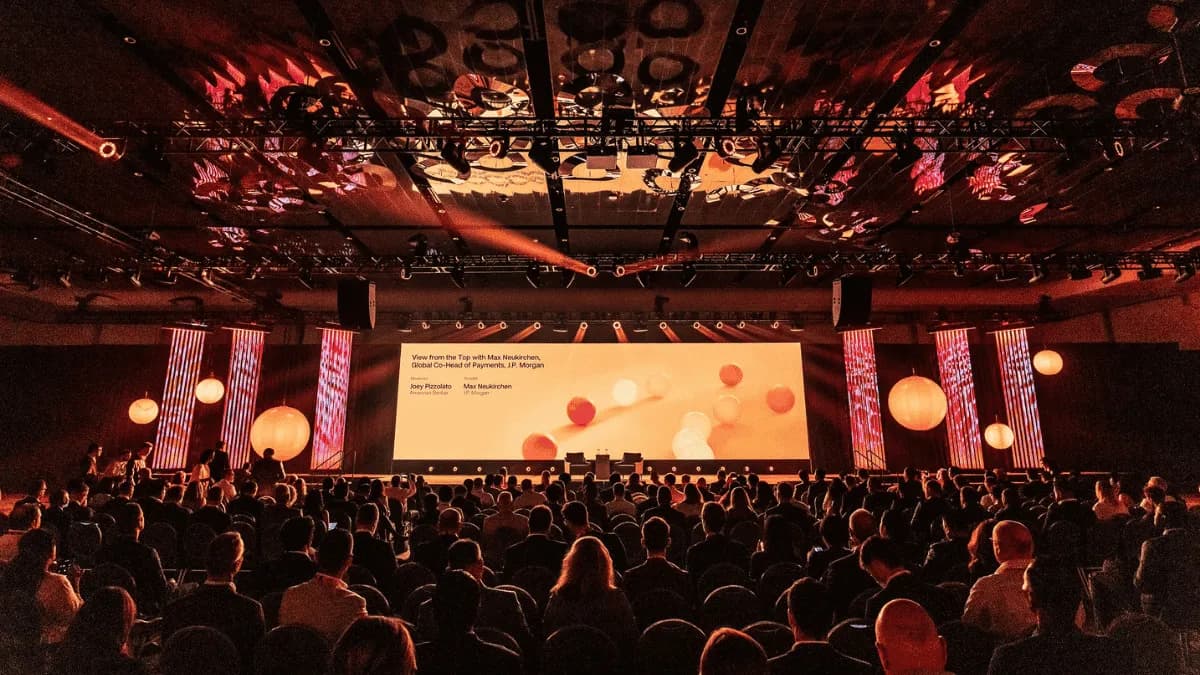
Anya Aratovskaya's notes from her visit to Sibos Miami, 2026. Artificial intelligence led the agenda but many of the conversations came back to the work banks still need to do on data, controls and the client experience.

Why has onboarding become so difficult for CFD brokers? With candid input from a Head of Operations at a regulated retail broker, I look at what is really happening behind the scenes with PSPs, banks, acquirers and compliance teams — and why the biggest bottleneck may now be processing the evidence rather than finding a provider willing to take the business.
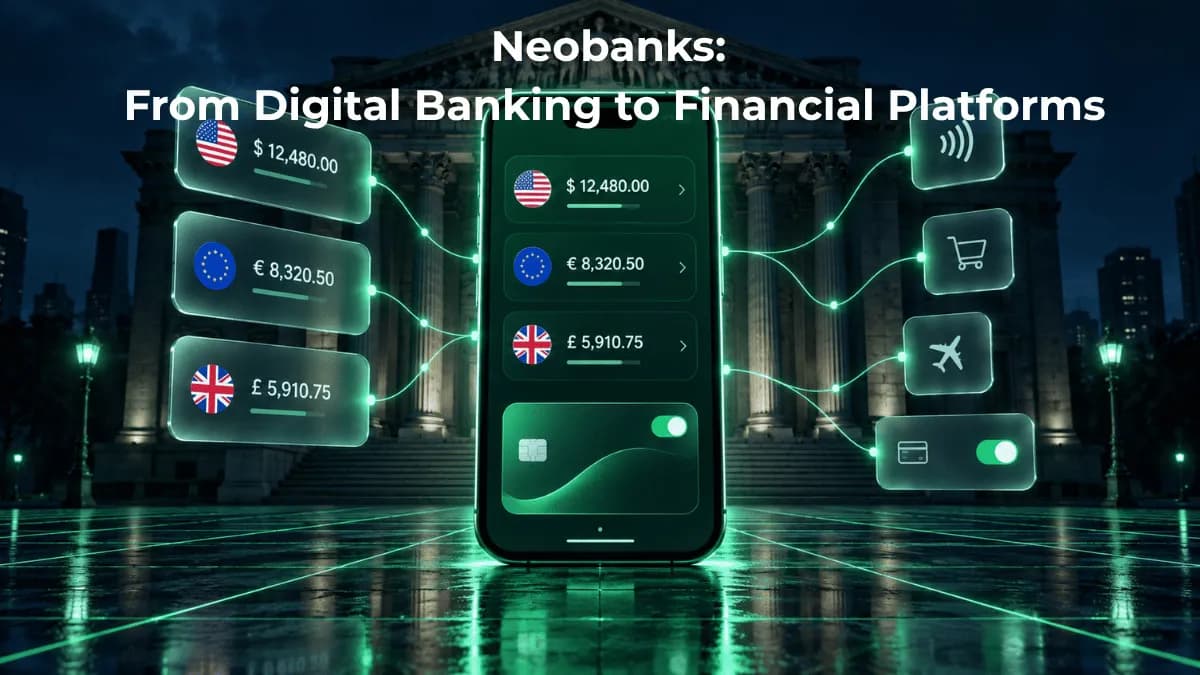
Not every neobank is actually a bank. Olaf Ransome of 3C Advisory sets out the three models operating under the label, compares UK challenger scale against the incumbents, and asks why legacy institutions have almost universally failed to compete.
Independent review of the Equals BaaS solution: multi-currency accounts, payments and cards for FX brokers and digital asset firms facing debanking risk.
A new stablecoin backed by 140+ firms, from Visa to BlackRock. Can Open USD challenge USDT and USDC, and will it clear MiCA? Olaf Ransome weighs in.
SoFi's SoFiUSD is the first stablecoin issued by a US national bank. But do holders actually have the protection they think?
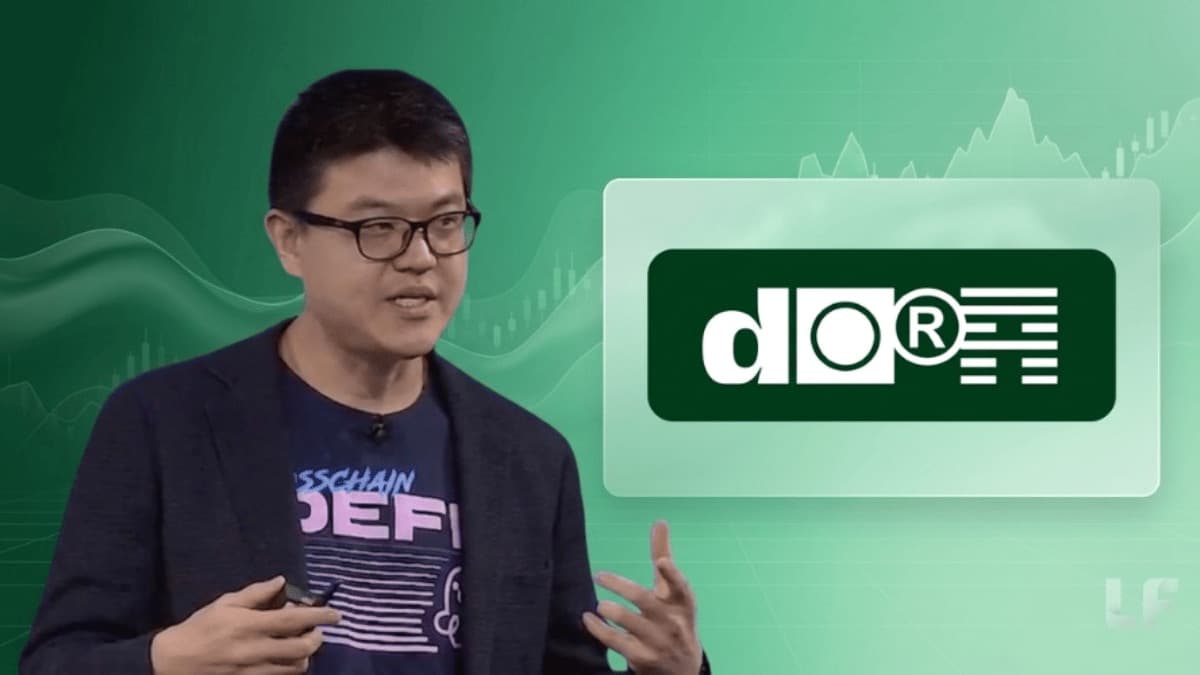
Brent Xu left Wall Street for blockchain in Ethereum's earliest days. Now his Franklin Templeton and Galaxy Digital backed platform Dora is bringing fractionalised bond trading to retail brokers. He speaks to Sam Low.

LSEG's DiSH promises atomic settlement and 24/7 PvP and DvP capability using tokenised commercial bank deposits. But when the balances move and the banks don't, who actually owns what? Olaf Ransome examines the mechanics - and the risks.
Create Your FREE Account
Get access to latest news, updates, real-time data, brokerage and trading firm insights and customized information feeds.


OANDA Japan has restricted trading on accounts that may have been affected by unauthorised access after login details stored on GMO's Onamae.com Desktop Cloud VPS leaked. The broker says its core systems were not breached and is directing affected clients to GMO's compensation process while urging password changes and 2FA.

Alpaca has received in-principle approval from ADGM's FSRA for Alpaca Clearing & Custody ME Ltd. Subject to a Financial Services Permission, the entity plans to offer brokerage services and virtual asset custody, bringing Alpaca's API-driven brokerage infrastructure closer to partners in the Middle East region.


US stock futures edged higher in early trading today as investors prepared for a week of major central bank decisions. S&P 500 futures rose 0.2%, Dow futures gained 0.3%, and Nasdaq-100 futures advanced 0.3%, following Friday’s selloff.

Brent crude is trading at $115.57 after retreating from its recent high of $118.23. The moving averages indicate a mixed short term picture.

iSAM Securities Apex is working with LMAX Group to bring perpetual futures pricing to FX and CFD brokers through the Apex platform.

ICM MENA has promoted Ahmed Kamal to Chief Executive Officer. Kamal joined the firm in March 2019 as Business Development Manager and most recently served as Regional Manager. He brings more than a decade of experience in financial markets, with expertise in foreign exchange, business development and team leadership.

Theorem has integrated Symbiotic’s Liquid Lane RFQ network, letting holders of tokenised real-world assets trade against on-chain pool liquidity and market-maker quotes. The integration is live on Ethereum, with Midas’s yield-bearing mHYPER fund as the first supported asset. Holders can trade for the USDC stablecoin.

US equities were volatile with technology selloff erasing much of the earlier rebound.

FM Summit London 2026 returns to Old Billingsgate on 24 November for its 15th edition, with LMAX Group, Plus500 and oneZero among confirmed exhibitors. The one-day event adds Business Connect meetings and roundtables, and opens with a networking evening at The Folly on 23 November.

Finance Magnates Summit London returns to Old Billingsgate on 24 November 2026 for its 15th edition. The one-day event brings together brokers, liquidity providers, institutional firms, trading technology vendors, payments businesses and digital asset firms.
Feed