
Search Companies, News, Members & more
Terms of ServicePrivacy PolicySecurity PolicyLegal InformationCommunity GuidelinesSitemapsCookie Settings
2026 Copyright © Liquidity Finder Ltd. All rights reserved.
Liquidity Finder Ltd is incorporated in England and Wales, company number 10610740, registered address 167-169 Great Portland Street, Fifth Floor, London W1W 5PF, United Kingdom.
Prediction Markets and Disturbances in the Force

Published on Jun 8, 2026
Updated on Jun 8, 2026

Something significant is happening in financial markets right now. (Not the SpaceX IPO, and crypto platforms rushing to announce their abilities to price pre-IPO stocks).
Prediction markets are the new shiny object, and they are definitely now an institutional asset class. In the same way that brokers scrambled to add crypto to their offering a few years ago, the smartest operators in our space are already asking how they access prediction markets.
Unlike crypto in its early days, this new asset class (yes I think event contracts are already an asset class) arrives already inside a regulatory framework, with serious institutional money behind it and the world's most sophisticated trading firms already acting as market makers.
Terry Duffy, CEO of the CME, is clearly feeling the heat from Kalshi, spreading some FUD on CNBC last week that “Perpetual Futures (Kalshi ) incite bad behaviour” See here.
I spoke with Andy Ross (@AndyRoss) Head of Institutional Business at Kalshi, the largest CFTC-regulated prediction markets exchange in the world. A couple of months ago, Andy left a senior PB role at Standard Chartered to join Kalshi as Head of Institutional. I needed to speak to him to learn more about what his move means and what was his thinking behind going there.
Read the full article on LiquidityFinder - Kalshi: The Exchange That Can Price Everything
It Is Not a Two-Horse Race. It Is a Three-Platform Market.
Most people think of prediction markets as a Kalshi versus Polymarket story. The reality is more nuanced.
There are now three CFTC-regulated prediction markets venues operating in the United States: Kalshi, CME Group, and ForecastEx, the latter being an affiliate of Interactive Brokers itself. Last month, Interactive Brokers launched a unified prediction markets interface giving clients access to all three from a single account, with intelligent order routing to the venue offering the best net price. Other brokers are scrambling. Prediction markets are no longer a niche product.
Robinhood Predictions, launched in late 2024 and powered by Kalshi's exchange infrastructure, has been driving over 50% of Kalshi's total retail trading volume. That makes Robinhood simultaneously Kalshi's biggest distribution partner and, potentially, its most significant future competitor. In January 2026, Robinhood and Susquehanna (the same Susquehanna that is a market maker on Kalshi's exchange) closed a joint venture acquisition of MIAXdx, the former clearing house that Kalshi itself used before building Kalshi Klear. They are building their own CFTC-licensed prediction markets exchange and clearinghouse, expected to go live in 2026. Whether Robinhood stays on Kalshi's platform, migrates to its own, or runs both simultaneously is something to keep an eye on. For brokers thinking about prediction markets distribution, the infrastructure layer is still being fought over.
CME already lists event contracts on economic data: GDP, Fed decisions, inflation, employment, settling at a dollar or zero in the same binary structure as Kalshi. But CME is playing a different game from Kalshi. Its prediction markets are retail-focused and macro data-oriented. It has not launched perpetual futures. It has not built the bespoke institutional contract factory. It has not made the institutional market making and block trading infrastructure investments. CME is in the space but Kalshi seems to be leading it, and is building a moat.
Then there is Polymarket. Backed by Intercontinental Exchange, which invested over one billion dollars for approximately 17% of the company, Polymarket is currently valued at around 15 billion dollars. Founders Fund, Polychain and Dragonfly round out a cap table that skews heavily toward crypto and venture capital. Polymarket built its reputation offshore, on the blockchain, outside the US regulatory framework. US persons are technically prohibited from using it.
Kalshi, by contrast, is valued at 22 billion dollars and counts Morgan Stanley, Sequoia, Andreessen Horowitz, Coatue and Tradeweb among its investors. The CEO of Citadel Securities invested personally. Jump Trading and Susquehanna are active market makers on the exchange.
Polymarket is a crypto platform growing into institutional markets. Kalshi is a regulated exchange built for institutional markets from day one. Both have serious money behind them. But one has CFTC approval for the first regulated perpetual futures in American history. The other is prohibited to US persons.
It is fairly clear which horse is in front.
Terry Duffy Is Worried.
The reaction from the established players to Kalshi's perpetual futures launch was telling. CME Group CEO Terry Duffy, speaking at the Piper Sandler Global Exchange and Fintech conference on 4 June, called crypto perpetual futures "a disaster waiting to happen," warning that high leverage and automatic liquidations could expose retail traders to serious losses.
Terry Duffy runs the world's largest futures exchange. Bringing perpetual futures onshore under CFTC supervision creates a direct rival product class on his home turf.
This makes me wonder whether the CME will now launch its own perpetual futures, or does it acquire Kalshi before Kalshi becomes too disruptive to ignore? At a 22 billion dollar valuation, the acquisition window may already be closing.
The Third Force: Hyperliquid
While Kalshi, Polymarket and CME fight it out in their respective corners, there is another force disrupting the established exchange order that deserves serious attention: Hyperliquid.
Jeffrey Sprecher, CEO of Intercontinental Exchange, called Hyperliquid "bigger than NASDAQ" in trading activity at a Bernstein conference on 27 May. "It is 11 people. You look at it, you are like, wow, that is pretty something," he said. He also described it as a "wake up call" for the industry. These are the thoughts of the CEO of one of the world's most powerful exchange groups talking about a DeFi platform run by a team smaller than most sales desks.
When the US and Israel launched joint strikes on Iran in February, tokenized commodities and perpetual futures continued trading on Hyperliquid while traditional exchanges were closed for the weekend. Price discovery for gold, silver and oil was happening on a DeFi platform, not on CME, NYMEX or ICE. TD Securities subsequently found that Hyperliquid priced in roughly 80% of a recent oil market move before traditional exchanges had even opened.
The response from the incumbents has been predictable. CME and ICE have lobbied the CFTC to scrutinise Hyperliquid over manipulation risks, calling for mandatory KYC, trade surveillance and full market oversight. The same two exchange groups pushing regulators at Hyperliquid are the ones feeling pressure from Kalshi's perpetuals launch. The incumbents are fighting on two fronts simultaneously.
Hyperliquid is opaque in one particular sense. The technology is fully transparent: every trade, every liquidation, every funding payment is publicly verifiable on-chain. But the people behind it remain notoriously obscure and seem to shun the limelight.
(If anyone from the Hyperliquid team is reading this, I would genuinely love to have a conversation. Please get in touch.)
This Week at LiquidityFinder
Copy Trading Webinar: We ran a lively webinar on 5 June on copy trading with PLUGIT Apps. Maria Pittashi (@mariap7e19f) from PLUGIT was joined by Barry Flanigan (@barry) from iSAM Securities and Fraser Nelson (@FraserNelson) for a conversation about what copy trading actually looks like in practice for brokers and their clients.
Fraser Nelson Moves to Azul Markets: On the subject of Fraser, he has just joined Azul Markets alongside Jacob Plattner. Wishing Fraser well in his new role.
RateStream Gets Noticed (Better Late Than Never): A few weeks ago we published a piece on RateStream, the new no-cost-to-taker platform from LiquidityMatch, parent of FXSpotStrean (@FXSpotStream) bringing a flat-fee model to institutional fixed income. This week Magnus Mathisen (@magnusm4543a) at Ediphy (@Ediphy) kindly picked it up and shared the piece with his network, calling RateStream a serious challenger to existing market structure. Another quiet disruption to market structure. Read the full article here.
That is it for this week. There is a lot happening with market structure right now. The Kalshi piece is a long read. Set aside 20 minutes - I think you will find it worthwhile.
Sam Low Founder, LiquidityFinder liquidityfinder.com
Found this interesting? Become a member of LiquidityFinder and get daily industry news direct to your inbox — join here.
Share this article

Comments
Most Recent
Find The Right Partners for
Your Trading Business
Sign up and join over 5,000 professional members who receive personalized news alerts, curated professional connections, and more for free!
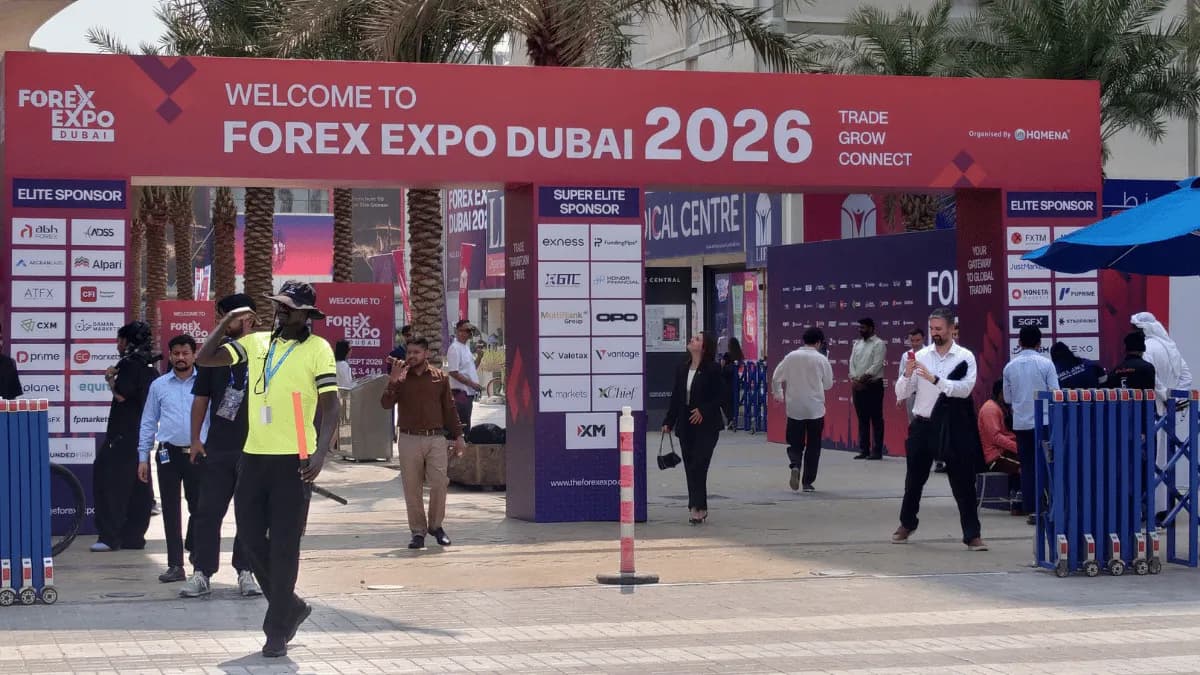
Some thoughts from Forex Expo Dubai 2026 about forex brokers: what was going on in the competition for attention, offshore unregulated entities on the same playing field as multi regulated brokers, in-house AI builds and the rise of prediction markets.

Why has onboarding become so difficult for CFD brokers? With candid input from a Head of Operations at a regulated retail broker, I look at what is really happening behind the scenes with PSPs, banks, acquirers and compliance teams — and why the biggest bottleneck may now be processing the evidence rather than finding a provider willing to take the business.

Kalshi is the largest CFTC-regulated prediction markets and event contracts exchange. In this exclusive interview, LiquidityFinder's Sam Low speaks with Andy Ross, Head of Institutional Business, about institutional access, block trading, market making, capital efficiency and the landmark launch of the first regulated perpetual futures on a US exchange, and what it all means for liquidity providers, brokers and institutional FX professionals.

Fusion Capital is a specialist crypto liquidity provider offering brokers over 350 crypto CFD pairs with bespoke pricing, pure A-book execution, and access to decentralised exchange liquidity through Hyperliquid. In this broker profile, LiquidityFinder's Sam Low speaks with Head of Product Jasper Cooney about how Fusion's in-house trading bots monetise flow across centralised and decentralised venues, why crypto exchanges handle toxic flow differently to FX, and how brokers can now offer clients pre-IPO perpetual futures through their existing MT5 infrastructure.

In Part 5 of his A-Book STP series, Youssef Bouz from GCC Brokers provides a guide to distinguishing healthy algorithmic trading from latency arbitrage and structural abuse — and why behavior, not profitability, is the real risk indicator.

Dark pools are a large part of the market, and how institutional traders keep their trades anonymous. We what dark pools are, the different types, and their effect on the broader market.

As the crypto market reaches a crossroads for its future development, the industry and regulators need to decide whether to fully adopt traditional financial market structures to increase stability and attract institutional investment, or maintain crypto's decentralized ethos at the risk of impeding mainstream and institutional adoption.
Create Your FREE Account
Get access to latest news, updates, real-time data, brokerage and trading firm insights and customized information feeds.

Multi-asset trading broker AvaTrade has agreed to acquire the majority of FXCM Group’s business and brand, in a transaction that would bring a longstanding retail FX franchise into the AvaTrade Group.

LSEG and CMC Markets have signed a multi-year strategic data agreement expanding CMC's access to LSEG's real-time and delayed pricing, reference and corporate actions data, news and analytics, plus AI-ready content, to support new products, entry into new markets and the growth of CMC's institutional and B2B partnerships.

The Tel Aviv Stock Exchange is considering a bid for the Cyprus Stock Exchange, with Israeli media citing its EU licence, trading platform and clearing house. Euronext’s Athens exchange and India’s National Stock Exchange are also seen as contenders, and Cyprus aims to sign a sale agreement by the end of this year.
CME Group will launch baseball futures on 12 October, pending regulatory review, tracking CME FutureSports Performance Indexes built on Official League Data. Standard and micro contracts will start with the 2026 Postseason and the four clubs in the League Championship Series, trading around the clock.

ESMA has published an opinion stating that MiCA-authorised crypto-asset service providers should cease services tied to non-MiCA-compliant stablecoins for EU clients across MiCA crypto-asset services. National authorities should require remediation of existing exposures within three months, by early January 2027.

Nasdaq Ventures has made a strategic investment in Amsterdam-based derivatives and crypto exchange One Trading, with both firms to explore 24/7 trading of equity futures. The undisclosed investment follows Nasdaq's US$100 million investment in Payward, the parent of Kraken, and CME Group's move to 24/7 trading.

cTrader has opened multi-platform plugins to brokers and prop firms, which can pre-install their own tools for clients or list them in cTrader Store. The plugins run across Mobile, Web, Windows and Mac, and can be built and launched independently of core-platform releases, including trading journals and calculators.

Institutional brokerage and financial infrastructure provider Clear Street has joined TradingView’s broker network, allowing its clients to trade US stocks, exchange-traded funds and options directly through the charting and analysis platform.

Learn how to improve trading psychology, manage fear and greed, avoid revenge trading, and follow your trading strategy with discipline and a trading journal.

GTC Prime has announced a strategic partnership with Centroid Solutions to manage and distribute its liquidity through CS 360 Bridge, Centroid's multi-asset connectivity and execution engine, giving brokers and institutional clients access to tailor-made pricing, low-latency execution and real-time risk management.
Feed