
Search Companies, News, Members & more
Terms of ServicePrivacy PolicySecurity PolicyLegal InformationCommunity GuidelinesSitemapsCookie Settings
2026 Copyright © Liquidity Finder Ltd. All rights reserved.
Liquidity Finder Ltd is incorporated in England and Wales, company number 10610740, registered address 167-169 Great Portland Street, Fifth Floor, London W1W 5PF, United Kingdom.
Brokerpilot's Sergey Berezhnoy on Toxic Flow, Risk and AI in the Dealing Room

Published on Jun 15, 2026
Updated on Jun 16, 2026

Risk and dealing analytics provider Brokerpilot has been listed on LiquidityFinder for some time. I sat down with Sergei Berezhnoy, Chief Revenue Officer at Brokerpilot, to find out what the software actually does, how it helps brokers get on top of toxic flow, and where he thinks risk management is heading as AI works its way into the dealing room.
Brokerpilot is a B2B SaaS platform built for the dealing teams of multi-asset CFD brokers running MT4, MT5 and cTrader, pulling trading data from across a broker's servers into a single real-time view.
How Brokerpilot Started
Sam Low: Let's start at the beginning. How did BrokerPilot come about?
Sergei Berezhnoy: There is a very strong personality behind the product. Valery Dolgov, our founder and CEO, was working as a chief dealer back in 2015 and he was struggling with fragmented data across his dealing and risk management. He had the idea to build software that could cover every trading server the firm had and show all of that data in one place, in real time, tick by tick. Within three years he had a serious risk engine and was already working with enterprise-grade brokers, who gave us a lot of feedback and helped shape the product.
SL: So Valery built the tool he needed himself, solved his own problem, and now sells it to other brokers.
SB: Exactly. He founded the company in 2015 with the mission to serve brokerages and eliminate the problems he had seen in the market. It was a very relevant problem for the whole industry: having everything in one place, reacting in seconds to what is happening in the dealing operation, and identifying the patterns that cause P&L losses.
Tackling Toxic Flow
SL: Toxic trading is clearly one of the key things Brokerpilot is built to address. A retail broker can look at their client flow and work out what is good flow and what is toxic. How big a problem is this for the brokers you work with?
SB: It is a huge problem, and in a sense it is stable. The toxic patterns in the market today have been there for decades. What we did was ask a lot of large brokerages what they consider toxic, and where they had lost P&L to different kinds of cheating behaviour. We took those practices and tackled them in the risk engine. It now runs on more than forty triggers, which can be combined to answer quite complicated questions about where toxic patterns sit in the overall B book flow, where to hedge it, how to hedge it, and when to react. We are still building new tools that large brokers ask us for, and we are working on machine learning to identify the next best action proactively.
SL: Does Brokerpilot automate the broker's response, or does it simply give signals?
SB: Some of it can be automated. Where there is no bias, the system can change spreads or leverage for specific account groups, or act on a defined list of accounts, with no human interference. But our philosophy is to give the dealer as much information as possible so they can react manually, because a human being needs to analyse the alerts the system produces. We do not rely on fully automatic controls, because that introduces bias, and bias is also money. We take a conservative approach, while looking to close the gap on automating the routine work in the dealing operation.
SL: So a chief dealer should not worry that Brokerpilot is going to replace them. They work with it as an intelligence tool to make better decisions about their client flow.
SB: Exactly. The heart of any dealing team is its people and their experience, how many brokerages they have worked with, how many complicated cases they have solved. That human intelligence is the heart of the firm. We just give them a more advanced toolset to make their lives easier.
The Role Of AI
SL: How does the AI work? In a recent conversation with DevExperts, a fair point was raised that the large language models themselves, like Claude and ChatGPT, are not always stable or available. Are you using an MCP server connection to those models, or is it something in-house?
SB: It is in-house infrastructure, based on a RAG architecture. We develop our own libraries with best practices from the industry, and the architecture also draws on the brokerage's own database. So it sources information from both. We started with simple tasks. We trained AI on our product documentation so it can tell a dealer which tool to use for a given problem and how to configure it. We are not rushing into the more complicated processes. We would rather offer something that works like a search tool, like Perplexity, but for the brokerage's own data. It pulls the specific information you need and gives you a snapshot for that moment in time. The next step is an AI scanner, which we are testing with a number of brokerages as an MVP. It gives the chief dealer a snapshot of where the flow is right now: this percentage of scalpers, this level of problems in the liquidity flow, and the next best action to take. It is a helper.
SL: It is implied by the name, isn't it. Brokerpilot, helping you get where you want to go with a pilot alongside you. It is a nice name, and good branding too.
SB: Thank you, that is exactly the idea.
SL: And bias remains the main concern with going further?
SB: Yes. AI can still produce false positives, and a false positive can cost the brokerage money. That is why we do not go fully down that route.
Liquidity, Platforms And Pricing
SL: If you look the other way, at the liquidity coming into the broker, does Brokerpilot have tools for analysing the flow from liquidity providers?
SB: We have gateways to integrate with the FIX protocol of the liquidity providers and can constantly monitor the broker's hedge accounts. As a product company we do not build the bridge, but we integrate with the bridges in the market and take parameters such as slippage into account. It is a custom solution for each firm.
SL: If a broker runs multiple platforms, MatchTrader, cTrader, MT4, MT5, TraderEvolution, DXtrade, etc can they aggregate all of that into Brokerpilot and monitor every flow at once?
SB: Exactly, and this is the biggest value we give to enterprise-grade brokers. They have different trading audiences, geographies and products all over the world. Bringing all of that under one roof is one of the best reasons to use Brokerpilot.
SL: Can a broker use Brokerpilot to generate their own price back out to clients, based on the risk in the book?
SB: Yes. We can automatically change the commercial conditions a broker offers to a specific account group, business or geography. It can be segmented into clusters and layers with different parameters, event-based. There is a high level of dynamic logic to it.
SL: Is there anything about Brokerpilot the market may not be aware of?
SB: As a software platform we also manage the bonus systems brokerages offer to their clients, with both real-time and historical reporting. We are a member of the financial commissions, and the reports we generate can be used as evidence when cases are arbitrated, which happens quite often. Looking ahead, we are expanding the AI toolset and the tools for analysing incoming liquidity and quote flow.
Where The Abuse Comes From
SL: Crypto CFDs is one thing, but does the software apply to crypto as a spot product?
SB: We cover crypto for brokerages and treat it like any other symbol in the portfolio. It does not really matter whether it is forex, commodities, metals or crypto. All of the tools in the platform work across each of these instruments.
SL: Are you seeing particular products abused more than others, and which territories the activity comes from?
SB: Historically we see most of the abusive patterns from the Asian markets. Based on the feedback from our customer success and support teams, the cases tend to cluster around whichever instruments are most volatile at the time. It was gold at the start of this year, where we saw a lot of cases, but that simply tracks what is happening in the market. I would not single out any one group of instruments.
Startup Brokers And Prop Firms
SL: One thing I have learned over the years is that startup brokers who go to market as B book operators tend to get hunted down. Experienced cohorts of traders go looking for the newest names in the market, on the assumption, rightly or wrongly, that a young firm has not got all of its risk models in place and is not yet equipped to handle that kind of flow. A tool like Brokerpilot feels like it could be a useful line of defence from the outset, rather than leaving the chief dealer to manage all of it alone.
SB: That is exactly why a startup broker tends to treat Brokerpilot as a checklist. When they open the system, it lets them explore every route through which toxic flow can come into their B book, including the patterns they may not yet know to look for. We build the product around the feedback we get from large, experienced brokerage firms, the ones with complicated operations and years of hard lessons behind them, and we put that experience into the product. It has effectively become a library of best practice. Whether you are a startup or a firm that has survived for years, you will find the specific tools you need, here and now, to make your dealing operation more complete and more resistant to toxic flow.
SL: So for a newer team, it is as much about education as it is about monitoring.
SB: Yes. At the startup point there is a great deal a team does not yet know, so a lot of the early value is simply in educating them. When they open the system, they start asking the right questions: do I have this covered? Do I also need to be watching for run-ups, or for these particular events? The product walks them through it and gives them their checklist, so the things that would otherwise catch a new desk out are in front of them from the start.
SL: And the commercials are friendly enough for an early-stage broker?
SB: Brokerpilot suits any stage, and the value it brings differs at each one. A large infrastructure is one story. At the startup point there is a lot a team does not yet know, so the product helps educate them. When they open the system, they start asking themselves: do I have this covered? Do I also need to be watching for run-ups, or for these events? It walks them through it and gives them their checklist.
SL: You have a slightly separate product set for prop firms. What does that cover?
SB: The most value still comes from the classic brokerage model, but for prop firms we offer real-time P&L monitoring, exposure analysis, large-volume analysis, control of the incoming quote flow, abnormal volatility, and monitoring of specific account events such as run-ups when a challenge account exceeds a threshold. If a broker runs its own prop firm under a second brand, connecting both businesses into BrokerPilot so they can see the analytics for both models under one roof adds real value.
SL: Do you work with outsourced dealing desks?
SB: Not at the moment, although we have had some conversations. We have a portfolio of more than a hundred brokers, and I expect some of them already work with outsourced dealing teams, so it is an opportunity. It is something we will explore in the years to come.
Where To Meet Brokerpilot
SL: Where can people find you over the rest of the year?
SB: We will be at iFX EXPO in Cyprus, and we attend Forex Expo Dubai, iFX EXPO Asia, the Finance Magnates events, Singapore and South Africa. We do five or six events a year.
SL: Brokerpilot also puts out some genuinely good content on LiquidityFinder, so it is worth following both the company and Sergei himself on the site. Consider that a nudge, Sergei, to keep your own posts coming. Thank you for the update and good luck in Cyprus.
SB: Thank you, Sam, and thank you for the opportunity to speak to the market about who we are and how we work. I really value LiquidityFinder and the community you are building. It brings a lot of insight to everyone in this market.
Found this interesting? Become a member of LiquidityFinder, join the community and join the discussion - join here.
Share this article

Comments
Most Recent
Find The Right Partners for
Your Trading Business
Sign up and join over 5,000 professional members who receive personalized news alerts, curated professional connections, and more for free!

Scope Prime's Andrew Taylor sets out how brokers serving Asian clients should measure and price sharp gold flow, citing the October 2025 and January 2026 sell-offs, thin liquidity at the Asian open, segmentation over relationship-wide repricing and the questions to ask a prime of prime provider.
Outsourced dealing desks have grown as the cost of hiring experienced dealers has risen. Alex Hristov of Broktinger sets out what brokers hand over, what stays in-house, and the monitoring tools his team built for their own desk, which other brokers can also benefit from.
Fusion Capital is a specialist crypto liquidity provider offering brokers over 350 crypto CFD pairs with bespoke pricing, pure A-book execution, and access to decentralised exchange liquidity through Hyperliquid. In this broker profile, LiquidityFinder's Sam Low speaks with Head of Product Jasper Cooney about how Fusion's in-house trading bots monetise flow across centralised and decentralised venues, why crypto exchanges handle toxic flow differently to FX, and how brokers can now offer clients pre-IPO perpetual futures through their existing MT5 infrastructure.
In Part 5 of his A-Book STP series, Youssef Bouz from GCC Brokers provides a guide to distinguishing healthy algorithmic trading from latency arbitrage and structural abuse — and why behavior, not profitability, is the real risk indicator.

Watch the LiquidityFinder webinar replay on A-Book vs B-Book execution models for retail FX/CFD and crypto brokers. Hear Lars Holst (GCEX), Rob Brown (MAS Markets), Jeremy Kinstlinger (Afterprime), Youssef Bouz (GCC Brokers), Victor Ivanchenko (cBridge/Spotware) and Sam Low (LiquidityFinder) discuss AI-driven trading, liquidity stress, regulatory scrutiny, risk transfer, LP/PB relationships, balance-sheet volatility and brokerage valuation over the next 3–5 years.

S&P Global Ratings gave Tether (USDT) the weakest Stablecoin Stability Assessment. Olaf Ransome breaks down what drives stablecoin risk—asset backing, custody/correspondent chains, transparency and reporting.

At the top of the FX liquidity hierarchy sit Tier 1 banks, the institutions that set interbank rates and define the depth of the global forex market. This article explains how they operate, how their pricing flows down to retail brokers, and what it means for execution quality at every level.
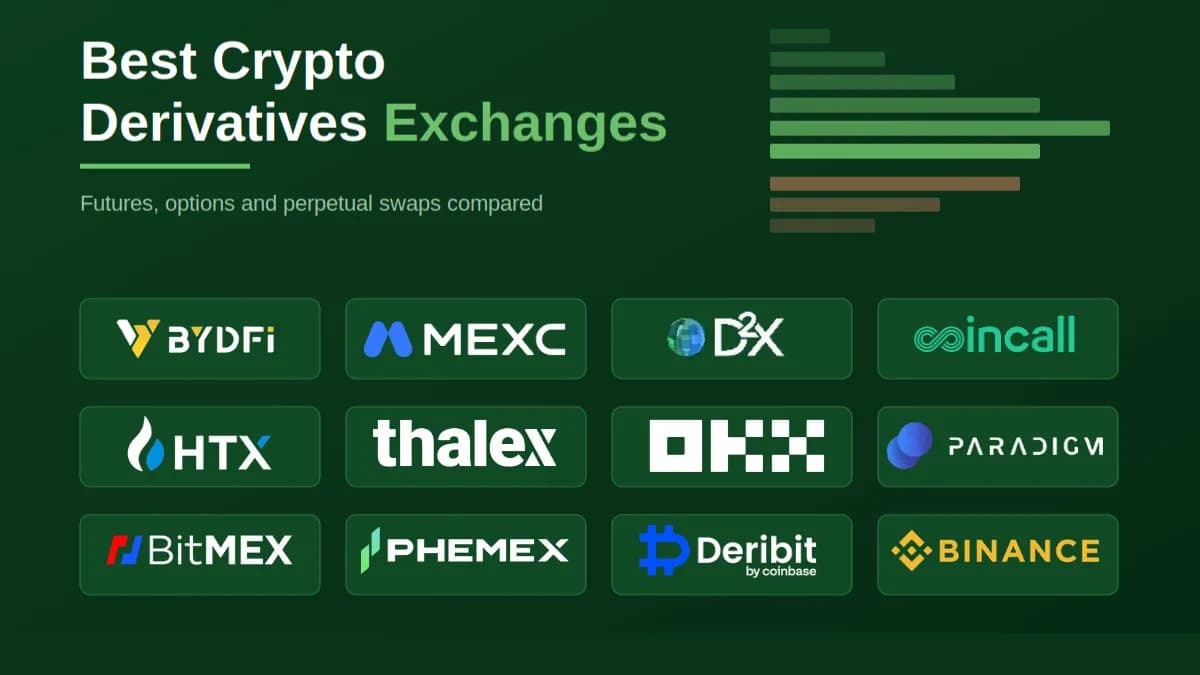
A curated list of the top exchanges for trading crypto futures, options, and perpetual swaps.
Create Your FREE Account
Get access to latest news, updates, real-time data, brokerage and trading firm insights and customized information feeds.


Theorem has integrated Symbiotic’s Liquid Lane RFQ network, letting holders of tokenised real-world assets trade against on-chain pool liquidity and market-maker quotes. The integration is live on Ethereum, with Midas’s yield-bearing mHYPER fund as the first supported asset. Holders can trade for the USDC stablecoin.


US equities were volatile with technology selloff erasing much of the earlier rebound.

FM Summit London 2026 returns to Old Billingsgate on 24 November for its 15th edition, with LMAX Group, Plus500 and oneZero among confirmed exhibitors. The one-day event adds Business Connect meetings and roundtables, and opens with a networking evening at The Folly on 23 November.

Finance Magnates Summit London returns to Old Billingsgate on 24 November 2026 for its 15th edition. The one-day event brings together brokers, liquidity providers, institutional firms, trading technology vendors, payments businesses and digital asset firms.


iSAM Securities Apex has integrated with Match-Prime, giving brokers access to liquidity across more than 2,000 instruments, with tailored pricing and up to 10 levels of market depth.

propfunding.com's free-entry instant funding changes the order of prop funding. Start trading first. Its free-entry instant funding model offers two qualification attempts without an upfront activation fee.

US stocks closed higher on Wednesday, with the Nasdaq gaining 1%, the S&P 500 rising 0.6%, and the Dow advancing 0.7%, as renewed enthusiasm for AI-related stocks lifted market sentiment.


SpaceX went public in June as a rocket company. On October 20 it reported as something else entirely: an AI infrastructure business, financed by a satellite broadband network, with a launch division attached. Rockets generated 12% of third quarter revenue and lost money. The AI segment generated 52% of revenue and consumed 84% of capital expenditure. Starlink generated 85% of operating profit.

Standard Chartered has signed definitive agreements to acquire 100% of Zodia Custody UK Limited, folding its regulated digital asset custody business into Securities Services. Zodia Solutions will be set up under SC Ventures with bank investors including Northern Trust, NAB Ventures, Emirates NBD and Investcorp.

Bybit Fintech FZE has secured a Virtual Asset Service Provider licence from Dubai’s Virtual Assets Regulatory Authority for Exchange Services, covering spot trading. Bybit’s Peter Loo said the firm hopes to add derivatives, subject to regulatory approvals. Its international Dubai headquarters opened in 2022.
Feed