
just now


Liquidity Finder Ltd is incorporated in England and Wales, company number 10610740, registered address 167-169 Great Portland Street, Fifth Floor, London W1W 5PF, United Kingdom.
Published: just now

The final quarter of 2025 opens with the U.S. dollar still under pressure. The Fed has already trimmed rates twice this year and is expected to cut again before December is out. On paper, that should be negative for the greenback. But the real story is what these moves signal.
Watch for these signals in Q4:
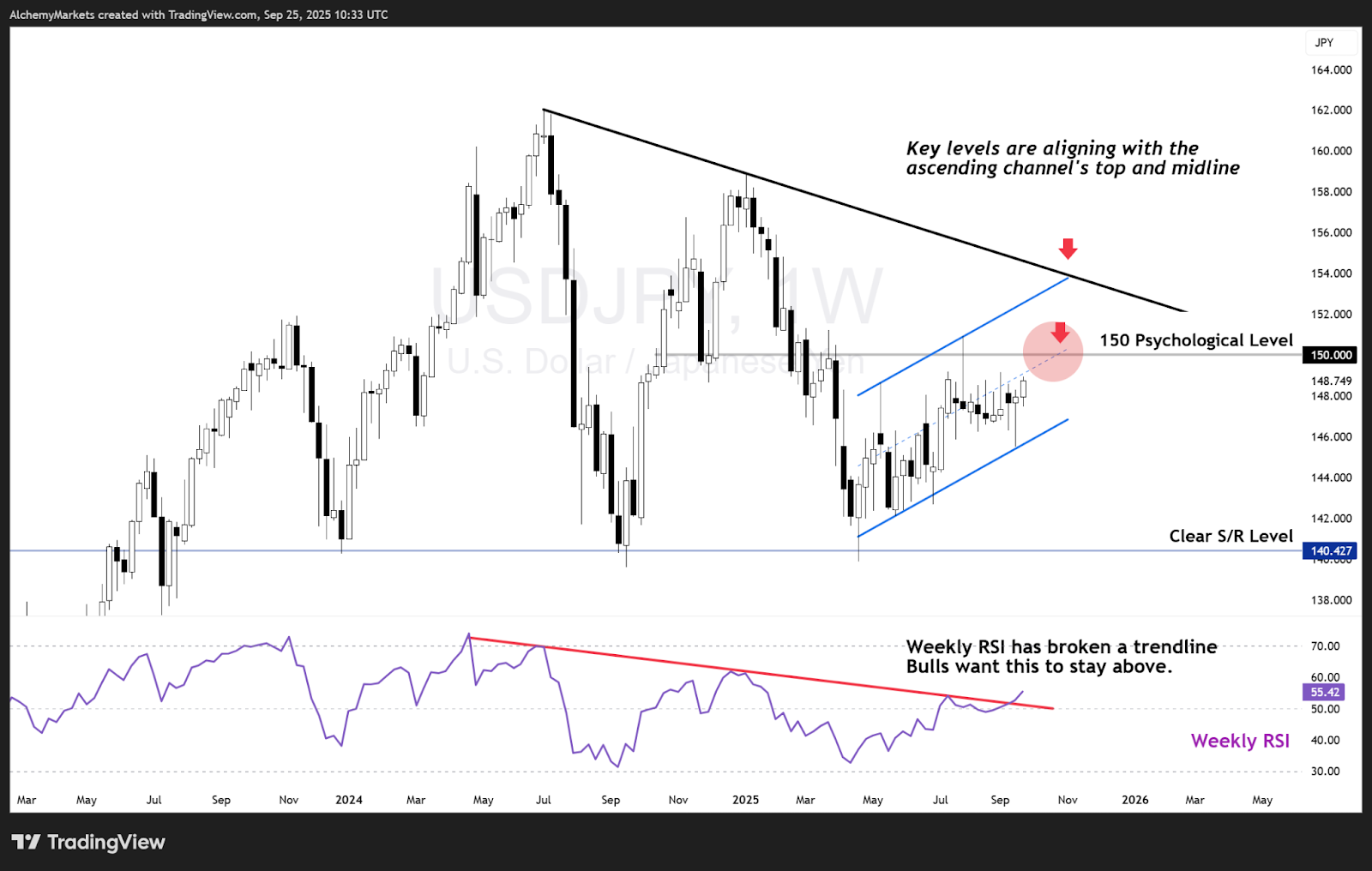
More importantly, the yen carry trade remains the story to watch. If USD/JPY pushes to ¥150, the BoJ has flagged intervention, and that could be the first screw to unwind.
💵 Fed Funds: 4.00–4.25% → 3.50–3.75% (two more 25bp cuts)
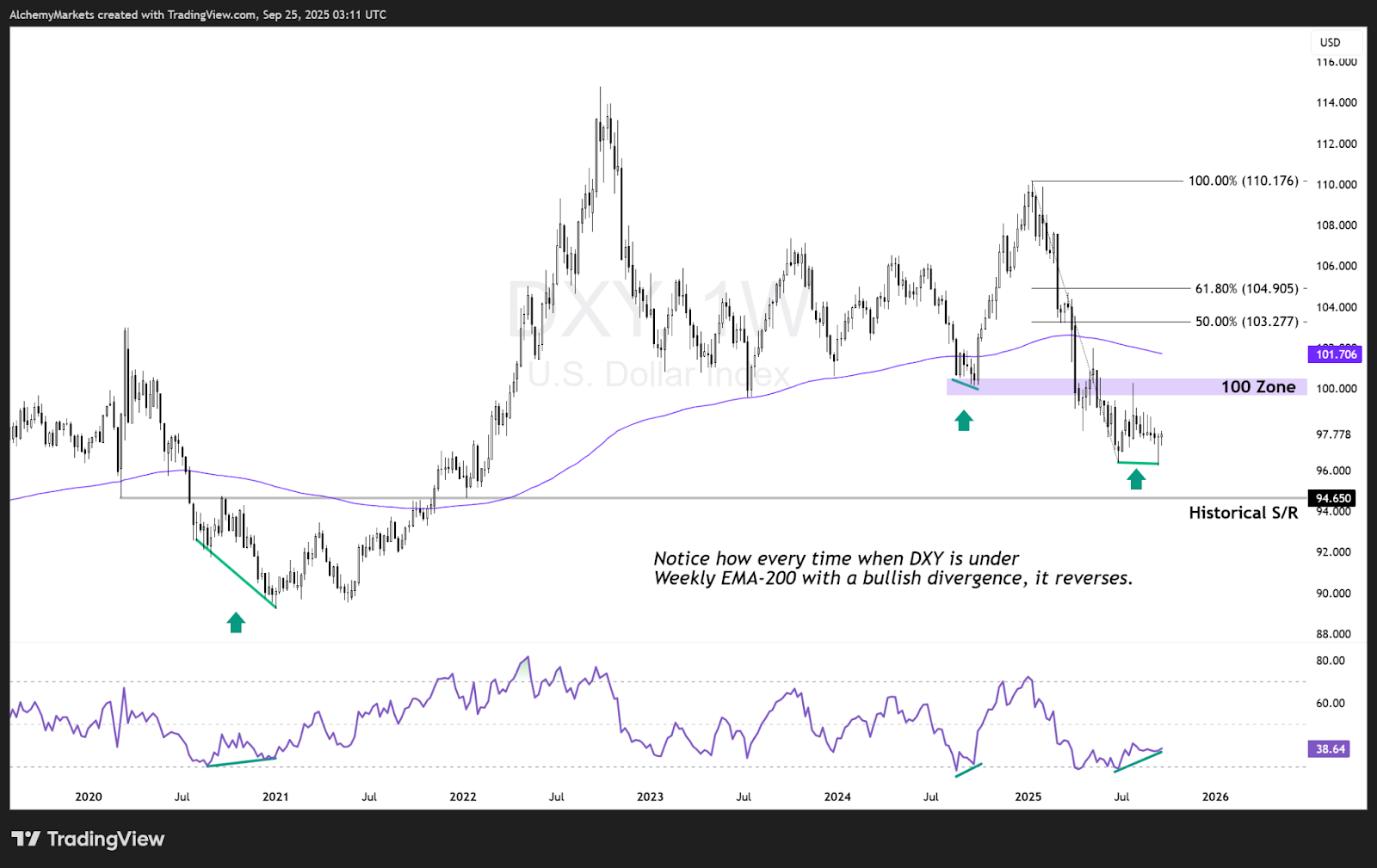
DXY is testing its 200-week EMA again. History shows that when a bullish divergence forms under this line, the index often recovers. That setup is alive now. A rebound would aim for 100 as the psychological line, while failure points to a deeper slide into the 97–98 support zone.
DXY fundamentals are in a weird balance — the dollar still gets that knee-jerk safe-haven pop when equities dump, but the strength is shaky because the yen carry unwind lurks underneath.
If the unwind accelerates, USD weakness vs. the yen drags on DXY (since JPY is part of the basket). Meanwhile, the Fed’s path is crucial: if rate cuts are slower or more limited than markets hope (because they fear capital flows reversal), DXY could hold up better than expected. But if growth in the U.S. cracks or external flows reverse aggressively, DXY is vulnerable to a slide.
💵 Fed: 4.00–4.25% → 3.50–3.75%
🗾 BoJ: 0.50% → 0.75%
The pair has been grinding higher inside its 2025 channel but capped by a descending trendline from 2024. Bulls are pushing, but momentum isn’t decisive.
For USD/JPY, the picture is way more direct: higher Japanese yields and rising hedging costs force traders to repatriate, meaning they buy back yen and sell dollars.
BoJ is slowly but surely moving away from negative rates, while Fed cuts are on the table — that’s a narrowing yield gap. If US equities wobble into year-end and Japanese yields creep up, the carry unwind setup is live: first you’d see DXY hold up on safe-haven demand, then USD/JPY may decline once repatriation flows kick in.
💵 Fed: 4.00–4.25% → 3.50–3.75%
🍁 BoC: 2.50% → 2.25–2.50%
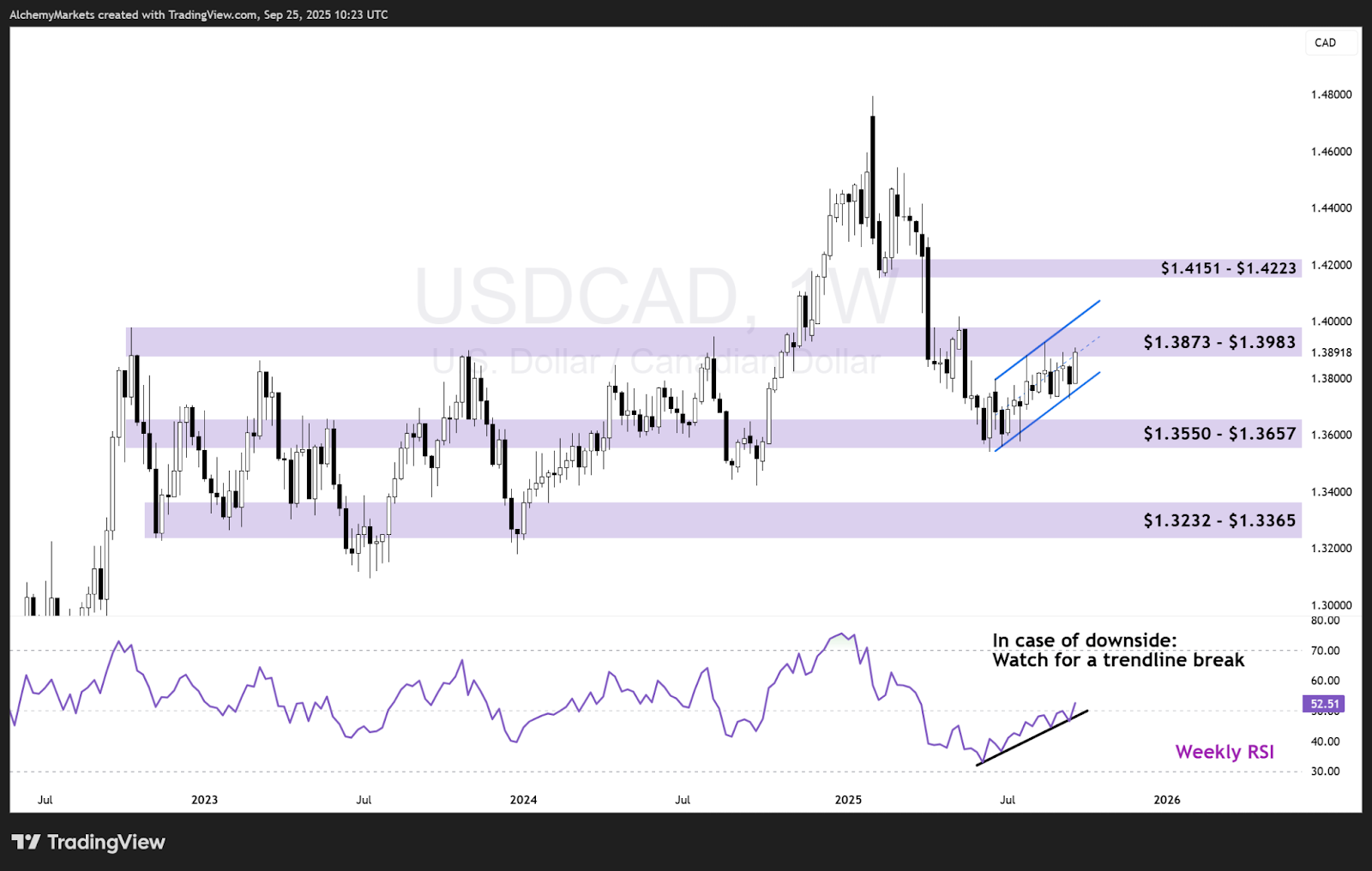
The loonie has pulled the pair back into its 2022–2024 range. The mid-zone around C$1.355 is the pivot. Price is pressing the top of the channel, rejection leans bearish, while a breakout would aim for C$1.415.
On the weekly timeframe, the RSI is also grinding up on an ascending trendline — a clear break below would signal weakness for the greenback versus the CAD.
USD/CAD fundamentals in Q4 come down to policy and oil. The Fed is set to cut rates again, which lowers dollar appeal. The Bank of Canada is easing less, so the gap between the two is not moving strongly in the USD’s favour. Oil adds another layer: if risk-off hits and crude slides, USD/CAD can spike higher. But if energy holds steady or rebounds, the loonie gets support and the pair tilts lower.
💵 Fed: 4.00–4.25% → 3.50–3.75%
💶 ECB: 2.00% → 2.00%
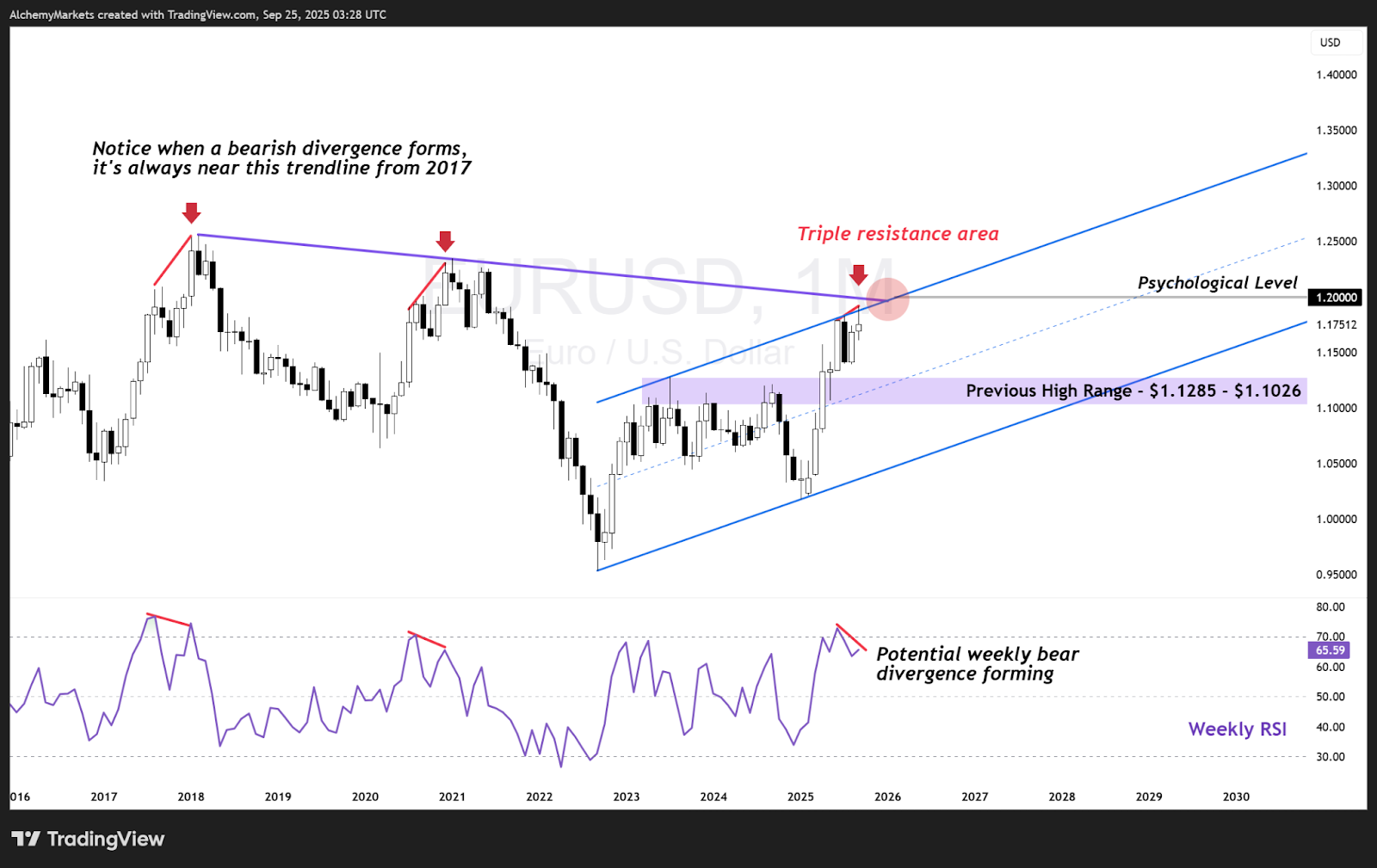
The euro is pressing into a heavy cluster of resistance: the $1.20 handle, a long-term trendline from 2017, and the top of the 2022 channel, with a bearish RSI divergence adding to the pressure. That makes this area a tough ceiling.
EUR/USD in Q4 hinges on the Fed’s cuts versus Europe’s weak growth. With the Fed easing toward 3.50–3.75% and the ECB holding at 2.00%, the policy gap narrows in the euro’s favour.
Still, $1.20 is a heavy ceiling with an eight-year trendline, the 2022 channel top, and bearish RSI all in play. Resistances like this require a catalyst for a breakout; like a USD/JPY unwind hitting the dollar. Otherwise, soft euro data or risk-off could keep the pair stuck below resistance.
💵 Fed: 4.00–4.25% → 3.50–3.75%
💂 BoE: 4.00% → 4.00%
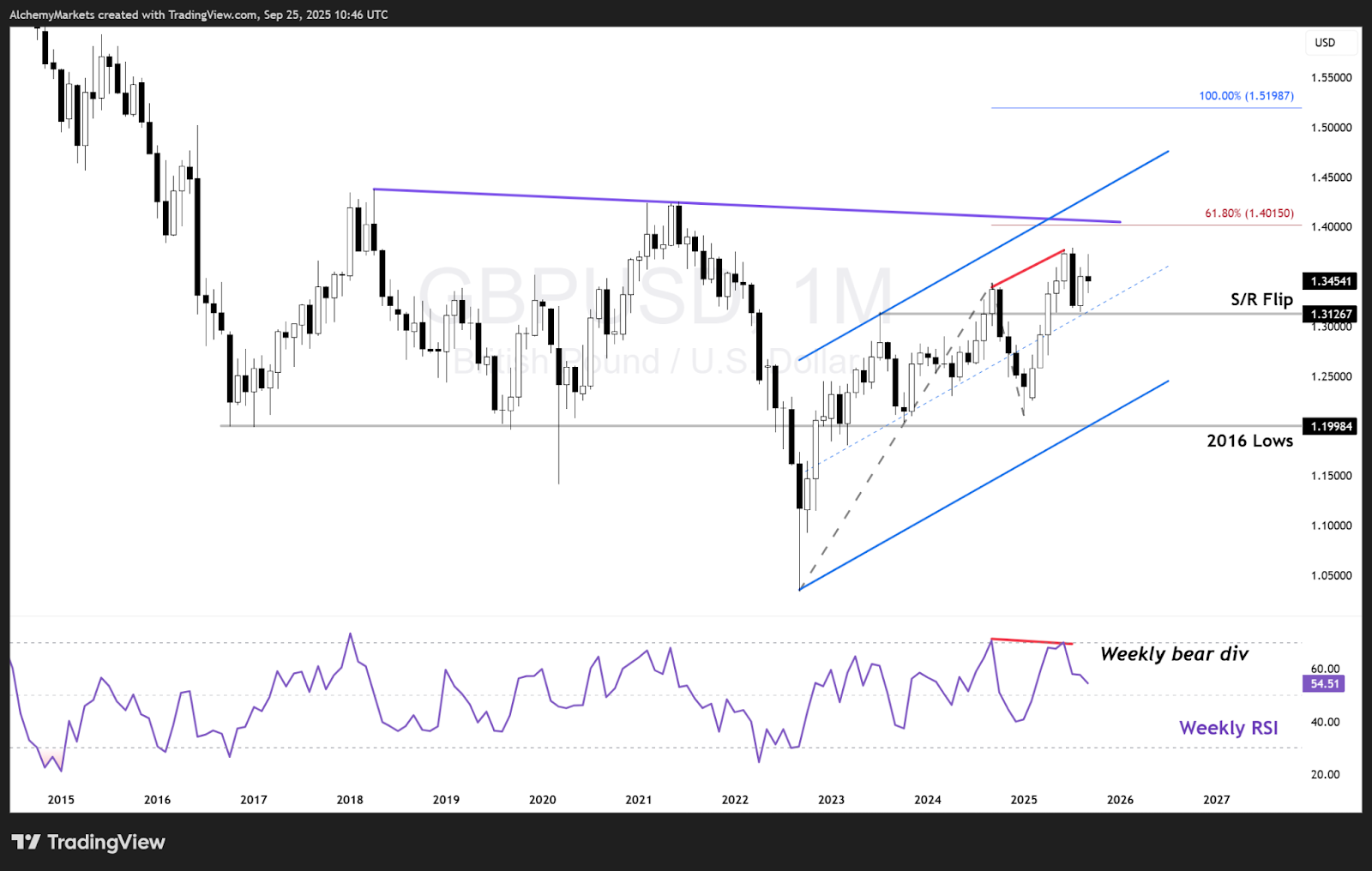
Sterling is drawing a similar pattern to the Euro. It’s been climbing inside its broad channel since 2022 and currently under a 8 year trendline.
The $1.40 zone lines up with a fib extension and the trendline since 2017, making it a natural resistance zone. The channel, while not obvious, is valid due to its midline acting as support all year.
On the fundamentals, Q4 is a story of the Fed cutting rates toward 3.50–3.75% while the Bank of England holds steady at 4.00%. That narrows the policy gap against the dollar and gives sterling some tailwind. Still, the effect may be limited if growth data in the UK continues to underwhelm.
For a clean break above $1.40, cable would likely need an added driver such as broad dollar weakness from a USD/JPY unwind. Without that, softer UK data or risk-off sentiment could stall the move and keep GBP/USD capped under long-term resistance.
💵 Fed: 4.00–4.25% → 3.50–3.75%
🦘 RBA: 3.60% → 3.35% or hold
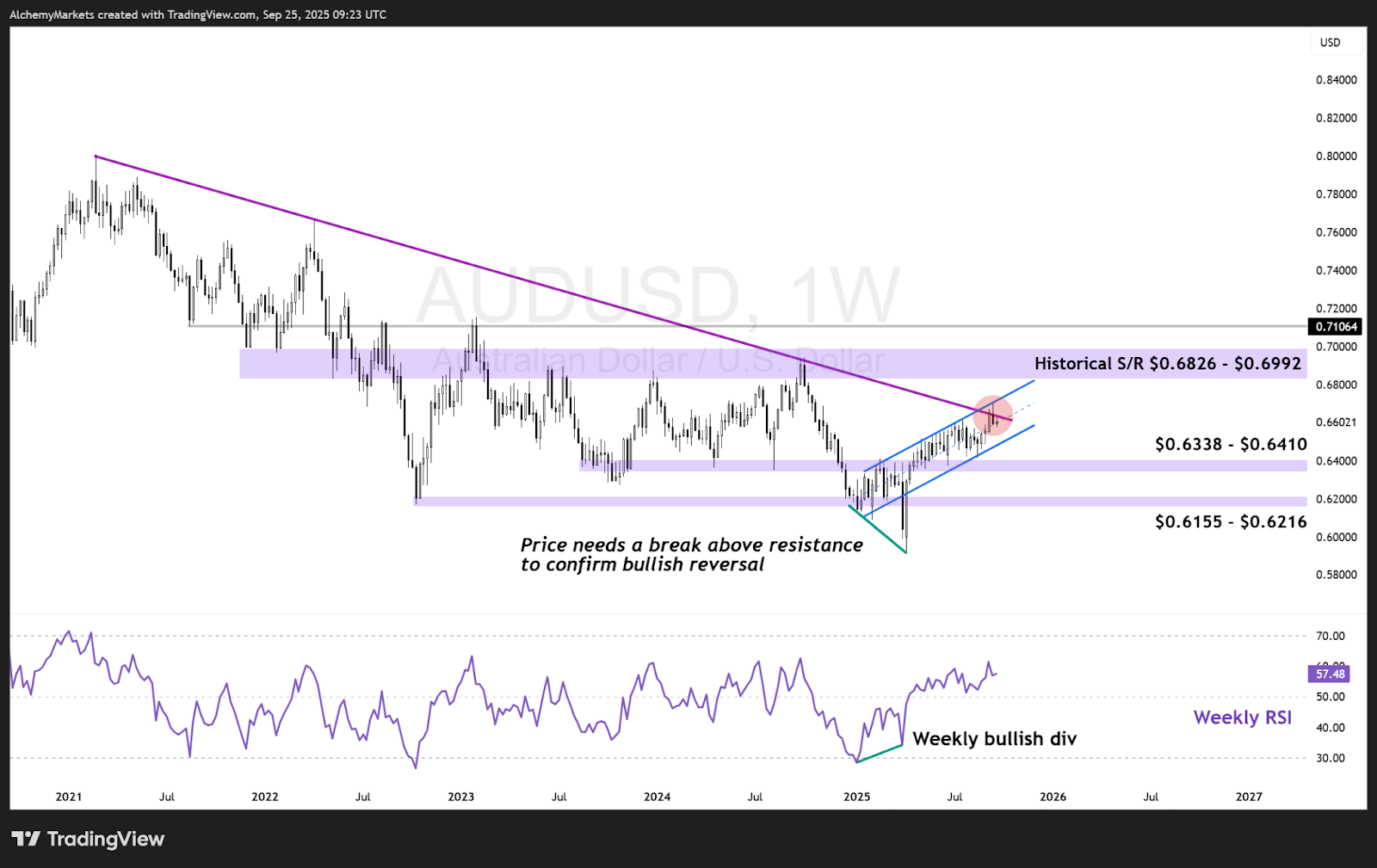
The Aussie tapped a multi-year trendline from 2021 and remains inside its channel. A breakdown targets $0.6338, while a grind higher puts $0.68 back in play; a clear “risk-on” signal if reached.
The RBA is expected to hold at 3.60% or trim slightly to 3.35%. That shift narrows the rate gap against the dollar, which lends some support to the Aussie. Still, much of this policy path is likely anticipated, so the pair’s direction will lean heavily on how global risk appetite plays out.
If equities and commodities remain steady, AUD has room to grind higher toward $0.68, signalling risk-on momentum. But if growth jitters flare and markets swing risk-off, the Aussie could falter back toward its ascending trendline support, or horizontal support at $0.6338 waiting to be tested.
💵 Fed: 4.00–4.25% → 3.50–3.75%
🐑 RBNZ: 3.00% → 2.50%
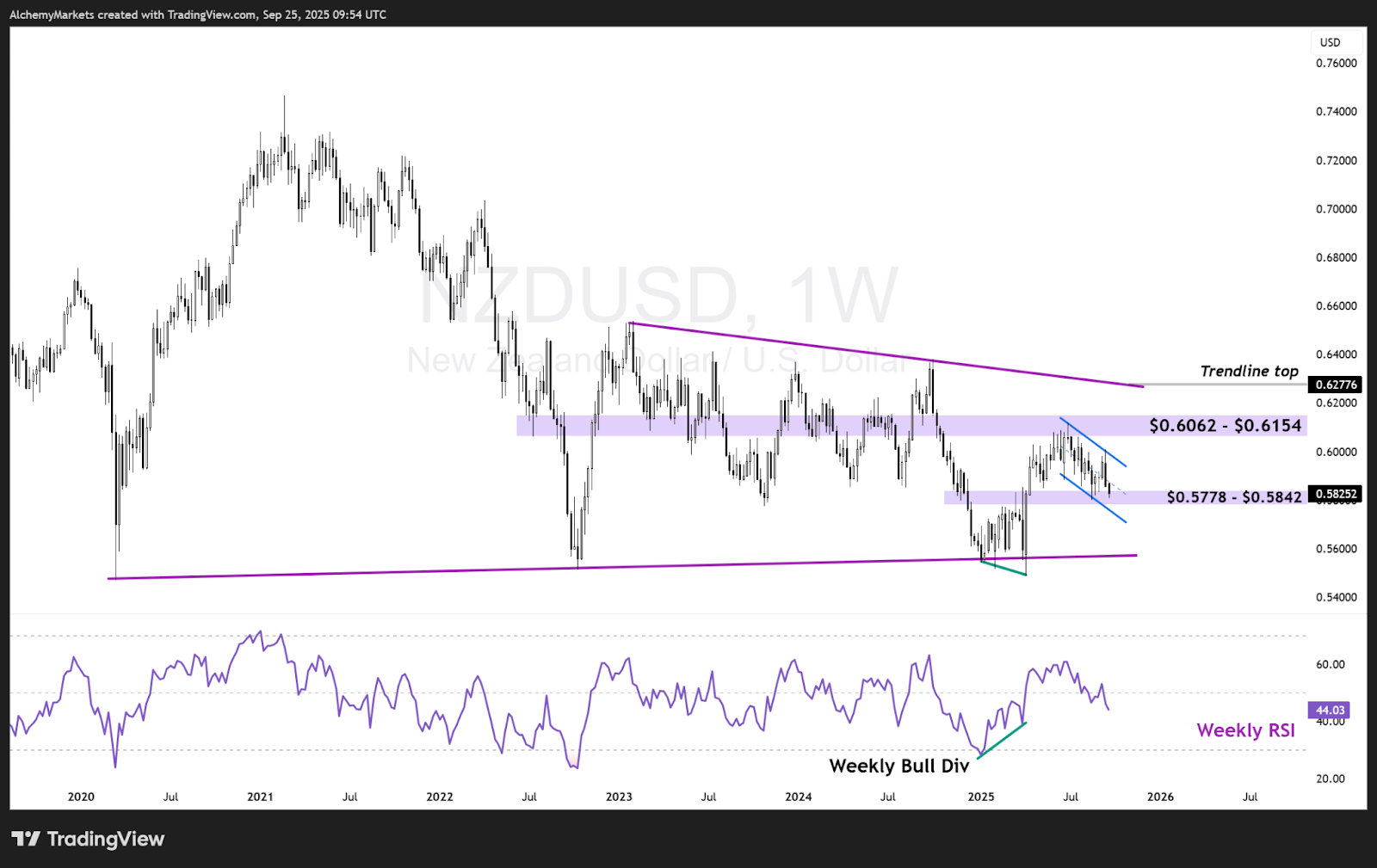
Unlike the other FX majors on this list, the Kiwi sits in a bull flag and has slowly consolidated to the downside. Currently, it sits right on support with bullish divergence on weekly RSI. If it holds, $0.6062 and $0.6277 are the upside levels. A break lower would target the base of the formation.
NZD/USD in Q4 trades on Fed easing versus the RBNZ’s dovish tilt. Both central banks are expected to cut by 50bps by year-end, but with the dollar carrying more weight across FX, the Kiwi is more likely to be the benefactor.
If risk appetite holds and the dollar softens broadly, NZD/USD has room to rebound toward $0.6062 and $0.6277 (top of its triangle formation). But if global conditions sour and risk-off takes hold, the Kiwi could break lower instead, testing the base of its broader triangle structure.
💵 Fed: 4.00–4.25% → 3.50–3.75%
⛰️ SNB: 0.00% → 0.00%
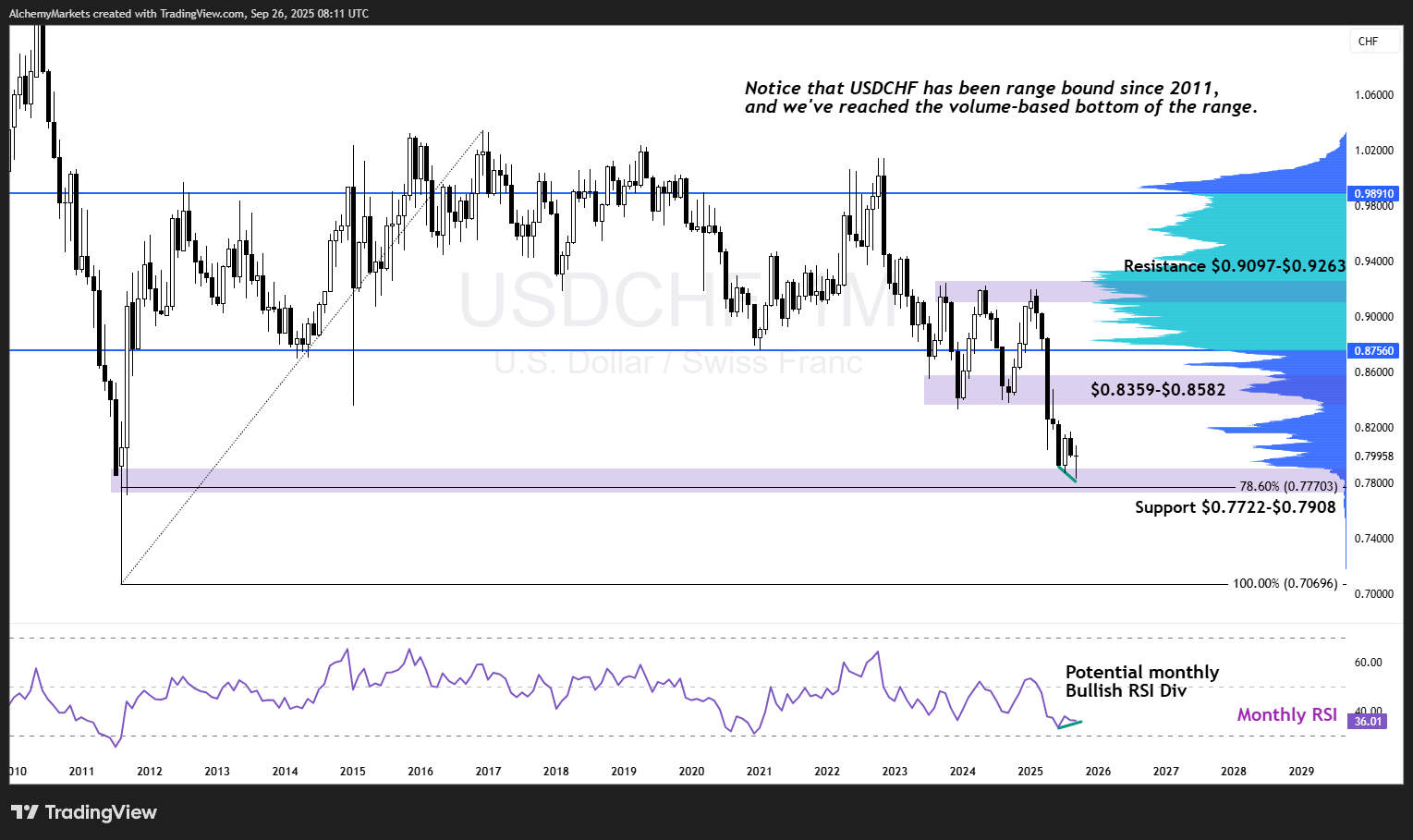
USD/CHF has been locked in a range since 2011 and is now pressing the lower end at 0.7722–0.7908, where the 78.6% retracement adds weight. Anchored volume profile shows a thin profile just beneath, marking this as a key defence zone.
Unlike EUR/USD and GBP/USD, the yen carry isn’t the driver here yet, since USD/JPY hasn’t touched the ¥150 line and DXY itself is flashing a reversal setup. That leaves USD/CHF freer to react to its own base. With the SNB holding rates at 0.00%, the policy gap versus the Fed is wide, giving fundamentals and a monthly bullish RSI divergence more reason to back a rebound.
As long as 0.77 holds, USD/CHF has scope to pivot higher, with 0.8359 on the table in Q4.
The dollar’s weakness is real, but the easy trade may already be behind us.
Q4 is less about the rate move itself, and more about the markets looking to react to the news. Will they sell the rumor, then buy the news later? It’s certainly looking like a possibility.
With EUR/USD and GBP/USD stuck at 8-Year resistances, it’s prudent to only expect a breakout when we have a large catalyst to drive prices higher.
You may also be interested in:
Alchemy Markets Quarterly Forecasts
DISCLAIMER: For educational purposes only. Trading comes with substantial risk, leading to possible loss of your capital. Traders are advised to do their own due diligence before investing.
Alchemy Markets is a multi-asset brokerage providing retail traders with the same elite trading conditions, tools, and transparency typically reserved for institutions.

Select the categories and companies you wish to follow directly to your person rss feed.
Create Custom RSS FeedSign up and join over 5,000 professional members who receive personalized news alerts, curated professional connections, and more for free!
ATARIA CRM is a centralized platform designed for fintech teams to manage account operations, verification, fund management, and support in one place. With desktop and mobile access, it helps businesses stay connected, organized, and efficient.
EUR/AUD hits the 1.60500 target after rejecting 1.61715–1.62300 resistance. Review the bearish price action setup and why trade confirmation mattered.
Get an inside look at how rising Treasury yields and sector shifts into healthcare are impacting S&P 500 market dynamics, technical levels, and key economic drivers.
Understand XAUUSD support and resistance with simple gold chart examples. Learn to identify key zones, assess price reactions, and avoid beginner mistakes.
CMC Markets, a FTSE 250 multi-asset financial services firm, has launched a read-only ChatGPT integration for UK CFD clients, giving access to balances, positions, orders, pricing and historical market data through conversational prompts, as part of its ongoing investment in AI and cloud technology.
DXtrade, the multi-asset trading platform from Devexperts, has integrated Notofin's trading performance intelligence solution, adding behaviour-first analysis, structured journaling and pattern recognition tools. Brokers licensing DXtrade can now offer Notofin's services to clients as part of the platform's open integration framework.
KYC is essential for building trust, preventing fraud, and meeting regulatory requirements. A centralized system like ATARIA CRM helps compliance teams manage KYC requests, track pending documents, monitor approvals and rejections, and keep the entire verification process organized. By quickly identifying pending issues, businesses can reduce delays and provide customers with a smoother path from “Pending” to “Approved.”
Build better trading habits with a trading journal. Learn how a trading memory bank helps you review mistakes, manage emotions, and develop confidence.
GBP/USD has fallen to 3-month lows near 1.3200 due to strong US economic data and weakening UK consumer demand, though technical indicators like an RSI of 25.18 suggest the pair is now in oversold territory near key support at 1.3150.