
Search Companies, News, Members & more
Terms of ServicePrivacy PolicySecurity PolicyLegal InformationCommunity GuidelinesSitemapsCookie Settings
2026 Copyright © Liquidity Finder Ltd. All rights reserved.
Liquidity Finder Ltd is incorporated in England and Wales, company number 10610740, registered address 167-169 Great Portland Street, Fifth Floor, London W1W 5PF, United Kingdom.

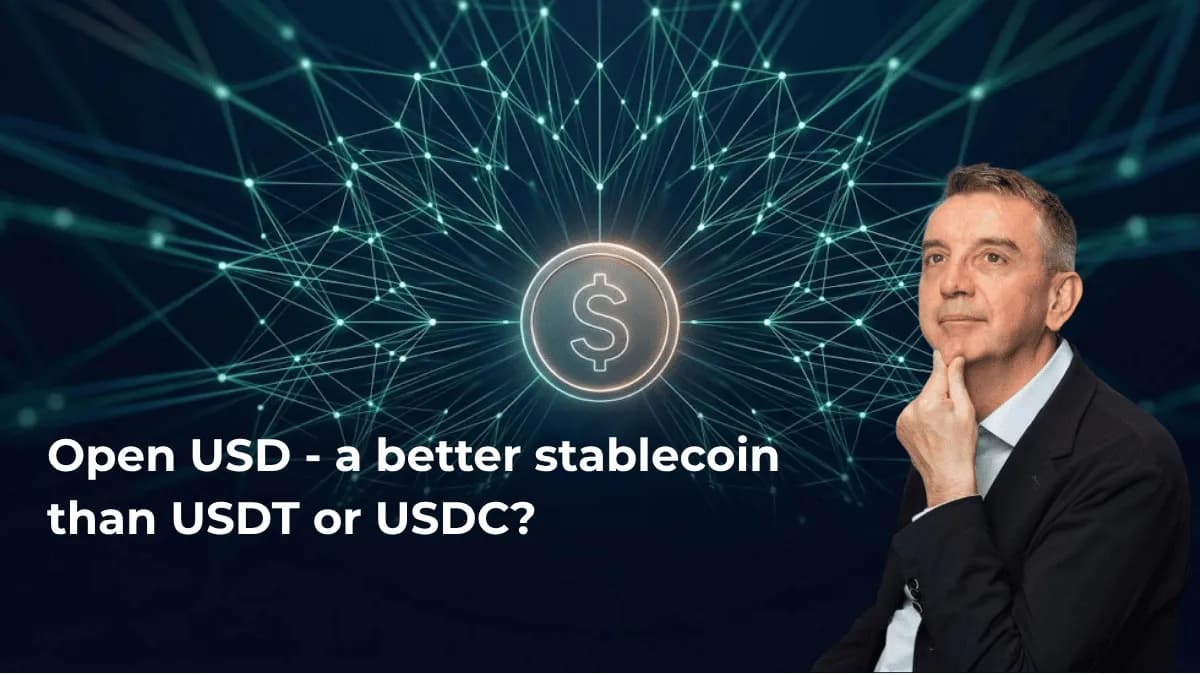
"Today we're announcing Open USD, a new stablecoin for global money movement." Another day, another stablecoin. Yet another stable is not per se worthy of note. But I think this one merits a closer look.
What's the same?
Open USD is a USD-pegged stablecoin. So, like all the others, it holds reserves, and, like all the others, it is not going to pay interest. That's fine, but so far, so not really newsworthy.
What's different?
The next part of the announcement hints at what might be different: "Open USD has been designed as shared infrastructure for businesses and financial institutions." And then it announces that 140-plus firms across payments, banking, commerce, crypto and infrastructure are part of this new initiative. That is worth some attention.
A few things got my attention. First was the promise that users can mint and redeem at no cost and with no volume caps. The second was that the profits on holding the underlying assets would be distributed to the partners. I think this is like streaming royalties: the more you use, the bigger your share. Lastly, there is the promise of shared governance, with partners having a say.
And there's one more thing. None of the big three incumbents, Circle, Tether and PayPal, are part of this new venture.
Who is behind it?
This is where it gets interesting. Open USD is not being issued by a bank, nor by a crypto native looking to build the next empire. It is operated by Open Standard, a new and deliberately independent company. The founding CEO is Zach Abrams, co-founder of Bridge, the stablecoin infrastructure business that Stripe bought, and before that a product lead at Coinbase. So the pedigree here is payments plumbing, not speculation.
The clever part is the ownership. Open Standard is structured so that its board is made up of the partners themselves, and the whole thing is governed for the collective rather than for a single issuer. In plain terms, the firms using the rail also own a piece of it and get a say in how it is run. That is a very different animal from Tether or Circle, where you are a customer and nothing more.
And the partner list is the real headline. This is not two men and a dog. More than 140 firms have signed up, and they are not minnows. Visa, Mastercard and American Express are in the same tent, alongside Stripe, Shopify, BlackRock, BNY, Standard Chartered, Google and a long roster of banks and fintechs. On the crypto side you have Coinbase, Solana and Ripple. Persuading that many fierce competitors to back the same horse is, frankly, the most remarkable thing about the whole announcement.
It is due to go live later in 2026, and it is being built to run across several chains, including Solana, Stellar, Base and Polygon, rather than betting on any one of them.
And it is worth noting who is not in the room. Circle, Tether and PayPal, the three biggest incumbents, are all absent. The market took the hint: on the day of the announcement, Circle's shares fell around 16%.
What difference might this make?
In things stables, two things are certain right now in summer '26: the USD is the only currency that matters, and USDT and USDC are the 800lb gorillas.
A fairly good rule of thumb is that displacing incumbents with dominant market share is really difficult. Add to that the fact that it will be a long while before the courts or regulators entertain any anti-trust, aka competition law, challenges.
So, if launching a new initiative is generally brave, then, as Sir Humphrey from Yes Minister would put it, taking on the 800lb gorillas would be courageous. I recall that once upon a time Netscape was the 800lb gorilla of browsers. Gorillas can be beaten.
Now, functionally, any one stablecoin is very broadly similar to the next. A stablecoin can be moved peer-to-peer, and then interoperability and programmability allow us to compose services in new ways. And the whole set-up is always on.
So, if functionality is not a differentiator, what is?
The first thing which changes with this model is "cui bono?" Right now, if you want to use a stable, you'll use USD ones, and most likely USDT or USDC. The two have about 80 to 85% of the 320 billion dollar stablecoin market, with USDT about 2.5 times the size of USDC. The two of them are pocketing all the yield. Unlike the banks, they do not have to manage through the liquidity buffer demands imposed by liquidity metrics such as the LCR, the Liquidity Coverage Ratio. And, unlike transaction banks and correspondent banks, who will generally pay some interest, stablecoin operators get to keep the returns. In the Open USD model, that income is going to be shared.
The service is also offering to mint and burn for free. I am not yet sure what you are allowed to offer in exchange for 100 Open USD. Fiat, for sure. Maybe other things. Here's what I think happens behaviour-wise.
During the day, using Open USD is like picking your flights to maximise your Air Miles. If you do a lot of flights, there is some upside to the Air Miles. Let's use music streaming to illustrate.
Taylor Swift's monthly nut from streaming is some 8 to 10 million dollars, which might cover the costs of her private jet. The Rolling Stones make a whole lot less, at some 800k to 1 million, so maybe the fuel for the private jet, and if you are Johnny Come Lately, "it" might cover a one-day travelcard on the London Underground. Plenty of incentive for those who stream lots of payments, and/or big ones, to direct their flow to Open USD.
As far as end-of-day cash management goes, I think the story is different and behaviour will stay broadly the same.
Stablecoins don't pay interest on their balances, so I think the general aim of every cash manager and intraday liquidity manager stays the same: fund flat, i.e. as close to zero as possible at the end of the day. Remember, there will need to be an end-of-day, i.e. the time when the value or business date rolls. If balances are off-ramped to fiat, then existing timings dictate what happens when. Today, an overnight sweep to a money market fund or doing a reverse repo are the standard tools used to end up flat. In both cases, exactly when you get your fiat back is not always known; basically any time on value date tomorrow.
Against that, stablecoins promise always-on processing. I think this will leave FIs having to keep some overnight balance, which means that one or other business line would need to eat the cost of the foregone interest.
Then comes the promise to mint and redeem at par, and for free. Ok, there is some liquidity risk, because if all the stablecoin holders rock up at once, then assets need to get financed or sold in a hurry. But that mint-and-burn-at-par-for-free feature is worth having.
The hard part
Before we all get carried away, a dose of cold water. The graveyard of "USDT killers" is well populated. For all the noise every new entrant makes, the third-place stablecoin has never held more than about 3% of the market. BUSD, PYUSD, RLUSD; all arrived with fanfare, none has dented the top two. Liquidity begets liquidity, and the incumbents' depth is horribly sticky. If you are a trader who needs to move size at 3am, you go where the liquidity is, and today that is USDT.
Then there is the consortium problem. Getting 140 fierce rivals to agree on the colour of the carpet, let alone the governance, is not trivial. Analysts have been quick to note that previous consortium efforts have little to show for themselves. The excitement at launch is real; the hard yards come later, when everyone actually has to converge on the standards and the rules. As anyone who has sat on a standards committee will tell you, that is where good intentions go to die.
And the model is not entirely new. Paxos already runs Global Dollar, USDG, on a very similar revenue-sharing basis with a network of a hundred-plus institutions. It is a perfectly sensible design. It is also still sub-scale. So sharing the yield, on its own, has not yet proved enough to move the needle.
Lastly, a question of who actually cares. A great deal of USDT's demand is offshore and trading-driven, from users who prize depth and ubiquity above all else. The promise of a slice of the reserve yield is a lovely thing for a corporate treasurer eyeing a payments use case but it may mean rather less to someone who just wants the deepest pool in the room.
None of this means Open USD fails. It means the distribution muscle of those 140 firms has to overcome a liquidity moat that has seen off every challenger so far. That is the bet.
What about Europe? The MiCA question
Here is a wrinkle the announcement did not dwell on. As of 1 July 2026, the transitional window for Europe's Markets in Crypto-Assets regulation, MiCA, has closed. In the EU, a dollar stablecoin is an electronic money token, an EMT, and to be offered to the public it needs an issuer authorised as an electronic money institution in a member state. Circle did the work and got there through a French licence for USDC. Tether did not, and has duly been delisted from the regulated European exchanges. So the first question for Open USD is a simple one: will there be an EU-authorised entity issuing it? At the time of writing, I have not seen one announced.
Then there are two features of the Open USD design that sit awkwardly with MiCA. The first is the yield. MiCA is clear that issuers may not pay interest or yield to the holders of an EMT. Now, Open USD's clever bit is that it shares the reserve income with the partners who distribute it, not, on the face of it, with everyone who happens to hold a token. That may keep it the right side of the line, but it is exactly the sort of arrangement a supervisor will want to look at closely. Where does distribution end and remuneration of holders begin? I would not want to bet the farm on where the regulator draws that line.
The second is scale. MiCA deliberately caps how far a non-euro EMT can be used as a means of exchange within the bloc, precisely to protect the Euro. That sits directly across the path of a stablecoin whose whole pitch is payments at industrial, global scale. In Europe, at least, the throttle is built into the law.
None of this is fatal. It does mean that the version of Open USD that flies in the United States may look rather more constrained on this side of the Atlantic. For any European institution weighing it up, "is it MiCA authorised, and by whom?" should be the first question on the list.
In summary
For the big players, owning a share of the infrastructure and getting some usage fees is worth changing behaviour for. And I would expect to see shifts in "stablecoin of choice".
For the little folks, like Johnny Come Lately, I think they will have to wait and see. The mint and redeem promise is worth having, but your business alone is not going to have a big influence on whether others use it.
Maybe some novel things happen. If the payment processors are getting real money for using the platform, then they might want to share the love. Imagine the merchant acquirers suddenly offer an incentive to use Open USD rather than a credit card. Or perhaps they say that if merchants use Open USD, then they are paid immediately, versus the current T+1 to T+3 schedule.
With all things bleeding edge in financial services, there are a number of risks when I write. There is every risk that I haven't understood properly, or just missed a few salient points, or just come to an implausible conclusion. If any of these things are true, please call me out on them.
In any case, please do share a comment or two.
Please feel free to get in contact via LiquidityFinder.
Author - Olaf Ransome
Olaf is a liquidity and financial services expert. He is the founder of 3C Advisory.
Share this article

Comments
Most Recent
Find The Right Partners for
Your Trading Business
Sign up and join over 5,000 professional members who receive personalized news alerts, curated professional connections, and more for free!
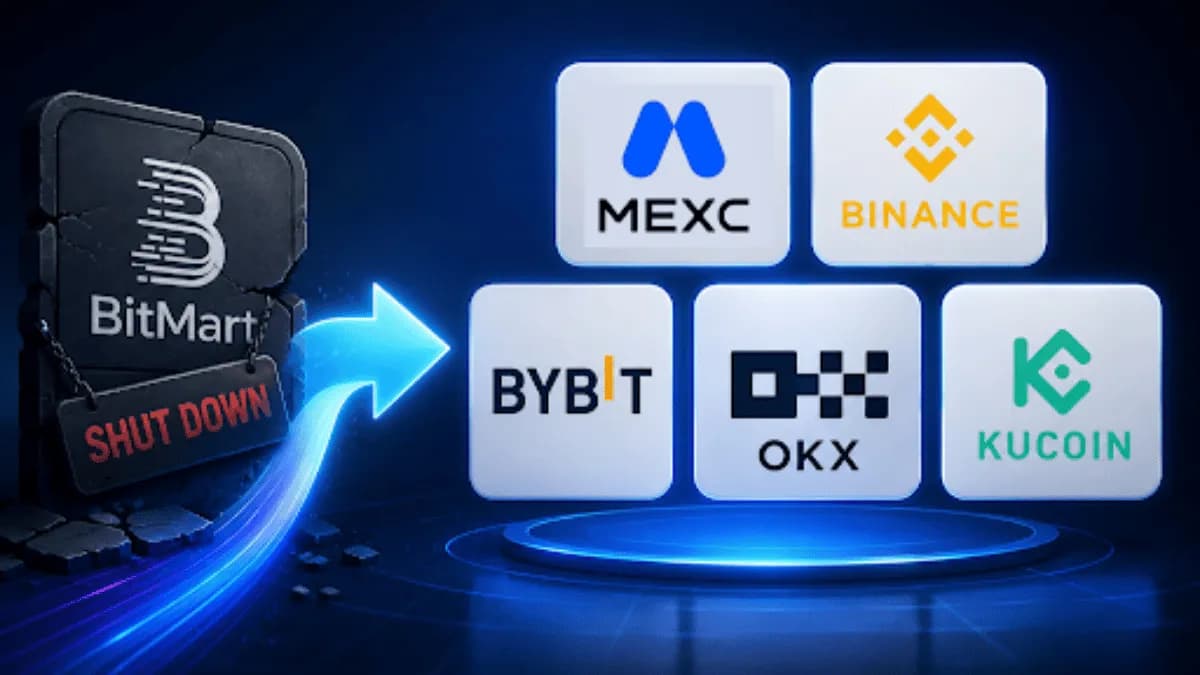
BitMart announced on July 26, 2026 that it is winding down its trading platform: new registrations and deposits stopped immediately, spot and futures trading ends August 26, 2026, and operations fully close by January 31, 2027. Anyone still holding funds on BitMart needs a reliable replacement exchange immediately.

SoFi's SoFiUSD is the first stablecoin issued by a US national bank. But do holders actually have the protection they think?

As tokenisation and digital assets move from niche curiosity to mainstream expectation, banks and financial institutions face an uncomfortable truth: their legacy core banking systems were never built for this. From order execution and pre-funding to custody, portfolio management and gas fees, Olaf Ransome explores the key infrastructure challenges FIs must navigate and asks whether to re-use, buy or build their way to a solution that actually scales.

Klarna is partnering with Coinbase, raising stablecoin-denominated funding and launching KlarnaUSD. We break down the treasury logic, merchant incentives and agentic AI payments angle — and what other CFOs should take from it.

Olaf Ransome’s latest article on liquidity management explores PORTS (Perpetual Overnight Rate Treasury Securities) and how they could expand the supply of on-chain high-quality liquid assets (HQLA) for treasury and cash management. He explains why long cash balances create risk, how stablecoins and tokenised money market funds need safe short-duration assets, and what PORTS could mean for reverse repo, liquidity management and wholesale banking.

Discover whether KuCoin is still “The People’s Exchange” in 2026. This in-depth KuCoin review breaks down fees, KYC, security, Proof of Reserves, supported coins, deposits/withdrawals, futures, margin, Earn and the platform’s standout free trading bots — plus who it’s best for (and who should avoid it).

Gas fees can be the most confusing part of using Ethereum and other blockchains. This guide explains what gas fees are, why they exist, how costs are calculated (including EIP-1559’s base fee and priority tip), and the key factors that drive price spikes. You’ll also learn practical ways to reduce fees using gas trackers, smarter timing, batching, and Layer 2 networks like Arbitrum, Optimism, Polygon and zkSync.

Generating and sustaining liquidity requires a strategic approach across centralized exchanges, decentralized pools, and market-making relationships. This guide covers every stage of the process for crypto projects.
Create Your FREE Account
Get access to latest news, updates, real-time data, brokerage and trading firm insights and customized information feeds.


Multi-asset trading broker AvaTrade has agreed to acquire the majority of FXCM Group’s business and brand, in a transaction that would bring a longstanding retail FX franchise into the AvaTrade Group.

LSEG and CMC Markets have signed a multi-year strategic data agreement expanding CMC's access to LSEG's real-time and delayed pricing, reference and corporate actions data, news and analytics, plus AI-ready content, to support new products, entry into new markets and the growth of CMC's institutional and B2B partnerships.

The Tel Aviv Stock Exchange is considering a bid for the Cyprus Stock Exchange, with Israeli media citing its EU licence, trading platform and clearing house. Euronext’s Athens exchange and India’s National Stock Exchange are also seen as contenders, and Cyprus aims to sign a sale agreement by the end of this year.
CME Group will launch baseball futures on 12 October, pending regulatory review, tracking CME FutureSports Performance Indexes built on Official League Data. Standard and micro contracts will start with the 2026 Postseason and the four clubs in the League Championship Series, trading around the clock.

ESMA has published an opinion stating that MiCA-authorised crypto-asset service providers should cease services tied to non-MiCA-compliant stablecoins for EU clients across MiCA crypto-asset services. National authorities should require remediation of existing exposures within three months, by early January 2027.

Nasdaq Ventures has made a strategic investment in Amsterdam-based derivatives and crypto exchange One Trading, with both firms to explore 24/7 trading of equity futures. The undisclosed investment follows Nasdaq's US$100 million investment in Payward, the parent of Kraken, and CME Group's move to 24/7 trading.

cTrader has opened multi-platform plugins to brokers and prop firms, which can pre-install their own tools for clients or list them in cTrader Store. The plugins run across Mobile, Web, Windows and Mac, and can be built and launched independently of core-platform releases, including trading journals and calculators.

Institutional brokerage and financial infrastructure provider Clear Street has joined TradingView’s broker network, allowing its clients to trade US stocks, exchange-traded funds and options directly through the charting and analysis platform.


Learn how to improve trading psychology, manage fear and greed, avoid revenge trading, and follow your trading strategy with discipline and a trading journal.

GTC Prime has announced a strategic partnership with Centroid Solutions to manage and distribute its liquidity through CS 360 Bridge, Centroid's multi-asset connectivity and execution engine, giving brokers and institutional clients access to tailor-made pricing, low-latency execution and real-time risk management.
Feed