
Search Companies, News, Members & more
Terms of ServicePrivacy PolicySecurity PolicyLegal InformationCommunity GuidelinesSitemapsCookie Settings
2026 Copyright © Liquidity Finder Ltd. All rights reserved.
Liquidity Finder Ltd is incorporated in England and Wales, company number 10610740, registered address 167-169 Great Portland Street, Fifth Floor, London W1W 5PF, United Kingdom.

SoFi, a US bank launches new stablecoin, "This marks the first time that a U.S. national bank-issued stablecoin is available directly on a banking app".
Announcements about a new stablecoin are not per se noteworthy. An announcement by a US bank, SoFi, that it is the first bank to issue a stablecoin, is worth some attention. When renowned commentator Simon Taylor posts about it, then that gets my attention.
So, SoFiUSD deserves closer attention.
This month’s post takes a closer look to help us understand if a stablecoin issued by a bank is something special.
This post is not about the technical things which stables enable, they are advancements worth having. I have written previously about how Stablecoins are like Heineken; they reach the parts other payment methods cannot reach. In the same article, I warned that care is needed to know whether something itself out to be a a pint is indeed a pint.
In any jurisdiction there are a lot of rules about who, or rather what, can call themselves a “bank”. If you engage with a thing called “bank”, you can pretty readily assess what you are getting yourself into. “Stablecoin” though is not a protected term. And for sure, not all stablecoins are equal.
Who has a claim on what?
If you are going to hold something you deem to be an asset, be that a security, a mutual fund, or even just a bank deposit, then the #1 question to start with is: “Who has a claim on what?”
If you have a credit aka long balance in your account with any bank, then in your accounts you have a receivable. The bank has a deposit and a liability. Some of those balances are protected by insurance, such as FDIC in the US. Whatever is not covered is referred to as an unsecured receivable; you have no special claim, you are one of a long list of creditors, with some more equal than others. VAT, tax, social security, wages, pension obligations all have a special position in the “legal pecking order”, then come preferred creditors, those who have some contractually agreed special treatment. Then come all the other creditors; the rent, the cleaners and you the account holder with a deposit. Some receivables are so called secured, which means they have "first dibs over something specific”. Those specific assets are often referred to as “ring-fenced”.
If you own a regulated money market fund (MMF) you have this ring-fencing; the assets your fund manager has interested in are protected. The fund manager could go bankrupt, but the assets will, or at least should, be there and the law ensures they are not part of the bankruptcy proceedings.
So, if you have a good old fiat credit balance with a bank, it does not matter one bit how many Dollars, Euros, Swiss Francs or Pounds that the institution has with the central bank; if the bank goes bankrupt, you are in that queue of creditors which I just described.
When JP Morgan launched its tokenised deposit, JPM Coin, the very eloquent Jamie Dimon spoke about "our bank has lots of money at the FeD". He was at least a bit disingenuous. If JPM had say 1B in JPM Coin in circulation, 10B at the Fed and then went bust, the JPM Coin holders have no special claim on that 10B. They are in the queue.
The Genius Act stablecoin legislation,, as well as MiCAR, both provide for ring-fencing of reserves. In other words, a Stablecoin is an MMF on-chain with no interest paid.
So them is the rules.
What About SoFiUSD Specifically?
I would re-use that term disingenuous for this product. The announcement says: 1:1 Redemption: “SoFiUSD is redeemable 1:1 for U.S. dollars from SoFi Bank. SoFi Bank maintains liquid assets to support all outstanding SoFiUSD.”
They are also very clear about the coin’s characteristics. SoFiUSD is available on both Ethereum and Solana, and SoFi has also announced a settlement integration with Mastercard's global payments network: “SOFID is not a deposit, is not insured by the FDIC or SIPC, is not bank guaranteed, is not legal tender, and may lose value.”
In simple terms, this is the same as a good old fiat balance at the bank, without any deposit insurance. And it pays no interest.
There is no legal construct at work which would deliver the ring-fencing that the Genius Act or MiCAR requires.
In Summary: Practical Guidance on Stablecoin Risk
Read Opinions Carefully. Simon Taylor has missed something here. There is no 1:1 backing for SoFiUSD and holders have no special or priority claim over anything.
My general advice on Stablecoins would be:
• They are fine for transactional purposes: if you can pay using a stablecoin, then you could take stablecoins in payment.
• If you are going to end up holding overnight balances, then you should make sure you understand what you have a claim on. Stables regulated under the Genius Act or MiCAR should be good. Remember: “a pint is not always a pint”.
• Like managing cash today, being long overnight is not a good thing.
a) Flat is good, allowing that “nearly flat” is ok given the imprecisions of life. “Nearly flat” will depend on the size of your shop and the legal entity involved.
b) Overnight longs in stablecoins have even more opportunity cost than overnight fiat.
c) Good treasury and liquidity management control never goes out of style. The cash management discipline from the fiat world of doing reverse repo and sweeping to money market funds should endure into to the wonderful new world of tokenised assets.
With all things bleeding edge in financial services, there are a number of risks when I write: There is every risk that I haven’t understood properly, or just missed a few salient points, or just come to an implausible conclusion. If any of these things are true, please call me out on them.
In any case, please do share a comment or two.
Please feel free to get in contact via LiquidityFinder here.
Olaf Ransome
Olaf is a liquidity and financial services expert specialising in payments, stablecoins, and digital asset settlements and is the founder of 3C Advisory. You can message Olaf directly here.
Share this article

Comments
Most Recent
Find The Right Partners for
Your Trading Business
Sign up and join over 5,000 professional members who receive personalized news alerts, curated professional connections, and more for free!
A new stablecoin backed by 140+ firms, from Visa to BlackRock. Can Open USD challenge USDT and USDC, and will it clear MiCA? Olaf Ransome weighs in.

As tokenisation and digital assets move from niche curiosity to mainstream expectation, banks and financial institutions face an uncomfortable truth: their legacy core banking systems were never built for this. From order execution and pre-funding to custody, portfolio management and gas fees, Olaf Ransome explores the key infrastructure challenges FIs must navigate and asks whether to re-use, buy or build their way to a solution that actually scales.

LSEG's DiSH promises atomic settlement and 24/7 PvP and DvP capability using tokenised commercial bank deposits. But when the balances move and the banks don't, who actually owns what? Olaf Ransome examines the mechanics - and the risks.
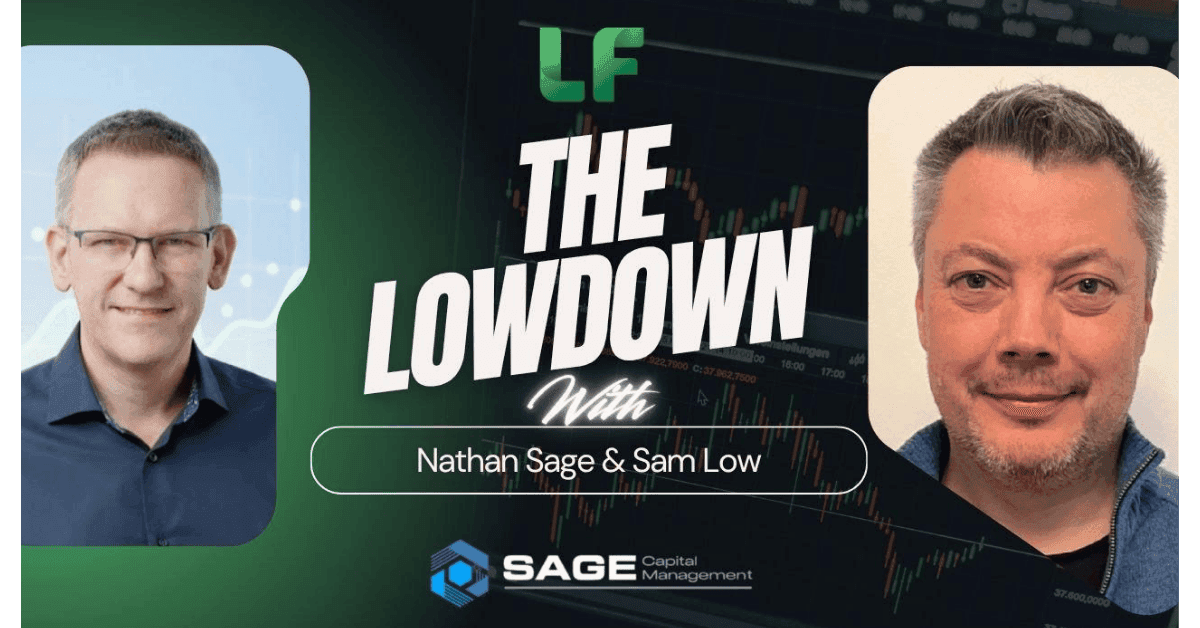
LiquidityFinder's Sam Low sits down with Nathan Sage, founder and CEO of Sage Capital Management, to trace his journey from FX fund manager to running a Bitcoin fund doing $1BN a day in 2016 — and how that experience of pain built one of the most connected prime brokerages in the digital assets market today.

Klarna is partnering with Coinbase, raising stablecoin-denominated funding and launching KlarnaUSD. We break down the treasury logic, merchant incentives and agentic AI payments angle — and what other CFOs should take from it.

Olaf Ransome’s latest article on liquidity management explores PORTS (Perpetual Overnight Rate Treasury Securities) and how they could expand the supply of on-chain high-quality liquid assets (HQLA) for treasury and cash management. He explains why long cash balances create risk, how stablecoins and tokenised money market funds need safe short-duration assets, and what PORTS could mean for reverse repo, liquidity management and wholesale banking.

S&P Global Ratings gave Tether (USDT) the weakest Stablecoin Stability Assessment. Olaf Ransome breaks down what drives stablecoin risk—asset backing, custody/correspondent chains, transparency and reporting.

Discover how SIKA’s CCP-based FX platform streamlines EM FX order matching and settlement, reduces credit risk and prepares banks and brokers for stablecoin rails.
Create Your FREE Account
Get access to latest news, updates, real-time data, brokerage and trading firm insights and customized information feeds.


OANDA Japan has restricted trading on accounts that may have been affected by unauthorised access after login details stored on GMO's Onamae.com Desktop Cloud VPS leaked. The broker says its core systems were not breached and is directing affected clients to GMO's compensation process while urging password changes and 2FA.

Alpaca has received in-principle approval from ADGM's FSRA for Alpaca Clearing & Custody ME Ltd. Subject to a Financial Services Permission, the entity plans to offer brokerage services and virtual asset custody, bringing Alpaca's API-driven brokerage infrastructure closer to partners in the Middle East region.


US stock futures edged higher in early trading today as investors prepared for a week of major central bank decisions. S&P 500 futures rose 0.2%, Dow futures gained 0.3%, and Nasdaq-100 futures advanced 0.3%, following Friday’s selloff.

Brent crude is trading at $115.57 after retreating from its recent high of $118.23. The moving averages indicate a mixed short term picture.


iSAM Securities Apex is working with LMAX Group to bring perpetual futures pricing to FX and CFD brokers through the Apex platform.

ICM MENA has promoted Ahmed Kamal to Chief Executive Officer. Kamal joined the firm in March 2019 as Business Development Manager and most recently served as Regional Manager. He brings more than a decade of experience in financial markets, with expertise in foreign exchange, business development and team leadership.

Theorem has integrated Symbiotic’s Liquid Lane RFQ network, letting holders of tokenised real-world assets trade against on-chain pool liquidity and market-maker quotes. The integration is live on Ethereum, with Midas’s yield-bearing mHYPER fund as the first supported asset. Holders can trade for the USDC stablecoin.

US equities were volatile with technology selloff erasing much of the earlier rebound.

FM Summit London 2026 returns to Old Billingsgate on 24 November for its 15th edition, with LMAX Group, Plus500 and oneZero among confirmed exhibitors. The one-day event adds Business Connect meetings and roundtables, and opens with a networking evening at The Folly on 23 November.

Finance Magnates Summit London returns to Old Billingsgate on 24 November 2026 for its 15th edition. The one-day event brings together brokers, liquidity providers, institutional firms, trading technology vendors, payments businesses and digital asset firms.
Feed